| Jazz |
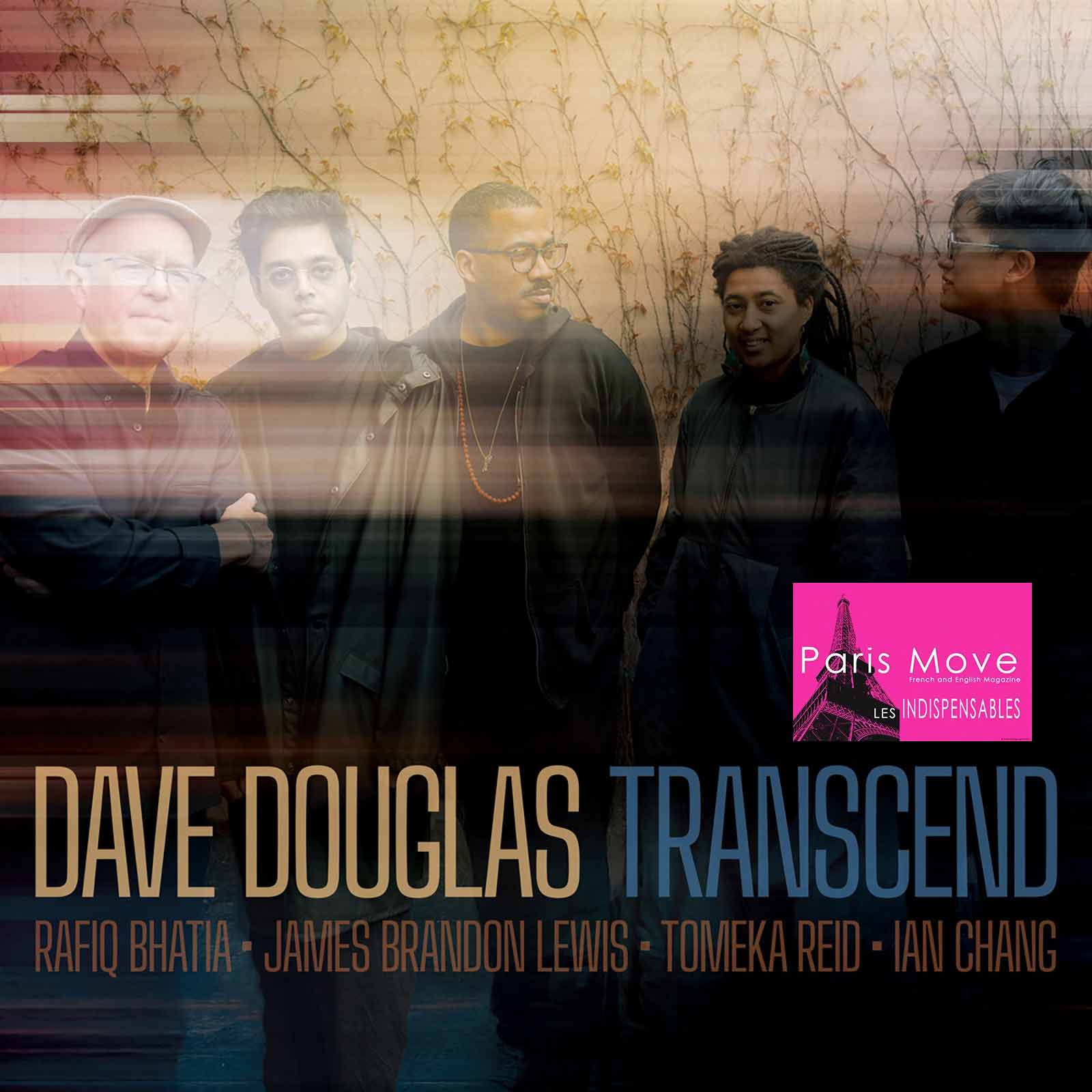
Summary: Before dawn in Austin, a listening session with Dave Douglas reveals an album shaped by the legacy of Duke Ellington and the visual art of Jack Whitten. Blending jazz, visual inspiration and spiritual reflection, Douglas creates music that is complex yet luminous. The project explores improvisation, emotion and the search for transcendence through sound.
In the Quiet Before Dawn, Dave Douglas and the Search for Transcendence
It is still dark here in Austin. For the past few days I have kept a new album by the trumpeter and composer Dave Douglas close at hand. As is my habit, I refuse at first to read anything about a project before hearing it. The ritual matters: insert the CD into the player, close my eyes, and listen without mediation.
The first track arrives almost tentatively. A pulse forms, slowly, patiently. The trumpet emerges not as a declaration but as a breath. Within seconds a memory surfaces: the first time I heard Boléro by Maurice Ravel. Not because the music resembles it, but because it unfolds with the same sense of patient inevitability, an idea expanding gradually, revealing itself layer by layer.
I stop the music.
Only then do I begin reading.
Because clearly this is not just another jazz record. There is intellectual material here, an architecture of ideas behind the sound, and I do not want to miss the meaning of the project. Douglas has always been an artist who honors his predecessors while carving out his own path. His music reflects immense cultural depth, one hears echoes of tradition without ever sensing imitation. Somewhere in that sound there is perhaps a trace of the soul of New Orleans wandering north toward New York City.
Douglas explains that the project Transcend draws inspiration from Duke Ellington, particularly Ellington’s legendary Sacred Concerts. Sacred music as a concept is hardly unfamiliar in Europe—centuries of liturgical music have shaped its cultural landscape. But in the United States the notion carries a different resonance. For many African American artists, the sacred tradition has long been a wellspring of creative energy, a bridge between spirituality, history and artistic expression.
Even for Europeans who consider themselves agnostic, as I do, centuries of Christian thought and the legacy of the Roman world remain embedded in the cultural imagination. That inheritance does not impose belief; rather, it offers a vocabulary through which one can approach other traditions with respect and curiosity.
Douglas’s project also draws inspiration from another artistic lineage entirely: the visual work of Jack Whitten. Whitten followed a path strikingly similar to that of an improvising musician. Fascinated by diagrams, grids and images not traditionally considered “artistic,” he infused them with gesture, intuition and improvisation.
In his early 1970s “slab paintings,” Whitten poured gallons of acrylic paint onto a surface and manipulated it across the canvas, creating textures that appear almost geological. The results are blurred yet emotionally charged surfaces, paint transformed into something that feels like memory or motion. The paintings seem to breathe.
One of these slab works was dedicated to Ellington. Douglas, in turn, composed several pieces on this album inspired by Whitten’s creative process.
Whitten’s painting Golden Spaces grew out of a conversation with John Coltrane, who spoke of waves, vibrations and the search for what he called “sheets of light.” In Whitten’s work, those ideas become visual environments, fields of energy rather than images in the conventional sense.
The spaces within the paintings evoke an experience: a form of awareness, an encounter with the sense of an infinite, vibrating universe. Unique within the art of its era, Whitten’s work conveys movement and fluidity, a constant transformation of surface and perception.
That same sensation animates Ellington’s music.
And it is equally present in Douglas’s.
Musically, the album unfolds like a set of meditations rather than a series of conventional jazz compositions. Douglas’s trumpet tone is warm but restrained, burnished rather than brilliant, reflective rather than declarative. The ensemble moves with quiet precision, each instrument entering and withdrawing like currents within a larger tide.
Rather than relying on the explosive virtuosity often associated with modern jazz trumpet, Douglas allows space to become part of the music’s vocabulary. Phrases stretch, hover, dissolve. Rhythms shift subtly beneath the surface. What emerges is less a sequence of songs than a continuous landscape of sound.
Certain passages evoke chamber music in their delicacy; others carry the spiritual gravity of a slow hymn. Yet nothing feels nostalgic. The music moves forward, always searching.
Here lies another point of connection for me personally. Painting and the visual arts are also my own domain, and I instinctively recognize the foundation on which Douglas builds his music. At its core lies emotion, the emotion that arises when a work of art truly reaches us.
When that happens, it triggers something deeper: a kind of intellectual upheaval.
Salvador Dalí once said that the idea for the melting clocks, most famously in The Persistence of Memory, came to him after watching a piece of Camembert cheese slowly melt. The contrast between the “hard” and the “soft” sparked one of the most enduring images of modern art.
Artists such as Dalí, and, in another register, Douglas, create beauty by venturing into the unknown. The unknown carries inspiration; inspiration becomes a work; and the work appears almost without mediation.
There is therefore something demanding about this album. It is not the easiest music to enter immediately. The structures are subtle, the references layered, the atmosphere contemplative.
But its beauty is striking.
It is the kind of beauty that great artists create almost accidentally, simply because they do not know how to cheat.
Douglas himself writes in the project notes: “Art is a communion with a mysterious spirit. No matter the circumstances, even the most ordinary, there is always a deep presence of love and meaning. We constantly aspire to explore new paths, to learn. Music is the path that leads us into an idyll with the universe.”
By the time the final notes fade, dawn has arrived in Austin. The darkness outside the window has softened into pale light. Douglas’s trumpet lingers in the air a moment longer, like the first rays entering a quiet room, suggesting that somewhere, beyond the mechanics of composition and performance, music remains what it has always been: a way of listening to the world.
“Dave Douglas is the unassuming king of independent jazz, a model of do-it-yourself moxie, initiative and artistic freedom.”, DownBeat Magazine
Thierry De Clemensat
Member at Jazz Journalists Association
USA correspondent for Paris-Move and ABS magazine
Editor in chief – Bayou Blue Radio, Bayou Blue News
PARIS-MOVE, March 13th 2026
Follow PARIS-MOVE on X

::::::::::::::::::::::::
Musicians :
Dave Douglas, trumpet
Tomeka Reid, cello
James Brandon Lewis, tenor sax
Rafiq Bhatia, guitar
Ian Chang, drums
Track Listing :
Come Sunday
Energy Fields
Gentle Collapse
Heaven
Curious Species
Argle-Bargle
Oclupaca
Slabs
Transcend
Production Credits:
Produced by Dave Douglas for Greenleaf Music
Recorded by Chris Allen on August 18 and 19, 2025, at Second Take Sound, NYC
Mixed and mastered by Tyler McDiarmid
All compositions by Dave Douglas (Dave Douglas Music BMI), except tracks 1, 4 and 7 by Duke Ellington
Photography by Anna Yatskevich
Graphic design by Lukas Frei