| Jazz |
Summary: Dan Cray’s Devolution blends lyrical jazz piano, inventive compositions, and dynamic trio interplay into a deeply personal album shaped by life, loss, and renewal.
Devolution: Dan Cray Turns Life’s Defining Moments Into Music
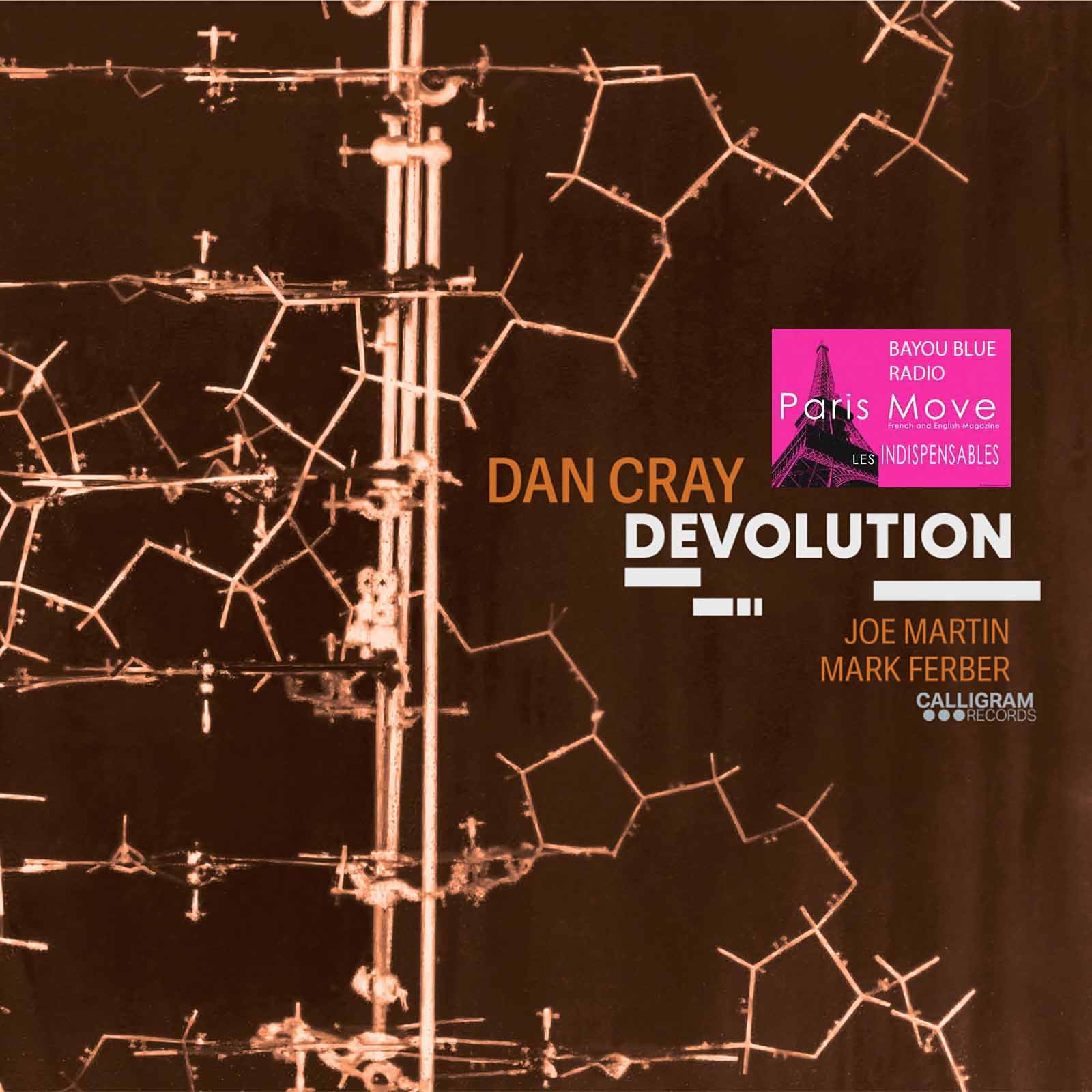
With November just around the corner, the jazz release calendar is looking especially promising. Among the upcoming offerings from Calligram Records, Devolution, the new album by New York pianist and composer Dan Cray, stands out as a particularly rewarding listen. Long in the making, this trio recording brings together intricate compositions, rhythmic vitality and a personal sensibility shaped by some of life’s most consequential experiences. Conceived in 2020, the project was delayed by the pandemic and the unpredictable turns of everyday life before finally being recorded in February 2026 at Samurai Hotel Recording Studio in Astoria, Queens. By then, the music had taken on an added resonance. The death of Cray’s father, his marriage and the birth of his son all helped shape the compositions, reflecting moments when time, memory and one’s understanding of the world can suddenly take on new meaning. Yet Devolution never feels like a musical diary or a collection of personal revelations telling listeners what they should feel. Cray allows experience to find its way into the music without spelling everything out. Emotions become movement, memories take shape as melodies, and private questions emerge through rhythmic patterns and harmonic shifts. Rather than recounting the events of his life, he explores their lasting impact, giving musical form to uncertainty and reflection without forcing them into a tidy narrative.
The piano-bass-drums trio is one of jazz’s most familiar formats, but Cray has little interest in playing it safe. For him, tradition is a starting point, a musical language to build on and reshape. His compositions are carefully constructed and often rhythmically demanding, with the beat doing far more than supporting the melody. Rhythm drives the music, redirects phrases and gives each piece its distinctive character. Bassist Joe Martin and drummer Mark Ferber understand exactly what this approach requires. They are not simply accompanying the pianist through a series of solos; they are active participants in a conversation where any musical idea can change the direction of the performance. Martin provides a constantly shifting foundation, while Ferber adds accents and rhythmic turns that keep the music unpredictable. Cray, meanwhile, resists making the piano the unquestioned center of attention. He leaves room for his collaborators and allows their responses to become part of the music’s larger design. The result is a trio that sounds perpetually in motion, with each composition capable of taking an unexpected turn. Technical mastery is evident throughout, but the real achievement lies in how these musicians bring demanding material to life without sacrificing spontaneity.
“Monkey Trouble,” which opens the album, establishes that approach from the start. Cray’s piano has an assertive, almost percussive edge before the piece settles into a supple 12/8 groove that never loses its forward momentum. The music moves through successive bursts of tension and release, keeping the listener engaged without sacrificing clarity. The melody doesn’t simply float above the rhythm; it works its way through it, pushes against it and draws much of its appeal from those shifting contours. Martin and Ferber do more than hold down the groove. They redirect it, sharpen moments of tension and introduce fresh rhythmic ideas that keep the performance alive. Ferber’s incisive playing near the end gives the piece an exhilarating final push without turning the close into a display of technique for its own sake. From the opening track, it’s clear that the album’s complexity isn’t there for show. It grows out of a desire to sustain several layers of activity without losing the coherence of the whole. You may be drawn in immediately by the groove, then return to notice a bass line that slipped past you the first time or hear how a shift in the piano changes the meaning of what came before. Devolution rewards repeated listening because there’s simply too much going on to take it all in at once.
There is also an unmistakably urban quality to this music, evident in its mix of speed, density and unpredictability. Cray isn’t trying to recreate the noise of New York or turn the city into a musical backdrop. Instead, he captures something of its restless energy, its constant movement and its sudden changes of direction. His compositions often unfold like conversations among people who understand one another without having to explain everything. Melodies provide points of reference, but they rarely stay put. They develop, break apart and return in altered forms as the rhythm shifts the listener’s perspective. Cray offers colors, contours and movements, leaving room for listeners to assemble their own impressions. “The Wolf,” inspired by the restlessness of the child Cray was expecting before his birth, shows how effectively he can turn a personal experience into shared musical energy. An insistent, dark-toned bass line gives the piece an underlying tension, while its groove draws on traditional boogaloo in a distinctly contemporary way. The story behind the composition adds another layer of meaning, but it doesn’t define the music. What emerges is something broader: a feeling of anticipation, agitation and uncertainty that listeners can recognize without knowing anything about the circumstances that inspired it. Music can make an intensely personal experience resonate with others without stripping away what makes it unique.
“The Worst Thing About Losing a Foot” reveals a more introspective side of Cray’s writing. Shifting rhythmic accents and melodic turns give the piece a beguiling ambiguity. Echoes of Nick Drake and the Beatles of the post-Revolver era, particularly “Dear Prudence” and “Blackbird,” surface along the way, but the composition never becomes a game of musical references. Instead, they point to an imagination that extends well beyond jazz. Cray doesn’t define himself by rejecting other traditions, nor does he confuse originality with erasing his influences. He absorbs them and makes them part of his own musical language. Jazz at its best has never been a closed world; its history is built on exchange, adaptation and reinvention. Devolution embraces that legacy without falling into stylistic collage. The references are there, but the music remains unmistakably Cray’s own. Listeners may recognize some of the echoes or simply respond to a melody that feels familiar without knowing why. You don’t need an encyclopedic knowledge of its influences to enjoy the album, though closer listening reveals just how much is happening beneath the surface.
The album’s most quietly affecting moment may be “One Sees Fish,” a ballad dedicated to the memory of Cray’s father. The melody feels familiar almost from the opening notes, yet it retains enough uncertainty to avoid the predictable turns of a conventional ballad. Cray doesn’t illustrate grief or heighten its emotional weight through unnecessary drama. Instead, he lets the music breathe, giving silences and subtle shifts room to speak. The feeling comes through in the way a phrase lingers, hesitates or seems to hang in the air before moving forward. Martin and Ferber give the piano room without fading into the background, lending the piece a quiet depth that allows an individual memory to take on a wider resonance. The result avoids the sentimentality that could easily have crept into such personal material. Music doesn’t have to spell out an emotion to make it felt. “White Linen Castle” shifts the mood, bringing back a livelier energy and featuring a solo by Martin whose agility and full-bodied sound underscore the strength of the trio’s interplay. Loss and remembrance coexist with movement, humor, invention and the obvious pleasure these musicians take in playing together. That emotional range gives the album much of its appeal.
It took me several listens to realize that “Shuffle Montgomery,” one of the album’s most intriguing tracks, was not written by Cray but by Herbie Nichols. That discovery was one of the record’s most satisfying surprises, a reminder of how rewarding it can be to encounter music that doesn’t reveal all its secrets right away. Nichols, whose distinctive writing occupies a singular place in modern jazz, left behind a body of work that resists easy classification. His harmonic and rhythmic language demands a great deal from performers. Playing the notes correctly is one thing; capturing the music’s spirit is another. Cray, Martin and Ferber approach the piece with confidence, preserving its angularity rather than smoothing out its rough edges or making it artificially accessible. Their interpretation fits naturally into the album, as though Nichols’ musical language were extending Cray’s own ideas rather than interrupting the flow of his original compositions. The performance also reveals something about Cray’s understanding of homage: to acknowledge a predecessor without being overwhelmed by his reputation, and to bring an earlier work into the present without turning it into a museum piece. Respect comes through commitment, risk-taking and the ability to make the composition feel alive in the moment. Nichols’ music finds fresh life in an ensemble that gives it a new context without compromising its identity.
The title Devolution might suggest a meditation on decline, regression or disintegration. The music points toward something more complicated. The events surrounding the album’s creation have clearly changed Cray’s perspective, but they have not led him to retreat into himself or draw a neat lesson from life’s difficulties. Instead, his compositions acknowledge the contradictions, disruptions and shifting perspectives that are part of being human. The music doesn’t try to resolve those tensions. It gives them shape and allows them to evolve through the interaction of the instruments. Cray’s writing is demanding without becoming opaque, sophisticated without turning cold, and melodic without taking the easy way out. The trio strikes a balance between compositional precision and interpretive freedom, between carefully built structures and the unpredictability of musicians responding to one another in real time. These pieces could take on another dimension at a major jazz festival, where their rhythmic intensity and sudden changes of direction would make for a compelling live experience. But the album doesn’t depend on the promise of a concert to make its case. Its strengths are already apparent in close listening, which reveals new details with each return.
It would be a mistake to reduce Devolution to a personal album inspired by a handful of life-changing events, or to treat it simply as another demonstration of what a piano trio can do. At its heart is Cray’s ability to turn personal experience into music that remains open-ended, challenging and deeply alive. His writing reflects a thorough understanding of jazz tradition without hiding behind it, while Martin and Ferber give the compositions depth and momentum without sacrificing their individual voices. Together, the three musicians favor conversation over showmanship and collective invention over a succession of individual showcases. The result is an album that earns the listener’s attention rather than demanding it. At a time when music is often consumed in fragments, with the first few seconds expected to determine whether a recording is worth hearing, Devolution restores the pleasure of an album you can return to and continue to discover. Its richness lies not in a parade of technical feats but in an artistic vision that gives equal weight to melody and rhythm, memory and invention, the individual and the collective. This trio has the energy to set a festival stage alight, but also the finesse to hold your attention when you’re listening alone. Devolution is a generous, intelligently crafted album that rewards repeated play and becomes more satisfying the better you know it.
Thierry De Clemensat
Member at Jazz Journalists Association
USA correspondent for Paris-Move and ABS magazine
Editor in chief – Bayou Blue Radio, Bayou Blue News

PARIS-MOVE, October 27th, 2026
Follow PARIS-MOVE on X
::::::::::::::::::::::::
Musicians:
DAN CRAY: piano
JOE MARTIN: bass
MARK FERBER: drums and cymbals
Track Listing:
Monkey’s Trouble
The Wolf
The Worst Thing About Loosing A Foot
One Sees Fish
Shuffle Montgomery
The Owl
White Linen Castle
Forgottens
Jazz Guy
Tracks 1, 2, 3, 4, 6, 7, 8, 9 composed by Dan Cray, Dan Cray BMI
Track 5 composed by Herbie Nichols, Universal Music Corp. BMI
Recorded by David Stoller at Samurai Hotel Recording Studio, Astoria, Queens, NY, February 6, 2026
Mixed by David Stoller Mastered by David Darlington
Layout and Design by Chad McCullough