| Jazz |
The first sound is not a declaration but a suggestion: a trumpet line suspended in air, warm but edged with steel, hovering above a rhythm section that refuses to hurry. The bass settles into a groove that leans ever so slightly forward, while the drums imply momentum without insisting on it. A Fender Rhodes figure glows softly beneath the surface, less accompaniment than atmosphere. Within thirty seconds, the direction is clear. This is music that unfolds rather than announces itself.
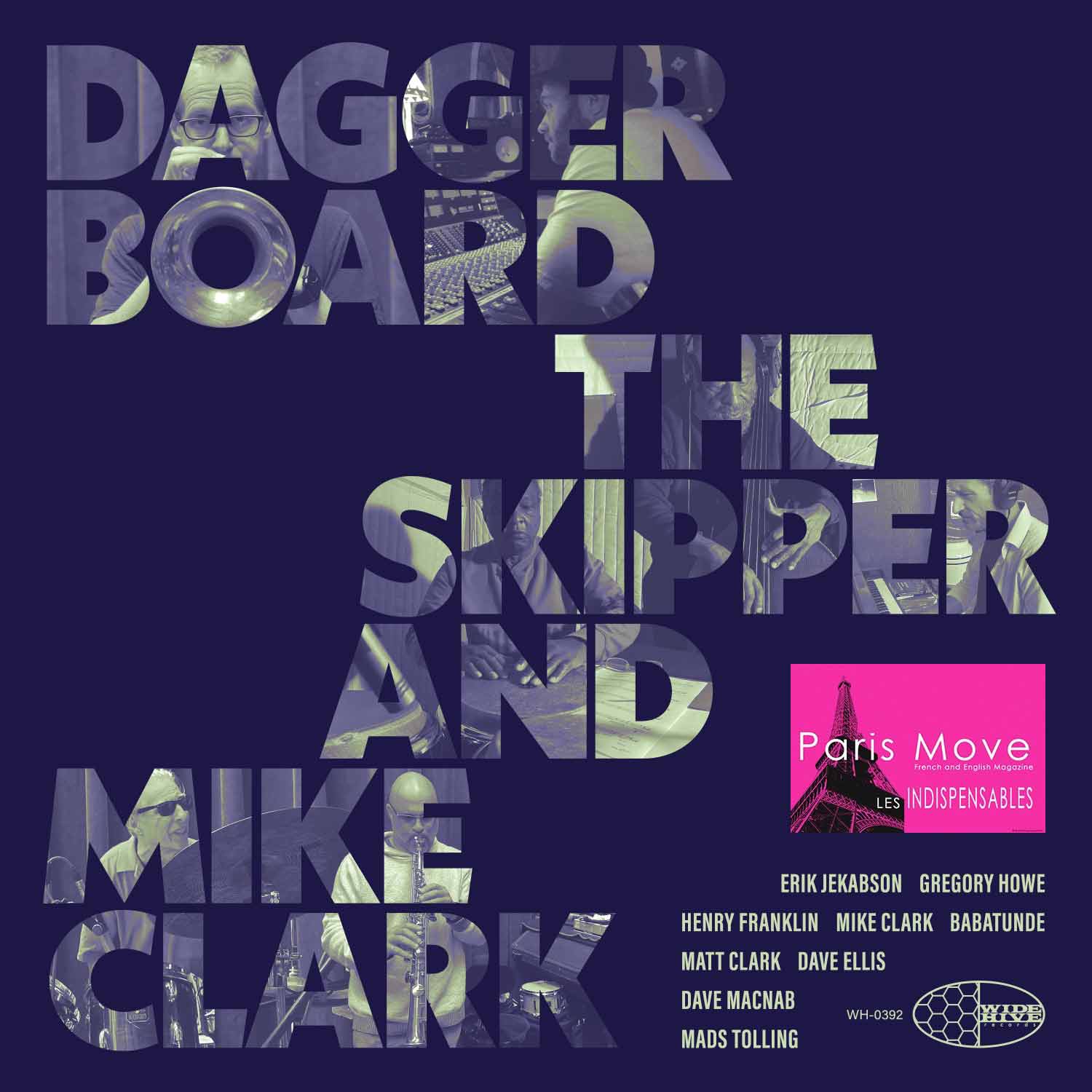
Daggerboard, the collaborative project led by Erik Jekabson and Gregory Howe, does not traffic in spectacle. It builds patiently, deliberately, and by the end of its opening track, the listener understands that the album’s architecture will be one of restraint, texture and slow-burning propulsion.
Jekabson, a Berkeley-based trumpeter who has become a defining presence on the Bay Area jazz scene over the past two decades, plays with a tone that is at once lyrical and investigative. His phrasing often lands just behind the beat, creating a tension that feels conversational rather than confrontational. He has cited Miles Davis as his favorite trumpeter and bandleader, and here the influence is most audible not in imitation but in spirit, particularly the mid-1960s Second Great Quintet era, where space, breath and suggestion mattered as much as velocity. At moments, there are even echoes of Davis’s late-1950s lyricism: trumpet lines that feel sung rather than played.
Yet Daggerboard is no revivalist project. The sonic palette is wider, more textural. The keyboard voicings occasionally shimmer in ways that recall the orchestrated soul sophistication of MFSB, while certain harmonic explorations suggest the electric-era curiosity of Herbie Hancock — not merely the funk immediacy of Head Hunters, but the more atmospheric, exploratory textures of the Mwandishi period. The grooves, meanwhile, carry a hypnotic patience reminiscent of recent releases from Jazz Is Dead, where rhythm becomes both anchor and open field.
If there is a defining signature to Daggerboard, it is this refusal to climax conventionally. The music resists the dramatic swell or virtuosic eruption. Instead, it accumulates detail. A hi-hat pattern subtly shifts emphasis. A bass figure thickens. A secondary horn line enters like a shadow. The effect is immersive rather than explosive, grooves that unfold instead of explode.
Howe’s role in shaping that sensibility cannot be overstated. Founder of Wide Hive Records, he has spent nearly three decades cultivating a catalog that bridges generations. Born in 1969 and raised in Santa Barbara, Howe fell in love with jazz through his father’s record collection. After earning degrees in political science and environmental science from Williams College, he relocated to San Francisco, balancing environmental work with immersion in the city’s vibrant music community. The duality is telling: systems thinking on one hand, artistic intuition on the other.
In the 1990s, drawn to the tactile discipline of analog recording, Howe founded Wide Hive in the Mission District. A self-taught engineer, he approached the studio as both laboratory and workshop, studying techniques with near-archival rigor. By the early 2000s, after relocating to Berkeley, he had embarked on collaborations with formidable figures including Calvin Keys, Roscoe Mitchell, Phil Ranelin, Larry Coryell, Eddie Henderson, Bill Summers, Gary Bartz and Patrice Rushen. His mission gradually crystallized: to create a label that honored jazz history while refusing to fossilize it.
Daggerboard, now in its sixth project iteration, feels like the distilled expression of that philosophy. The metaphor embedded in the name, a daggerboard as the part of a boat that cuts against the current to allow forward motion, is more than poetic. These musicians generate propulsion not by fighting tradition, but by angling against it with precision.
What makes the album particularly compelling is its temporal fluidity. It moves through eras without announcing the transition. There are modal shadows of the 1960s, electric textures that nod to the 1970s, rhythmic elasticity reminiscent of 1980s and ’90s fusion, and a contemporary production clarity that anchors everything firmly in the present. It is as if the most resonant strands of the past fifteen years of forward-thinking jazz have been gathered, distilled and reconfigured through an entirely distinct rhythmic logic.
This is not background music. It demands, and rewards, attention. The more closely one listens, the more the architecture reveals itself: interlocking patterns, tonal shading, the quiet confidence of musicians uninterested in overstatement.
In a year already crowded with ambitious releases, this record stands apart not because it shouts the loudest, but because it listens the hardest, to history, to groove, to space. It feels less like a throwback than a continuation, less like homage than conversation. And if it lingers in the months ahead, as it likely will, it may well be remembered as one of 2026’s most quietly enduring jazz statements, an album that moves against the current while sounding entirely of its time.
Thierry De Clemensat
Member at Jazz Journalists Association
USA correspondent for Paris-Move and ABS magazine
Editor in chief – Bayou Blue Radio, Bayou Blue News
PARIS-MOVE, March 5th 2026
Follow PARIS-MOVE on X

::::::::::::::::::::::::
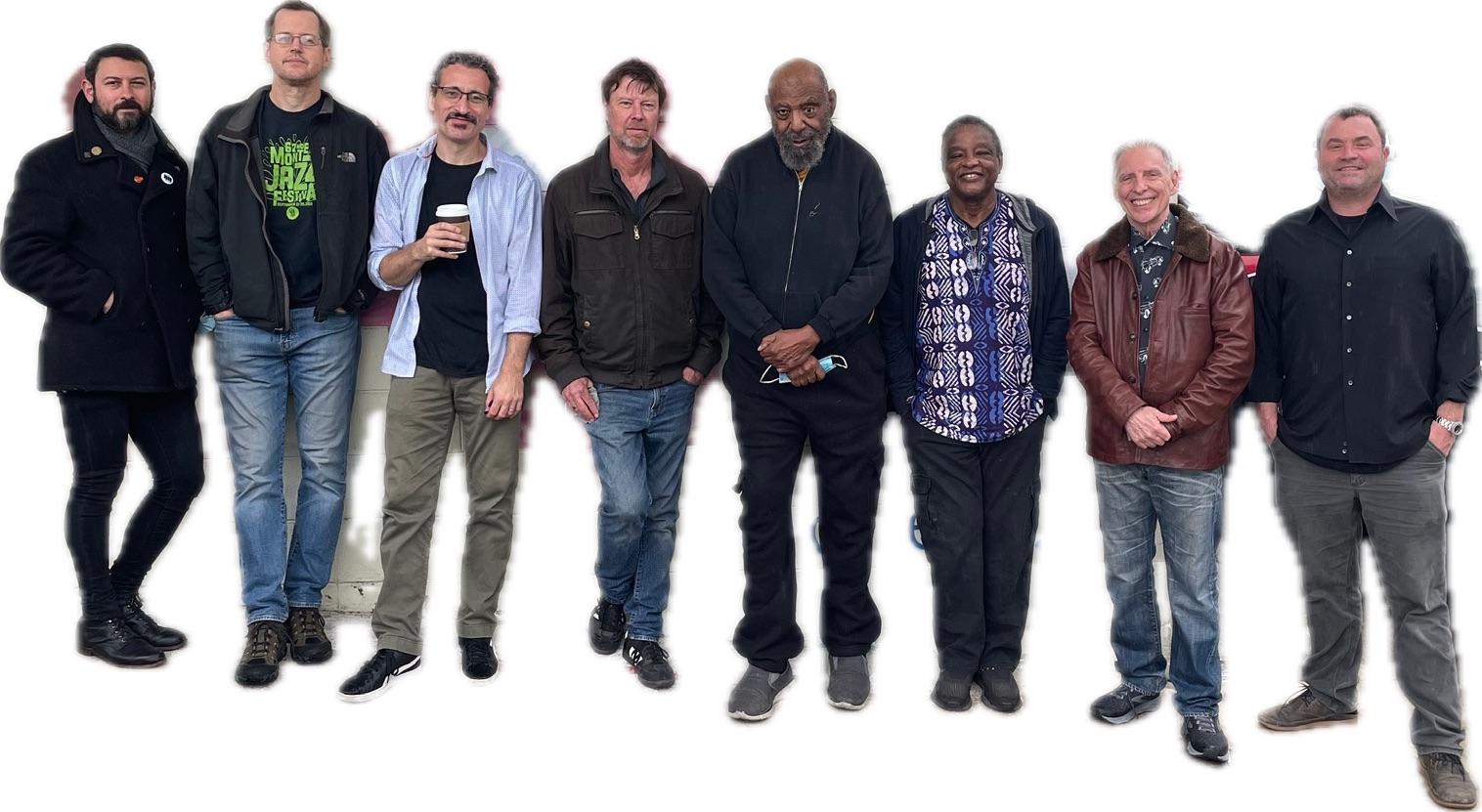
Musicians :
Henry “The Skipper” Franklin: Bass
Mike Clark: Drums (known for Herbie Hancock’s Headhunters)
Erik Jekabson: Trumpet, composer, and arranger
Gregory Howe: Guitar, percussion, and production
Babatunde Lea: Percussion
Matt Clark: Piano
Dave Macnab: Guitar
Dave Ellis: Saxophone
Mads Tolling: Violin
Matt Renzi: Woodwinds
Sheldon Brown: Saxophone
Track Listing:
Desierto De Tabernas
Changing Emphasis
Tanzanian Skies
Runnin’ Into One
Street Sheik
Brother Ranelin
Tranquil Blue
A Pride In The Prairie
Free Lancer
Ruaha Daybreak