| Jazz |
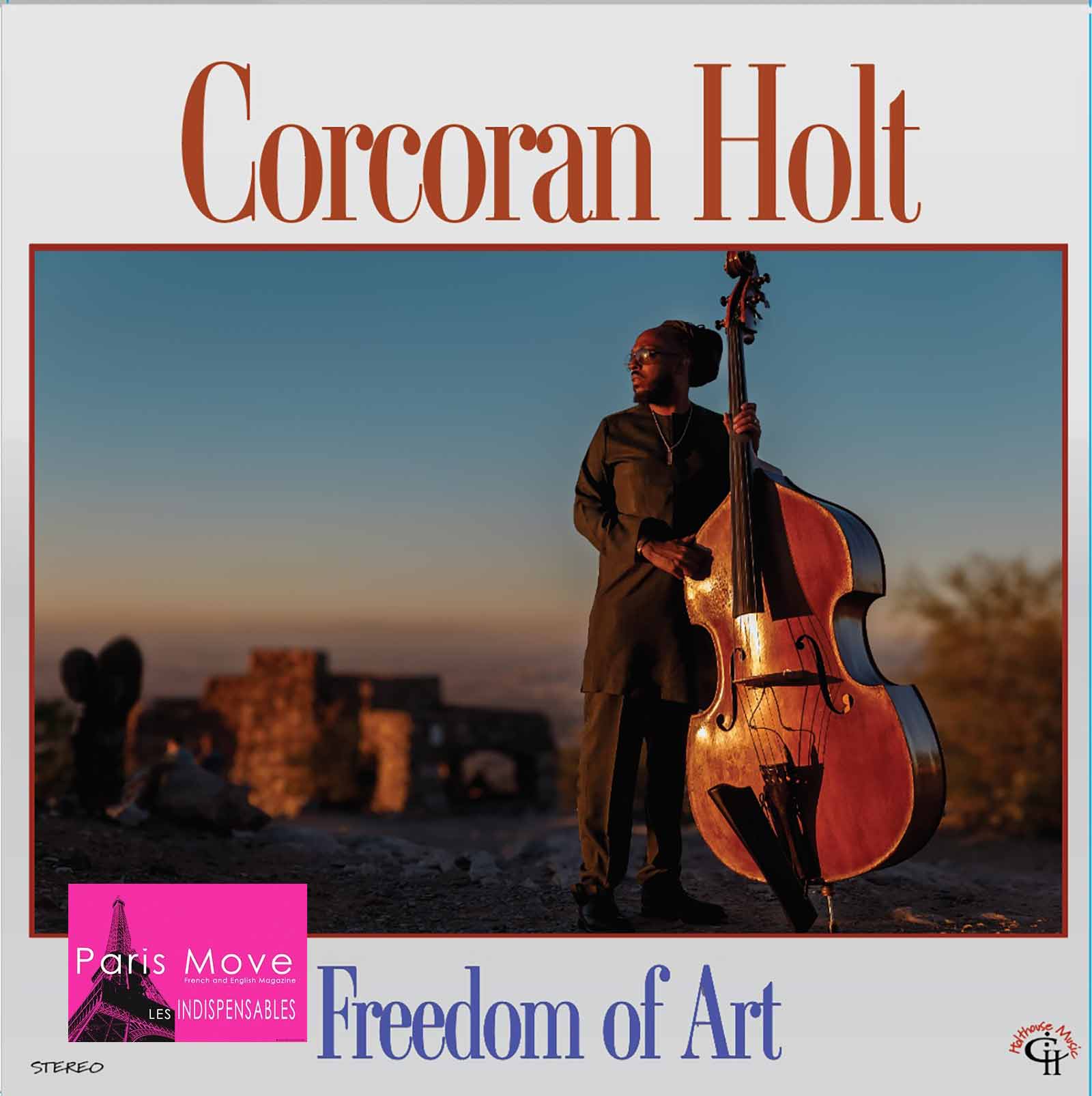
Some albums, from their opening bars, usher the listener into an alternate reality, a place at once immersive and faintly disorienting. That sensation, intoxicating for some, may prove forbidding for others. With his second release, Corcoran Holt unveils a world of formidable complexity, one that aligns itself with the uncompromising creative vision of towering figures such as Maria Schneider. At the heart of the project lies a devotion to family and to the foundational principle that has defined jazz since its inception: freedom itself.
Freedom to think. Freedom to compose. Freedom to shape sound as inquiry, a pursuit not unlike the calling of journalism at its most rigorous. Holt draws from a distinctly urban sensibility, channeling a multiplicity of impressions and emotions into a sonic architecture executed with striking precision. Over the course of his career, he has collaborated with some of jazz’s most respected artists, notably spending significant time alongside saxophonist Kenny Garrett. Freedom of Art feels like a distillation of those experiences, enriched by the personal journey that has unfolded since his 2018 debut, The Mecca.
Resolutely contemporary yet steeped in rock and classical influences, the album carries an almost symphonic breadth. Its expressive force draws unmistakably from the chiaroscuro atmosphere of mid-century film noir, the shadow-drenched tension of postwar cinema in the late 1940s and early 1950s, while navigating the shifting terrain between the 20th and 21st centuries. The result is music that is turbulent yet purposeful, capable of invoking post-bop idioms before veering toward more exploratory terrain.
On one extended composition midway through the album, Holt anchors a slow-building crescendo with a brooding ostinato in the lower register of the bass. The horns enter in staggered intervals, first murmuring in near-unison, then splintering into angular counterpoint. A sudden rhythmic contraction, drums tightening into a clipped, almost martial pulse, gives way to a release of harmonic tension in the piano, whose cascading arpeggios briefly suspend time before the ensemble surges back with renewed urgency. It is in passages like this that Holt’s architectural instincts come into sharp focus: ambition rendered concrete through structure and pacing.
Several compositions serve as deliberate tributes to the jazz lineage Holt both honors and extends. Pianist Benito Gonzalez, a longtime collaborator within the Kenny Garrett Quartet, contributes his characteristic swing and crystalline articulation throughout the recording. On “Flatbush,” one of Gonzalez’s own compositions, pianist and bassist celebrate a musical rapport forged over years of touring. Saxophonist Stacy Dillard delivers solos of notable inventiveness, his phrasing darting between lyricism and sharp-edged abstraction, while trumpeter Josh Evans injects the ensemble with a bright, bracing intensity that cuts cleanly through the denser arrangements.
What ultimately distinguishes Freedom of Art is not only its creativity but its aspiration toward something approaching the absolute, though even that phrase risks abstraction. More precisely, Holt seems intent on crafting music that is less a collection of tunes than a sustained argument about artistic agency. In the liner notes, Southern observes: “This album offers far more than notes and melodies. It presents a collective movement of serious, determined, passionate and joyful artists. Freedom manifests through expressions of love and timeless compositions that illuminate the path forward.” The sentiment feels less promotional than declarative.
Yet the album’s density may challenge even seasoned listeners. Its shifting tonal centers, layered arrangements and refusal to settle into predictable forms demand attention and patience. At times, the sheer abundance of ideas can feel overwhelming, as though Holt is determined to explore every thematic corridor before allowing the listener to pause. That restlessness, however, is inseparable from the record’s vitality.
The late Wayne Shorter, who collaborated with artists ranging from Miles Davis to Weather Report, often spoke of pushing beyond the known boundaries of the form, of approaching music as spiritual exploration and as a generator of meaning. By that measure, Holt appears to embrace a similar ethos. Whether that makes him a spiritual heir to Shorter is ultimately for listeners to decide. What is clear is that Freedom of Art stakes a claim: that jazz, in its most uncompromising form, remains a living argument for imagination, risk and, above all, freedom.
Thierry De Clemensat
Member at Jazz Journalists Association
USA correspondent for Paris-Move and ABS magazine
Editor in chief – Bayou Blue Radio, Bayou Blue News
PARIS-MOVE, February 22nd 2026
Follow PARIS-MOVE on X

::::::::::::::::::::::::
Musicians :
Corcoran Holt – Bass, keyboards, vocals
Stacy Dillard – Tenor & Soprano Sax
Josh Evans – Trumpet
Benito Gonzalez – Piano & Fender Rhodes
Kweku Sumbry – Drums & Djembe
Special Guest: Lewis Nash – Drums
Tracklisting:
1 Theme for Ma 2:14 (Corcoran Holt)
2 Breathe in Peace (Kharyallah) – 9:02 (Corcoran Holt)
3 Transition Blues – 7:22 (Corcoran Holt)
4 Golson Calling – 0:40 (Corcoran Holt)
5 Hello 6:35 (Milt Jackson)
6 Rae Ray 5:50 (Corcoran Holt)
7 Kiss to the Skies 9:31 (Kenny Garrett)
8 Affirmations 0:50 (Corcoran Holt)
9 Kaz 4:01 (Corcoran Holt)
10 Flatbush 5:58 (Benito Gonzalez)
11 Free at 3 0:43 (Corcoran Holt)
12 Ibou & Art 5:24 (Corcoran Holt)
13 Raven’s Call 1:08 (Corcoran Holt)
14 Free 5:28 (Corcoran Holt)
15 To My Dear Ones 2:40 (Corcoran Holt)Ones 2:40 (Corcoran Holt)