| Jazz |
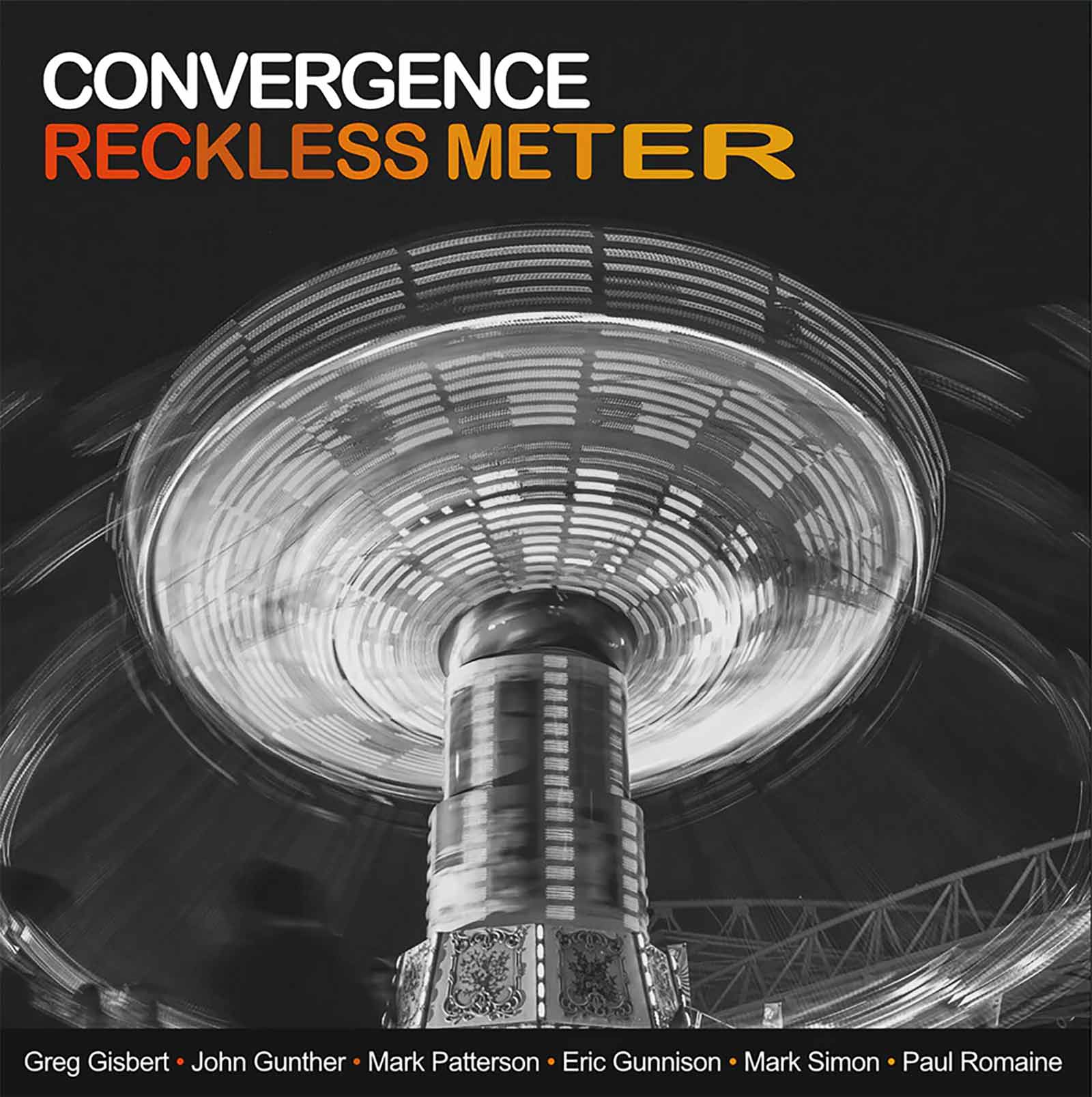
On a gray November morning, as the year edges forward with reluctant, uneven steps toward its close, an album arrived on my desk that felt like a dispatch from another era. At a moment when advance releases for early 2026 are beginning to appear in waves, some ambitious, others predictable, this one stands apart. It is a record steeped in a classic jazz aesthetic, the kind that instantly conjures the grainy chiaroscuro of 1950s film noir. Listening to it is like stepping into a vapor-lit alleyway or slipping into a booth at a late-night club where the smoke curls almost imperceptibly above the brass. It feels as though 2025 itself, unwilling to make a discreet exit, has decided to leave behind one last atmospheric vignette.
This is precisely the kind of album that finds its natural audience at the threshold of the year-end holidays: introspective enough to intrigue seasoned jazz listeners, yet accessible enough to appeal to a broader public. Its compositions, while structurally intricate, are shaped with remarkable clarity. And the musicians, each of them a seasoned craftsman, demonstrate an uncommon ability to summon the past while delivering an interpretation unmistakably anchored in the vocabulary of the twenty-first century. The result is a sonic world where nostalgia is never a gimmick, and modernity never feels forced.
By the second track, the group’s identity emerges with striking precision. The music bridges eras, not through nostalgia, but through architecture. The compositions are forward-facing, built on rhythmic and harmonic ideas that speak directly to contemporary ears. This is jazz that doesn’t simplify itself to seduce; instead, it invites the listener upward, toward structures more complex than those of the opening track. As the album unfolds, one moves from classical melodic frameworks to more modernist constructions, a shift handled with such natural fluidity that almost anyone can find an entry point. The music never panders, never seeks consensus. What holds the listener, ultimately, is the strength of its melodies, the elegance of its arrangements, and the quiet authority of its performers.
The coherence of the album likely stems from a defining fact: the compositions are internal to the group. There is an auteur-like sensibility in their writing, a cinematic vision that feels intentional rather than accidental. One can detect the faint watermark of Henry Mancini, not imitation, but inspiration, a subtle glimmer of that refined orchestral imagination. The result is, quite simply, one of the most enjoyable albums I have encountered this year: surprising without being esoteric, joyful without being naïve, invigorating yet meticulously crafted.
And then there is the matter of longevity. Founded in 1991, the group has spent decades performing across the United States, appearing on NPR’s Toast of the Nation and Jazz Set, and participating in three conferences of the International Association for Jazz Education. Longevity in jazz is never accidental. It speaks to commitment, to curiosity, to the endlessly renewed desire not only to play together but to continue surprising one another. After multiple albums, these musicians still manage to defy expectations, less through reinvention for its own sake than through the quiet self-confidence of artists who know exactly how to expand their vocabulary without repeating themselves.
Their shared musical culture is palpable throughout the album: a classical foundation, an expansive understanding of world music, a fluency in jazz idioms both traditional and contemporary. Pianist Eric Gunnison stands out in particular; his approach, steeped in classical clarity, gives the album a sense of structural grounding. But the surprises are so numerous that cataloging them becomes an exercise in futility. One must listen repeatedly to uncover even a portion of the secrets woven into the arrangements. The solos, each one brilliantly paced and sculpted, propel the music with a lively, almost kinetic energy. It is in these details, the articulation of a phrase or the elegant restraint of a harmonic turn, that experience makes itself unmistakably known.
And so Convergence reveals itself as far more than a name. Over the years, it has become an identity, a philosophy, perhaps even a quiet manifesto: the pleasure of sophisticated listening paired with the desire to remain accessible to audiences beyond the circle of experts. It is a rarity in today’s landscape, jazz that invites without diluting, challenges without alienating.
In a year defined by noise both literal and metaphorical, this album offers something increasingly precious: clarity. Not the sterile clarity of perfection, but the textured, human clarity of artists who listen to one another, who understand the value of subtlety, who know how to let the music breathe. My only hope is that you take as much pleasure in discovering this record as I did, because albums like this do more than accompany a season; they quietly illuminate it.
Thierry De Clemensat
Member at Jazz Journalists Association
USA correspondent for Paris-Move and ABS magazine
Editor in chief – Bayou Blue Radio, Bayou Blue News
PARIS-MOVE, December 2nd 2025
Follow PARIS-MOVE on X

::::::::::::::::::::::::
Musicians :
Eric Gunnison, piano
Greg Gisbert, trumpet & flughorn
Jhon Gunther, saxophones
Mark Patterson, trombone
John & Paul Romaine, drums
Mark Simon, bass
Track Listing :
Big Boot
Springaling
Margaret Clara
It’s One Or Not One
Master Jake
Cauldron
Coyote Moon
Reckless Meter