| Jazz |
The Sound of a Night That Never Ended
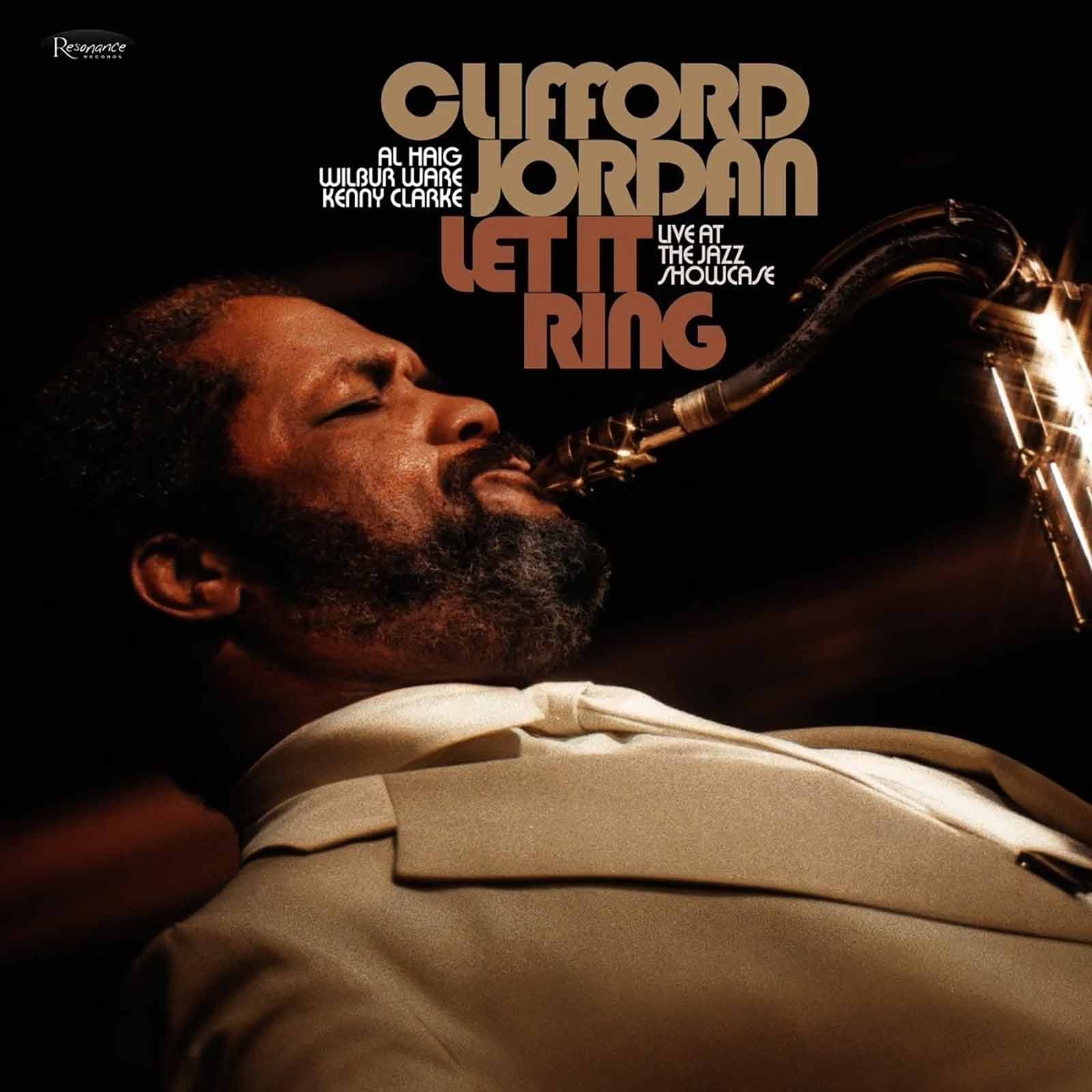
Some recordings have a way of making the past feel startlingly present. Not by concealing their age or disguising the circumstances in which they were made, but by erasing, almost immediately, the distance between the original performance and the person listening today. We are no longer simply hearing an archival recording, carefully recovered, restored, and presented to jazz fans. We are in the room, among the audience, just a few feet from the musicians. The instruments breathe, the sound fills the space, and even the silences seem to carry their own weight. The music comes alive all over again. That is the remarkable effect of *Let It Ring: Live at the Jazz Showcase*, a previously unreleased document of an extraordinary gathering led by saxophonist Clifford Jordan and recorded in Chicago between September 30 and October 4, 1976. The opening track, “The Highest Mountain,” sets the tone immediately. There is something almost cinematic about those first moments: The scene comes into focus, the room gradually reveals itself, and the musicians step into the light. Jordan’s saxophone does not announce itself with a show of force. It establishes a presence. His full, burnished tone seems to spread through the room, combining authority with an uncommon sense of ease. The recording lets us hear the smallest inflections, the grain of the sound, the nuances of his breath. The instruments are not merely arranged across a stereo field. They occupy the same living space, listening and responding to one another.
Much of that immediacy comes from the work done with the original tapes. The restoration does not seem intent on imposing some artificial notion of sonic perfection. Instead, it preserves what makes a live performance feel real: the texture of the instruments, the force of each attack, the dynamic range, the physical presence of the musicians. Al Haig’s piano is clearly defined without being pushed into the background as a mere accompaniment. Wilbur Ware’s bass has depth and weight, while Kenny Clarke’s drumming reveals its remarkable rhythmic subtlety. Jordan remains the central voice, but he never overwhelms the others. That balance is one of the recording’s great strengths. This is not simply four major musicians playing in a Chicago club. It is a conversation among equals, an ensemble whose members know the language intimately but cannot know exactly where the next exchange will lead.
The story behind this meeting is worth revisiting. Founded by Joe Segal, the Jazz Showcase occupies a special place in Chicago’s musical history. In a city whose contribution to jazz is as significant as that of New York or New Orleans, the club became a place of continuity, resilience, and artistic exchange. Its purpose was not simply to provide a stage for musicians passing through town. It helped sustain the conditions that allow a musical community to thrive: a place where artists could work, reconnect, experiment, and be heard. Segal’s commitment to jazz was evident not only in the musicians he booked, but also in his ability to bring artists together in combinations that might never otherwise have happened. That is the spirit in which to understand the gathering of Clifford Jordan, Al Haig, Wilbur Ware, and Kenny Clarke. They came from different generations and followed distinct musical paths, yet their histories intersected in ways that made this encounter especially compelling. Born in Chicago in 1931, Jordan was one of the leading saxophonists of his generation. He came up in the world of bebop and lived through the successive transformations of modern jazz without allowing himself to be confined by any one school. His career reflects an unusual ability to absorb changes in the music while maintaining a voice that is unmistakably his own. His playing has an earthy power and an almost architectural breadth, but it is also marked by a melodic intelligence that keeps it from becoming merely forceful or showy. Al Haig, born in 1924, belonged to an earlier generation. Closely associated with bebop’s formative years, he worked with Charlie Parker, Dizzy Gillespie, and Miles Davis. His playing carries the direct memory of the revolution that reshaped jazz in the 1940s: more complex harmonies, faster tempos, greater freedom in improvisation, and a new emphasis on the individual voice. Kenny Clarke, born in 1914, was an even more foundational figure. A key architect of bebop, he helped shift the rhythmic center of the drum kit away from the bass drum and toward the ride cymbal, fundamentally changing the drummer’s role in the modern small ensemble. Long based in Europe, he remained one of the great innovators in jazz drumming. Wilbur Ware, meanwhile, was deeply rooted in Chicago’s musical tradition. His bass playing brought the group a foundation that was supple, earthy, and remarkably alive.
The fact that these musicians were not a regular working band gives the recording an added dimension. This was not the product of months of rehearsals, a carefully planned tour, or a set list polished through repeated performances. It depended on a different kind of trust: the confidence that comes from knowing a shared musical language inside and out. Each player understood the territory, knew what his partners were capable of, and recognized that the group would have to find its balance in real time. That tension between experience and spontaneity is one of the album’s most rewarding qualities.
In an interview conducted at the time by Ted Panken, Jordan discusses the different voices musicians bring to a performance. The idea is simple, but it goes a long way toward explaining what we hear here: Each player approaches the same piece in his own way, yet the group comes together as a unified whole. It is a concise description of what makes collective improvisation so compelling. Jazz is not about erasing individual identities in the name of some general harmony. It is about bringing those differences into conversation. Every musician retains his freedom, but that freedom becomes meaningful only when it responds to the freedom of the others. The balance is never settled once and for all. It is worked out measure by measure, through musical replies, silences, anticipations, and subtle shifts in rhythm. The quartet’s reading of Thelonious Monk’s “Well, You Needn’t” makes the point particularly well. With its angular melody and unexpected harmonic turns, the composition resists easy treatment. Here, it is never reduced to a vehicle for technical display. Its wit, its eccentricity, and its refusal to follow conventional paths remain intact. Jordan attacks the tune with energy, but never at the expense of clarity. Haig does not try to compete with the saxophone. Instead, he steps in, redirects the momentum, shifts an accent, and offers responses that seem to open unexpected doors in Jordan’s phrasing. Ware and Clarke keep the exchange moving without weighing it down. The pulse is firm, but never stiff. The performance reminds us that swing is about much more than tempo. It is about making time flexible, giving it room to move and breathe.
That rapport is all the more striking because the repertoire ranges across several periods of jazz history. “The Highest Mountain,” “Now’s the Time,” “Ornithology,” “Confirmation,” “Blue Monk,” “Stella by Starlight,” “Lush Life,” and “Don’t Get Around Much Anymore” create a musical landscape in which standards, modern compositions, and the legacy of bebop meet and speak to one another. Yet there is nothing museum-like about these performances. The tunes are not lined up to illustrate a chronology. They are treated as living material, as familiar territory that still offers room for discovery. The presence of Charlie Parker’s “Now’s the Time” underscores how deeply bebop shaped Jordan’s musical thinking. But that lineage never turns into imitation. Jordan knows the language inside and out, yet he speaks it in his own voice. His phrasing has a breadth and density that reflect the evolution of jazz beyond the first bebop revolution. He is not rejecting the past; he is finding new ways to make it speak. His music occupies that particularly fertile space between inheritance and independence: close enough to the founders to understand what they accomplished, but free enough to avoid simply repeating their formulas.
That perspective helps explain the recording’s place in jazz history. By 1976, the music was undergoing profound changes. The preceding years had brought the rise of electric jazz, new forms of fusion, free-jazz experimentation, and encounters with musical traditions from around the world. The landscape had become broader and more fragmented, sometimes harder to define. In that context, hearing Jordan play alongside Haig and Clarke should not be mistaken for a nostalgic return to some imagined golden age. That would be too easy, and it would miss the point. What this music demonstrates is that tradition remains vital when it is willing to engage with the present. Bebop is not a relic being carefully preserved here. It is a musical language that experienced players continue to reshape.
Jordan’s own career reinforces that idea. His story is rooted in Chicago, but it also reflects the wider movement of American jazz, particularly through New York and the international scene. He worked across hard bop and post-bop, played in important ensembles, and built a recording career that was never limited to the major labels. His involvement with Strata-East, the independent label founded by musicians, also reflected a commitment to artistic independence. That cultural and economic history is not separate from his music. It reminds us that jazz is also a practice of freedom in an industry where the conditions of production, distribution, and recognition have never been neutral.
But the real argument of this recording is made in the music itself. Its importance lies not only in the gathering of four major names or in the historical value of tapes that remained unreleased for decades. It lies in what these musicians accomplish together. And it is probably in “‘Round Midnight” that their chemistry reaches its most affecting expression. Thelonious Monk’s composition is among the most recognizable and revealing works in the jazz repertoire. Its melody seems to carry a particular kind of loneliness, a melancholy that never quite resolves. Countless musicians have tried to uncover its beauty, sometimes at the risk of making it too polished, too familiar, or too predictable. Jordan takes another route. He allows the melody to settle, gives it room to breathe, and gradually leads it into more introspective territory. His saxophone sounds almost conversational, as if he is telling us something that cannot quite be put into words. The performance has a distinctly narrative quality. It feels as though a scene is unfolding before us, with images appearing and fading as the phrases take shape.
Haig’s piano gives the interpretation much of its depth. He does more than outline the harmony: He opens up possibilities, introduces shadows, and suggests new directions without forcing a particular reading. Ware’s bass holds the music together with a reassuring presence that never becomes restrictive. Clarke, meanwhile, seems to understand that the power of this performance depends as much on what he leaves out as on what he plays. His drumming does not try to fill every available space. It gives that space its shape. The result is deeply moving precisely because it avoids easy effects. The music unfolds with nothing to fall back on but the musicians’ ears and instincts, and its vulnerability only makes it more powerful.
This version of “‘Round Midnight” has a cinematic quality, but not because it seems to accompany a film we already know. It creates its own images. Night is not simply a mood laid over the composition; it becomes part of the sound itself. Jordan’s phrases briefly illuminate certain spaces before allowing them to slip back into darkness. The melody returns like a memory we recognize but cannot quite hold on to. It is rare for an interpretation of such a familiar standard to feel this fresh. Jordan is not trying to reinvent Monk for the sake of novelty. He is reminding us that great compositions are never exhausted by their best-known performances.
Billy Strayhorn’s “Lush Life” reveals another side of Jordan. The piece demands close attention to the melodic line, to breath, and to the way its harmonies suggest disillusionment and regret. Jordan brings to it a restrained lyricism, never lapsing into sentimentality. His saxophone has the rare ability to give a note real weight without overplaying it. He knows when to extend a phrase and when to let it go unfinished. The music seems to exist in the delicate space between what is said and what remains unspoken. A similar sensitivity comes through in “Stella by Starlight,” where the quartet’s ease never obscures the subtleties of the composition. Ware’s contribution deserves special attention. In discussions of jazz, the bass is often treated primarily as a rhythmic and harmonic foundation. Here, it is much more than that. Ware has a way of bringing each note to life, giving the pulse an almost physical weight while still allowing the ensemble to breathe. His playing reminds us that the bass does not simply keep time. It helps shape time. It can propel the music, hold it back, redirect it, and sometimes take it somewhere unexpected. Clarke, working alongside him, does not merely support the momentum. He continually changes its perspective. His use of cymbals, snare, and rhythmic accents is remarkably economical. He knows how to intervene without taking over, how to create tension without making the music feel heavy. The conversation between bass and drums is one of the album’s great pleasures. The four closing tracks on the second disc, featuring the trio without Jordan, allow us to hear that musical rapport from another angle. With the saxophonist no longer in the foreground, Haig, Ware, and Clarke settle into a different kind of balance. This is more than a bonus at the end of the album. It reveals what has been happening beneath Jordan’s lead: a rhythmic and harmonic framework that is fully capable of standing on its own. “Well, You Needn’t” takes on a different kind of mobility; “‘Round Midnight” becomes more intimate. “Ornithology” and “All the Things You Are” show how easily these musicians can sustain and redirect the energy without a soloist at the center of the arrangement. The trio performances do not simply add extra material. They broaden the picture and reveal just how deeply these three musicians understand one another.
Joe Segal’s archival work deserves recognition, too. Jazz has always had a precarious documentary history. Important concerts were never recorded; others disappeared on poorly stored tapes, in private collections, or in archives whose histories remain uncertain. Clubs were often the places where the most important music happened, but the economic realities of running those venues did not always allow for a lasting record of what took place. Recovering performances like these does more than add new titles to collectors’ shelves. It restores a part of jazz life as it actually unfolded, beyond the studio albums that have come to shape the music’s official history.
Segal’s role was essential. By preserving these recordings and making them available, he helped safeguard a history that cannot be reduced to individual careers. What returns to us are the encounters, the places, the circumstances, and the moments of artistic freedom. Panken’s interview with Jordan and Ware adds another valuable dimension. It puts the music back into its human context without trying to explain it away. The musicians’ words deepen our understanding of what we hear, but they never claim to replace the listening experience. That distinction matters. Historical documents can help us understand the music. They should never get in the way of hearing it.
What stands out by the end of the recording is how little interest these musicians have in nostalgia. They are not trying to reconstruct a vanished era, much less prove that they belonged to some supposedly superior age of jazz. They are simply playing. They take chances, listen closely, and respond to one another in real time. Their experience is not a refuge; it is a resource. Tradition is not invoked as an authority that closes the conversation. It becomes a starting point for invention. That may be why the recording feels so fresh. It does not tell us that jazz was better in the old days. It reminds us of what remains alive and essential in the music: the possibility of turning individual freedom into a shared experience.
“Let It Ring: Live at the Jazz Showcase” is therefore much more than another handsome archival release in the growing collection of rediscovered jazz recordings. It is a document of exceptional musical value, but also a lesson in the art of being present. Clifford Jordan is heard here at the height of his maturity, both an heir to bebop and an artist fully engaged with his own time. Haig, Ware, and Clarke are not simply backing him in the conventional sense. They are creating a musical space in which every voice retains its identity. The gathering brought together by Joe Segal takes on an almost exemplary significance. It shows what a club can accomplish when it does more than book musicians-when it actively creates the conditions for them to meet.
I keep coming back to “The Highest Mountain,” and to that first sensation of sitting in the club, close enough to hear the musicians breathe. Perhaps that is the recording’s deepest achievement. Beyond the sound quality, the historical importance of the tapes, and the stature of the players, it restores an experience that time might otherwise have erased: the feeling of music being made right in front of us, in the moment, with nothing guaranteed and nothing predetermined. And when “‘Round Midnight” comes around again, with its enduring melancholy and shifting shadows, it becomes clear that those Chicago nights do not belong only to the first days of October 1976. They begin again every time we press play. For a moment, the past is no longer somewhere far away. It is right here. And jazz, true to its promise, starts speaking all over again.
Thierry De Clemensat
Member at Jazz Journalists Association
USA correspondent for Paris-Move and ABS magazine
Editor in chief – Bayou Blue Radio, Bayou Blue News
PARIS-MOVE, November 23rd, 2026
Follow PARIS-MOVE on X
::::::::::::::::::::::::
Musicians :
Clifford Jordan – tenor saxophone
Al Haig – piano
Wilbur Ware – bass
Kenny Clarke – drums
CD:
DISC ONE
1. The Highest Mountain (3:35)
2. Well, You Needn’t (8:35)
3. ‘Round Midnight (7:41)
4. Now’s the Time (9:02)
5. Holy Land (5:39)
6. Lush Life (6:56)
7. Star Eyes (8:47)
8. Blue Monk (7:53)
DISC TWO
1. Don’t Get Around Much Anymore (8:25)
2. Cal Massey (5:02)
3. Stella By Starlight (5:17)
4. Confirmation (7:44)
5. Well, You Needn’t (7:15)
6. ‘Round Midnight (7:28)
7. Ornithology (4:54)
LP :
SIDE A
A1. The Highest Mountain
A2. Well, You Needn’t
A3. ‘Round Midnight
A4. Now’s The Time
SIDE B
B1. Holy Land
B2. Lush Life
B3. Star Eyes
B4. Blue Monk
SIDE C
C1. Don’t Get Around Much Anymore
C2. Cal Massey
C3. Stella By Starlight
C4. Confirmation
SIDE D
D1. Well, You Needn’t (Trio)
D2. ‘Round Midnight (Trio)
D3. Ornithology
D4. All the Things You Are