
| Latin Jazz |
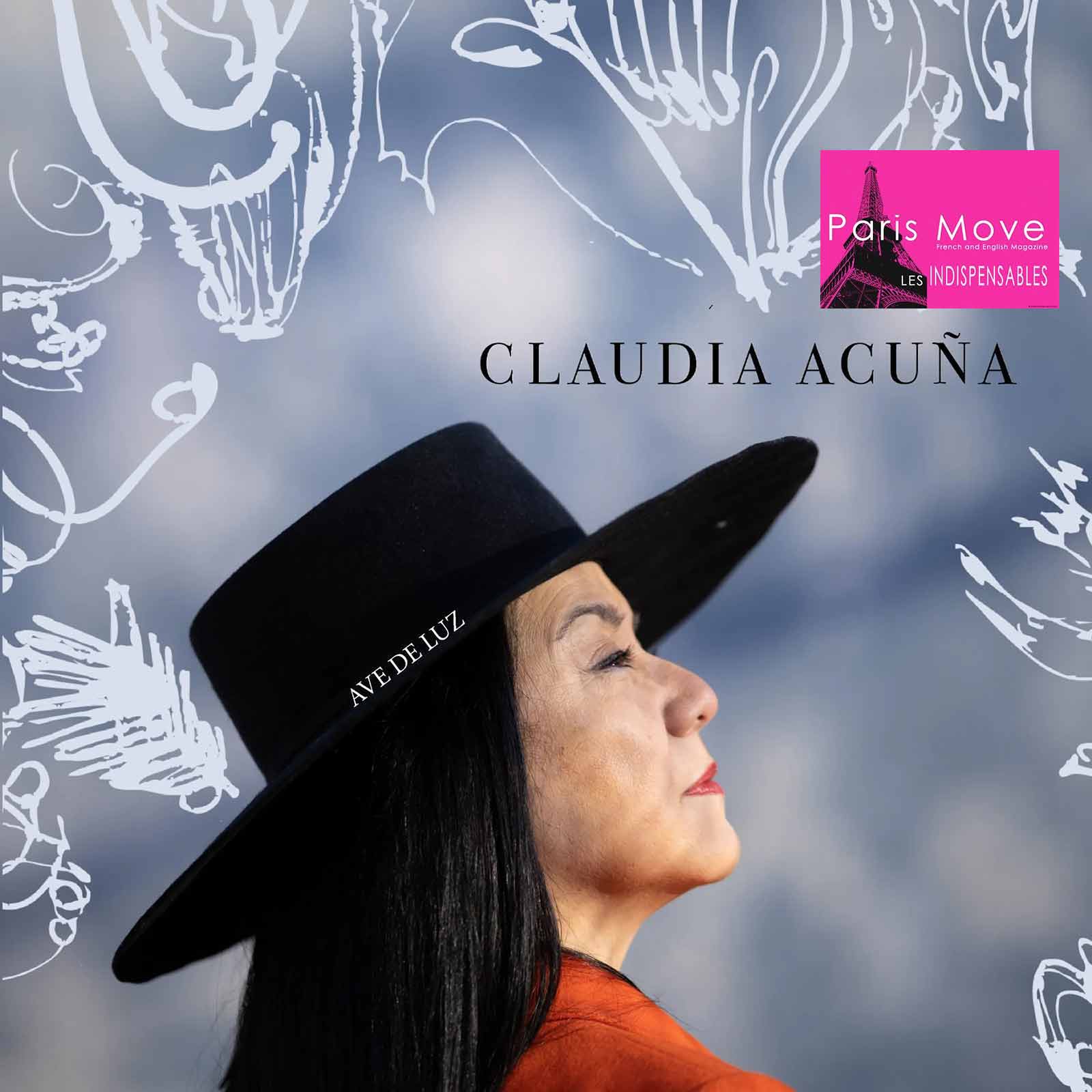
Summary: Ave de Luz: Chilean Jazz & Soul finds Claudia Acuña at the height of her artistry, blending Chilean folk traditions with contemporary jazz through breathtaking vocal performances and elegant arrangements. This in-depth review explores the album’s emotional depth, cultural significance, and why it stands among the most compelling vocal jazz releases of recent years.
Claudia Acuña’s Ave de Luz Is More Than an Album. It Is an Invitation to Listen Differently
Some musical discoveries arrive with tremendous publicity. Others appear almost unnoticed, quietly waiting for the right listener to stumble upon them. More often than not, it is the latter that leave the deepest impression. Free from expectations, marketing campaigns, or preconceived opinions, they allow us to experience something increasingly rare in today’s musical landscape: genuine surprise. That was precisely my encounter with Ave de Luz: Chilean Jazz & Soul, the latest recording by Chilean vocalist Claudia Acuña.
Until that first listen, I knew virtually nothing about her. No biography. No discography. No critical reviews. No recommendations from friends or fellow music lovers. There was simply an album title and the curiosity to press play.
Looking back, I realize that ignorance became one of the greatest gifts a listener could hope for. Too often we approach music armed with information before emotion has had the opportunity to speak. We read interviews, compare reviews, study production credits, and examine an artist’s career long before hearing the first note. While knowledge undoubtedly enriches appreciation, it can also shape expectations before the music has the chance to reveal itself on its own terms.
I have always believed the opposite approach possesses its own quiet wisdom. Music should first be felt. Only afterward should it be understood. That philosophy guided every moment of my first encounter with Ave de Luz. Rather than searching for meaning immediately, I allowed myself to be immersed in the atmosphere. Reflection could come later. The emotional experience deserved to exist before intellectual analysis began.
Within moments, it became clear that this would not be ordinary listening. Although I speak virtually no Spanish, language quickly became irrelevant. When words are inaccessible, the ear naturally turns toward everything else. The human voice ceases to function merely as a vehicle for lyrics and instead becomes another instrument, one capable of expressing emotion with extraordinary precision. This is exactly where Claudia Acuña reveals her greatest strength.
Her voice possesses that rare quality shared by only a handful of truly memorable singers. It is immediately recognizable, yet impossible to reduce to simple technical descriptions. Warm without becoming sentimental. Powerful without ever sounding forceful. Delicate without sacrificing authority. There is remarkable control throughout her performances, but even more impressive is the emotional intelligence that guides every phrase.
Many exceptional vocalists impress listeners with range, volume, or virtuosity. Claudia Acuña chooses another path altogether. She convinces. Every note appears motivated by feeling rather than technique. Every pause carries dramatic weight. Every breath contributes to the unfolding narrative. She never sings to demonstrate what she can do. She sings because every sentence appears to carry something worth saying. That distinction changes everything.
Listening to her often feels less like attending a concert than sitting across from someone recounting deeply personal memories. She inhabits every lyric with remarkable sincerity, creating the impression that each song is unfolding for the very first time. It is an approach rooted as much in storytelling as in vocal performance, transforming each composition into something intimate and profoundly human. Few singers possess this ability. Even fewer sustain it across an entire album.
As the record unfolded, another realization emerged. I struggled to remember another Spanish language vocal performance that had affected me with comparable dramatic intensity. This observation has nothing to do with language itself. Spanish possesses immense musical richness and has produced extraordinary singers across countless genres and generations. Rather, it speaks to Acuña’s singular interpretive gifts. Her performances transcend vocabulary. She communicates directly through tone, pacing, silence, and emotional presence.
Even listeners unable to understand every lyric can follow the emotional arc of each song almost instinctively. That is the mark of exceptional artistry. Curiosity inevitably followed admiration.
Who was Claudia Acuña? The answer reveals an artist whose career reflects both geographical movement and unwavering cultural identity. Born in Santiago, Chile, Acuña eventually established herself in New York City, one of the world’s great centers for jazz innovation. Many musicians who relocate to international cultural capitals gradually soften the characteristics that distinguish them from their peers. Acuña has done precisely the opposite.
Rather than abandoning her Chilean heritage, she has allowed it to become the foundation of an unmistakably personal musical language. That balance between roots and exploration defines Ave de Luz. It is unmistakably informed by contemporary jazz, yet equally shaped by South American traditions, Chilean folklore, poetic sensibility, and a profound respect for storytelling. None of these influences compete with one another. Instead, they coexist naturally, producing music that feels remarkably cohesive.
Perhaps this explains why the album never sounds like an exercise in stylistic fusion. Fusion, after all, has become one of the most overused concepts in modern jazz. Artists frequently combine traditions simply because they can, producing technically impressive works that nevertheless struggle to establish genuine identity.
Ave de Luz follows a very different philosophy. Its various influences never feel assembled. They feel inherited. That distinction may appear subtle, yet it fundamentally changes the listening experience.
The album does not present Chilean music through the lens of American jazz, nor does it merely introduce jazz harmonies into South American folk traditions. Instead, it allows both musical worlds to exist naturally within the same artistic identity. The result feels less like a collaboration between genres than the authentic voice of someone who belongs comfortably to both. This authenticity becomes particularly meaningful within the broader landscape of Latin American music.
International audiences are generally familiar with Cuban rhythms, Brazilian harmonies, Argentine tango, Mexican traditions, and increasingly the diverse sounds emerging from Colombia. Each of these countries has contributed enormously to global musical culture, earning recognition that is both deserved and well documented.
Chile, however, remains comparatively underrepresented in many international conversations about Latin American music, particularly within jazz. That absence is unfortunate. Chile possesses an extraordinarily rich artistic heritage shaped by poetry, political history, indigenous traditions, and generations of musicians who have consistently sought dialogue between folklore and contemporary expression. Yet outside South America, relatively few Chilean jazz artists have achieved widespread recognition.
Claudia Acuña stands among those who deserve far greater visibility. Her work reminds listeners that Latin America is not a single musical identity but an extraordinary collection of distinct cultures, each possessing its own history, emotional vocabulary, and artistic traditions. To speak of “Latin music” as though it were a unified style is to overlook countless regional voices that continue to shape contemporary music in profoundly different ways.
Ave de Luz quietly challenges those assumptions. Rather than announcing its cultural significance through grand gestures, it simply invites listeners into a deeply personal world where jazz becomes a meeting place for memory, migration, heritage, and imagination. Perhaps that is why the album feels so timeless. It never attempts to impress through novelty alone. Instead, it offers something infinitely more difficult to achieve. It offers honesty.
Where the Voice Becomes the Story
One of the most remarkable achievements of Ave de Luz lies not simply in the quality of its compositions, but in the way every musical element exists in service of a larger narrative. This is not an album built around vocal virtuosity for its own sake, nor is it an instrumental showcase that merely happens to feature a singer. Instead, everything feels carefully balanced. Every arrangement, every instrumental color, every moment of silence appears designed to support the emotional architecture of the songs.
That sense of balance has become increasingly uncommon.
Contemporary jazz often finds itself pulled between two extremes. On one side are recordings that celebrate astonishing technical ability, where musicians seem intent on demonstrating everything they know. On the other are productions so minimalist that they risk becoming emotionally distant. Ave de Luz occupies a far more compelling middle ground. It is sophisticated without becoming inaccessible, refined without sacrificing spontaneity, and emotionally generous without ever slipping into sentimentality.
Perhaps the album’s greatest strength is its remarkable understanding of space. Space is one of music’s least appreciated qualities. It cannot be measured in notes or tempos, yet it often determines whether a performance merely sounds beautiful or truly breathes. Throughout Ave de Luz, silence is treated as an instrument in its own right. The musicians understand that emotion often resides not only in what is played but also in what is deliberately left unsaid.
The result is a recording that feels astonishingly open. Every instrument occupies its own natural place within the soundscape. Nothing competes unnecessarily for attention. Instead, the arrangements create an atmosphere in which each musical voice can emerge with clarity before gently receding into the collective conversation. For listeners who appreciate high-quality recordings, this is particularly rewarding.
The production never overwhelms the performances with excessive polish. Instead, it embraces transparency. The piano resonates with warmth rather than brilliance. The bass retains its wooden character and physical presence. Percussion breathes naturally, preserving both texture and dynamic nuance. Acoustic instruments sound unmistakably acoustic, reminding us that genuine musical intimacy often depends less on technological perfection than on honest recording. The engineering deserves recognition precisely because it avoids drawing attention to itself.
In an era when many recordings are compressed into relentless loudness, Ave de Luz allows dynamics to flourish. Soft passages remain genuinely soft. Crescendos emerge organically. Instruments possess air around them. The recording invites attentive listening rather than demanding immediate impact. Audiophiles will recognize another quality that distinguishes this album. Its soundstage possesses remarkable depth.
Rather than presenting music as a flat wall of sound, the recording creates a convincing sense of dimension. The musicians appear to inhabit a real acoustic environment. Claudia Acuña’s voice occupies a central position, yet never dominates unnaturally. Instead, it interacts with the ensemble almost conversationally, moving within the musical landscape rather than floating above it.
This subtle realism contributes enormously to the album’s emotional power. One gradually forgets the recording process altogether. The sensation becomes one of sharing the same room as the musicians. At the center of everything remains Claudia Acuña herself.
To describe her simply as a jazz singer would be insufficient. She is, above all else, an interpreter. There is a profound difference. A singer performs melodies. An interpreter reveals meanings.
Throughout Ave de Luz, Acuña consistently chooses emotional truth over decorative embellishment. Her phrasing displays remarkable patience. She allows melodies to unfold naturally, resisting the temptation to fill every available space. Her restraint becomes one of her greatest expressive tools. Listening closely, one notices another extraordinary characteristic. She understands the dramatic value of timing.
A phrase may arrive a fraction behind expectation, creating gentle tension before resolving naturally. A sustained note lingers just long enough to deepen its emotional impact. A whispered conclusion often proves more devastating than any soaring climax. These are not accidental choices. They reflect decades spent understanding not only music but human communication itself. The finest singers often resemble accomplished actors. Their objective is not simply to deliver lines accurately but to inhabit every emotional circumstance those lines contain. Claudia Acuña achieves precisely that.
Her performances possess an unmistakable theatrical dimension, though never in the sense of exaggeration. Rather, she understands drama in its classical meaning: the art of revealing genuine human experience through carefully measured expression.
That distinction becomes increasingly apparent as the album progresses. One begins to anticipate not vocal acrobatics but emotional discoveries. Every song becomes another chapter. Every interpretation introduces another perspective. In this respect, Ave de Luz belongs to a lineage of vocal jazz that values narrative above spectacle. It recalls an era when singers trusted listeners enough to embrace subtlety. Rather than overwhelming audiences with continuous intensity, they understood that intimacy often leaves the deepest impression. Acuña clearly shares that philosophy.
The richness of the arrangements contributes significantly to this effect. They never function merely as accompaniment. Instead, they become active participants in the storytelling. The ensemble demonstrates remarkable discipline throughout the recording. Individual musicians resist unnecessary displays of virtuosity, choosing instead to serve the emotional character of each composition. Such restraint requires tremendous confidence. It is often more difficult to play exactly what a song requires than to demonstrate everything one is capable of performing. This ensemble consistently chooses wisdom over excess. That choice elevates the entire recording.
As the album unfolds, instrumentation evolves with remarkable fluidity. Some compositions embrace greater harmonic density, while others remain almost disarmingly sparse. These changing textures prevent monotony while reinforcing the emotional trajectory of the record.
Equally fascinating is the natural movement between Spanish and English lyrics. Rather than interrupting continuity, the two languages coexist effortlessly. Even listeners unfamiliar with Spanish quickly discover that emotional communication extends far beyond literal comprehension. Melody, rhythm, articulation, and vocal color convey meanings that translation alone could never capture.
This realization encourages a different way of listening. Instead of asking what every word means, one begins asking how every phrase feels. That shift transforms the experience. Music returns to its oldest function. Before it became entertainment, music was communication. Before it became commerce, it was ritual. Ave de Luz quietly reminds us of that forgotten heritage.
The album also illustrates something increasingly important in today’s musical landscape. Diversity is not achieved merely by assembling influences from different cultures. Authenticity emerges when those influences genuinely belong to the artist telling the story. In Claudia Acuña’s case, Chilean folklore, contemporary jazz, North American improvisation, Latin American rhythms, poetry, and personal history do not appear as separate ingredients mixed together for novelty. They are simply different facets of one artistic identity. Perhaps that explains why nothing feels forced. Nothing sounds calculated. Nothing appears designed to satisfy market expectations about what “world music” or “Latin jazz” should resemble.
Instead, every musical decision seems guided by a far simpler question. Does it tell the story honestly?
Again and again, the answer is yes.
By the time the album reaches its emotional center, the listener realizes something unexpected. This is no longer merely an enjoyable jazz recording. It has become a conversation. One conducted across languages, continents, memories, and traditions. Few albums accomplish that with such quiet confidence. Even fewer make it appear so effortless. It is the kind of artistry that rarely announces itself loudly. Instead, it earns admiration slowly, one carefully shaped phrase at a time.
Songs That Carry a Homeland
By the time Ave de Luz reaches its second half, it becomes increasingly clear that this is not an album built around isolated highlights. There are no obvious commercial singles competing for attention, no dramatic shifts designed merely to surprise the listener. Instead, the record unfolds with remarkable coherence, each composition enriching the next, each emotional chapter preparing the ground for what follows. This sense of continuity is one of the album’s greatest achievements.
Rather than asking listeners to consume individual tracks in isolation, Claudia Acuña invites them to experience the recording as a complete artistic statement. In today’s streaming culture, where playlists often replace albums and songs are routinely separated from the context in which they were created, Ave de Luz feels almost quietly rebellious. It asks something that modern listeners are rarely encouraged to offer. Time. Attention. Patience. The reward for granting those three things is considerable.
Among the album’s most immediately engaging compositions is “Chingalacachingal.” At first encounter, its rhythmic vitality may suggest a celebration, yet beneath its inviting musical surface lies one of the record’s most direct emotional statements. Claudia Acuña has described the song as an expression of hope for exhausted hearts, a meditation on peace, compassion, and the universal dignity every human being deserves.
Those themes could easily have become heavy handed. Instead, the music gives them extraordinary lightness. The rhythm never trivializes the message. Rather, it reminds us that joy itself can become an act of resistance, particularly in uncertain times. There is generosity throughout the performance, a refusal to surrender optimism despite the complexities of the world it quietly acknowledges. It is a song that speaks as much to the present moment as to timeless human aspirations.
Another deeply affecting composition is “Viento del Sur,” or “South Wind.” Its emotional landscape feels entirely different. Where “Chingalacachingal” reaches outward toward humanity, “Viento del Sur” turns inward, exploring memory, belonging, and the complicated experience of carrying one’s homeland across continents. This is a subject that resonates far beyond Chile. Every culture has known migration. Every generation has experienced departures that transformed families forever. Some people leave by choice. Others leave because history leaves them no alternative.
Whatever the reason, distance creates a unique emotional condition. Home gradually becomes less a physical location than an internal geography, something carried quietly within oneself regardless of where life eventually unfolds. Claudia Acuña communicates that feeling with extraordinary sensitivity. Even listeners unfamiliar with the Spanish language instinctively understand the emotional landscape. Nostalgia does not require translation. Neither does longing.
Perhaps nowhere is the album’s artistic ambition more fully realized than in “Piecesitos de Niño.” The composition draws inspiration from the poetry of Gabriela Mistral, one of Chile’s greatest literary figures and the first Latin American writer to receive the Nobel Prize in Literature. Mistral devoted much of her work to childhood, education, grief, compassion, and human dignity. Her poetry possesses remarkable simplicity while carrying extraordinary emotional depth, qualities that make it particularly receptive to musical interpretation.
Rather than merely setting the poem to music, Claudia Acuña chooses a far more imaginative approach. The spoken contribution by actress Paulina García introduces another dramatic dimension, transforming the composition into something that exists between poetry recital, chamber music, and vocal performance. It is an artistic risk. It is also one of the album’s finest moments. The arrangement unfolds with remarkable patience. Nothing feels hurried. Nothing feels decorative. Every instrumental gesture appears motivated by the emotional gravity of the text itself.
Then comes one of the album’s most quietly unforgettable moments. The charango enters. Small in size but immense in expressive character, this traditional Andean instrument possesses a timbre unlike any other. Here it does not simply accompany the voice. It becomes another storyteller. Its dialogue with Claudia Acuña feels almost spiritual. One is reminded of ancient landscapes, mountain winds, forgotten villages, and generations whose stories survive through music long after history has moved elsewhere.
The resulting atmosphere evokes an almost silent prayer offered to Pachamama, the Mother Earth revered throughout the Andean world. Whether understood literally, symbolically, or simply as poetic imagery, the effect is deeply moving. This is not spirituality presented as spectacle. It is reverence expressed through sound.
Listening to “Piecesitos de Niño,” one realizes something fundamental about Claudia Acuña’s artistry. She does not merely perform songs. She inhabits them. There is a crucial distinction. Many technically gifted singers remain conscious of producing beautiful sounds. Claudia Acuña appears concerned with something altogether different. She seeks emotional truth. That pursuit transforms every performance.
Theatricality often receives unfair criticism within jazz, as though dramatic interpretation somehow diminishes musical authenticity. In reality, the opposite is frequently true. The greatest vocal interpreters understand that every lyric represents lived experience. Their responsibility extends beyond accurate intonation toward genuine emotional communication. Claudia Acuña belongs firmly within that tradition.
Her performances possess dramatic intelligence rather than theatrical excess. Every emotional gesture feels earned. Every phrase appears carefully considered. By the album’s conclusion, one no longer admires her simply as an outstanding singer. One admires her as an exceptional artist. Her distinguished career only reinforces that impression.
Over the years, Claudia Acuña has collaborated with an extraordinary range of musicians whose combined influence spans much of modern jazz. Harry Whitaker, Arturo O’Farrill, Guillermo Klein, Branford Marsalis, George Benson, Kenny Barron, Louie Vega, Tom Harrell, Herbie Hancock, Dee Dee Bridgewater, and the Orchestra of Naples’ Teatro di San Carlo represent vastly different musical traditions and artistic personalities.
What unites them is excellence. Artists of this caliber do not seek collaborators lightly. Their willingness to work alongside Claudia Acuña reflects the profound respect she has earned throughout the international music community. Yet impressive résumés never guarantee meaningful art.
Many celebrated musicians produce recordings that quickly fade from memory. What distinguishes Ave de Luz is something far more difficult to manufacture. It possesses identity. Every great album eventually arrives at this challenge. Can listeners recognize the artist after only a few moments? Can a single phrase, a particular sound, or a distinctive emotional language immediately reveal who is performing?
With Claudia Acuña, the answer is unquestionably yes. That achievement deserves recognition. In an age where countless singers pursue stylistic perfection, she has pursued something considerably rarer. Individuality.
Perhaps this explains why the album lingered in my thoughts long after the final notes had disappeared. The experience was never limited to melody alone. It became an encounter with another culture, another history, another artistic perspective. Without speaking the language, I nevertheless understood the emotion. Without knowing the stories beforehand, I found myself compelled to learn more about their meanings afterward. Surely that is one of art’s highest purposes. Not simply to confirm what we already know. But to awaken curiosity about worlds beyond our own.
There is another lesson hidden within Ave de Luz. It reminds us that the richest discoveries often lie beyond the algorithms that increasingly shape our listening habits. Recommendation engines excel at finding music similar to what we already enjoy. They are far less successful at introducing us to experiences we never imagined searching for. True discovery still requires curiosity. It requires wandering. It requires the willingness to begin listening without knowing precisely what awaits. That is exactly how I encountered Claudia Acuña.
Had I researched her extensively beforehand, I undoubtedly would have admired her remarkable career. I would have recognized the impressive list of collaborators and understood her importance within contemporary jazz.
Instead, I experienced something much more valuable. I encountered the music first. Only afterward did I discover the artist. In retrospect, I would recommend that same path to anyone approaching Ave de Luz. Resist the temptation to read too much beforehand. Find a quiet evening. Choose a comfortable chair. Listen through a pair of good headphones or a carefully positioned stereo system that allows every nuance of the recording to emerge naturally. Do not skip tracks. Do not multitask. Allow the album to unfold exactly as Claudia Acuña intended. The experience rewards complete attention. In return, it offers something increasingly precious. Not simply beautiful music. But perspective.
Ave de Luz reminds us that jazz continues to evolve not because it abandons tradition, but because remarkable artists continue to reinterpret it through the lens of their own histories, languages, and lived experiences. Claudia Acuña has created a work that feels at once deeply Chilean and unmistakably universal. It is rooted in memory yet open to the future, intimate in scale yet expansive in emotional reach.
The finest recordings do more than entertain. They remain with us. They quietly reshape the way we listen. They encourage us to seek voices beyond the familiar and to recognize that artistry knows no linguistic or geographic boundaries. Ave de Luz is one of those rare recordings. It deserves not merely to be heard. It deserves to be experienced. And once experienced, it becomes extraordinarily difficult to forget.
Thierry De Clemensat
Member at Jazz Journalists Association
USA correspondent for Paris-Move and ABS magazine
Editor in chief – Bayou Blue Radio, Bayou Blue News

PARIS-MOVE, August 4th, 2026
Follow PARIS-MOVE on X
::::::::::::::::::::::::
Musicians :
Claudia Acuña – Vocals, Claps & Tormento
Manu Koch – Piano & Keys (Tracks 1, 2, 3, 5)
Pablo Vergara – Piano (Tracks 6 & 8)
Andrés Pollak – Piano (Track 7) | Organ (Track 1)
Carlos Henderson – Bass
Yayo Serka – Drums, Tormento, Hand Percussion
Pablo Zárate – Accordion & Chilean Pandero (Tracks 2)
Paulina García – Spoken Word (Track 6)
Daniel Kelley-Acuña – Vocals (Track 6)
Track Listing :
- Chinga la Ka Chinga – (Claudia Acuña, Coch, Hernandez & Serka)
- Ave de Luz – (Mario Rojas)
- Viento del Sur – (Claudia Acuña & Jason Lindner)
- Rezo – (Claudia Acuña)
- Meditation in Two Chords – (Jason Lindner)
- Piececitos de Niño – (Based on a poem of Gabriela Mistral / Music by Claudia Acuna)
- Un Gorro de Lana – (Víctor Acosta)
- La Jardinera – (Violeta Parra)
Produced by Claudia Acuña & Andrés Pollak
Tracks 1, 3, 4, 5, 6, 7, 8: Recorded at East Side Sound, November 2025
Engineered by Andrés Pollak – except Track 7, engineered by Nicolás Pollak
Track 2 – Recorded at TOC Musica, Santiago, Chile, October 2025
Engineer: Rafael Chaparro | Assistant: Javier Lizana
Additional Recording — Banduria Studio, Santiago, Chile
Mixed and Mastered by Marc Urselli