| Jazz Funk, Rock |
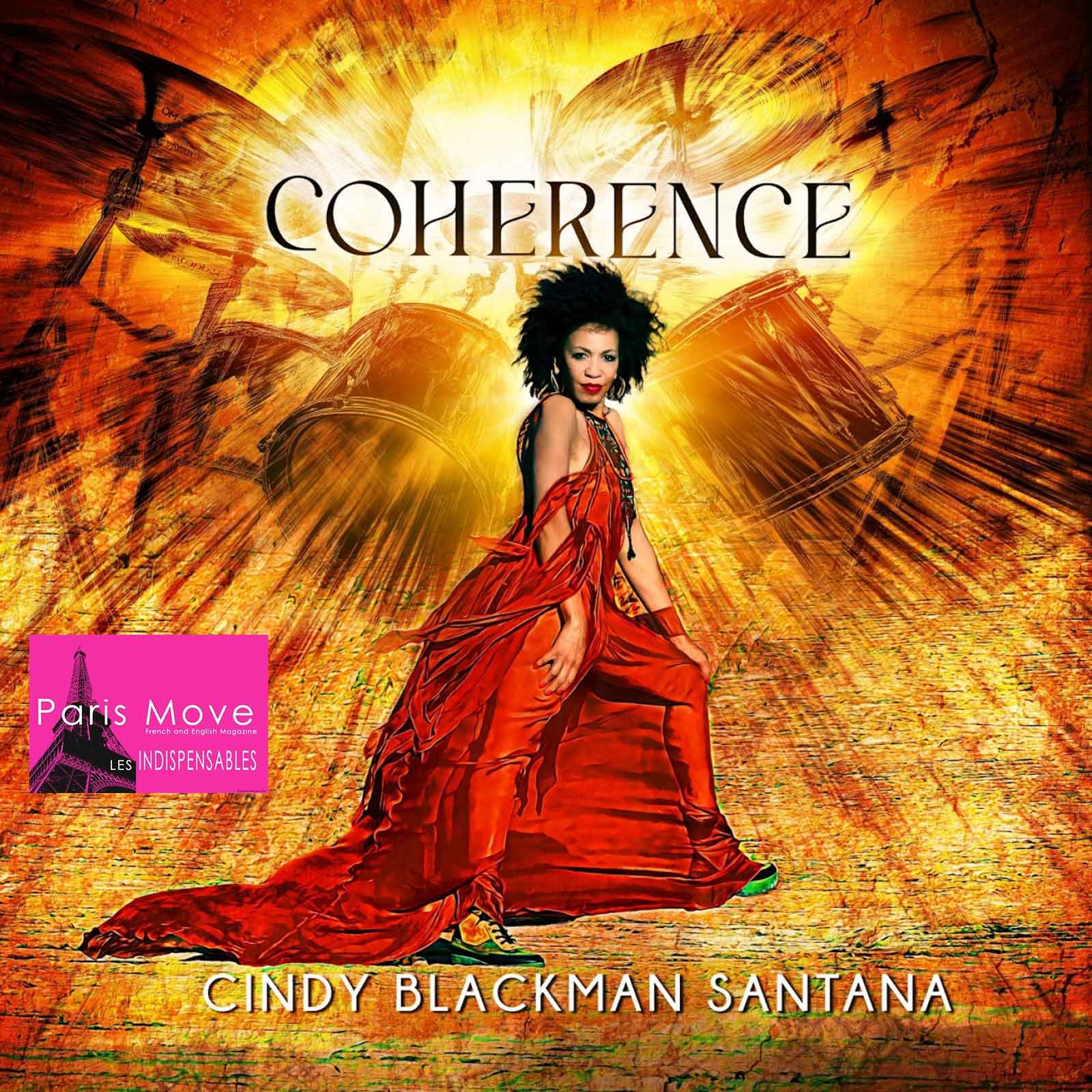
Cindy Blackman Santana: The Rhythm That Refused to Be Defined
From Street Corners to the World Stage, The Making of an Artist Without Boundaries
There are musicians whose careers are defined by a single moment, a single album, or a single collaboration that changes the direction of their lives. Cindy Blackman Santana’s career has been built differently. It is not the story of one breakthrough moment, but of decades of persistence, exploration, and artistic courage.
Long before she became known around the world as one of the most powerful and expressive drummers of her generation, Cindy Blackman Santana was simply a young musician searching for her own voice. In the 1980s, she began her journey as a street performer, playing wherever she could find an audience and learning one of the most important lessons in music: connection matters as much as technique.
Those early performances shaped the musician she would become. Playing in public spaces requires more than skill. It demands instinct, communication, and the ability to capture attention without the protection of a large stage or a famous name. For Cindy Blackman Santana, the street became a school of rhythm, discipline, and human interaction.
That foundation would eventually lead her from street corners to some of the most prestigious stages in the world.
Over the course of four decades, she has moved between musical worlds that are often considered separate. She has performed in jazz clubs where improvisation and conversation define the experience, and in massive rock arenas where energy and power must reach thousands of people at once. Instead of choosing one path, she created a language that allowed all of these influences to coexist.
Her career is a reminder that great artists are not always created by following a straight line. Sometimes they emerge by refusing to accept the limits placed around them.
A Career Built Through Curiosity and Collaboration
Cindy Blackman Santana’s musical journey has been marked by an extraordinary number of collaborations, not because she has simply been a supporting musician, but because other artists recognize her as a creative force.
She has worked with some of the most respected figures in modern music, including Pharoah Sanders, Cassandra Wilson, Bill Laswell, Joss Stone, Joe Henderson, Buckethead, Don Pullen, Hugh Masekela and Angela Bofill.
Each collaboration added another dimension to her musical identity. Jazz challenged her sense of space and improvisation. Rock expanded her understanding of power and physical expression. Funk reinforced the importance of rhythm as movement and communication.
But throughout these different environments, she maintained something essential: her own voice.
Too often, musicians who work with legendary artists become known primarily through those associations. Cindy Blackman Santana has taken a different path. Her collaborations have never erased her identity. They have expanded it.
Her own groups, including the Cindy Blackman Santana Group and Another Lifetime, allowed her to step forward as a composer, arranger, and bandleader. Another Lifetime’s self titled album, released in 2010, demonstrated that she was not simply one of the great drummers behind other artists. She was an artist capable of creating a complete musical vision.
Breaking the Expectations Surrounding Women and the Drum Kit
The history of popular music has often celebrated great guitarists, singers, and producers while overlooking the musicians who create the foundation beneath them. Drummers, despite being essential to the emotional and physical impact of music, have frequently remained in the background.
For women drummers, the challenge has often been even greater. For decades, the image of the drummer was connected to ideas of physical strength, aggression, and masculinity. The instrument itself seemed to carry cultural expectations about who belonged behind the kit.
Cindy Blackman Santana never approached the drums as something she needed to justify. She approached them as a language. Her career has helped change the conversation because she does not represent a compromise between musicianship and identity. She represents excellence without qualification. Her artistry places her in conversation with other groundbreaking women percussionists, including Terri Lyne Carrington, whose own career has expanded the possibilities for women in jazz. Their approaches are different, their musical personalities distinct, but both demonstrate that creativity has never belonged to one gender or one tradition.
The importance of Cindy Blackman Santana’s career is not only that she succeeded in a demanding field. It is that she helped redefine what success could look like.
The Rock Connection: Finding Freedom Through Power
One of the most fascinating aspects of Cindy Blackman Santana’s career is the way she has connected jazz sophistication with the physical energy of rock music.
From 1992 to 2007, and again in 2014 and 2015, she served as the drummer for Lenny Kravitz. Those years placed her in front of international audiences and allowed her to contribute to major recordings and worldwide tours. The experience could have pushed her toward becoming primarily known as a rock drummer. Instead, she used rock as another element in a much larger musical vocabulary.
Her approach has always been about integration rather than separation. The power is there. The intensity is there. But behind that force is a musician who understands harmony, composition, and improvisation. That combination is what makes her unique. A drummer can keep time. A great drummer can shape emotion. Cindy Blackman Santana belongs to the second category.
A New Chapter With Santana
In 2016, Cindy Blackman Santana joined Santana as a full time member, beginning one of the most important chapters of her career.
Her artistic connection with Carlos Santana has been built on mutual respect and musical understanding. Their partnership is not simply the meeting of two famous names. It is a conversation between two musicians who share a belief that music should carry emotion, spirituality, and human connection.
Her drumming appears on several Santana recordings, including Power of Peace with the Isley Brothers in 2017, In Search of Mona Lisa in 2019, Africa Speaks in 2019, and Blessings and Miracles in 2021.
Yet the significance of this collaboration goes beyond individual albums. It represents a meeting of two artistic philosophies: Carlos Santana’s search for melodic transcendence and Cindy Blackman Santana’s rhythmic intelligence.
Together, they create a musical dialogue where rhythm and melody become inseparable. And this idea leads directly to the deeper meaning behind her latest work, Coherence. The album is not simply another project in an already remarkable career. It is the place where all the roads meet.
From Tony Williams to Weather Report, The Art of Making the Drums Speak
The history of jazz fusion is filled with musicians who refused to accept the idea that genres should exist as separate worlds. Beginning in the late 1960s and expanding through the following decades, fusion became a place where jazz musicians could embrace the electricity of rock, the complexity of classical composition, and the rhythmic freedom of global music traditions.
At the center of this movement was a new understanding of the role of the drummer. The drummer was no longer simply the person responsible for keeping the band together. The drums became a voice, a source of melody, tension, emotion, and conversation. Cindy Blackman Santana belongs to this tradition.
Her approach carries the influence of musicians who transformed the instrument into something far more expressive than a timekeeping device. Artists such as Tony Williams, Billy Cobham and Jack DeJohnette demonstrated that the drum kit could function almost like a complete orchestra, capable of creating atmosphere and shaping the emotional direction of a composition. Cindy Blackman Santana continues that tradition, but she does not simply inherit it. She transforms it.
Her greatest strength is not only technical ability. Many musicians possess extraordinary technique. What separates the truly exceptional artists is their ability to turn technique into meaning. With Cindy Blackman Santana, every rhythm has a purpose.
The Drums as a Voice
Listening to Coherence, one immediately notices that the drums are not placed in the background. They are part of the conversation.
This does not mean that the music is dominated by percussion. Quite the opposite. Her greatest quality is her understanding of balance. She knows when to push the music forward and when to create space for other instruments to speak. That ability is one of the marks of a mature musician.
Young players often search for ways to demonstrate what they can do. Experienced artists understand that the most powerful musical decisions sometimes come from restraint.
Cindy Blackman Santana has spent decades developing that sense of timing, not only in rhythm but in artistic judgment. Her drumming can be explosive, carrying the physical force associated with rock music, but it can also become delicate, precise, and almost conversational. She moves between these worlds naturally because she does not see them as opposites. For her, jazz and rock are not competing identities. They are different expressions of the same human need to communicate.
The Spirit of Fusion Without Repetition
At certain moments on Coherence, listeners may find themselves reminded of the great fusion recordings of the past, including the adventurous spirit of Weather Report.
The comparison is not about imitation. Cindy Blackman Santana is not attempting to recreate the 1970s fusion era. Instead, she shares the same ambition: creating music where musicians interact as equals and where composition leaves room for discovery.
Like the greatest fusion artists, she understands that complexity alone is not enough. A song can contain difficult rhythms and sophisticated arrangements, yet still fail to move the listener. The challenge is to create music that is intellectually engaging while remaining emotionally accessible.
Coherence succeeds because the musicians never lose sight of that balance. The album invites the listener into a world of changing textures, unexpected transitions, and rhythmic conversations. But beneath the complexity is something very direct: feeling. That emotional connection is what separates a technical demonstration from a true artistic statement.
Cindy Blackman Santana the Composer
One of the most important aspects of Coherence is that it allows listeners to fully recognize Cindy Blackman Santana as a composer and arranger. Throughout her career, she has often been celebrated first for her drumming. That recognition is deserved, but it only tells part of the story. Behind the drum kit is an artist who thinks about structure, atmosphere, and musical architecture.
The album’s 17 tracks reveal someone who understands how individual elements become part of a larger vision. The arrangements do not feel like collections of impressive performances. They feel carefully designed journeys. Every musician has a role. Every instrument contributes to the emotional landscape. Every collaboration serves the composition. This is where the title Coherence becomes especially meaningful.
The word suggests unity, connection, and balance. It describes not only the album itself but also the entire career of Cindy Blackman Santana. A career that could appear divided between jazz, rock, funk, and experimental music actually reveals a remarkable consistency. The styles change. The voice remains.
“The Message With Love”: A Musical Conversation With Carlos Santana
Among the album’s highlights is “The Message With Love,” featuring Carlos Santana. The track represents everything that makes their artistic partnership compelling. It is not a guest appearance designed simply to attract attention. It feels like a genuine musical conversation.
Carlos Santana’s guitar has always been recognized for its emotional quality, his ability to make a single note carry a powerful human message. Cindy Blackman Santana’s rhythm provides the perfect foundation because she understands that music is not about competition between instruments. It is about connection.
The chemistry between them is obvious. The guitar does not compete with the drums. The drums do not simply support the guitar. They communicate. It feels like two artists who understand the same musical philosophy.
“Guitar With Love”: The Legacy of John McLaughlin
Another major moment comes with “Guitar With Love,” featuring John McLaughlin.
McLaughlin’s presence carries historical significance. Few guitarists have contributed as much to the development of jazz fusion, and his work has always represented exploration, spirituality, and technical innovation.
Yet his contribution here never feels like a nostalgic appearance. He is not included simply because of his legendary status. He brings another color to the music. His guitar expands the atmosphere of the composition, adding another emotional dimension while remaining connected to the album’s central vision.
This is one of the strengths of Coherence: the guests do not overshadow the artist leading the project. They become part of the larger musical conversation.
“Capri” and the Beauty of Carlos Santana’s Guitar
The return of Carlos Santana on “Capri” creates another memorable moment.
The song carries a sense of warmth and openness that recalls the emotional beauty of Santana’s classic composition “Europa.” There is a similar ability to transform melody into something timeless. The guitar sings rather than simply plays. And once again, Cindy Blackman Santana’s drumming provides more than rhythm. She creates the emotional environment that allows the melody to breathe.
This relationship between rhythm and melody is at the heart of the album. It is also the reason why Coherence feels larger than a collection of songs. It feels like the reflection of a lifetime spent searching for musical truth.
The Freedom to Refuse a Category
Perhaps the greatest achievement of Coherence is Cindy Blackman Santana’s refusal to choose a single identity. She could have created a traditional jazz album. She could have focused entirely on her reputation as a powerful rock drummer. She could have remained within the expectations created by her extraordinary career.
Instead, she chose freedom.
She created a space where jazz sophistication, rock energy, funk movement, and improvisational exploration exist together. That choice is not only artistically courageous. It is the most honest reflection of who she is.
Cindy Blackman Santana is not a jazz drummer who plays rock. She is not a rock drummer who understands jazz. She is a complete musician. And Coherence is the album that finally allows the world to hear the full dimension of that truth.
Coherence, The Album Where Every Musical Road Meets
Some albums feel like beginnings. Others feel like conclusions. The most remarkable ones manage to feel like both. Cindy Blackman Santana’s Coherence belongs to that rare category. It is an album that looks backward without becoming nostalgic and looks forward without abandoning the experiences that shaped the artist. It reflects decades spent absorbing different musical languages, from jazz improvisation to rock intensity, from funk grooves to the spiritual depth that has always been present in so much of Carlos Santana’s musical world.
The title itself offers the key to understanding the project. Coherence is not simply a collection of songs recorded by a talented drummer surrounded by impressive guests. It is a statement of artistic identity. It is the sound of a musician bringing together every chapter of her journey and discovering that all of those experiences were connected from the beginning.
The street performer from the 1980s, the jazz musician searching for new possibilities, the drummer standing on enormous rock stages, the composer creating her own ensembles, and the artist performing alongside some of the greatest musicians of modern history all exist within this album. Nothing feels accidental. Everything belongs.
An Album Built on Musical Conversation
One of the defining characteristics of Coherence is its sense of dialogue.
The best jazz and fusion records have always been built around communication. Musicians listen to each other, respond to each other, and allow the music to evolve naturally. The goal is not simply to perform a written composition but to create a living musical experience.
Cindy Blackman Santana understands this tradition deeply. Throughout the album, the musicians appear to be engaged in conversation rather than simply following arrangements. The compositions provide structure, but within that structure there is room for personality, emotion, and discovery.
This approach connects the album to the great fusion recordings of the past, but Coherence does not feel like a tribute to another era. It feels contemporary because its central message is timeless. Music remains powerful when musicians truly listen to one another.
Beyond Technique: The Emotional Intelligence of a Great Drummer
It is easy to describe Cindy Blackman Santana by focusing on her technical abilities. She is undeniably a remarkable drummer. Her precision, power, and rhythmic complexity have earned the respect of musicians around the world. But technique alone does not explain why her playing connects with audiences.
The greatest drummers are not remembered simply because they can play fast or create complicated patterns. They are remembered because their choices create emotion.
Think about the legendary players who changed the perception of the instrument. Their importance came from their musical personality. Cindy Blackman Santana belongs to that tradition. Her playing on Coherence demonstrates an understanding that rhythm is connected to human experience. A drum pattern can create excitement, tension, reflection, celebration, or even silence. The spaces between the notes matter as much as the notes themselves. That understanding is the result of a lifetime spent not only practicing the instrument but listening to the world around her.
Carlos Santana and the Language of Shared Emotion
The relationship between Cindy Blackman Santana and Carlos Santana remains one of the most fascinating artistic partnerships in contemporary music. Their collaboration works because it is based on respect rather than repetition.
Carlos Santana has spent decades developing a unique musical voice, one where melody becomes almost spiritual and where the guitar functions as a storyteller. Cindy Blackman Santana approaches rhythm with a similar philosophy. She does not simply provide a foundation. She creates a dialogue. On Coherence, their connection feels natural because both artists understand that music is ultimately about emotion. The technical aspects are important, but they serve a larger purpose.
“The Message With Love” represents this beautifully. The song is not built around the idea of two famous musicians sharing a recording. It feels like a genuine exchange between two artists who understand each other’s musical instincts. The result is intimate despite the scale of their reputations. That is often the mark of great collaboration.
John McLaughlin and the Continuing Spirit of Fusion
The appearance of John McLaughlin adds another important dimension to the album.
For many listeners, McLaughlin represents one of the essential architects of jazz fusion, a musician whose work expanded the possibilities of guitar, improvisation, and composition. His presence on “Guitar With Love” creates a bridge between generations.
But what makes the collaboration successful is that it does not depend on history alone. The song works because McLaughlin contributes something meaningful to the present moment. His guitar does not arrive as a symbol of the past. It becomes part of the album’s ongoing conversation. This reflects one of Cindy Blackman Santana’s greatest strengths as a bandleader: she understands how to bring together extraordinary musicians while maintaining a clear artistic direction. The album belongs to everyone involved, but it remains unmistakably hers.
The Importance of Musical Freedom
In many ways, Coherence is an argument for artistic freedom.
The modern music industry often encourages artists to become easily identifiable. A musician is expected to fit into a category, a marketing strategy, or a recognizable style. Cindy Blackman Santana has spent her career resisting that limitation. Her music suggests that identity does not come from restricting influences. It comes from understanding them.
Jazz taught her the importance of exploration. Rock taught her the power of expression. Funk taught her the physical movement of rhythm. Fusion taught her that boundaries are often artificial. All of these elements exist together in Coherence. The album does not ask listeners to decide what kind of musician Cindy Blackman Santana is. It simply reveals who she has always been.
A Record That Rewards Repeated Listening
One of the most satisfying aspects of Coherence is that it continues to reveal itself over time.
The first listen introduces the atmosphere and energy of the album. Later listens reveal details that may have been overlooked: subtle rhythmic changes, instrumental conversations, emotional shifts, and the intelligence behind the arrangements.
This is the type of record that invites patience. In an era where music is often consumed quickly and replaced immediately by the next release, Coherence asks listeners to stay longer. It rewards attention. It reminds us that some music is not designed simply to entertain for a moment. Some music is designed to become part of our understanding of an artist.
A Major Statement From a Complete Artist
After decades of performing with some of the most important musicians in modern music, Cindy Blackman Santana has created an album that places her fully at the center. Not as a drummer supporting a vision. As the creator of one.
Coherence confirms what many musicians have understood for years: Cindy Blackman Santana is not only one of the great drummers of her generation. She is a composer, arranger, bandleader, and artist with a distinctive voice.
The album is the meeting point of every road she has traveled. And perhaps that is why the title feels so accurate. Because after all these years, every rhythm, every collaboration, every stage, and every musical exploration has led to this moment. Everything connects. Everything has meaning. Everything is coherent.
Beyond the Drum Kit, The Legacy of Cindy Blackman Santana
Every generation of musicians produces a small number of artists who do more than master their instrument. They change the way people understand what that instrument can become. Cindy Blackman Santana belongs to that group.
Her legacy cannot be measured only by the number of albums she has played on, the artists she has accompanied, or the stages she has conquered. Those achievements are remarkable, but they represent only one part of the story.
The deeper significance of her career lies in the way she expanded the meaning of being a drummer. She demonstrated that a drummer can be a composer, a bandleader, a storyteller, and a visionary. She proved that rhythm is not simply something placed underneath a song. Rhythm can be the emotional center of the music.
For Cindy Blackman Santana, the drums have never been a limitation. They have always been a gateway.
Changing the Perception of the Modern Drummer
For much of popular music history, drummers have often been described through their ability to support others. They provide the foundation, maintain the groove, and allow singers and instrumentalists to shine. That role is essential, but artists such as Cindy Blackman Santana have expanded the conversation.
The modern drummer can also be a creator of musical worlds. Her career challenges the traditional hierarchy that places certain instruments at the center of artistic recognition while treating rhythm as secondary. In her hands, the drum kit becomes a complete expressive instrument. A single performance can contain architecture, emotion, tension, and release.
This is the difference between playing an instrument and developing a language. Cindy Blackman Santana has created her own language.
An Inspiration Across Generations
One of the most important aspects of her career is the influence she represents for younger musicians.
For aspiring drummers, especially women entering a field that has historically been dominated by men, her example carries a powerful message. The lesson is not simply that success is possible. The lesson is that authenticity matters more than expectation.
Cindy Blackman Santana never built her career by trying to fit into a predetermined image of what a drummer should be. She built it by developing her own artistic identity and allowing every influence to become part of that identity.
Her journey shows future generations that musicians do not need to choose between different worlds. A drummer can love jazz and rock. A composer can embrace improvisation and structure. An artist can respect tradition while constantly searching for something new. That freedom may be one of her greatest contributions.
A Career Defined by Evolution
Looking back at Cindy Blackman Santana’s career, one of the most striking elements is her ability to continue evolving.
Many musicians reach a certain level of recognition and then repeat the formula that made them successful. Cindy Blackman Santana has taken the opposite approach. She has continued to explore. From her early jazz experiences to her years with Lenny Kravitz, from her work with her own groups to her collaboration with Santana, she has consistently searched for new forms of expression.
That curiosity has protected her from becoming trapped by her own reputation. She is respected as a legendary drummer, but she continues to think like an emerging artist. That combination of experience and openness is rare.
The Importance of Coherence in Her Artistic Journey
This is why Coherence feels like such an important album. It is not simply another achievement added to an impressive career. It is a reflection of everything that came before. The album contains the energy of rock, the imagination of jazz, the movement of funk, and the emotional depth that has always defined her collaborations.
But more importantly, it reveals the unity behind all those experiences.
The young musician performing on the streets in the 1980s and the internationally recognized artist performing alongside legends are not separate versions of Cindy Blackman Santana. They are the same person, following the same artistic instinct. The search has always been about expression.
More Than a Collaboration With Legends
Throughout her career, Cindy Blackman Santana has worked with some of the most influential musicians in modern history. Yet her legacy does not come from the famous names around her. It comes from what she brought into those collaborations.
Great musicians do not simply join important projects. They transform them.
Her work with artists such as Pharoah Sanders, Cassandra Wilson, Lenny Kravitz, Carlos Santana, and John McLaughlin demonstrates an extraordinary ability to adapt while remaining unmistakably herself. That is perhaps the highest compliment that can be given to a musician. No matter the setting, the audience recognizes the voice.
The Future of an Artist Still Creating
One of the fascinating aspects of Cindy Blackman Santana’s story is that her legacy is still being written.
This is not a retrospective about an artist looking back on a completed journey. She remains active, curious, and creatively engaged. The same qualities that defined her early career continue to guide her today. The willingness to experiment. The desire to communicate. The refusal to accept artificial boundaries. Those qualities ensure that her music remains alive.
The Final Measure Is Not the Beat, But the Message
In the end, Cindy Blackman Santana’s greatest achievement is not that she became one of the world’s greatest drummers. It is that she expanded what greatness could mean.
She showed that strength and sensitivity can exist together. She showed that technical mastery and emotional expression are not opposites. She showed that tradition and innovation can share the same stage. And she showed that music is at its most powerful when it reflects the full complexity of a human life.
Coherence is more than an album title. It is the story of Cindy Blackman Santana herself. Every collaboration. Every performance. Every challenge. Every musical discovery. All of it belongs to the same journey.
After decades behind the drum kit, she has created something far greater than a collection of rhythms. She has created a legacy. And that legacy is still playing.
Thierry De Clemensat
Member at Jazz Journalists Association
USA correspondent for Paris-Move and ABS magazine
Editor in chief – Bayou Blue Radio, Bayou Blue News
PARIS-MOVE, August 4th, 2026
Follow PARIS-MOVE on X
::::::::::::::::::::::::
Musicians :
Cindy Blackman Santana: Drums (All), Spoken Word (4, 6)
Aurelien Budynek: Guitar (1-3, 7, 10, 11, 13-17)
Felix Pastorius: Bass (1-3, 7, 10-17)
Emilio Modeste: Saxophone (1-3, 7, 10-17)
Zaccai Curtis: Keyboards (1-3, 7, 10-16)
Carlos Santana: Guitar (3, 5, 8, 9, 10, 17)
Snoop Dog: Shout-Out Intro (3)
Matt Garison: Bass (4, 5, 6)
Dave Eggar: Strings (7, 8, 11-14)
Ray Angry: Keyboards (8)
John McLaughlin: Guitar (9), Organ (9)
Alonso Broz: Bass (9)
Coherence Tracklist:
- Illumination
- Blue Whale
- The Message is Love feat. Carlos Santana
- Coherence Tapestry
- Coherence feat. Carlos Santana
- Coherence Embrace
- Peace Please
- Psychedelic Movie House feat. Carlos Santana
- Guitar Love feat. Carlos Santana & John McLaughlin
- Capri feat. Carlos Santana
- SyZyGy (SIZ-uh-jee)
- Circe
- Eclipse
- Soon a Queen
- Sunday
- Music
- Sanctuary feat. Carlos Santana
Cindy Blackman Santana Tour Dates:
Mon, Sept 7 – Detroit Jazz Festival – Detroit, MI
Santana & The Doobie Brothers 2026 Tour Dates:
Thu, Aug 6 – Auburn, WA – White River Amphitheatre
Sat, Aug 8 – Wheatland, CA – Toyota Amphitheatre
Sun, Aug 9 – Mountain View, CA – Shoreline Amphitheatre
Tue, Aug 11 – Chula Vista, CA – North Island Credit Union Amphitheatre
Thu, Aug 13 – Los Angeles, CA – Hollywood Bowl
Fri, Aug 14 – Phoenix, AZ – Mortgage Matchup Center
Sun, Aug 16 – El Paso, TX – UTEP Don Haskins Center
Tue, Aug 18 – Austin, TX – Moody Center
Fri, Aug 21 – The Woodlands, TX – The Cynthia Woods Mitchell Pavilion
Sat, Aug 22 – Dallas, TX – American Airlines Center
*Mon, Aug 24 – Red Rocks Amphitheatre – Morrison, CO
Wed, Aug 26 – Kansas City, MO – Morton Amphitheater
Thu, Aug 27 – Shakopee, MN – Mystic Lake Amphitheater
*An Evening With Santana (Not with Doobie Brothers)