| Jazz |
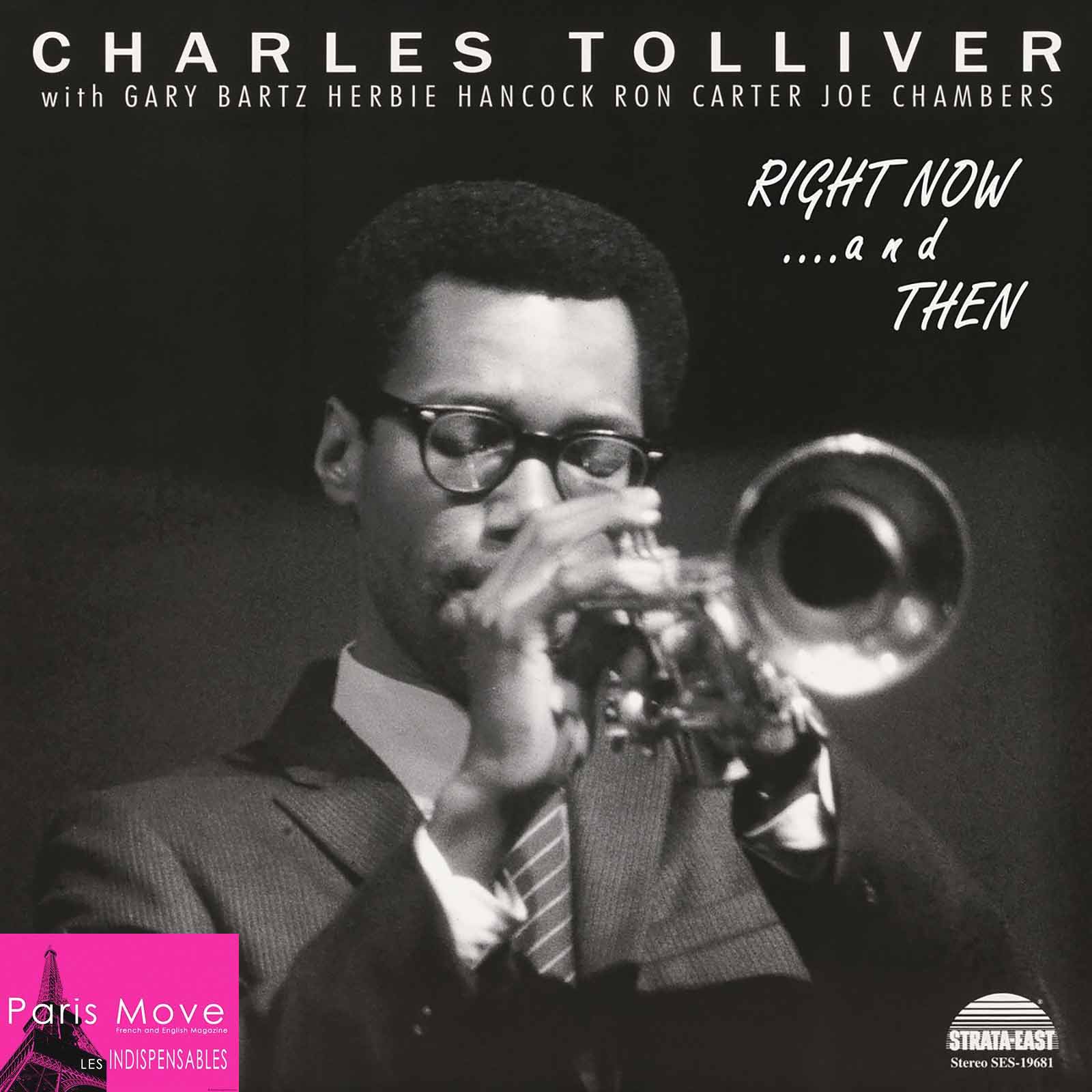
Charles Tolliver’s Right Now…. And Then: The Sound of an Artist Who Refused to Compromise
There is something almost surprising about hearing the opening moments of Right Now….And Then today. The recording does not announce itself as a historical artifact, preserved behind the glass of another era. Instead, it feels immediate, restless and alive. Charles Tolliver’s trumpet enters with a sense of purpose, carrying both brilliance and warmth, a sound that is at once commanding and deeply human. Within moments, the musicians around him begin to respond. Herbie Hancock introduces harmonies that seem to expand the music’s horizon, Gary Bartz brings a voice full of color and emotion, Ron Carter provides a foundation of extraordinary precision, and Joe Chambers pushes the ensemble forward with a rhythmic imagination that never calls attention to itself.
More than five decades after it was recorded, Right Now….And Then remains a remarkable statement from an artist who had already found his voice at an age when many musicians were still searching for theirs. The album captures Charles Tolliver at only twenty six years old, yet the confidence, sophistication and emotional depth of the music suggest a much longer artistic journey. It is not simply an impressive debut from a young musician. It is the work of a composer, arranger and bandleader who understood exactly what he wanted to say.
The reissue of this extraordinary recording on July 10, 2026, also represents the continuation of a much larger story, one connected to the history of independent jazz itself.
Founded in 1970 by Charles Tolliver and Stanley Cowell, Strata East Records was built on a radical idea: that musicians should have control over their own artistic destinies. At a time when many artists were navigating the limitations imposed by major record companies, Strata East offered an alternative model based on independence, ownership and creative freedom. The label was not created simply to release records. It was created to protect artistic voices.
That philosophy made Strata East one of the most important independent jazz labels of its generation. Its catalog became a reflection of a period when jazz was undergoing profound transformation, when musicians were expanding the language of the music while questioning the structures that surrounded it. The partnership with Mack Avenue Music Group now ensures that these recordings continue to receive the careful restoration and presentation they deserve, allowing contemporary listeners to experience their full artistic power.
The historical importance of Right Now….And Then is immediately apparent, but its true impact comes from the music itself. Tolliver assembled a group of musicians who represented some of the most remarkable creative forces in twentieth century jazz. Gary Bartz, Herbie Hancock, Ron Carter and Joe Chambers were not simply exceptional players. They were artists who helped redefine the possibilities of their instruments.
Yet what makes this recording extraordinary is that it never feels like a collection of individual stars competing for attention. The musicians listen to one another. They leave space. They respond. The album functions as a conversation, a musical dialogue in which every voice contributes to something larger than itself.
Tolliver’s compositions reveal a remarkable understanding of balance. The structures are sophisticated without becoming rigid. The arrangements are carefully designed, yet they leave room for discovery. He creates music that is intellectually ambitious but never distant, complex but never cold. His writing reflects a deep understanding of jazz tradition while also embracing the need for evolution.
That same balance defines his trumpet playing. Tolliver’s sound is instantly recognizable. There is brilliance in his tone, but never at the expense of feeling. His phrases can be sharp and explosive, yet moments later they become delicate and almost conversational. He combines technical mastery with a rare emotional directness.
The result is music that must have felt electrifying when audiences first encountered it in the late nineteen sixties and early seventies. Jazz was entering one of its most creative periods, moving beyond the boundaries of established traditions and embracing new approaches to rhythm, harmony and composition. Tolliver belonged to a generation of musicians who understood that honoring the past did not mean remaining trapped by it.
His reputation was recognized early by one of the most important figures in jazz history. When DownBeat magazine’s Herb Nolan asked Dizzy Gillespie which contemporary trumpeters he admired, Gillespie’s response was simple: “Charles Tolliver. I like him.”
Few statements carry that kind of authority. Gillespie was not only one of the architects of modern jazz trumpet, but also one of the musicians who understood better than anyone what originality sounded like. His recognition of Tolliver reflected an understanding that this was not merely a talented young player. This was an artist developing a distinct musical language.
For a largely self taught musician, Tolliver’s achievements are even more remarkable. Over the course of his career, he has established himself as a masterful trumpeter, composer, arranger, educator and bandleader. His musical journey includes collaborations with some of the most influential names in jazz, including Roy Haynes, Hank Mobley, Willie Bobo, Horace Silver, McCoy Tyner, Sonny Rollins, Booker Ervin, Gary Bartz, Herbie Hancock, the Gerald Wilson Orchestra, Oliver Nelson, Andrew Hill, Louis Hayes, Roy Ayers, Art Blakey and the Jazz Messengers, and Max Roach.
These names represent more than a list of collaborations. Together, they form a map of modern jazz history.
Still, the most convincing argument for Tolliver’s importance is not found in biographies or discographies. It is found in the sound of Right Now….And Then.
The recording quality itself is remarkable. The clarity of the restoration allows every detail of the performance to emerge, but technology alone cannot explain why the album remains so powerful. The reason is the musicianship. The energy comes from the interaction between artists who were operating at the highest level of creativity.
On “Peace Within Myself,” Tolliver demonstrates everything that makes his playing distinctive. His trumpet possesses both urgency and elegance, moving effortlessly between rhythmic intensity and lyrical expression. Hancock does not simply accompany him. He reshapes the emotional landscape of the music, offering harmonic ideas that feel unexpected yet perfectly natural. His playing creates possibilities rather than conclusions.
Gary Bartz brings a voice that is both luminous and deeply personal. His saxophone lines carry warmth, intelligence and a sense of freedom that perfectly complements Tolliver’s approach. Ron Carter, meanwhile, provides the kind of foundation that appears effortless until one listens closely and realizes how much movement exists beneath the surface. His bass lines are precise, melodic and constantly inventive. Joe Chambers completes the ensemble with a style that combines sensitivity and power, understanding exactly when to drive the music forward and when to allow it to breathe.
One of the great pleasures of Right Now….And Then is that it refuses to reveal everything at once. The first listen leaves an immediate impression. The second reveals new conversations. The third uncovers details that were invisible before. It is the kind of album that rewards patience because the musicians are not simply performing songs. They are creating a musical environment.
The title may sound modest, almost casual, but the music inside is anything but ordinary. Right Now….And Then represents a moment when jazz was reinventing itself, when musicians were challenging expectations and expanding the definition of what the music could become. It was an era when originality was not just admired. It was necessary.
Strata East became a home for that spirit of exploration. It documented artists who believed that creativity could not be separated from independence. The label’s legacy remains important because it reminds us that some of the most significant artistic movements emerge when musicians are given the freedom to follow their own vision.
Charles Tolliver belongs in any serious conversation about the architects of modern jazz. His name may not always receive the same level of public recognition as some of his contemporaries, but recordings such as Right Now….And Then demonstrate the originality and importance of his contribution. He did not simply participate in one of jazz’s most creative eras. He helped shape it.
More than fifty years later, this music still carries the spirit of the moment in which it was created: adventurous, fearless and unwilling to accept limitations. Great recordings do not merely preserve history. They continue to challenge the present.
Right Now….And Then is one of those recordings. It is not a monument to the past. It is a reminder that true artistic vision never becomes outdated.
Thierry De Clemensat
Member at Jazz Journalists Association
USA correspondent for Paris-Move and ABS magazine
Editor in chief – Bayou Blue Radio, Bayou Blue News

PARIS-MOVE, July 11th, 2026
Follow PARIS-MOVE on X
::::::::::::::::::::::::
Musicians :
Charles Tolliver: Trumpet
Herbie Hancock: Piano
Ron Carter: Bass
Joe Chambers: Drums
Gary Bartz: Alto Saxophone (Tracks 5, 6)
Track Listing :
Earl’s World
Peace Within Myself
Right Now
Lil’s Paradise
Paper Man
Household Of Saud
Repetition (Take 2 – Previously Unreleased) Producers: Lili Kardell & Charles Tolliver
Recorded July 2, 1968 at Town Sound Studios, Englewood, New Jersey
Engineer: Orville O’Brien
Cover photo: © Raymond Ross Archives/CTSImages
℗© 2025 Strata-East Records, Inc. Under exclusive worldwide license to Mack Avenue Records II, LLC.