| Jazz |
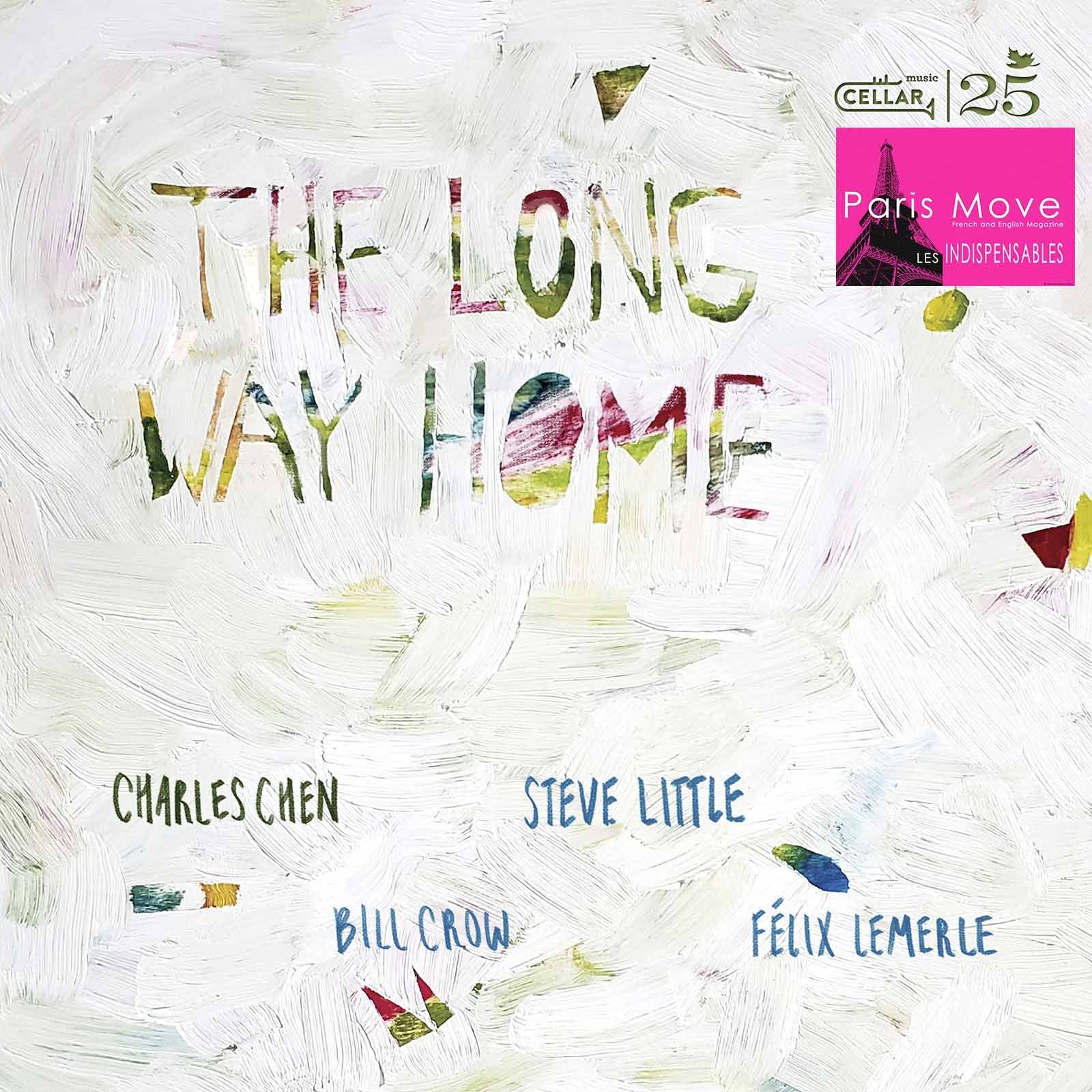
Summary: More than a jazz album, Charles Chen’s latest project is a remarkable musical and historical document. Featuring 98 year old bassist Bill Crow, 91 year old drummer Steve Little and guitarist Félix Lemerle, the recording combines inspired performances with fascinating interviews, offering a rare firsthand account of jazz history from musicians who lived it. Essential listening for jazz lovers, students and anyone interested in preserving the voices of a disappearing generation.
Charles Chen, Bill Crow & Steve Little: A Living Jazz History Preserved on Record
An inspired and deeply moving project, this recording finds Charles Chen bringing together two living jazz veterans, bassist Bill Crow, now 98, drummer Steve Little, 91, and guitarist Félix Lemerle. What emerges is far more than a conventional album. It is a tribute to jazz history itself, a rare encounter with artists whose careers stretch back to some of the most formative decades of American music.
The tone is established immediately with the album’s opening track, “The Long Way Home,” where Crow’s bass playing remains remarkably expressive and assured, while Little’s drumming displays a subtle elegance shaped by a lifetime of experience. The performance is wrapped in a warm aura of nostalgia, one that never feels sentimental or forced. Instead, it serves as an invitation into a world that is rapidly disappearing.
The album contains an astonishing 36 tracks. While some last barely a minute, their brevity is entirely intentional. These shorter segments consist of interviews with the veteran musicians, transforming the project into a hybrid of recording session and oral history documentary. As Crow and Little recount stories about the jazz giants with whom they worked, the spoken material becomes every bit as fascinating as the music itself. Their memories offer an intimate perspective on a century of cultural history, providing firsthand accounts that no textbook could ever fully capture.
In an era when countless recordings compete for attention through innovation, technical virtuosity or stylistic experimentation, this album distinguishes itself through something far rarer: lived experience. It is difficult to overstate the value of hearing musicians who worked directly with figures from the Swing Era, the Bebop revolution and the golden age of modern jazz reflecting on their careers in their own words. These are not distant historical figures commenting on the past through archival footage. They are active participants in the story of American music, still performing, still remembering and still eager to share what they witnessed.
In the accompanying booklet, Chen shares a remarkable anecdote about Bill Crow. As a teenager, Crow reportedly fell asleep at the wheel while driving home late one night and veered off the road, sending his car plunging into empty space. He woke up while the vehicle was still airborne. Miraculously, the car landed in a blackberry bush that softened the impact, and minutes later he was back on the road. It sounds less like a real event than the opening scene of a Hollywood film about jazz.
Crow arrived in New York as a valve trombonist before ultimately dedicating himself to the bass. Over the decades he performed alongside Stan Getz, Marian McPartland, Gerry Mulligan and Claude Thornhill. He later became one of jazz’s most gifted storytellers, documenting the culture in books such as Jazz Anecdotes and From Birdland to Broadway. Remarkably, at 98, he continues to perform. His life alone contains enough material for an entire documentary series, and this album provides a rare opportunity to hear that history directly from the source.
Steve Little’s journey followed a different but equally significant path. He worked with Duke Ellington during the legendary bandleader’s later years, including participation in the landmark 1967 recording …And His Mother Called Him Bill. Afterward, Little stepped away from touring and built a distinguished career in New York’s recording studios, orchestras and television industry. His résumé includes work with the Metropolitan Opera Orchestra and decades of contributions to Sesame Street and related productions.
Little and Crow have known each other since 1955 and continue to perform together regularly at Smalls Jazz Club in New York. Their friendship and shared musical language are evident throughout the recording. Completing the quartet is Félix Lemerle, a Paris-born guitarist now based in New York whose studies at the Conservatoire à Rayonnement Régional de Paris, Queens College and The Juilliard School place him at the intersection of European and American jazz traditions.
Chen deserves considerable credit for recognizing the historical importance of these musicians and for creating a setting in which they can speak freely. Rather than directing the conversations toward predetermined conclusions, he allows the artists to tell their stories in their own words. The result is a valuable historical document that illuminates the evolution of twentieth-century music through the eyes of those who lived it.
Up to track 23, listeners primarily hear Steve Little reflecting on his experiences. Beginning with track 24, Bill Crow takes center stage, recounting memories of figures such as Bud Powell and Miles Davis before eventually arriving at Charlie Parker. The cumulative effect is extraordinary. These are not secondhand narratives or polished academic interpretations. They are eyewitness testimonies from musicians who stood inside the history they describe.
What makes these interviews particularly compelling is the absence of nostalgia for nostalgia’s sake. Both musicians speak with the clarity and perspective that only decades of experience can provide. Their recollections offer details that are often absent from official biographies and academic studies, revealing the human realities behind the legends. For younger listeners, the interviews serve as a bridge connecting contemporary jazz to its foundational generations. For historians and researchers, they represent something even more valuable: primary source material from artists whose direct connections to the formative decades of jazz are increasingly rare.
The album opens with nine musical performances before transitioning into its documentary component. The instrumental section begins with Oscar Pettiford’s “Laverne Walk.” “You Turned the Tables on Me” draws upon the piano language of the 1930s and 1940s, while Cole Porter’s “Dream Dancing,” the album’s first single, unfolds with unhurried grace and understated sophistication. “Squatty Roo” introduces a brief stride-inspired flourish before settling into a swinging groove, and Lemerle delivers a lyrical reading of “On the Alamo.”
“You Send Me” recalls Little’s years among New York’s elite studio musicians, including his association with Sam Cooke. An Ellington medley follows, featuring “Prelude to a Kiss,” “I Got It Bad (and That Ain’t Good)” and “Sophisticated Lady,” allowing each member of the quartet space to shine. “Yours Is My Heart Alone” begins as a waltz before accelerating into the fastest tempo heard on the album, while “Poor Butterfly” closes the instrumental program with a subtle nod to Madame Butterfly.
The performances themselves carry an emotional weight that extends beyond the notes being played. Listening to musicians in their nineties perform with such conviction inevitably adds another layer to the experience. The music is not presented as a museum piece or historical reenactment. It remains alive, spontaneous and deeply personal. Every phrase serves as a reminder that jazz is ultimately a living tradition transmitted from one generation to the next through performance, mentorship and shared experience.
The decision to feature Little and Crow together proves particularly inspired. Although they emerged from the same era, they represent two distinct pathways through jazz history. Crow’s career was largely rooted in clubs, small ensembles and the day-to-day life of working jazz musicians. Little’s trajectory led him through big bands, recording studios, orchestras and television. Together they provide a uniquely comprehensive portrait of American music across several generations.
One of the most revealing details comes near the end of Chen’s notes. Speaking of Crow, he writes: “Once the session was over, he packed up his bass and drove two hours to Connecticut for another gig. Even at 98, he still drives.” That simple image may ultimately capture the spirit of the entire project: dedication, resilience and an enduring commitment to the music.
More than an album, this is an archive, a conversation and a celebration. It functions as a living repository of memories, stories and artistic values that might otherwise disappear with time. In that sense, its importance extends well beyond the realm of recorded music. Future jazz historians may very well view these interviews as invaluable source material, preserving firsthand perspectives that can never be recreated once they are gone.
Jazz enthusiasts will find an abundance of stories and performances to treasure, while students of the music will discover invaluable lessons in artistry, professionalism and historical perspective. Few recordings manage to entertain, educate and preserve cultural memory with such effectiveness.
Charles Chen has created an essential document, one that honors not only two remarkable musicians but an entire chapter of jazz history that deserves to be heard, remembered and passed on. At a moment when many of the direct links to jazz’s foundational eras are disappearing, projects like this become more than recordings. They become acts of preservation, ensuring that the voices, memories and wisdom of these artists continue to resonate long after the final note has faded.
Thierry De Clemensat
Member at Jazz Journalists Association
USA correspondent for Paris-Move and ABS magazine
Editor in chief – Bayou Blue Radio, Bayou Blue News
PARIS-MOVE, June 18th, 2026
Follow PARIS-MOVE on X
::::::::::::::::::::::::
Musicians:
Charles Chen – Piano
Félix Lemerle – Guitar
Bill Crow – Bass
Steve Little – Drums
Executive Producer: Charles Chen & Cory Weeds
Produced by Charles Chen
Recorded at Bunker Studio on 08/11/2025
Engineered by Edwin Kenzo Huet and Alex Conroy
Mixed by Edwin Kenzo Huet
Mastered by: Steve Fallone, Sterling Sound
Production Manager: Dominic Duchamp
Cover Art by Casandra Lee
Other photos by Mike Lisching
Design and layout by Tilda Hedwig
Track Listing :
1. Laverne Walk
2. You Turned The Tables On Me
3. Dream Dancing
4. Squatty Roo
5. On The Alamo
6. You Send Me
7. Ellington Medley: Prelude to a Kiss
8. Ellington Medley: I Got It Bad (and That Ain’t Good)
9. Ellington Medley: Sophisticated Lady
10. Yours Is My Heart Alone
11. Poor Butterfly
12. Steve Little: Introduction
13. Steve Little: Orchestra Years
14. Steve Little: Jazz Background
15. Steve Little: Commercial Work
16. Steve Little: Why I Quit Traveling
17. Steve Little: Duke Ellington
18. Steve Little: Duke’s Drum Charts
19. Steve Little: Charlie Barrett
20. Steve Little: Love-Hate Relationship With Jazz
21. Steve Little: Memorable Commercial Work
22. Steve Little: Copacabana
23. Steve Little: Ryo Sasaki and Bill Crow
24. Bill Crow: Origins
25. Bill Crow: Stan Getz, Claude Thornhill
26. Bill Crow: Marian McPartland
27. Bill Crow: Gerry Mulligan, Zoot Sims
28. Bill Crow: Fred Zimmerman
29. Bill Crow: Gerry Mulligan Playing Backgrounds
30. Bill Crow: Teddy Wilson
31. Bill Crow: Art Tatum, Bud Powell
32. Bill Crow: Influences
33. Bill Crow: Norman Granz, Picasso
34. Bill Crow: Paul Chambers, Curtis Fuller, Miles Davis
35. Bill Crow: Jo Jones, Walter Page
36. Bill Crow: Charlie Parker
Limited Edition 12″, 180g Vinyl:
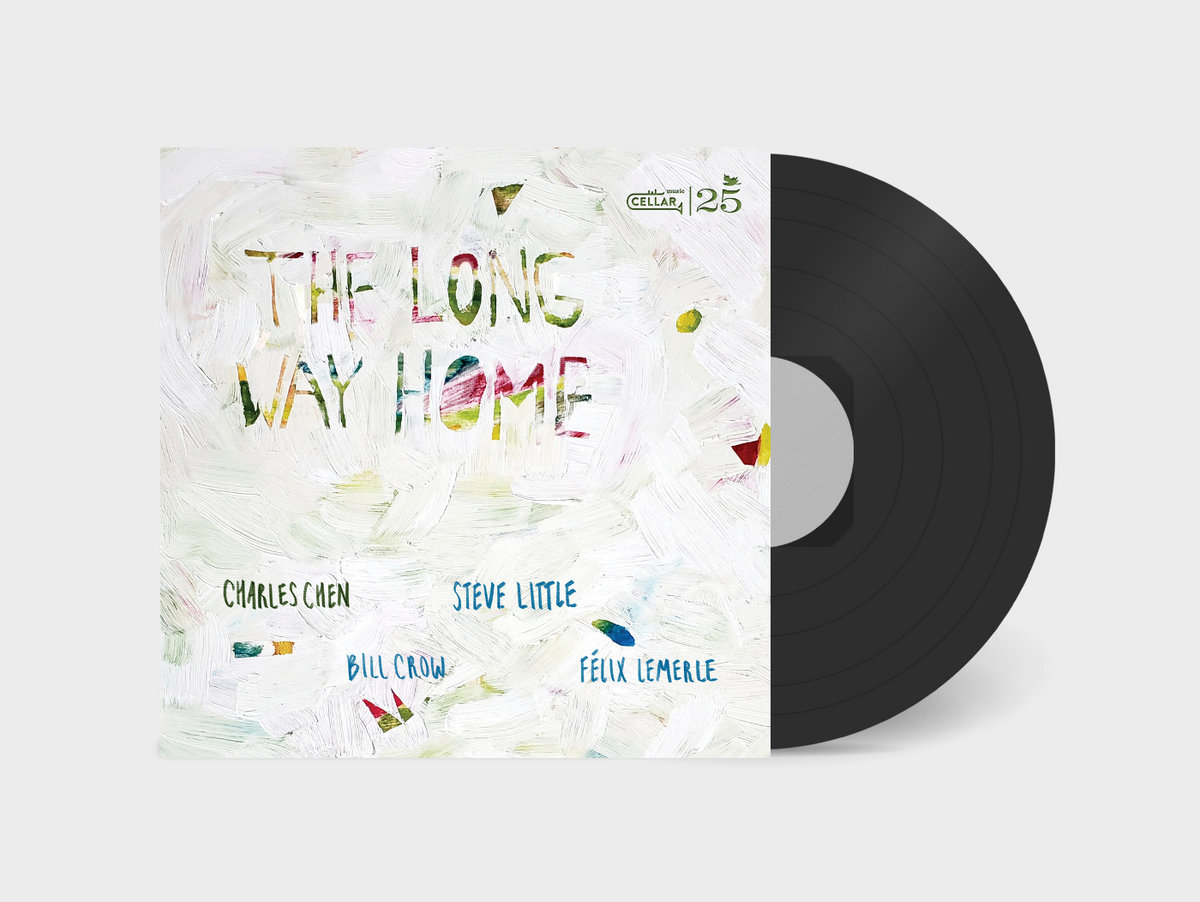
Side A
- Laverne Walk (5:45)
- You Turned The Tables On Me (5:14)
- Dream Dancing (4:37)
- Squatty Roo (3:00)
- Steve Little: Introduction (0:12)
- Steve Little: Orchestra Years (1:09)
- Steve Little: Love-Hate Relationship With Jazz (0:53)
- Steve Little: Memorable Commercial Work (0:42)
- Steve Little: Ryo Sasaki and Bill Crow (1:14)
Side B
- On the Alamo (5:45)
- You Send Me (4:18)
- Yours is My Heart Alone (4:19)
- Poor Butterfly (5:23)
- Bill Crow: Origins (3:42)