| Contemporary music |
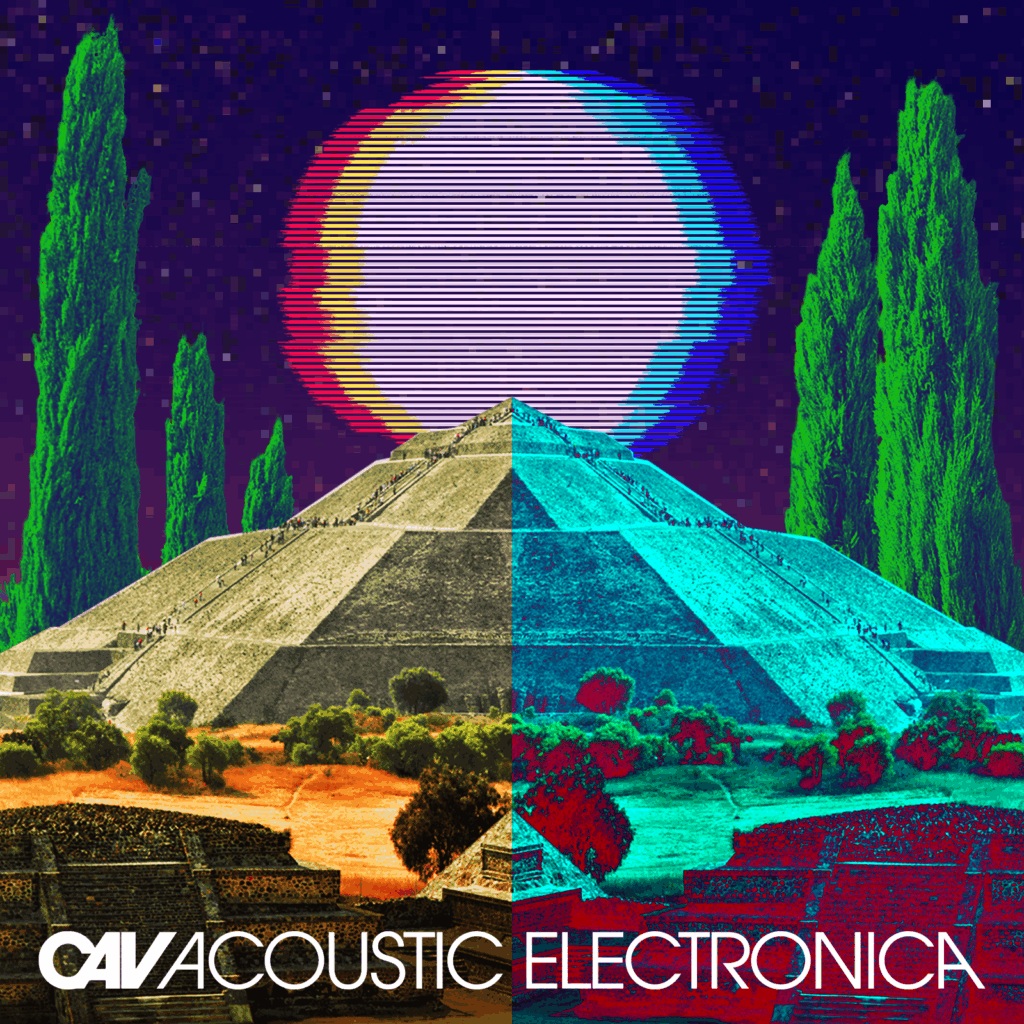
The Court at Versailles, Acoustic Electronica: when a jazz trio hands electronic classics to piano, bass and drums.
Some projects are explained by their name alone. The Court at Versailles (CAV) has a website with a single line on it: “The Court at Versailles performs electronic music. Acoustically”. Their debut album, Acoustic Electronica delivers exactly that, and a good deal more. The idea is simple to state and hard to carry out. Take eight landmarks of electronic music, from Tycho and Underworld to Squarepusher, Jon Hopkins, Deadmau5, Skrillex and Fred again.. & Brian Eno, and rebuild them on piano, bass and drums only. Every texture and processed sound you hear comes from the three instruments themselves. The trio never tried to copy the originals, and as producer Eric Palmquist puts it, the question was what survives when the material is handed to different instruments entirely.
First big surprise: the three musicians are spread across the world. Pianist and composer Joel Pierson, who directs the project, splits his time between New York and Mexico, bassist Sam Minaie is based in New York and drummer John Hadfield lives in Paris. Each part was recorded separately, in Los Angeles, New York and elsewhere, then assembled and shaped into its final form. For a record that feels like a live conversation between three good friends, that is a surprising way to make it, and it says a lot about how carefully the album was built.
The album does not rely on the prestige of its repertoire, and it does not claim to reinvent electronica. Its strength lies in how intelligently the three musicians blend their own experience with “borrowed” compositions. Pierson, Minaie and Hadfield play like musicians with nothing to prove. They have enough personality not to need the electronic formulas of earlier decades. What they keep is a sense of freedom, expressed through an acoustic approach. The music shifts in colour and dynamics, trades phrases, and leaves room for silence, always with a sense of proportion. The eight pieces belong to the same universe without being interchangeable. There is movement, contrast and density, but also moments when the music breathes, with a lightness and a controlled fragility.
The album rewards repeated listening. A first listen lets you appreciate the virtuosity. A second, more attentive one reveals the dialogue between the instruments. After that the details come out: a touch from the piano, a bass line, a drum accent that gives the record its density and takes the pieces beyond their original themes. This is the difference between a record with good musicians on it and one that brings together real talents. Each member of the trio has room to step forward, and none of them does so at the expense of the whole. That balance is what gives CAV its identity.
The mix: the fourth member! Eric Palmquist, who produced the album and mixed it, deserves special mention. His background includes work with Billie Eilish, Tate McRae, Bad Suns and members of the Red Hot Chili Peppers, and he brings a pop producer’s care for sonic detail. His mix shapes how the music reaches the listener: the textures, the balance, the depth, the way the instruments sit together. The cohesion of Acoustic Electronica owes a great deal to it. Kevin Ponto co-produced five of the tracks and added further mixing, and Sam Minaie, who runs birdFood Studio in New York, mastered the record. Masterful craftsmanship!
The album opens with “A Walk” (Tycho, Dive, 2011), the piece that served as its first single, in December 2025. Tycho’s original is a landmark of ambient and chillwave. Here the acoustic contrasts stir emotion straight away. You can hear the sophistication of the writing without analysing it, and you are moved all the same. It is a superb way in.
Second track, “Rez/ Cowgirl/ Two Months Off” (Underworld): this medley takes in “Rez” (1993), “Cowgirl” (from Dubnobasswithmyheadman, 1994) and “Two Months Off” (2002). The first two have long been welded together in Underworld’s legendary live version, regarded as a high point of techno. Rebuilding that hypnotic momentum on three acoustic instruments is the most daring bet on the record, and the second single, from February 2026.
Third track: “Come On My Selector” (Squarepusher, Big Loada, 1997). The hyperkinetic breakbeats of Tom Jenkinson’s Warp classic, known for Chris Cunningham’s unsettling video, are an obvious test for a drummer and a bassist. Hadfield and Minaie give the piece a physical, human energy rather than a programmed one. Another
Fourth piece of art, “Light Through the Veins” (Jon Hopkins, Insides). At nine minutes in the original, this is one of the great hypnotic electronic pieces. It was the third single, released on 12 June 2026. It is the track where the trio’s feeling for slow build, space and dynamics matters most. It’s followed by “Strobe, Part 1” and “Part 2” (Deadmau5, For Lack of a Better Name, 2009). Deadmau5’s anthemic progressive house piece is split into two parts, and the division lets the trio take the long arc of “Strobe” at its own pace, with room to develop.
Few pieces seem further from a jazz trio than “Scary Monsters and Nice Sprites” (Skrillex, 2010), which was made on a laptop and helped define dubstep. That is exactly why it works as an experiment, and the arrangement shows the trio’s playfulness. The album ends with “Cmon” (Secret Life), a piece from Eno and Fred again.. collaboration, an ambient record. It closes this record by returning to atmosphere. We’re taking off again… to hit the “replay” button.
Acoustic Electronica does not simply offer new versions of tracks we have heard countless times. It gives back something that familiarity had worn away: their sense of otherness. The best test of a record like this is whether it changes how we hear something we thought we knew completely. This one passes. When the piano, drums and bass go quiet, the music is not finished. It lingers through the images it has called up and the melodies that now sound different.
Acoustic Electronica shows that The Court at Versailles’ musicians are free, distinctive and essential artists. This is a great album, and above all one that lasts. It leaves one fascinating question: how far can this trio go?
Frankie Pfeiffer
Editor in chief – PARIS-MOVE
PARIS-MOVE, October 6th, 2026
Follow PARIS-MOVE on X
:::::::::::::::::::::
Tracklisting
- A Walk (Tycho)
- Rez / Cowgirl / Two Months Off (Underworld)
- Come On My Selector (Squarepusher)
- Light Through the Veins (Jon Hopkins)
- Strobe, Part 1 (Deadmau5)
- Strobe, Part 2 (Deadmau5)
- Scary Monsters and Nice Sprites (Skrillex)
- Cmon (Fred again.. & Brian Eno)
Musicians
- Joel Pierson: piano and arrangements
- Sam Minaie: upright bass, mastering
- John Hadfield: drums
- Eric Palmquist: producer and mixing
- Kevin Ponto: co-producer (tracks 1, 3, 5, 6, 7) and additional mixing