| Jazz |
Summary: A review of Bjarke Falgren’s jazz violin style, blending classical roots, gypsy and Latin influences, and cinematic jazz fusion. Featuring comparisons with Regina Carter, Avishai Cohen, and Anouar Brahem, the album unfolds like a travel journal shaped by space, silence, and emotional storytelling.
Bjarke Falgren and the New Language of Jazz Violin: A Cinematic, Borderless Soundscape
Jazz violin has undergone a striking transformation over the past three decades. Increasingly, violinists are emerging with distinct, diverse styles, each presenting original compositions shaped by clearly defined musical worlds. In many cases, their classical training is unmistakable, providing both structure and discipline beneath more exploratory instincts. What is equally evident is the way influences now travel freely across genres. Gypsy music phrasing and Latin rhythms often surface naturally, woven into a broader jazz vocabulary.
From the very first track of this album, “Cigarillos por favor,” it becomes clear that this composer and violinist is a musical traveler in the fullest sense. He has a gift for capturing atmospheres with precision, almost like a filmmaker working in sound. By the second track, “Embrace,” the mood shifts into jazz fusion territory, opening up a different emotional space entirely. The record quickly reveals itself as an album built on contrast and surprise, moving from joy and lightness to a more intimate, poetic romanticism that feels carefully observed rather than overstated.
Bjarke Falgren pushes against the usual boundaries of genre with a style that often feels cinematic, whether intentionally so or not. The violin, when placed in a solo or leading role, tends to take on a commanding presence, almost like a central character in a film. It draws attention without effort, shaping the emotional frame of whatever surrounds it. In Falgren’s case, the idea of “turquoise” becomes a guiding image, suggesting open horizons, dissolving borders, and a sense of movement that feels natural rather than forced.
“I never compose with a fixed idea of where I want to go,” he explains. “I listen. I wait. And when the wind shifts, I follow it.” That philosophy of surrender runs through the entire album. Silence, restraint, and patience are not treated as gaps between musical ideas but as essential elements in their own right. The result is a listening experience where space matters as much as melody, and where hesitation can feel as expressive as motion.
This way of working creates something close to a patchwork structure, where musical language reveals itself gradually, shaped by evolving impulses rather than rigid design. His violin technique is rooted in a tactile relationship with the bow, closer to breathing than to mechanical execution. It has been refined over decades of playing an instrument that itself is nearly three centuries old. “I have worked the bow the way others work the voice,” he says. “Like a breath that never fully disappears, even in silence.” The emphasis is not on virtuosity for its own sake but on tone, phrasing, and spatial awareness, inviting the listener into an intimate dialogue with sound itself. The question of voice becomes central here, as if the ear is constantly anticipating words that never arrive, yet somehow feel implied.
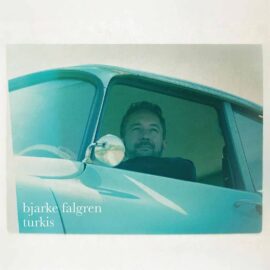
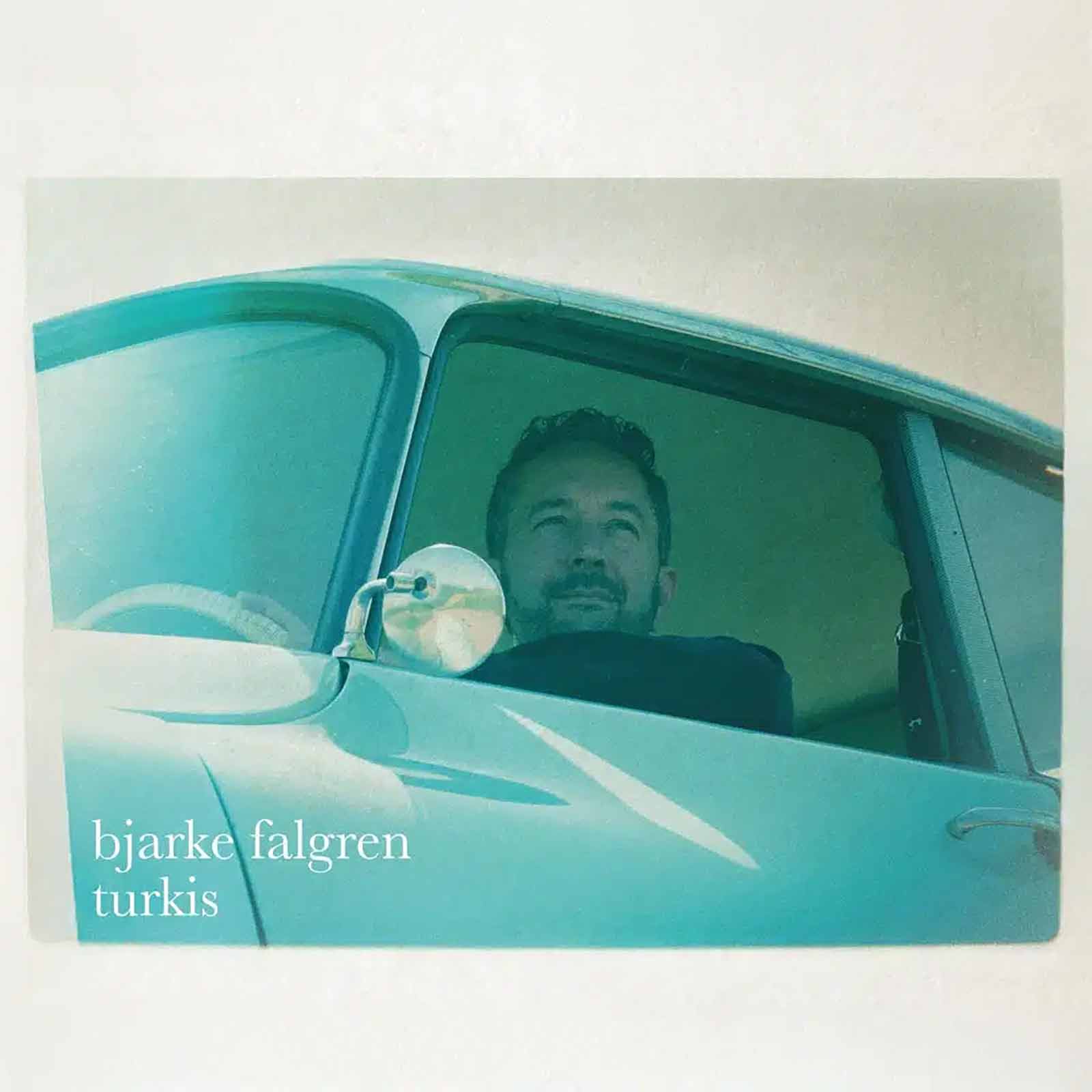
There is a playful intelligence at work as well. The track “Low Five” offers a subtle nod to “Take Five,” not as imitation but as a wink to jazz tradition and its memory of shared motifs. The album is filled with these small references, moments that echo familiar melodies or suggest half-remembered songs. Even the cover, showing the violinist in a car under what feels like a summer sun, reinforces this sense of movement and casual observation. The entire project resembles a travel journal filled in haste at a café counter, where impressions are recorded alongside fragments of conversation, fleeting details of scenery, and passing emotional notes.
For Bjarke Falgren, musical notes function like sketches. Everything else follows, layered in different colors and textures. The effect is light but never superficial, offering a refreshing clarity that feels especially suited to summer listening, the kind of record that might accompany a long drive or an afternoon spent with something cold in hand, letting the world drift by at its own pace.
Listening suggestions
If this musical world resonates, a few parallel paths open up naturally.
Regina Carter brings a deeply expressive voice to the violin in jazz, often weaving together tradition, improvisation, and narrative clarity. Her work feels grounded in storytelling, where each phrase carries emotional intention rather than decoration.
Avishai Cohen offers a different but related sensibility, rooted in lyrical bass lines, Mediterranean influences, and a strong sense of melodic openness. His music often moves between intimacy and expansiveness, balancing rhythm with reflection.
To complete this listening triangle, Anouar Brahem extends the same atmospheric quality into a more contemplative space. His compositions unfold slowly, with a cinematic patience that mirrors the sense of travel, memory, and quiet observation running through Falgren’s work.
Taken together, these artists form a subtle map rather than a strict category, each one tracing a different route through the same landscape of modern, borderless jazz expression.
Thierry De Clemensat
Member at Jazz Journalists Association
USA correspondent for Paris-Move and ABS magazine
Editor in chief – Bayou Blue Radio, Bayou Blue News
PARIS-MOVE, June 6th, 2026
Follow PARIS-MOVE on X
::::::::::::::::::::::::
Musicians :
Bjarke Falgren | Violin
Heine Hansen | Piano
Morten Lundsby | Double Bass
Eliel Williams Lazo Linares | Congas
Anders Holm Jensen | Drums
Jakob Riis Holm | Guitar
Track Listing
Embrace
Il Posto del Padre
Cigarillos por Favor
Viola
Tiden Står Stille Her
Rossignol
Rosa’s Forår
Low Five
Vinden Vänder
Hora Azul