
| Jazz |
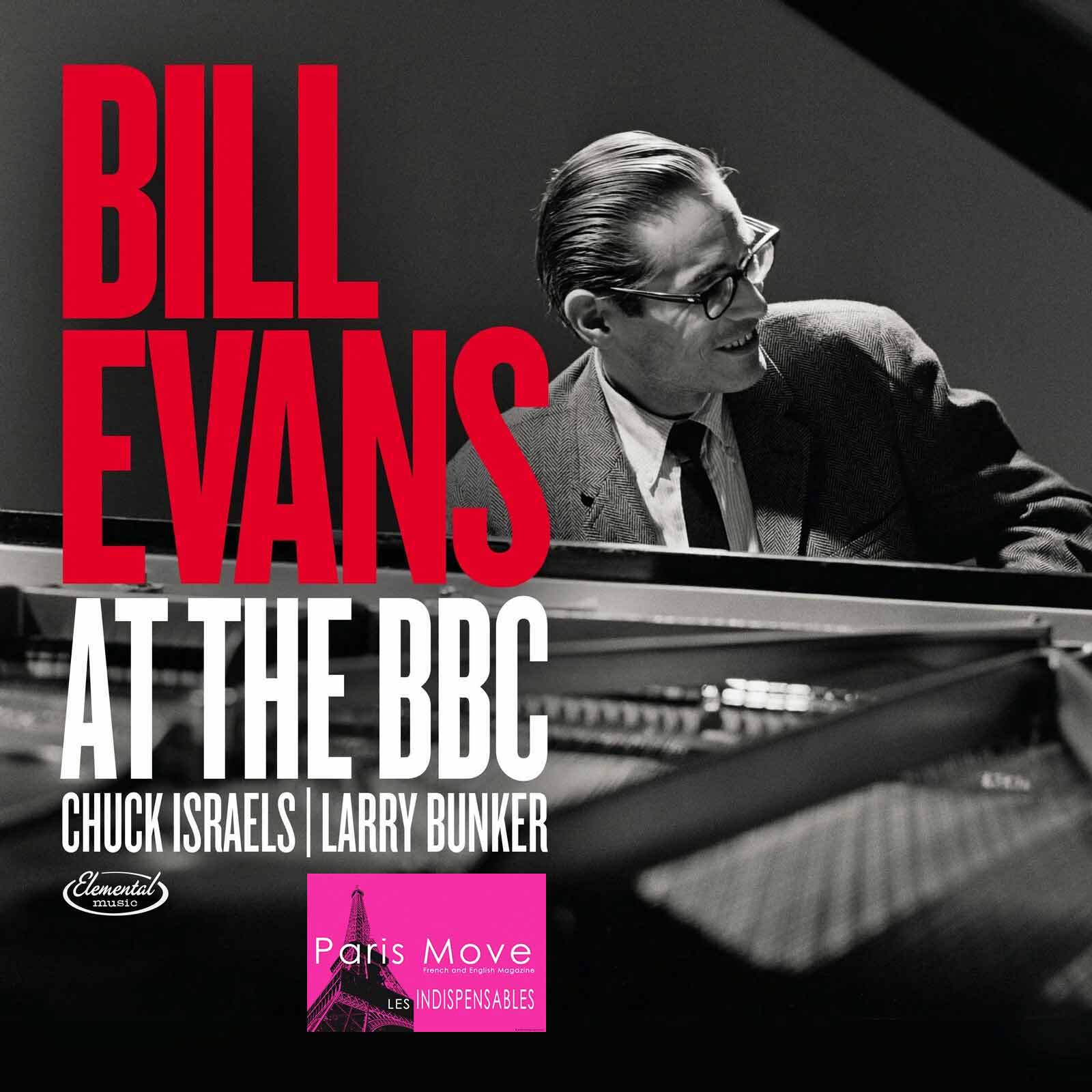
Summary: A rare 1965 BBC session captures Bill Evans at his most intimate, poetic, restrained, and timeless, best experienced on vinyl.
Bill Evans at the BBC (1965): A Haunting, Intimate Jazz Session Best Heard on Vinyl
In 1965, inside the BBC’s studios, Bill Evans takes his place beneath low, diffuse lighting that seems to muffle even the air itself. A piano waits at center stage, its lid raised like a quiet promise. A single microphone stands ready. There is no spectacle here, only the faint rustle of an audience settling into near-silence, the soft hum of broadcast equipment, and that particular tension that precedes the first note. The recording and AM transmission tools of the era impose their own limits, of course. The CD edition reveals a somewhat constricted, midrange-heavy sound, faithful, but exposed. The LP, however, transforms that limitation into atmosphere: its softer contours and natural compression lend the recording a cohesion that feels not corrective, but true to its time and place.
Sharing the small BBC studio stage are bassist Chuck Israels and drummer Larry Bunker. Together, they form a trio of rare equilibrium, where each gesture feels both independent and inevitable.
At moments, Evans leans toward the microphone to announce a piece for those present and the unseen audience beyond the airwaves. His speaking voice, so seldom captured, introduces a fleeting intimacy, almost disarming in its simplicity. It adds another dimension to an artist already defined by nuance. There is, in his playing, a singular rhythmic sensibility, a kind of inward pulse. Evans does not accumulate notes; he shapes them, giving each a tonal identity, a weight, a color. In a piece like “Some Day My Prince Will Come,” he resists the temptation of flourish, instead allowing the melody to breathe, subtly reharmonizing phrases so they unfold with quiet inevitability. On “How Deep Is the Ocean,” his use of space becomes structural: pauses are not absences but tensions, as if each silence were drawing the listener deeper into the architecture of the piece.
Transferred from the original BBC tapes and mastered by Matthew Lutthans at The Mastering Lab, this deluxe edition appears as a double 180-gram vinyl in a gatefold sleeve, with a CD counterpart also available. The presentation is elegant, but it is the internal balance of the trio that defines the recording. Evans places his notes with near-surgical precision, often within the spaces between the beat, while Israels answers with bass lines that drift just behind or ahead of the pulse, and Bunker’s drumming maintains a quiet elasticity. The effect is not looseness, but a different kind of discipline, one that privileges listening over assertion.
The British musician Jamie Callum, a longtime admirer of Evans, contributes liner notes to the album. Reflecting on Evans’s touch, he describes it as a way of “letting the piano speak in sentences rather than fragments”, a phrasing that captures both the clarity and the conversational intimacy of Evans’s style. It is an observation that resonates throughout this recording, where each phrase feels considered, complete, and quietly revelatory.
Evans, who died in New York City in 1980, came to embrace his role as a leader only after a formative period in 1958 with Miles Davis. Davis’s gift for identifying singular voices is well documented, but in Evans’s case, the impact was transformative. Freed from his own hesitation, he emerged not only as a pianist of rare sensitivity, but as a guiding voice for modern jazz. His influence continues to ripple outward, shaping generations of musicians on both sides of the Atlantic, where he remains a foundational reference.
Archival recordings of Evans continue to surface, though few achieve the quiet authority of this one. The sound may bear the imprint of its era, but the music itself resists time. What emerges here is not simply a document, but a perspective: that of an artist who understood restraint as a form of expression, and simplicity as a path toward depth.
From “Some Day My Prince Will Come” to “How Deep Is the Ocean,” the performances gathered here offer a lesson in understatement, in lyricism, in the art of saying more by doing less. Bill Evans endures, not as a figure confined to history, but as a presence that continues to shape how we listen, here and now.
Thierry De Clemensat
Member at Jazz Journalists Association
USA correspondent for Paris-Move and ABS magazine
Editor in chief – Bayou Blue Radio, Bayou Blue News
PARIS-MOVE, March 25th 2026
Follow PARIS-MOVE on X

::::::::::::::::::::::::
Musicians :
Bill Evans, piano
Chuck Israels, contrebasse
Larry Bunker, drums
Tracklist:
SIDE A
A1. Five (Intro)> Humphrey Lyttleton Introduction
A2. Elsa
A3. Summertime
A4. Come Rain Or Come Shine
SIDE B
B1. My Foolish Heart
B2. Re: Person I Knew
B3. Israel
B4. Five (Outro)
SIDE C
C1. Five (Intro) > Humphrey Lyttleton Introduction
C2. How My Heart Sings
C3. Nardis
C4. Who Can I Turn To
SIDE D
D1. Some Day My Prince Will Come
D2. How Deep Is The Ocean
D3. Waltz For Debby
D4. Five (Outro)
Recorded on March 19, 1965, for Jazz 625 at BBC2, London, England
Produced for release by ZEV FELDMAN
Executive Producers: JORDI SOLEY and CARLOS AGUSTÍN CALEMBERT
Associate Producers: LINDSAY FITZGERALD and CHUCK ISRAELS
LP mastering by MATTHEW LUTTHANS at The Mastering Lab
Transferred from the original BBC tape reels