| Jazz |
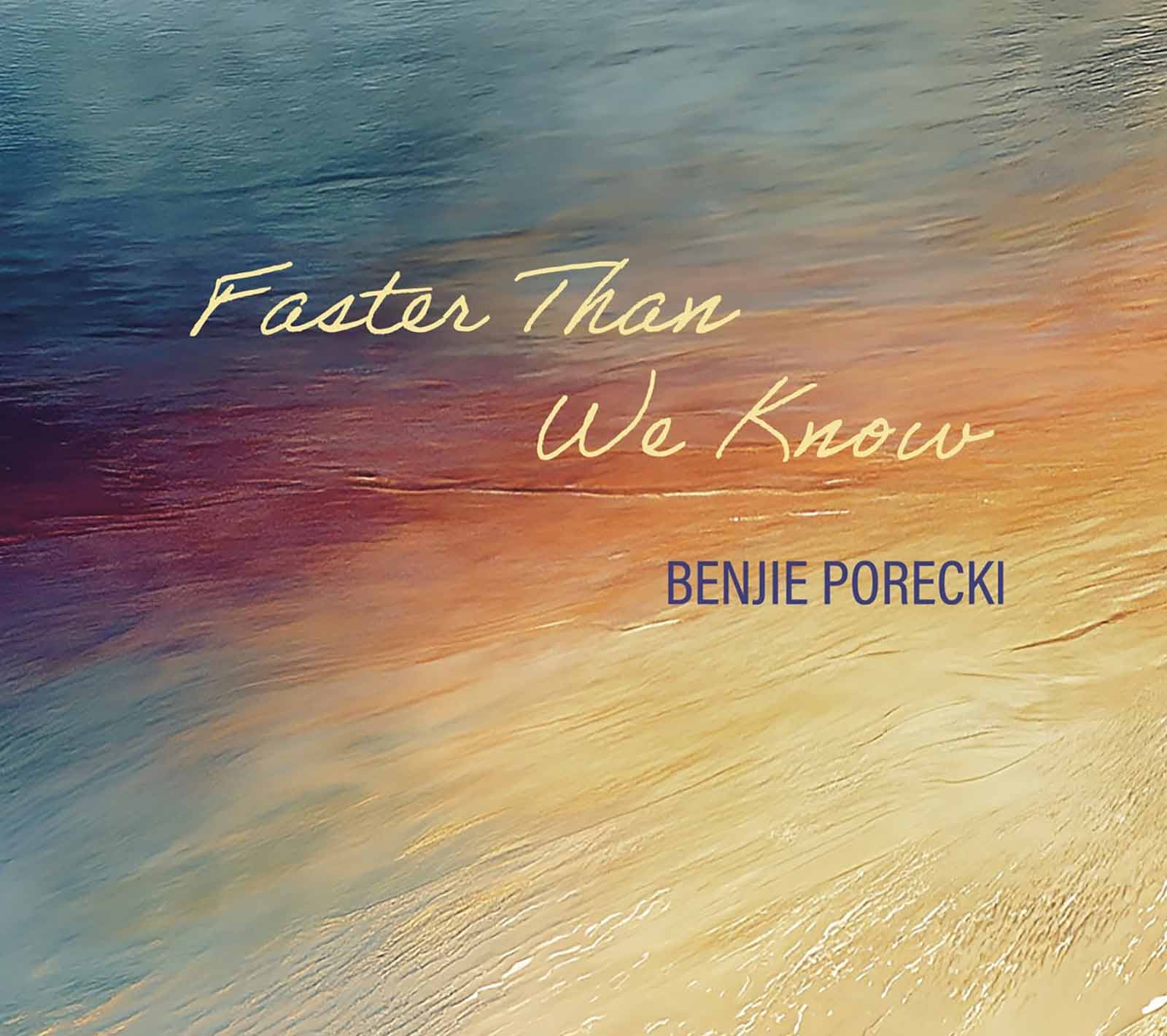
Summary: A refined blend of smooth jazz, soul, and funk, Benjie Porecki’s Faster Than We Know showcases a distinctive voice, elegant trio interplay, and a modern homage to classic African American musical traditions.
Benjie Porecki’s Faster Than We Know: A Fresh, Jazz-Rich Take on Smooth Jazz, jazz, soul, funk, blues
In a genre often relegated to the background, pleasant, polished, and too easily dismissed, keyboardist Benjie Porecki makes a compelling case for renewed attention. No sooner had I switched on the office light and set down a still-steaming cup of coffee than I slipped Faster Than We Know into the player. Within moments, a smile took hold. This was smooth jazz, yes, but jazzier than smooth, and all the more engaging for it.
The leading figures of smooth jazz form a familiar constellation; their names come readily to mind. Yet Porecki’s work occupies a more elusive space, both within and just beyond the genre’s usual contours. Elements of jazz, soul, and funk surface in carefully measured strokes, never overwhelming the listener, always enriching the palette. Raised in a musically steeped environment, Porecki draws from a lineage that includes Ray Charles, Herbie Hancock, Bill Evans, Stevie Wonder, Jimmy Smith, and Billy Preston. What distinguishes him is not merely the breadth of these influences, but the ease with which he integrates them into a sound that feels fully realized and unmistakably his own.
The album reached No. 19 on the chart compiled by JazzWeek, a respectable showing, though one suspects it might have climbed higher in Europe, where audiences have historically shown a greater appetite for stylistic hybridity and instrumental nuance. Here, the achievement lies less in innovation than in the clarity of voice. For an instrumentalist, that is no small accomplishment. It speaks to more than influence; it suggests vision.
Working in a trio format, Porecki and his collaborators produce a sound at once compact and expansive. The interplay is tight but never rigid, allowing space for phrasing that breathes. In one passage, a gently syncopated piano line unfolds over a restrained groove; elsewhere, the bass anchors the harmony with a warm, rounded tone while the drums shift subtly between timekeeping and texture. These are not grand gestures, but accumulations of detail, precise, deliberate, and quietly expressive.
Moments of lyricism emerge without fanfare. They feel unforced, almost inevitable. That sense of ease, however, is carefully constructed. The more natural the music appears, the more intricate its architecture reveals itself to be. A single chord voicing can redirect the emotional current; a slight rhythmic inflection can reshape an entire phrase.
This is the kind of project that adapts seamlessly from intimate venues to larger stages. It carries enough subtlety for close listening, yet enough immediacy to engage a broader audience. Across nine tracks, gone almost too quickly, Porecki seems to trace a narrative thread, moving fluidly across stylistic boundaries. At times, one can almost sense the presence of Ray Charles lingering at the edges: a phrasing here, a harmonic turn there, like a shadow just beyond the light.
What emerges, ultimately, is less an exercise in nostalgia than a living conversation with the past. The album reads as a quiet homage to 20th-century African American musical traditions, not as museum pieces, but as evolving forms. Nostalgia, in this context, is not about looking back; it is about continuity, about how these sounds persist and adapt in a restless 21st century. Are these songs that become music, or music that becomes song? The distinction feels increasingly beside the point.
Faster Than We Know is, above all, a work of pure listening pleasure. It invites return, not through complexity alone, but through balance, between sophistication and accessibility, craft and spontaneity. It is the sort of album one reaches for between more demanding recordings, only to find it quietly rewarding repeated attention.
As I rise to pour a second cup of coffee, I leave you in the company of Benjie Porecki. In an overcrowded musical landscape, that kind of company is not just welcome, it is increasingly rare.
Thierry De Clemensat
Member at Jazz Journalists Association
USA correspondent for Paris-Move and ABS magazine
Editor in chief – Bayou Blue Radio, Bayou Blue News
PARIS-MOVE, March 17th 2026
Follow PARIS-MOVE on X

::::::::::::::::::::::::
Musicians :
Benjie Porecki, piano, electric piano, organ, keyboards
Mark Prince, drums
Gary Baker, bass
Track Listing :
Chrysalis
Right Direction
Moving On
Headed Home
Make It Bring You UpSuperstar
Fresh Start
It’s Gonna Be Alright
Faster Than We Know