| Jazz |
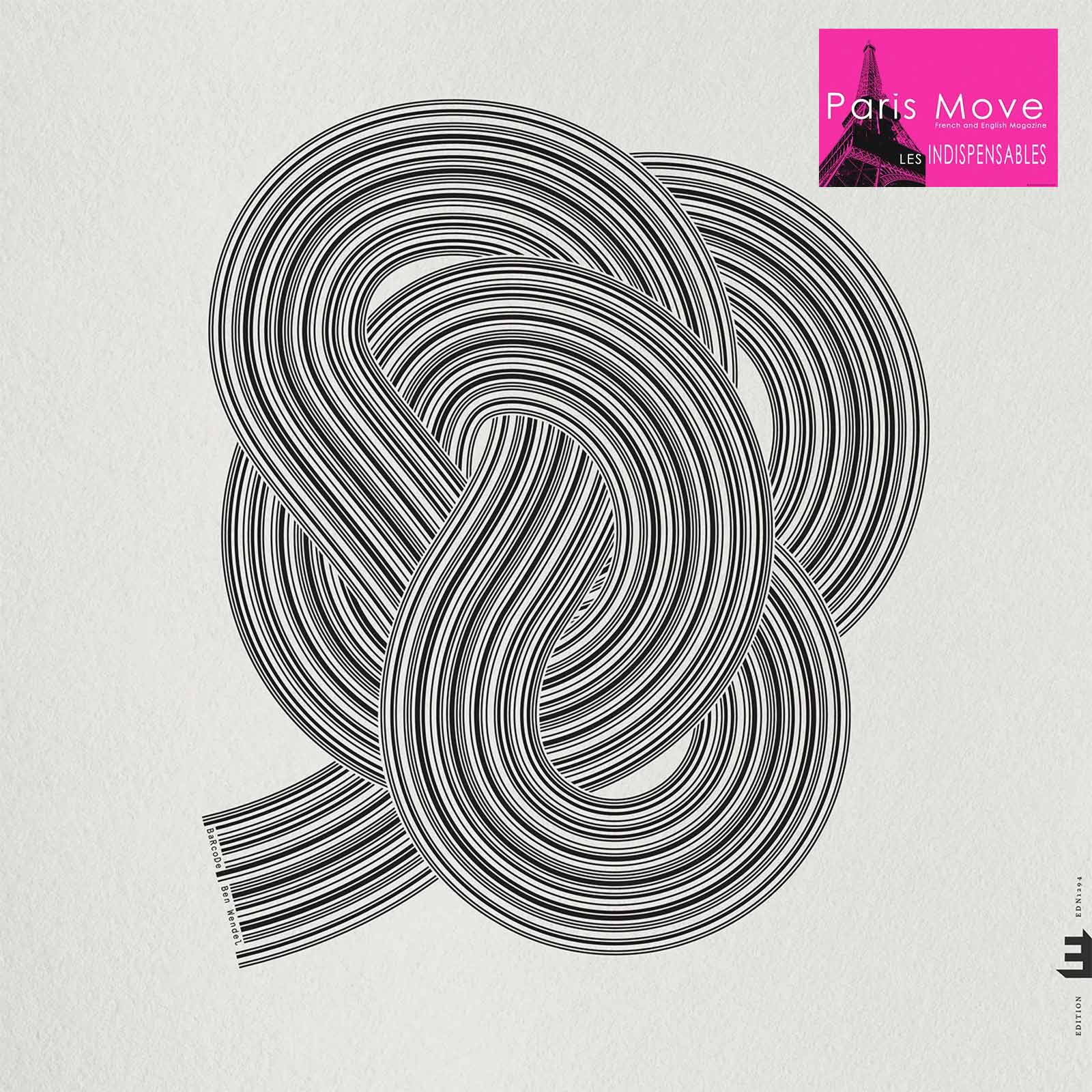
Summary: A bold and immersive jazz album, BaRcoDe showcases Ben Wendel and Patricia Brennan at their most inventive and expressive.
A “Beautiful Team” in Motion: Inside Ben Wendel’s BaRcoDe
Few albums in recent memory feel as complete, or as quietly commanding, as this one. It might just as fittingly have been titled “La Belle Équipe”, English: “The Beautiful Team.” With a roster of musicians this formidable, the result is a vivid expression of contemporary jazz at its most refined and exploratory. From the opening moments, the listener is drawn into a sound world that feels at once meticulously constructed and fluidly alive.
At its center stands vibraphonist Patricia Brennan, whose playing is nothing short of luminous. Her tones shimmer and dissolve, sometimes crystalline, sometimes percussive, creating a shifting sonic landscape that both anchors and propels the ensemble. Around her, each musician moves with a heightened sense of awareness, shaping phrases that feel less like individual statements than parts of a larger, breathing organism. The music unfolds with a tactile richness, metallic resonance, airy woodwinds, pulses that expand and contract, until, almost unexpectedly, the final track recedes, leaving behind a silence that feels charged, even incomplete.
“This is simply my way of staying true to myself. I feel incapable of putting together ‘normal’ projects,” Ben Wendel says with a laugh. The remark rings true. His 2020 album All One, recorded during the pandemic lockdown, operated as a kind of self-contained orchestra, layering saxophone and bassoon into intricate tapestries while featuring a rotating cast of guest soloists.
But “normal” has never been a particularly useful category for artists like Wendel. He and his collaborators might be better understood as hyper-creators, musicians who move fluidly between composition and improvisation, structure and intuition. In practice, that means pieces that can shift from tightly interlocking rhythmic patterns to moments of near weightless abstraction, where melody feels suspended in air. Their work draws as much on intellectual rigor as it does on instinct, producing music that may challenge casual listeners but rewards those willing to engage deeply. For critics and open-eared audiences alike, it becomes less about immediate accessibility than about expanding the very act of listening.
The project BaRcoDe emerged from both observation and opportunity. Noticing the rise of a striking new generation of vibraphonists, Wendel developed the concept after receiving a commission from Rio Sakairi, artistic director of The Jazz Gallery. “I thought it would be exciting to highlight this new wave,” he explains, “while also reflecting my own path and my love for classical and contemporary music.”
Traces of minimalist influence surface throughout subtle repetitions, evolving patterns that recall, at times, the language of Philip Glass. Yet Wendel’s approach resists imitation. His music opens outward, absorbing and refracting a wide range of influences: hints of African rhythmic sensibilities, echoes of chamber music, and textures that seem to belong to no single tradition. Rather than foregrounding style, he privileges substance, letting ideas take shape organically, as if the music were growing rather than being assembled. It is less a statement than a process of transformation, one sound leading inevitably to the next.
If the project occasionally feels more conceptual than purely melodic, that tension is part of its appeal. The intellectual framework never fully eclipses the sensory experience; instead, the two exist in a kind of dynamic balance. BaRcoDe closes with “Lonely One,” a piece that showcases Wendel’s distinctive whistling technique, its fragile tone cutting through the ensemble with disarming intimacy. The title gestures toward something more personal. The son of divorced parents, Wendel spent long stretches of his youth alone. “It was a mix of loneliness and, paradoxically, a genuine pleasure in being by myself, just existing in my own world,” he recalls. “Those memories, and the feeling they evoke, I call my ‘happy-sad place.’ That’s what I tried to capture in this piece.”
The result is music that does not insist so much as it lingers, quietly, persistently, reshaping the listener’s sense of space, time, and attention long after the final note has faded.
Thierry De Clemensat
Member at Jazz Journalists Association
USA correspondent for Paris-Move and ABS magazine
Editor in chief – Bayou Blue Radio, Bayou Blue News
PARIS-MOVE, March 17th 2026
Follow PARIS-MOVE on X

::::::::::::::::::::::::
Musicians :
Ben Wendel, saxophone, EFX
Joel Ross, vibraphone, marimba
Simon Moullier, vibraphone, chromatic balafon, EFX
Patricia Brennan, vibraphone, EFX
Juan Diego Villalobos, vibraphone, mallet station, percussion, EFX
Track List :
Clouds
Mimo
Olha Maria (Antônio Carlos Jobim)
Repeat After Me
Birds Ascend
Lonely One