| Classique |
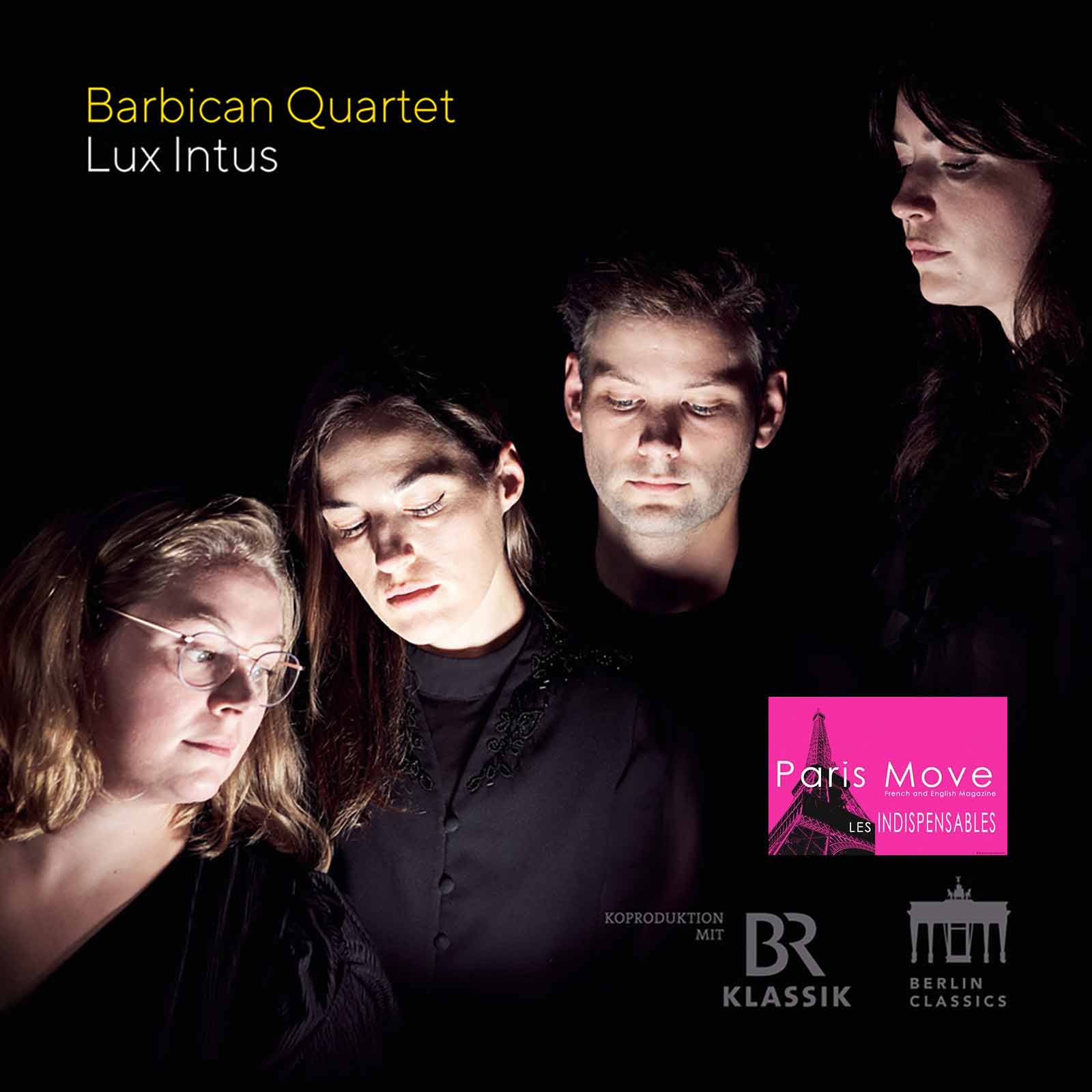
If you have even a passing interest in classical music, the opening measures of Lux Intus may stop you in your tracks. In the first movement of String Quartet No. 1 in D Major, Op. 25, the slow-breathed Andante sostenuto unfolds with a suspended, almost devotional hush before yielding to the quicksilver vitality of the Allegro vivo. In the hands of the Barbican Quartet, that transition feels less like a tempo change than an ignition. A silence lingers half a heartbeat longer than expected; then the ensemble surges forward, tone burnished, articulation clean as cut glass.
Unlike jazz, where innovation is often measured by the boldness of new compositions, classical music thrives on renewal through interpretation. What matters is not novelty of material but freshness of vision. Here, four young musicians revisit works by Wolfgang Amadeus Mozart, Rebecca Clarke and Edward Elgar, composers separated by centuries and sensibilities, and find connective tissue in contrast.
The album’s title, Lux Intus , literally, “intruding light”, hints at its governing idea. These performances do not attempt to modernize the repertoire through gimmickry; rather, they cast an unexpected illumination across familiar terrain. In Mozart, the quartet leans into tensile phrasing and subtly exaggerated dynamic swells, allowing harmonic shifts to glow from within. Clarke’s darker, more chromatic language is shaped with careful gradation of tone, the viola lines shaded like charcoal across canvas. In Elgar, the ensemble resists sentimentality, emphasizing structural clarity while letting climaxes bloom organically.
The Barbican’s instrumentation is traditional, two violins, viola and cello, but the interplay feels electric. There is something almost rock-like in their temperament, not in decibel level but in intensity. Rhythms lock in with near-metronomic precision, yet elasticity remains. In forte passages, the quartet achieves a collective sonority that swells without harshness; in pianissimo, they pare the sound down to a filament. Particularly striking is their management of silence: cadences breathe; transitions shimmer in suspended air before the next phrase lands with quiet inevitability.
Since 2022, the ensemble, whose members hail from leading European conservatories and count chamber-music luminaries among their mentors, has steadily ascended the international stage. Their First Prize at the 71st ARD International Music Competition, along with several special awards, signaled not only promise but authority. The competition’s juries are known for ferocious scrutiny; victories there are rarely accidents. Yet Lux Intus does not sound like a victory lap. It feels instead like a waypoint in an evolving conversation among four players who share a disciplined, almost ascetic devotion to craft.
That seriousness recalls, in spirit if not repertoire, the partnership between Alfred Deller and William Christie. Christie’s recordings of Music for a While and Ode à la Reine Anne demonstrated how scholarship and imagination can coexist, how historical awareness can heighten, rather than dampen, emotional immediacy. The Barbican Quartet operates within a different stylistic frame, yet a comparable rigor is audible. Beauty here arises from attention: to balance, to articulation, to the inner logic of a phrase.
Though much of my listening gravitates toward jazz, the border between jazz and classical music has long been porous. Keith Jarrett’s classical training informed his improvisational architecture; Wynton Marsalis moves fluently between symphonic and jazz idioms. Both traditions prize interpretation as much as invention. In Lux Intrus, the sequencing itself feels almost jazz-like in its sense of narrative arc. The program unfolds deliberately, each work preparing the ear for the next, inviting immersion rather than demanding instant impact.
One of the album’s quiet triumphs is its pacing. The Barbican Quartet resists the temptation to front-load the most virtuosic material. Instead, they allow the listener to discover their strengths gradually: the seamless blend of upper strings, the warm, grounded resonance of the cello, the subtle elasticity that animates transitional passages. In Clarke’s writing, dissonances resolve with a kind of inward sigh; in Elgar, climactic surges are shaped with architectural patience, crescendos built in long arcs rather than abrupt bursts.
In classical music, technical excellence is assumed at this level. What proves rarer is viewpoint, the capacity to inhabit a score while offering a distinct interpretive stance. Each member of the Barbican Quartet appears to bring an individual sensibility to the table, yet the collective voice remains unified. Their phrasing suggests a shared philosophy: fidelity to the written page paired with the courage to linger, to risk vulnerability in the shaping of a line.
For a listener formed in the classical tradition, genuine surprise is uncommon. Yet their interpretation of Mozart’s quartet, particularly the unfolding of that opening movement, left me momentarily breathless. The music did not feel embalmed in reverence; it felt alive, as though composed yesterday. That vitality cannot be manufactured. It emerges only when musicians invest something of themselves, their curiosity, their restraint, their ardor, into the act of performance.
Lux Intrus ultimately succeeds not because it seeks to reinvent the canon, but because it reveals it anew. In doing so, the Barbican Quartet affirms a truth sometimes overlooked: that even in works long enshrined, light still finds unexpected angles of entry.
Thierry De Clemensat
Member at Jazz Journalists Association
USA correspondent for Paris-Move and ABS magazine
Editor in chief – Bayou Blue Radio, Bayou Blue News
PARIS-MOVE, February 22nd 2026
Follow PARIS-MOVE on X

::::::::::::::::::::::::
Musicians :
Amarins Wierdsma, violin
Kate Maloney, violin
Christoph Slenczka, viola
Yoanna Prodanova, cello
Track Listing:
String Quartet No. 21 In D Major, KV 575 – I. Allegretto
String Quartet No. 21 In D Major, KV 575 – II. Andante
String Quartet No. 21 In D Major, KV 575 – III. Menuetto. Allegretto
String Quartet No. 21 In D Major, KV 575 – IV. Allegretto
Poem For String Quartet
String Quartet No. 1 In D Major, Op. 25 – I. Andante Sostenuto, Allegro Vivo
String Quartet No. 1 In D Major, Op. 25 – II. Allegretto Con Slancio
String Quartet No. 1 In D Major, Op. 25 – III. Andante Calmo
String Quartet No. 1 In D Major, Op. 25 – IV. Molto Vivace
Enigma Variations, Op. 36 – Variation Ix. Adagio, “Nimrod” (Arr. For String Quartet By Christoph Slenczka)
Postlude