
| Jazz |
Baltimore’s Sound, Composed as a Collective Statement
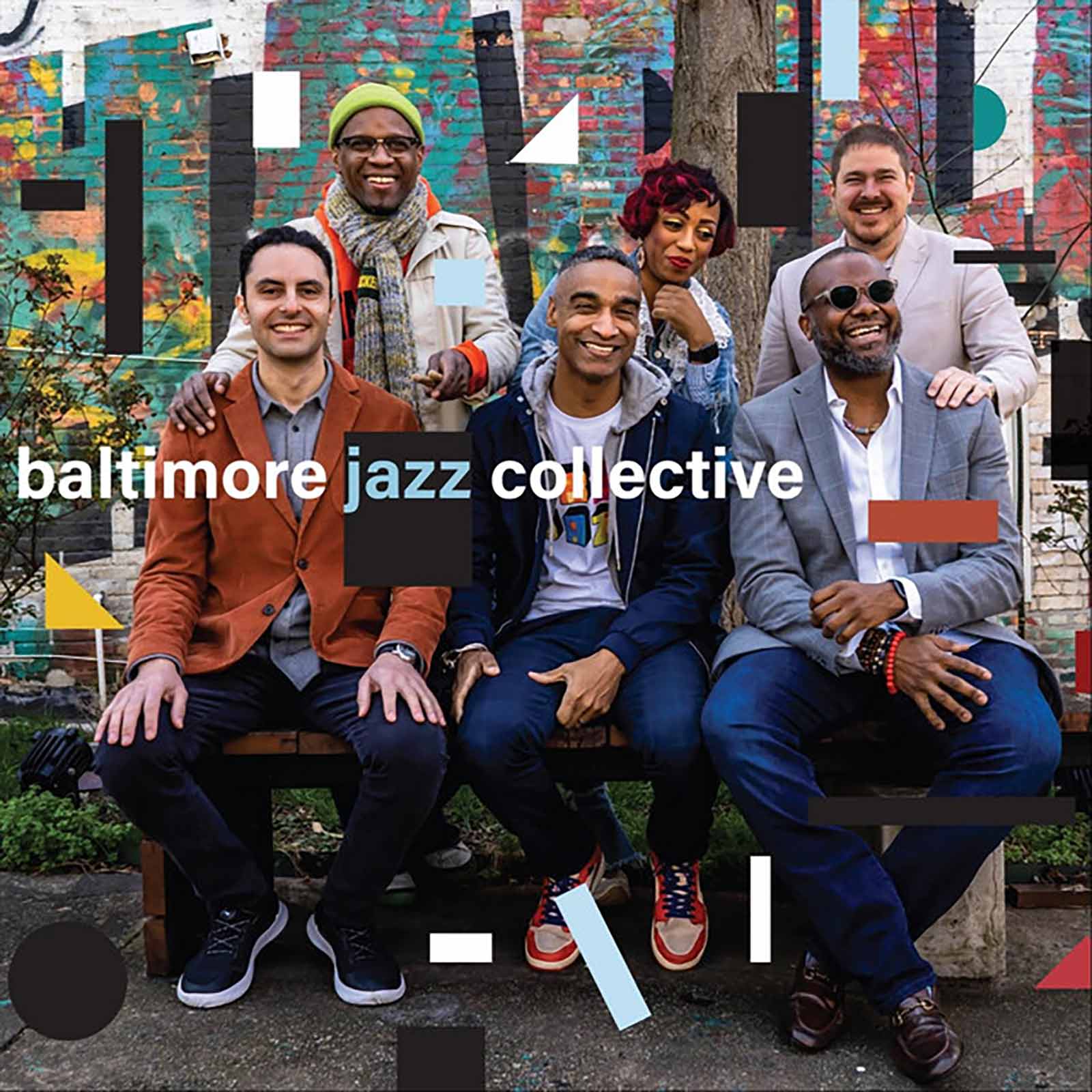
At a moment when American cities are reassessing how culture defines their public identity, the Baltimore Jazz Collective arrives not simply as a band, but as a civic statement. Its self-titled debut album suggests the emergence of something larger than an ensemble: the early formation of an institution. Built almost entirely on original compositions, the project reflects a rare degree of artistic discipline and shared purpose, one in which each musician contributes not only as a performer, but as a composer and custodian of a collective voice.
Founded in 2019 by trumpeter Sean Jones, the Baltimore Jazz Collective was conceived in the image of the SFJAZZ Collective, where compositional responsibility is distributed among all members rather than centralized in a single authorial figure. That model, collaborative, demanding, and egalitarian, shapes every aspect of this recording. What makes the project distinctive, however, is its geographic unity: every musician involved comes from Baltimore, and every piece is informed by the city’s layered musical history.
The ensemble’s sound has been refined through frequent performances at Keystone Korner, Baltimore’s newly revitalized jazz club, led by Todd Barkan, a recipient of the National Endowment for the Arts Jazz Master Award. Those appearances are audible in the album’s cohesion and balance. This is music forged in front of audiences, but meticulously honed through writing and rehearsal.
There is an almost symphonic dimension to the album’s construction. The arrangements unfold with architectural precision, leaving little space for spontaneity in the traditional sense. Improvisation is present, but it is carefully framed, subordinated to the primacy of composition. For some listeners, this emphasis on structure may raise familiar questions about jazz’s historical reliance on risk and unpredictability. Yet here, restraint functions not as limitation but as intent. The writing is central, deliberate, and commanding, producing a form of jazz that is immediately approachable while remaining formally complex.
The solos, in particular, feel less like individual departures than guided tours through jazz history itself. There is a clear respect for lineage, swing, post-bop, modal traditions, but these references are never nostalgic gestures. Instead, they are refracted through a contemporary lens, firmly situated in the 21st century. Across six musicians, the album offers shifting soundscapes, light, detailed, and varied, while maintaining a strong sense of unity in melodic direction and emotional purpose.
This approach also shapes how one imagines the Collective in performance. The music draws freely from classical form, traditional jazz language, and elements of folk-inflected lyricism, all handled with notable intelligence. At times, the atmosphere takes on a cinematic quality, evoking the tonal palettes of 1950s American film scores. Structurally and philosophically, the project recalls the best productions associated with Jazz at Lincoln Center. While the Collective’s music differs significantly from that of Wynton Marsalis, the underlying ambition is comparable: to treat jazz as a classical American art, worthy of preservation, transmission, and renewal.
Jazz in the United States has always been shaped by geography. Each region carries its own dialect, formed by local history, community, and cultural memory. That tension, between a shared national language and deeply rooted regional identities, is one of the music’s greatest strengths. Baltimore’s voice, as articulated by this Collective, is soulful, disciplined, and resistant to easy categorization.
On an album of this scope, most listeners will find at least one piece that invites close listening, and another that compels movement, sometimes both at once. The richness of the compositions, matched by the ensemble’s interpretive clarity, gives the music a sense of scale and quiet grandeur. This is not music that seeks attention through excess, but through depth and coherence.
The way the members of the Baltimore Jazz Collective describe their hometown could just as easily describe themselves, and their debut album. “Musically, Baltimore is one of the most soulful cities, and you can’t really box its music scene into a single category,” says Sean Jones, founder of the Collective and one of the most respected jazz trumpeters of his generation. Jones holds the Richard and Elizabeth Case Chair of Jazz Studies at the Peabody Conservatory of Music at Johns Hopkins University, which has supported the project since its inception. “The musicians here play at an exceptionally high level,” he adds. “It’s truly a unique place.”
“This is jazz that respects its past without being trapped by it, and that may be Baltimore’s greatest contribution to the form.”
Taken together, these elements point toward a future in which the Baltimore Jazz Collective is recognized well beyond the city’s borders, not only as a high-level ensemble, but as a defining expression of how place, education, and collective authorship can shape the future of American jazz.
Thierry De Clemensat
Member at Jazz Journalists Association
USA correspondent for Paris-Move and ABS magazine
Editor in chief – Bayou Blue Radio, Bayou Blue News
PARIS-MOVE, January 20th 2026
Follow PARIS-MOVE on X

::::::::::::::::::::::::
Musicians :
trumpeter Sean Jones,
bass clarinetist Todd Marcus,
pianist Alex Brown,
bassist Kris Funn,
drummer Quincy Phillips,
and interdisciplinary artist/vocalist/tap dancer Brinae Ali
Track Listing:
Minor Swing
Red-Lined Intro
Red-Lined
Red-Lined Outro
Watermelon
Link to Lateef
Memories of You
Sundays at Eubies
For Baby
The Thong Song
Fleeting Stillness
Intercession
Dance my Pain Away