
| World |
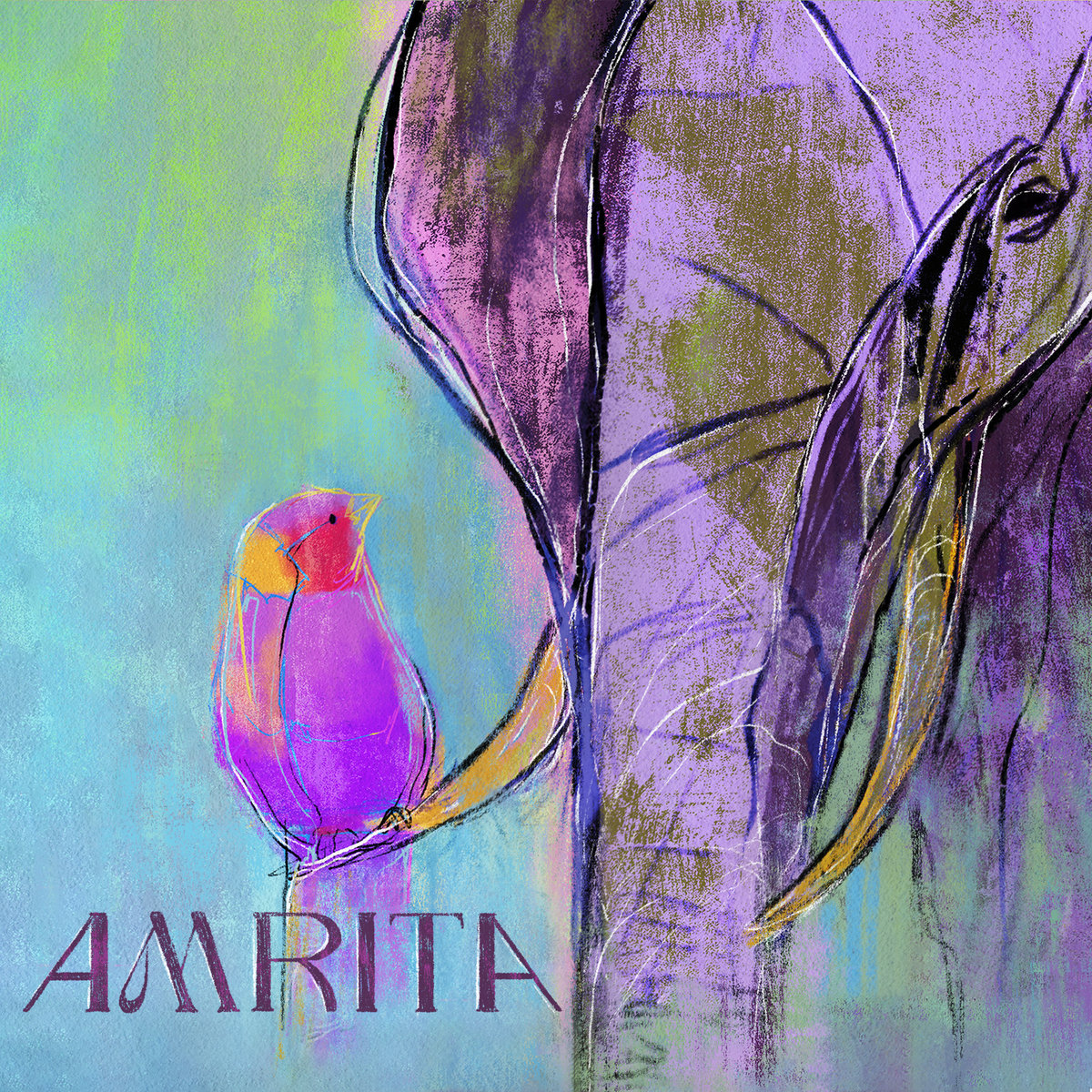
Amrita, the debut album by the duo AMRITA, is one of those rare albums that seem to suspend time itself, inviting us to slow down, listen deeply, and reconnect with something essential.
Rich in beauty, sensitivity, and inner light, it offers a musical journey where tradition, improvisation and human connection merge together naturally as it is meant to be.
From the very first notes, one is drawn into a world where Hindustani music, jazz improvisation, and contemporary world music coexist in perfect harmony. The result is neither a fusion project nor a simple meeting of cultures, but rather a genuine musical dialogue, one that feels both ancient and entirely contemporary.
Formed in 2022 by tabla player, vocalist, and composer Anita Katakkar and soprano saxophonist Kayla Milmine, AMRITA has created a recording that feels both timeless and contemporary, rooted in ancient traditions while speaking directly to modern listeners. Their music occupies a fascinating territory where Hindustani classical music, jazz improvisation, world music, and personal expression coexist naturally, without ever sounding forced or artificial.
The very name of the duo offers an important clue to the spirit of the project. In Sanskrit, Amrita means “nectar of immortality,” a concept deeply embedded in Indian philosophy and mythology. Across centuries and civilizations, the word has come to symbolize humanity’s enduring aspiration to transcend mortality and connect with something greater than us. This search for transcendence, beauty, and spiritual depth seems to permeate every moment of the album.
Listening to Amrita often feels less like hearing a collection of compositions than like entering a luminous musical space where cultures, traditions, and emotions gently intertwine.
At the heart of this achievement are two remarkable musicians.
Anita Katakkar brings an extraordinary richness to the project. A highly respected performer and educator, she draws upon deep knowledge of Hindustani music while remaining fully open to improvisation and cross-cultural collaboration. Her tabla playing is consistently remarkable, not only rhythmically sophisticated, but also profoundly musical. Throughout the album, she demonstrates an ability to transform rhythm into melody and conversation. Her vocal contributions add another layer of intimacy and emotional depth, revealing a voice that is both expressive and deeply rooted in tradition.
Alongside her, Kayla Milmine proves to be the perfect AMRITA musical partner. Her soprano saxophone playing combines technical mastery with lyrical sensitivity. Rather than imposing a jazz vocabulary onto Indian-inspired material, she listens, responds, and adapts, creating a genuine dialogue with Katakkar. Her tone is warm, clear, and inviting, capable of moving effortlessly between contemplative passages and more adventurous improvisational flights.
One of the album’s greatest strengths lies in the quality of communication between the two musicians. Neither seeks to dominate the music. Neither attempts to showcase their individual brilliance at the expense of the collective vision. Instead, they engage in a continuous process of listening and responding, allowing each piece to unfold organically.
The result is music that feels alive.
The two guest artists who appear on selected tracks further enrich the album’s already impressive palette. Their contributions are integrated with great sensitivity, adding subtle colours and textures without ever disturbing the intimate balance that defines the duo’s identity. Rather than functioning as guest stars, they become additional voices within the ongoing conversation, helping to expand the emotional and sonic landscape of the recording.
What makes Amrita particularly successful is the naturalness of its fusion. Many cross-cultural projects speak of blending traditions, but relatively few achieve genuine integration. Here, Hindustani musical concepts, jazz improvisation, and world-music influences coexist effortlessly. The listener never has the impression of hearing separate musical languages stitched together. Instead, a new and coherent language emerges.
The album is filled with moments of extraordinary delicacy. Certain passages seem to float weightlessly, suspended in time. Others pulse gently with rhythmic energy, propelled by the intricate beauty of Katakkar’s tabla playing. Throughout, Milmine’s soprano saxophone acts as a lyrical guide, weaving melodic threads that connect the various moods and textures.
What remains most striking, however, is the album’s emotional character. This is profoundly sensitive music. It is endearing without becoming sentimental. It is sophisticated without becoming intellectualized. It is spiritual without becoming dogmatic. Above all, it is radiant.
The word “radiant” seems particularly appropriate because the music constantly projects warmth, openness, and generosity. Listening to Amrita feels like standing in sunlight after a long period of darkness. The album does not demand attention through volume or complexity; it attracts the listener through beauty and sincerity.
In this respect, one cannot help thinking of George Harrison‘s famous reflection following his first encounters with Indian culture and music in the mid-1960s: “The Indian people possess an immense spiritual strength that I don’t think I could find anywhere else. The spirit of the people, the beauty, the goodness, that is what I tried to learn.”
That observation seems particularly relevant here. While Amrita is unquestionably a contemporary album, it shares with Harrison’s discovery a profound appreciation for the spiritual and human dimensions that Indian musical traditions can convey. One senses not imitation but respect, not exoticism but genuine dialogue.
Perhaps the greatest compliment one can pay this recording is that it succeeds simultaneously as a world-music album, a jazz album, an improvisation album, and a deeply personal artistic statement. It belongs to all these categories and yet transcends them.
With Amrita, Anita Katakkar and Kayla Milmine have created a work of remarkable beauty and authenticity. Their musical partnership feels both natural and inspired, their performances are consistently captivating, and the album’s atmosphere remains with the listener long after the final notes have faded.
In a world that increasingly seems rushed, violent, aggressive, and fragmented, Amrita offers something increasingly rare: a moment of calm, reflection, connection, and grace.
It is a radiant debut, a deeply moving musical journey, and one of those albums that quietly reminds us why music remains one of humanity’s most powerful forms of expression.
Frankie Pfeiffer
Editor in chief – PARIS-MOVE
PARIS-MOVE, June 26th, 2026
Follow PARIS-MOVE on X
::::::::::::::::::::::::
AMRITA is:
Anita Katakkar – tabla, vocals
Kayla Milmine – soprano saxophone
Guest Artists:
Jonathan Kay – esraj (tracks 6, 7)
Zaynab Wilson – cajón (tracks 2, 4, 7, 9)
Tracklisting:
- Take Flight 05:44
- Clinton Street 7 06:45
- English Breakfast 05:52
- Dimension Jumping 04:20
- Heavy Bird 02:56
- Elephant Promenade I 09:20
- Elephant Promenade II 05:45
- Bon Chaton 07:10
- Metamorphosis 04:54
All music composed by AMRITA, except:
“Clinton Street 7”: co-composed with Pratik Rao
“Elephant Promenade I”: co-composed with Vinod Prasanna
Produced and mixed by Justin Gray
Recorded by Alex Gamble at Union Sound Company
Mastered by Mariana Hutten Czapski
Album artwork and design by Bea Labikova
This album was made with the generous support of our funders: Canada Council for the Arts, Ontario Arts Council, and Toronto Arts Council.