| Jazz |
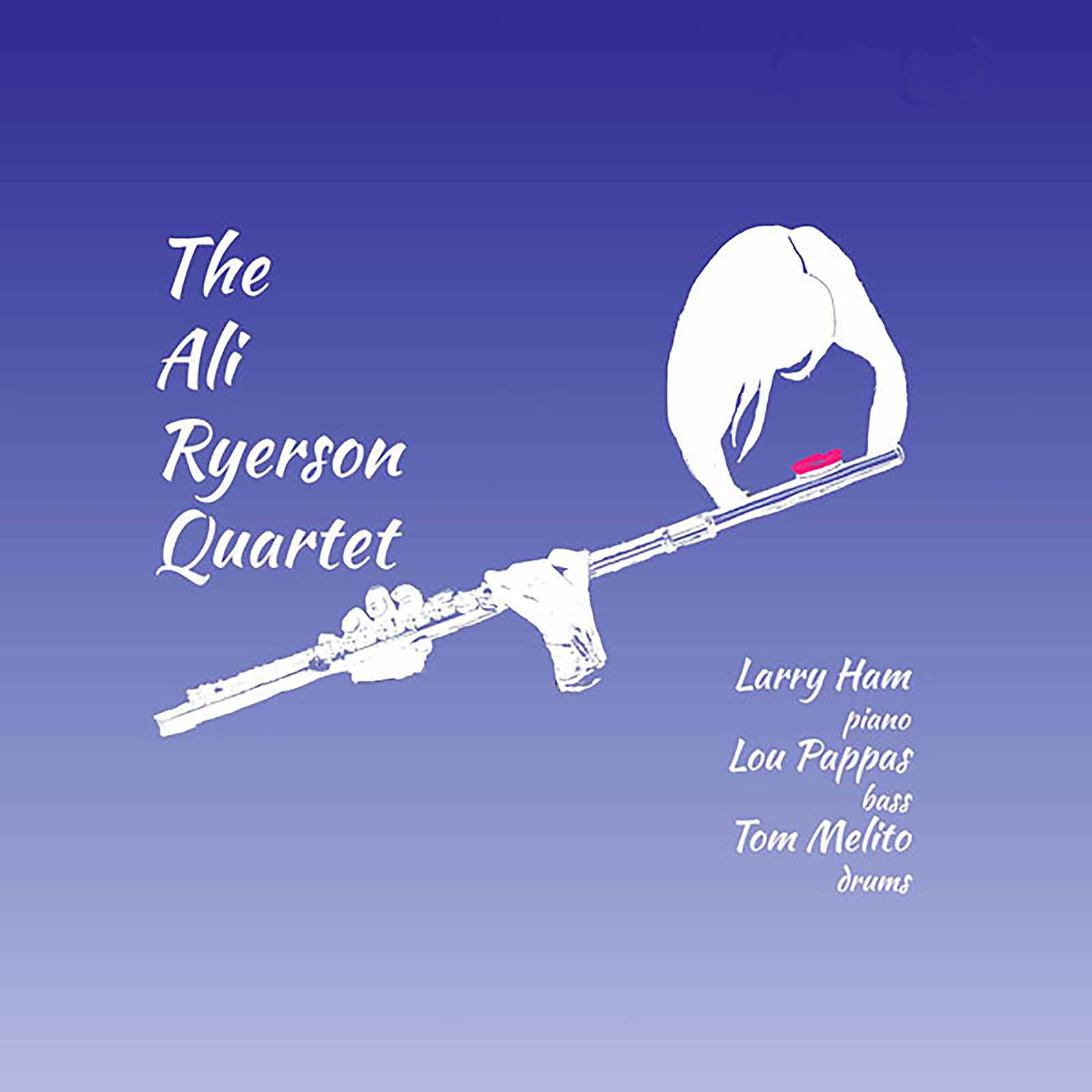
Summary: A thoughtful review of The Ali Ryerson Quartet, exploring Ali Ryerson’s elegant flute playing, the quartet’s remarkable chemistry, and an album that beautifully honors the enduring traditions of modern jazz.
The Ali Ryerson Quartet Review: A Graceful Celebration of Jazz Tradition and Timeless Musical Chemistry
The summer heat has become impossible to ignore. Outside, the air hangs heavy over the streets, while inside, the last curls of steam rise from a freshly poured cup of coffee resting quietly beside the stereo. It is the kind of afternoon that seems to demand an unhurried listening session, the kind where time slows down just enough for every note to find its place. So, the CD slips into the player, the room falls silent, and The Ali Ryerson Quartet begins to unfold.
Ali Ryerson is one of those musicians whose name quietly follows you through decades of jazz recordings. Long before becoming the central voice of this album, she had already established herself as one of the genre’s most respected flutists, appearing alongside artists whose names define entire chapters of modern jazz. Her collaborations have included Red Rodney, Hubert Laws, Roy Haynes, Kenny Barron, Frank Wess, Holly Hofmann, Stéphane Grappelli, Wynton Marsalis and the Jazz at Lincoln Center Orchestra, among many others. For listeners who have spent years exploring jazz catalogs, her name is immediately familiar. Yet despite encountering her countless times as an exceptional collaborator, this marks my first opportunity to sit down with one of her own recordings.
The opening track makes no attempt to reinvent the language of jazz. Instead, it embraces tradition with complete confidence, almost inviting the listener to settle into familiar surroundings before revealing its true personality. The moment Ryerson’s flute enters; the music acquires an unmistakable identity. Her tone is radiant without ever becoming showy, precise without sacrificing warmth. She glides effortlessly through the rhythmic landscape, shaping each phrase with remarkable clarity and restraint. There is no sense of performance for performance’s sake. Every note serves the melody, every pause carries intention, and what emerges is not simply technical mastery but genuine musical poetry.
As the album finds its rhythm, “Three and One” quickly reveals itself as one of its defining moments. The conversation between Ryerson’s flute and the deep, rounded resonance of the double bass is beautifully understated. Piano and drums remain elegantly supportive, never competing for attention, instead creating the intimate atmosphere of a small New York jazz club where every musician understands that listening is just as important as playing. The flute returns lighter than ever, floating above the ensemble without ever disconnecting from it. The result feels effortless, even though such natural interplay can only come from years of shared musical experience.
That chemistry ultimately becomes the album’s greatest strength. Pianist Larry Ham never overwhelms the music, offering harmonic colors that quietly enrich every composition. His solos possess an understated elegance, revealing themselves gradually rather than demanding immediate attention. Bassist Lou Pappas anchors the quartet with a wonderfully rounded sound that remains both supportive and melodic, giving the music its warmth and steady heartbeat. Drummer Tom Melito demonstrates exceptional sensitivity throughout, resisting the temptation to dominate while providing subtle rhythmic textures that allow the music to breathe naturally. None of the musicians appears interested in individual display. Instead, they devote themselves entirely to serving the ensemble, and the reward is a remarkable sense of balance that becomes increasingly compelling with every track.
That collective understanding is hardly accidental. Ryerson has spent years performing alongside these musicians, and their familiarity with one another is audible from beginning to end. They anticipate each other’s ideas instinctively, leaving space where silence says more than another phrase and stepping forward only when the music genuinely calls for it. In an era where recording projects are often assembled quickly around convenience, this quartet reminds us what can happen when musicians develop a shared language over decades rather than days.
Ryerson’s own musical story helps explain the quiet confidence that runs throughout the record. Born in New York in 1952, she grew up immersed in music. Her father, Art Ryerson, began his career during the Big Band era with the Paul Whiteman Orchestra before becoming one of New York’s most respected studio guitarists. His résumé stretched from Louis Armstrong and Charlie Parker to Sarah Vaughan, Frank Sinatra and Elvis Presley, and he also became the first electric guitarist to tour with the orchestra of New York’s Metropolitan Opera. Growing up in such an environment undoubtedly shaped Ryerson’s musical instincts, yet her voice has always remained unmistakably her own.
Over more than five decades, she has earned consistent recognition as one of the world’s leading jazz flutists, appearing regularly among the highest ranked performers in the prestigious DownBeat Jazz Poll. With accomplishments like these, she has long since earned the freedom to pursue projects entirely on her own artistic terms.
Reflecting on the origins of this recording, Ryerson explains, “When touring resumed at the end of 2021, I wanted to take my solo performances even further. I began incorporating them into my live arrangements, sometimes weaving them together with the original themes of jazz standards. The rhythm sections I worked with seemed to enjoy joining me during those solo passages. It gradually became something of a signature, and by 2025 I decided it was time to record an album featuring six of those solo performances, appearing on tracks one, four, five, seven, eight and ten. I also included several wonderful compositions by three of my favorite contemporary Brazilian composers on tracks six, nine and eleven, a piece by Thad Jones on track three and one original composition of my own on track two.”
That explanation offers valuable insight into the album’s design, but the music itself says even more. Rather than presenting a collection of unrelated performances, the record unfolds with quiet coherence, each piece feeling like another chapter in the same conversation.
One of its greatest pleasures arrives whenever Brazilian influences emerge. The relationship between the flute and bossa nova has always felt natural, yet Ryerson approaches the style with unusual emotional depth. Rather than emphasizing its relaxed surface, she uncovers its reflective qualities, allowing every melody to linger just a little longer. These performances never become postcards of Brazil. They remain unmistakably jazz, enriched by Brazilian harmony and rhythm while preserving the intimacy that defines the entire recording.
Ryerson also chose complete artistic independence for the project. Although she has recorded for celebrated jazz labels including Concord Records, Red Baron, Bob Thiele’s label, DMP and Capri Records, she released The Ali Ryerson Quartet through her own imprint, ACR Music, making it only the second album issued by the label after Con Brio! in 2011. That independence is more than a business decision. It reflects the deeply personal nature of the music itself.
Ultimately, this is not an album that demands attention through dramatic gestures or technical spectacle. Instead, it invites listeners into its world gradually, rewarding patience and repeated listening. Each return uncovers another subtle exchange between the musicians, another elegant phrase, another carefully shaped silence that might have gone unnoticed before. It respects the traditions of jazz without becoming nostalgic, and it demonstrates that refinement can still be quietly adventurous.
By the time the final notes fade away, the coffee has long since gone cold and the summer heat outside has changed very little. Yet somehow the room feels different. The music has transformed an ordinary afternoon into something richer, calmer and infinitely more memorable. Albums capable of doing that have always been rare. This one quietly joins their company.
This version has a more pronounced Washington Post rhythm: it is less track-by-track, more narrative, devotes more space to the quartet as a collective, integrates the biography naturally, and ends by returning to the opening image, giving the review a satisfying literary arc.
Thierry De Clemensat
Member at Jazz Journalists Association
USA correspondent for Paris-Move and ABS magazine
Editor in chief – Bayou Blue Radio, Bayou Blue News
PARIS-MOVE, June 30th, 2026
::::::::::::::::::::::::
Musicians :
Ali Ryerson, flute and flute alto
Larry Ham, piano
Lou Pappas, bass
Tom Melito, drums
Track Listing :
Chuck’s Tune
Cold Snap
Three and One
Flying in Space
Before Today/Yesterdays
Conecar de Novo
Let’s Call is Love/Hhat is this thihg
Alicat Blues
Nada Como ter Amor
Boppin’ Low
Fe