
| Jazz |
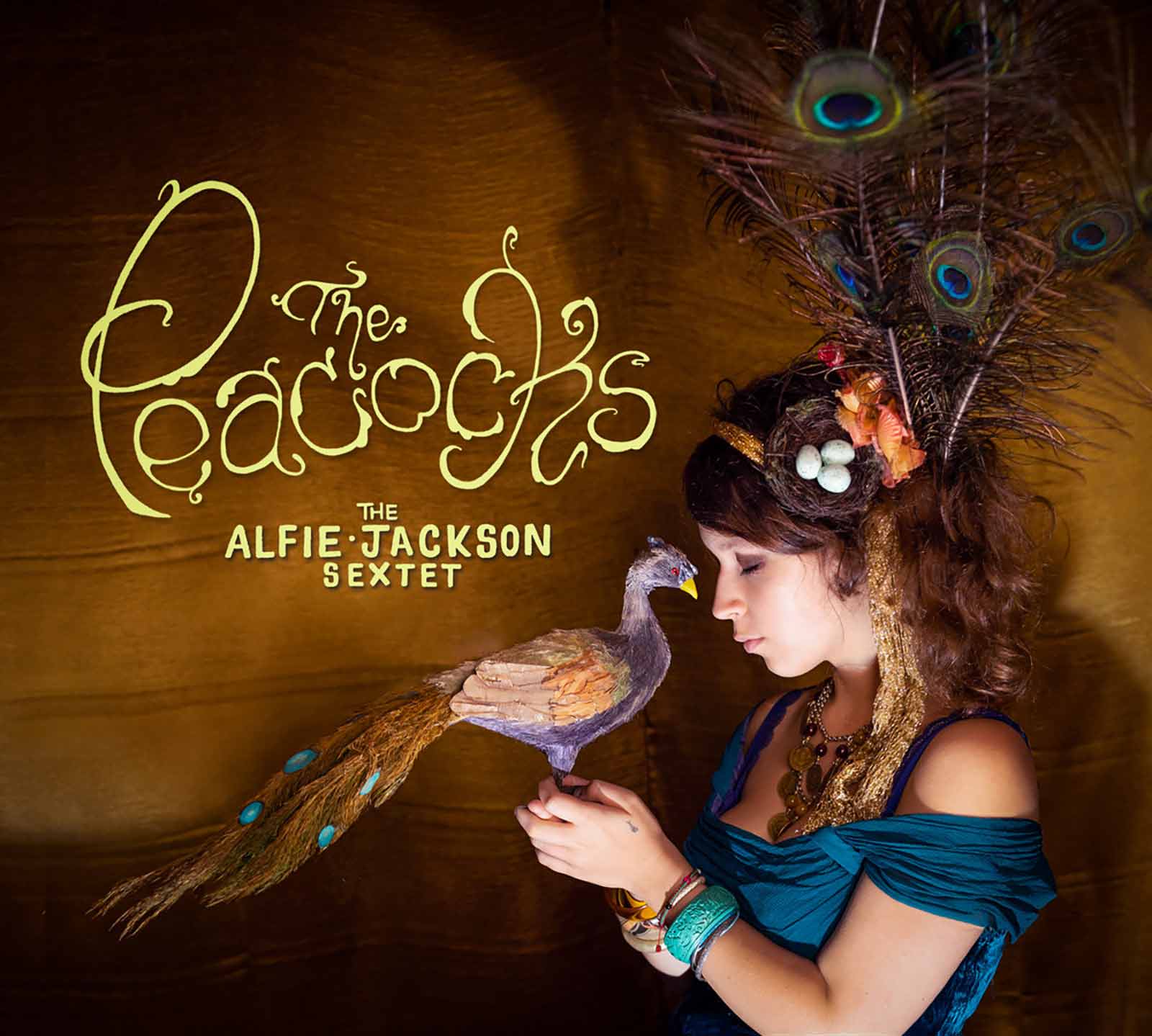
In a moment when contemporary jazz vocals are experiencing a quiet but unmistakable renewal, shaped by artists who blur the boundaries between composition, improvisation and personal storytelling, a new voice has begun to draw serious attention. It is likely that, unless you live in New York or Chicago, you have not yet heard of the vocalist Alfie Jackson. Yet in Chicago, where she trained under G. Thomas Allen, Margaret Murphy-Webb, Kurt Elling and the Jazz Institute, her emergence has been watched with growing interest.
That interest turned into genuine excitement at last year’s Chicago Jazz Festival. During a late-afternoon set that began in near silence, Jackson opened with a spare, unaccompanied phrase that seemed to suspend the restless festival crowd in place; by the time the band entered, the audience had settled into the kind of attentive stillness musicians rarely encounter at outdoor events. The ovation that followed her closing number was long and unforced, the sort that signals not simply approval but discovery. Soon after, she played to a sold-out audience at SPACE in Evanston, Illinois, celebrating the release of her debut album.
There is, in her singing, a fleeting reminder of Minnie Riperton, not in imitation, but in the clarity and ease with which she moves through the upper register, tempered by an artistic personality that is unmistakably her own. One might also hear, in her phrasing, echoes of the narrative subtlety of Norma Winstone or the exploratory instincts associated with singers who have gravitated toward the progressive edge of jazz.
A final cover of “Nature Boy” may not seem the most obvious choice for such a project. The song has been interpreted so often that it risks becoming a museum piece, and many performers have struggled to find a convincing way into it. Jackson, however, treats the composition less as a standard than as a landscape for exploration, stretching phrases, bending dynamics, and allowing silence to play as active a role as sound. The result is not definitive, perhaps, but it is revealing: it shows the breadth of her vocal imagination and the confidence of a young artist who appears destined for a remarkable future.
Jackson persuades not by adopting a persona but by refusing to be anything other than herself. She performs with overflowing passion and energy, seemingly delighted by the smallest musical gesture, precise in her interpretations and bringing a rare freshness to a style that resists easy imitation. Yet, as with many albums by ambitious creators, this recording will not be for everyone. Its vocal language is modern, and its musical architecture often leans toward a complex, exploratory jazz vocabulary shaped as much by chamber music textures and subtle rhythmic displacements as by traditional swing. Entering her universe requires patience; it unfolds like a slowly forming dream, each track functioning as a key that opens another door into her artistic world.
Jackson does not appear to be chasing broad appeal. Instead, she offers her music plainly, to anyone willing to listen, and for a debut album, the result is deeply compelling. It quickly becomes evident that she is not only a gifted vocalist but also a skilled musician, accompanying herself on guitar and presenting a repertoire composed largely of her own works. The breadth of her musical culture is apparent, as is her desire to situate herself within a progressive strain of jazz that favors risk and discovery over convention. It is easy to understand why major national newspapers and critics, attentive to the evolution of the genre, have begun to take an interest in her work.
There is also a distinctly cerebral, almost gothic dimension to the way she conceives her music. In her singing, she seems to inhabit the notes themselves, shaping phrases with an elasticity that creates the impression of time stretching and bending. The album feels, at moments, like a patchwork of her vocal and musical passions. Occasional rock-tinged gestures, a sudden surge of distorted guitar color, or a rhythmic pattern that leans briefly toward post-rock atmospherics — disrupt expectations and reinforce the sense of surprise that runs throughout the recording.
Performing in a sextet setting, Jackson remains the unmistakable center of gravity, supported by musicians who appear to take genuine pleasure in accompanying her. The pianist favors harmonies that hover between tonal and modal language; the rhythm section moves with a flexibility that allows the music to breathe. At times, the album carries the atmosphere of a live performance, which may also account for what some listeners will perceive as its principal weakness. A few tracks feel less fully integrated into the album’s arc, as though chosen in the heat of enthusiasm rather than through strict structural design. Yet this very abundance of ideas and energy may well prove to be one of her greatest strengths, particularly on stage, where such spontaneity can become electric.
If this first recording offers any indication, Alfie Jackson stands at the beginning of a trajectory worth watching. With touring already under discussion and new material reportedly taking shape, she seems poised to refine and expand a musical language that is still evolving. For listeners willing to step into her world, the sense is not of a finished statement, but of an artist in motion, and that, in jazz, is often where the most compelling stories begin.
Thierry De Clemensat
Member at Jazz Journalists Association
USA correspondent for Paris-Move and ABS magazine
Editor in chief – Bayou Blue Radio, Bayou Blue News
PARIS-MOVE, February 11th 2026
Follow PARIS-MOVE on X

::::::::::::::::::::::::
Musicians :
Alfie on vocals and guitar
Sam Roberson, guitar
Leo Milano, sax
Wanye Williams, vibraphone
Chase Wilkins, drums
Daniel Ellis Perez, bass
Track Listing :
500 Miles High
Nature Boy
After The Rain
Inner Urge
How Insensitive
I Deserve This
My One And Only Love
Ugetsu
Do I Move You?
The Peacocks