| Contemporary music |
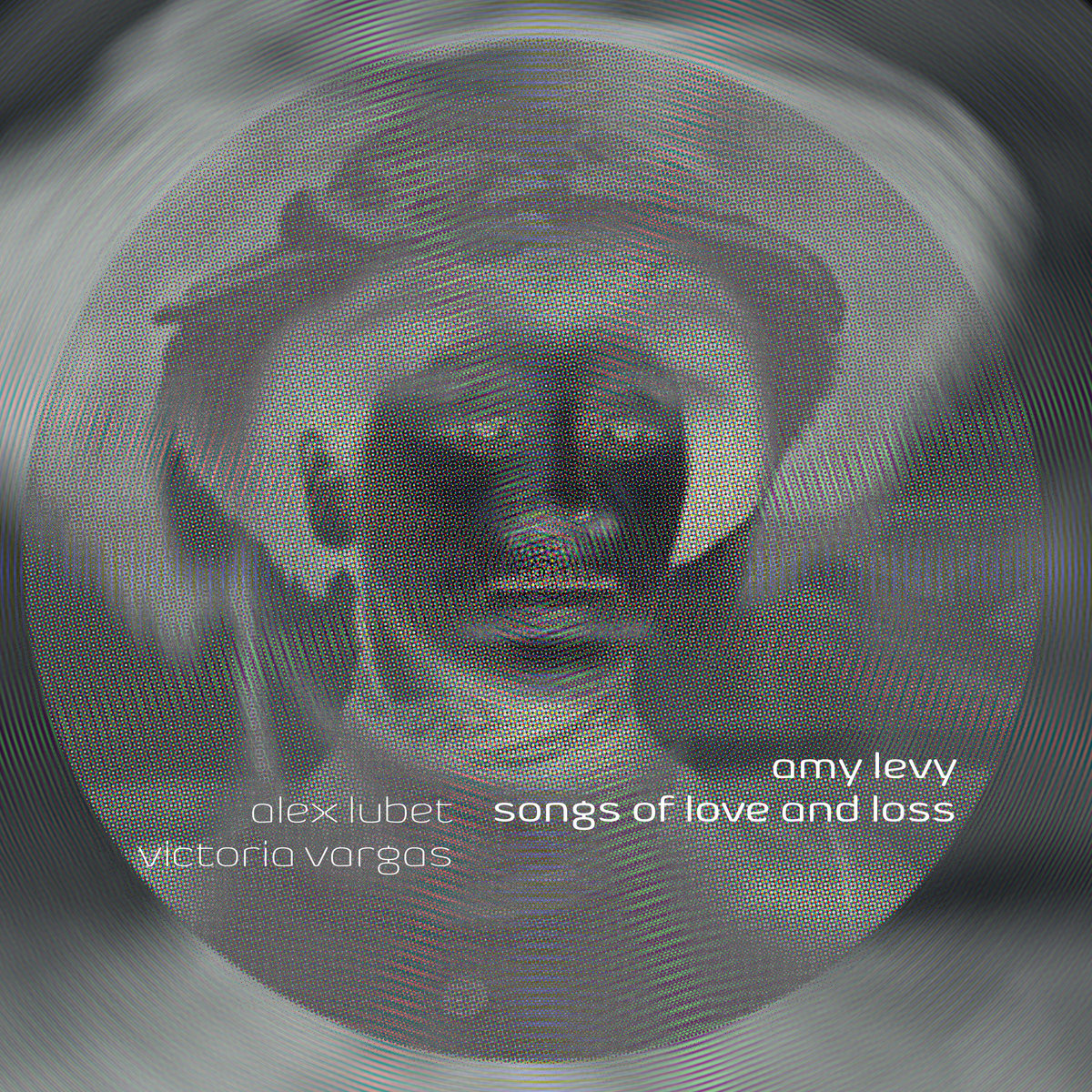
Amy Levy: Songs of Love and Loss: A Revelatory Song Cycle for Mountain Dulcimer and Voice.
Amy Levy: Songs of Love and Loss, the extraordinary release from composer and mountain dulcimer virtuoso Alex Lubet, doesn’t just add to a tradition but quietly redraws its boundaries. The song cycle, that intimate parlour tradition of poetry wedded to music, has belonged almost exclusively to voice and piano for two centuries. Lubet throws that convention out entirely, pairing mezzo-soprano Victoria Vargas not with a piano but with the humble Appalachian mountain dulcimer, and in doing so creates something genuinely new: the first major musical setting of the poetry of Amy Levy, a dazzling, tragically short-lived Victorian writer who deserves exactly this kind of rediscovery. The result is a work of rare beauty, startling originality, and real emotional devastation, an unreserved must-hear.
Amy Levy (1861–1889) was, by any measure, extraordinary. Born into an Anglo-Jewish family, she became the second Jewish woman ever to study at Cambridge University and the first Jewish woman admitted to Newnham College. As a poet, novelist and essayist, she wrote with a frankness about female independence, Jewish identity and same-sex desire that was decades ahead of her era, themes found in her poetry collections Xantippe and Other Verses (1881), A Minor Poet and Other Verse (1884) and A London Plane-Tree and Other Verse (1889), as well as her controversial novel Reuben Sachs (1888), which explored Anglo-Jewish life with unflinching honesty, and essays for The Jewish Chronicle that grappled directly with her own identity and community. Her poem “To Vernon Lee” is widely understood as a tribute to her romantic interest in fellow writer Violet Paget (who published under the pen name Vernon Lee), making Levy a genuinely pioneering queer and feminist voice in Victorian England. Oscar Wilde, who admired her work deeply, wrote in her obituary that to write with such power “at six-and-twenty is given to very few”, lamenting that “the world must forego the full fruition of her power”. That loss came after Levy, who had struggled with depression, died by suicide at just twenty-seven, a tragically early end to a voice that was only beginning to find its full range. For decades her work slipped into obscurity, but she has since been reclaimed by feminist scholars, and interest in her continues to grow: in a remarkable coincidence, Cambridge University acquired and unsealed Levy’s personal archive, letters and draft manuscripts, in November 2025, the very month this album was released, a development expected to fuel a new wave of scholarship on her life and work.
Alex Lubet is a Chicago-born, longtime Minnesota-based composer, multi-instrumentalist, author and educator whose creative output this century has focused almost entirely on reimagining instruments of American folk and vernacular tradition: acoustic guitar, National steel guitar, ukulele, and, since 2015, especially the mountain dulcimer, for which he has built an entirely new “new music” repertoire employing extended techniques and more than seventy-five different tunings. A Morse Alumni/Graduate & Professional Distinguished Teaching Professor of Music at the University of Minnesota since 1979, Lubet is also a serious scholar in his own right: he’s widely credited as a founder of the field of disability studies in music, author of the first solo monograph in that discipline, and a respected writer on figures from Bob Dylan to blues and jazz traditions, with work appearing everywhere from academic journals to CNN and Newsweek. His recordings as a soloist and collaborator, including the acoustic-guitar album Spectral Blues, named a Best Album of 2013 by critic Ted Gioia, have been heard on six continents.
For this project, Alex Lubet makes an inspired case for the mountain dulcimer as a genuinely dramatic concert instrument. As he’s explained it himself, “the dulcimer’s delicate yet expressive timbre mirrors Levy herself – it can whisper like a lute or wail like a blues guitar, sometimes in the same phrase”. That description turns out to be exactly right: across this recording, Alex coaxes sounds from his instrument — played here on a McSpadden Model 4FHWR — that range from gentle, lute-like murmurs to raw, percussive wails, part Alban Berg in its angular modernism, part B.B. King in its rawness, with Appalachian folk and Jewish melodic inflections woven through the whole fabric. For anyone who still associates the mountain dulcimer purely with gentle Appalachian lap-playing, this album is a revelation, a reminder that in the right hands, even the plainest-looking folk instrument can carry genuine operatic weight.
None of this would land with the same force without Victoria Vargas, a Minnesota-based mezzo-soprano with deep roots in both opera and art song. Vargas has sung more than twenty-five roles for the Minnesota Opera and performed with the Opera Theater of Saint Louis, Chautauqua Opera, Sarasota Opera and numerous orchestras including the Buffalo Philharmonic, the Saint Paul Chamber Orchestra and the Minnesota Orchestra, with a repertoire ranging from Carmen to Marcellina in Le Nozze di Figaro, and credits that include creating the role of Nellie in Paola Prestini and Mark Campbell’s opera Edward Tulane. On this recording she brings both extraordinary vocal power and genuine interpretive subtlety to Levy’s words, capturing the poet’s wit, her longing and her piercing intellect in equal measure. It’s a performance that makes a poet dead for well over a century feel vividly, startlingly present.
The cycle opens with an instrumental “Prelude”, where Lubet’s dulcimer immediately establishes both beauty and mystery, setting a tone of melancholy that will deepen steadily across the record. “At a Dinner Party” sets Levy’s brief, glittering two-stanza poem about a secret shared glance across a crowded table, Vargas’s voice illuminating its hidden intimacy with real wit. “The First Extra”, a waltz song, and “A Cross-Road Epitaph” — its German epigraph referencing the old folk practice of burying suicides at crossroads — pair warm strings with Vargas’s increasingly expressive vocal lines as the cycle’s darker undercurrents begin to surface.
“To Vernon Lee” is one of the album’s loveliest and most poignant settings, a sweetly nostalgic reflection on a possibly romantic Florentine idyll shared with fellow writer Violet Paget, rendered here with a mesmerizing backdrop beneath Vargas’s soaring vocal line. For anyone who knows Amy’s story, here is a song that will make your heart and soul weep. A song featuring a vocal performance by Victoria Vargas that leaves you deeply affected, unable to walk away unscathed, and filled with profound, poignant thoughts for the young woman who subsequently took her own life.
“On the Threshold” and “A Prayer” – the latter a longing, five-minute meditation on loneliness and an elusive divine connection – deepen the cycle’s emotional stakes considerably, Lubet’s dulcimer work growing ever more inventive in its shading of light and shadow.
Then comes the album’s second towering centrepiece: “Magdalen”, a seventeen-minute tour de force that sets Levy’s devastating sixty-eight-line dramatic monologue, voiced by a dying “fallen woman” who places the blame for her ruin squarely on the man who seduced her. Lubet builds the piece as a slow, inexorable arc, his dulcimer morphing across its length from gentle accompaniment into something closer to a percussive wail, while Vargas delivers a genuinely operatic narrative arc that swings between despair and defiance. It’s a staggering achievement, the clear emotional and structural heart of the record, and one of the most powerful vocal-chamber performances committed to tape in recent memory.
The cycle closes with “A Farewell”, subtitled “After Heine”, a heart-rending musical epitaph built around Levy’s own reflections on leaving Cambridge, where, in her words, she gained “neither friend nor honour”. Alex Lubet folds in fragments of Wagner’s Liebestod and Elgar’s Pomp and Circumstance — love and death, youth and loss, collapsing into one another — with faint echoes of the childlike vision of heaven from Mahler’s Fourth Symphony drifting through as well. The piece ends, extraordinarily, with a fragment of a Jewish funeral chant, the Mourner’s Kaddish-adjacent prayer for peace, leaving the listener suspended somewhere between sorrow and transcendence. It’s an unforgettable way to close an album that has, by this point, earned every ounce of its gravity.
The album’s sound is every bit as considered as its conception, produced by the Grammy-winning team of Steve Barnett and Preston Smith, recorded at the Lloyd Ultan Recital Hall at the University of Minnesota’s School of Music. Their work captures every nuance that matters here — the shimmering overtones of Lubet’s dulcimer, the breath and diction in Vargas’s voice — ensuring nothing ever obscures the emotional weight of Levy’s words. At just under fifty minutes, the record proves conclusively that an intimate duo can carry as much dramatic force as a full orchestra.
Amy Levy: Songs of Love and Loss succeeds on every level it attempts: as a long-overdue tribute to a brilliant, unjustly forgotten writer, as a genuine reinvention of what the mountain dulcimer can do in a concert setting, and as a showcase for a mezzo-soprano performance of real depth and power. It’s intimate, demanding, occasionally devastating, and never less than completely absorbing, a music that asks to be heard in full, from “Prelude” to that final whispered prayer. This is a landmark recording, and an easy, resounding must. A truly great, unforgettable moment that will remain etched in the memories of all who listen to this wonderful album. A must-have, yes, but also more than that: a moment where music history and the art of songwriting converge, and more than just a tribute to Amy, this album represents the light of one more star in the sky, Amy’s star, shining there forever.
Frankie Pfeiffer
Editor in chief – PARIS-MOVE
PARIS-MOVE, October 5th, 2026
Follow PARIS-MOVE on X
:::::::::::::::::::::
To order the album on Alex Lubet’s Bandcamp
To order the album on NEUMA Records’ website
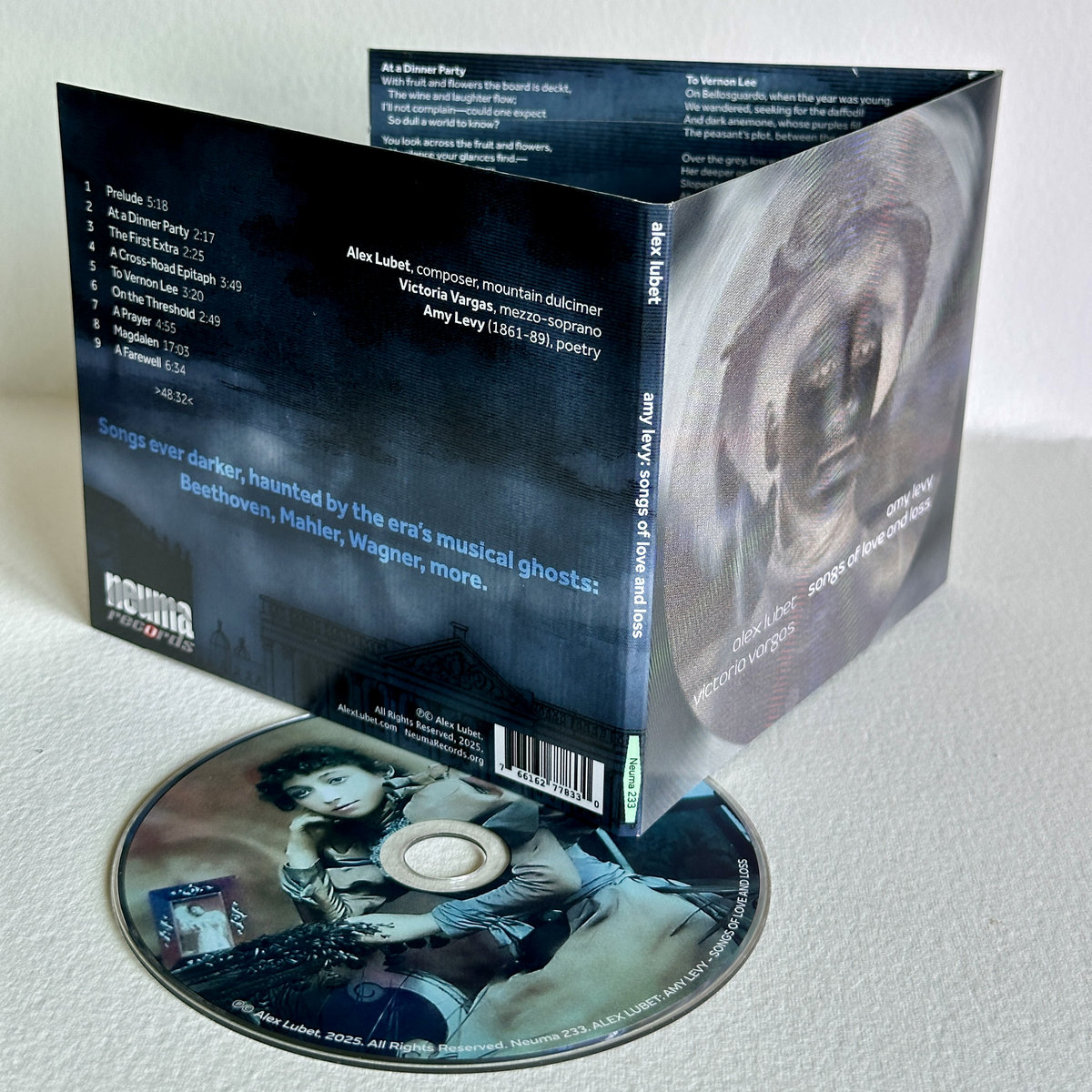
Tracklisting:
- Prelude 05:17
- At a Dinner Party 02:16
- The First Extra 02:25
- A Cross-Road Epitaph 03:49
- To Vernon Lee 03:19
- On the Threshold 02:49
- A Prayer 04:55
- Magdalen 17:02
- A Farewell 06:34
Total running time: 48:32
Credits:
Alex Lubet – composer, mountain dulcimer (McSpadden Model 4FHWR)
Victoria Vargas – mezzo-soprano
Amy Levy (1861–89) – poetry
Recorded August 12–15 and 26–28, 2024, at the Lloyd Ultan Recital Hall, School of Music, University of Minnesota
Recording, mixing and mastering: Steve Barnett (Barnett Music Productions) and Preston Smith (Perfect Record)
Design: Philip Blackburn
Funded by the Grant-in-Aid Program of the University of Minnesota