| Jazz |
Summary: Alain Métrailler delivers a refined, transatlantic jazz album blending European lyricism with New York sophistication, where intricate compositions and precise interplay create a deeply cohesive and compelling listening experience.
Between Two Traditions: Alain Métrailler’s Transatlantic Architecture of Sound
On a dimly lit Brooklyn stage, somewhere between rehearsal and revelation, Alain Métrailler stands slightly apart from his quartet, not out of distance, but concentration. The music unfolding is intricate, almost architectural, yet it breathes with an organic elasticity that resists rigidity. What might initially register as restraint soon reveals itself as control: a deliberate shaping of sound where nothing is incidental.
Métrailler, a Swiss composer and saxophonist, has long embodied a rare artistic posture, one rooted in introspection rather than display. His work suggests a musician intent on excavating his inner landscape for creative material, guided by a near-ascetic commitment to precision. There is, in his writing, a compelling duality: intellectual rigor paired with an almost deceptive clarity. Beneath the apparent simplicity lies a lattice of interlocking ideas, where phrasing, harmonic density and tonal color are calibrated with exacting care. Sound itself is not merely a vehicle here; it is a central compositional element.
My first encounter with his music came years ago, through a series of videos on YouTube, passed along in conversation with fellow listeners. Even in that fragmented, digital context, something distinct emerged, a voice already formed, yet still searching. Born in Switzerland’s Valais region, Métrailler relocated to New York in 2019 to study at The New School for Jazz and Contemporary Music, an institution that has long served as a crucible for emerging jazz voices.
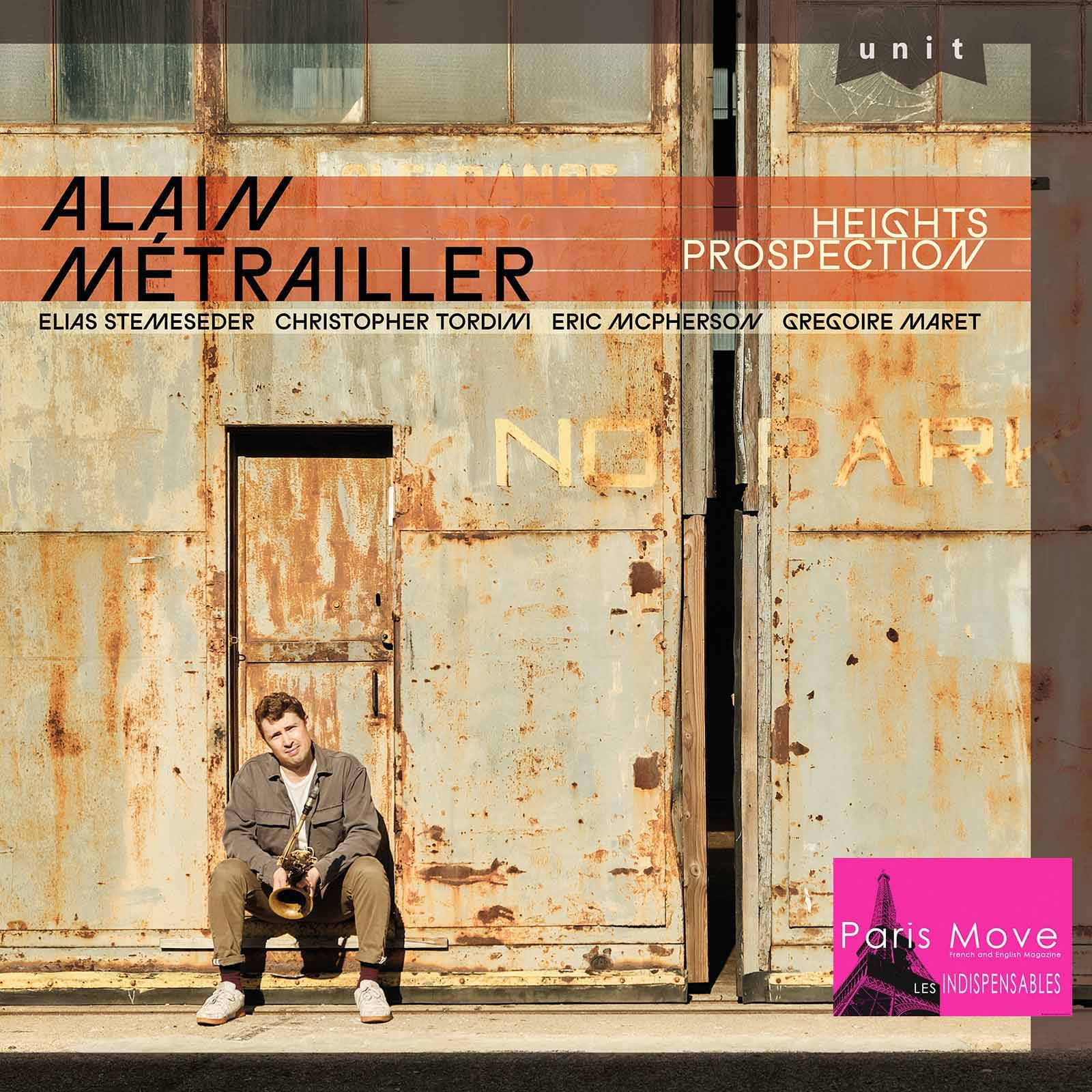
Over the next six years, he embedded himself in the city’s demanding musical ecosystem, performing both as a leader and sideman. Like many European musicians before him, from those shaped by ECM’s spacious aesthetics to artists navigating the transatlantic language of modern jazz, Métrailler absorbed and recontextualized what he encountered. The result is not imitation but synthesis. His album “Heights Prospection” stands as a document of that evolution.
The influence of European musicians on contemporary jazz is by now well established, but Métrailler’s work underscores something more nuanced: not simply influence, but integration. His compositions carry a distinctly European sensibility, lyrical, sometimes romantic, attentive to space, yet they unfold within structures deeply informed by American jazz tradition. Across seven pieces, he constructs a dialogue between these worlds, one that resists easy categorization.
The ensemble assembled for the recording reflects that same level of intentionality. Pianist Elias Stemeseder brings a harmonic language that shifts fluidly between density and translucence; drummer Eric McPherson anchors the music with a rhythmic subtlety that favors propulsion over assertion; bassist Chris Tordini provides both grounding and elasticity. Together, they create a framework that allows Métrailler’s compositions to expand and contract in real time.
Crucially, this was not music assembled in the studio. The group had lived with these pieces, testing them in performance, adjusting their internal mechanics, allowing them to evolve. That process is audible in the recording itself: transitions feel earned, improvisations emerge organically from written material, and the ensemble operates with a cohesion that cannot be manufactured in isolation. Captured in a single session, the album retains a sense of immediacy without sacrificing structural clarity.
One track, in particular, illustrates this balance: a composition that opens with a sparse melodic figure before gradually layering rhythmic displacement and harmonic tension. What begins as near-minimalism unfolds into something far more complex, the ensemble navigating shifting meters and tonal centers without ever losing momentum. It is in moments like these that Métrailler’s approach becomes most apparent, not complexity for its own sake, but as a means of deepening expression.
Following the recording, Métrailler returned to Switzerland, yet “Heights Prospection” remains unmistakably shaped by its American context. It is, in many ways, a New York record, one that engages directly with the city’s appetite for risk, sophistication and reinvention. At the same time, it avoids the density that can sometimes render contemporary jazz insular. Métrailler understands pacing: some pieces invite immediate access through melodic clarity, while others unfold more gradually, rewarding close listening.
It is in these more abstract passages that his voice becomes most distinctive. His saxophone phrasing is incisive, controlled yet exploratory, often pushing against the underlying structure before resolving into it. There are echoes here of broader modern traditions, but they are refracted through a highly personal lens.
The presence of harmonica player Grégoire Maret adds another dimension. Long recognized for his ability to move between European and American contexts, from recordings on ACT to collaborations across the U.S. jazz spectrum, Maret integrates seamlessly into the ensemble. His playing here is particularly striking: fluid, responsive, and at times indistinguishable from the compositional fabric itself. Rather than functioning as a guest voice, he becomes part of the architecture, engaging in a dialogue with Métrailler that blurs the boundary between composition and improvisation.
Ultimately, the album’s strength lies in its refusal to resolve its own tensions. It exists fully between traditions, European and American, written and improvised, intellectual and emotional, without privileging one over the other. That balance is not always easy to sustain; in lesser hands, it can lead to fragmentation. Here, it produces coherence.
If there is a critique to be made, it is perhaps that the album’s very precision occasionally tempers its volatility. One senses that Métrailler, in his pursuit of structural integrity, sometimes reins in the kind of abandon that can electrify a performance. Yet even this restraint feels intentional, part of a broader aesthetic that values clarity over excess.
From its opening moments to its final notes, “Heights Prospection” maintains a quiet intensity, driven by musicians fully committed to the material. It is an album that rewards attention, revealing new details with each listen.
One can only hope that Métrailler will return to the United States to bring this music back to the stage. In a landscape that continues to value originality, even as it wrestles with its own traditions, a project of this depth and nuance would likely find not just an audience, but an eager one.
Thierry De Clemensat
Member at Jazz Journalists Association
USA correspondent for Paris-Move and ABS magazine
Editor in chief – Bayou Blue Radio, Bayou Blue News
PARIS-MOVE, April 2nd 2026
Follow PARIS-MOVE on X

::::::::::::::::::::::::
Musicians :
Alain Métrailler : Tenor Saxophone
Elias Stemeseder : Piano
Chris Tordini : Contrabass
Eric McPherson : Drums
Gregoire Maret : Harmonica (guest on Flight of the Humble Being)
Track Listing
- Obvious Transmission
- Crispy
- EWR HERO SAYNT
- Jump Loud
- Flight of The Humble Being
- Unstablemates
- I’m In Tears
- Crazy He Calls Me
Background info / Liner Notes:
Katalognummer: UTR 5258
EAN-Barcode: 7640222862586
Recording Engineer: Aaron Nevezie
Mixing Engineer: Joseph Branciforte
Mastering Engineer: Joseph Branciforte