| Jazz moderne |
Summary: Al Swainger’s Pointless Beauty: Impure Imagination blends jazz, progressive rock, electronic textures and improvisation into a deeply human exploration of identity, collaboration and musical freedom.
Al Swainger’s Pointless Beauty Finds Beauty in the Space Between Things
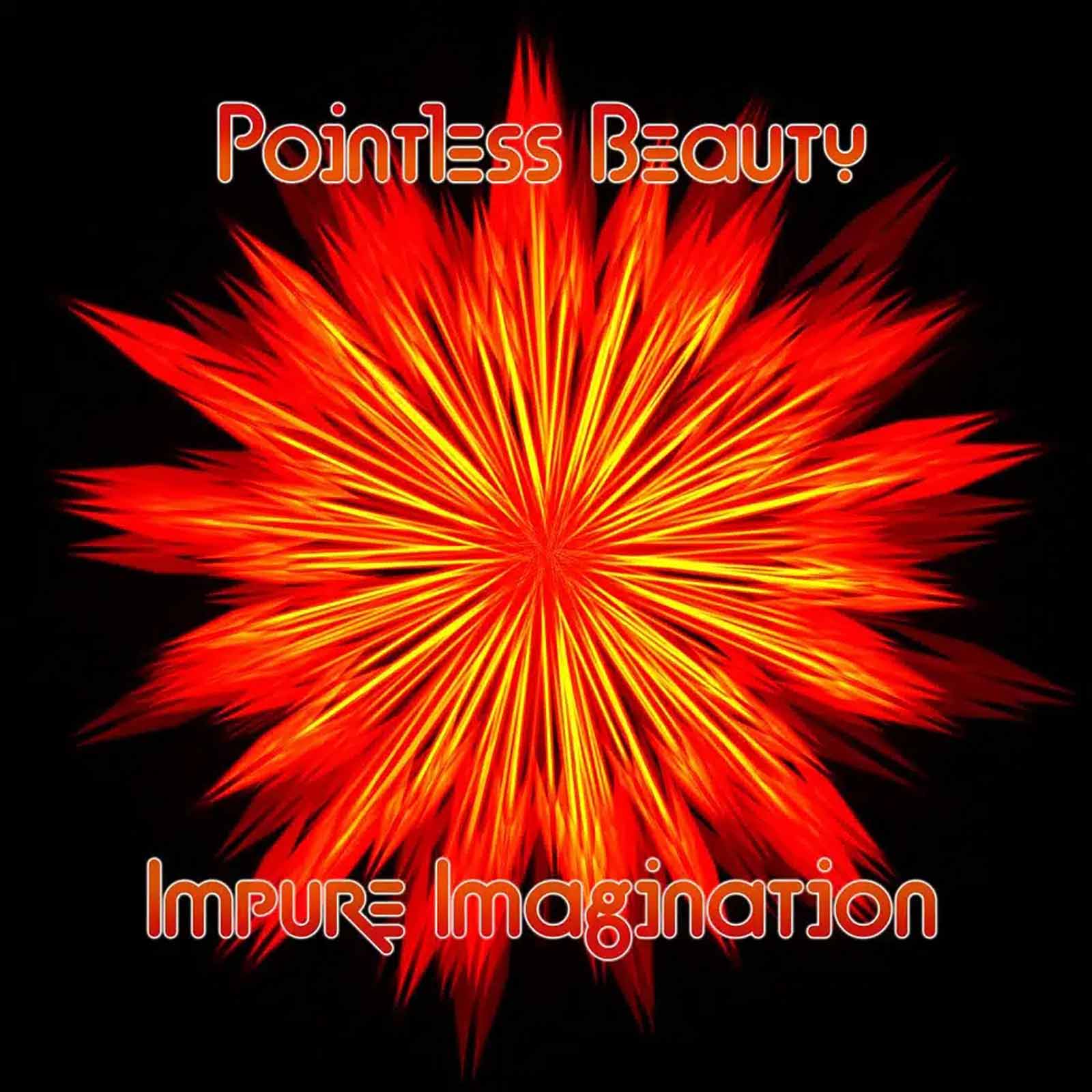
There was something almost theatrical about the morning when Al Swainger’s Pointless Beauty: Impure Imagination arrived from England. A strange, unforgiving light was spilling through the windows, coming from a sky that appeared unable to decide whether it wanted to laugh or cry. The heat had already flattened most of the living world outside. Only the ants seemed to have received the message that the day was beginning, moving around with an energy that suggested they had somewhere important to be. Everything else appeared to be conserving itself. I was standing near the mixing desk when I noticed the record beside it, its luminous artwork set against a dark background, and for a moment the album seemed to belong to the room before I had even played it. It had arrived from England just before Prince Harry and Meghan were expected to return to British soil, which made me wonder, in the mildly superstitious way one sometimes does before putting on unfamiliar music, whether the timing meant something.
The record was Pointless Beauty: Impure Imagination, the latest chapter in Swainger’s long running musical project. Swainger is a bassist, composer, producer and multi-instrumentalist, and that description alone tells you very little about what happens once the music starts. His palette is unusually broad, moving between jazz, progressive music, electronic production, ambient textures, cinematic writing and improvisation without settling comfortably inside any one of those categories. That refusal to choose is not a marketing strategy. It is central to the music. Swainger has described the reason for creating as an attempt to explore “the spaces between things that already exist,” and Pointless Beauty feels like the practical demonstration of that idea.
The opening track, “This Paper House,” begins with piano, immediately giving the album a sense of intimacy before the larger musical landscape gradually comes into view. “The Wheel” follows with a more mysterious atmosphere, and from there the record starts revealing its real ambition. Cinematic fusion, progressive jazz, electronic textures and collective improvisation begin to overlap, sometimes so naturally that the boundaries between them disappear. The music is sophisticated without constantly announcing its sophistication, which is an important distinction. There are records that want you to admire the architecture, and there are records that invite you inside the building. Swainger is much more interested in the second possibility.
That makes Pointless Beauty an album about sound, but also about human behavior. Its underlying concerns include identity, agency and belonging, ideas that can easily become unbearably serious when presented as concepts. Swainger avoids that trap by allowing the questions to remain inside the music rather than turning them into a lecture. The musicians are not illustrating an argument. They are negotiating with one another. The result is a record in which uncertainty is not treated as a weakness but as a creative resource.
There is an urgency to that process, but it is not the kind of urgency that produces noise for its own sake. Swainger seems to understand that experimentation becomes interesting only when there is something at stake. The music reaches outward with determination, yet it rarely feels violent or forced. Its musical language can occasionally evoke the elaborate constructions of European progressive rock, and there are moments when the memory of a group such as Yes might pass through the room, but Swainger is not interested in recreating anyone’s past. The references are part of a larger vocabulary rather than destinations. What matters is what happening when those influences are allowed to collide with contemporary electronic production, jazz improvisation and the possibilities of a small group working without a safety net.
That last point is crucial to understanding the album. Many of these compositions began as short pieces created for Swainger’s Bandcamp subscribers before being developed into larger works. Several originated as electronic demonstrations, sketches that could have remained private experiments but were instead opened up to other musicians. Once the material entered the hands of the quintet, it became something more flexible. The compositions were reshaped to encourage interaction, allowing the players to respond to one another rather than simply reproduce predetermined parts.
The album was recorded over three days at Yellow Shark Studios by a quintet that had not rehearsed together beforehand. On paper, that sounds like an invitation to disaster. In practice, it gives the music a remarkable sense of presence. You can hear the musicians listening. You can hear decisions being made. There are moments when the arrangement seems to turn slightly in response to what another player has just done, and those moments give the record its human pulse. The music is composed, but it is not imprisoned by the composition.
Swainger plays bass, synths, guitar and piano, joined by Jon Clark on drums, George Cooper on piano and Rhodes, Mike Outram on electric guitar, and Gary Alesbrook on flugelhorn and muted trumpet. It is a lineup capable of producing considerable density, yet the album is rarely interested in density simply for its own sake. Instead, the musicians create layers that communicate with one another. Loops can sit beneath acoustic instruments. Electronic textures can become almost atmospheric before a rhythm suddenly gives them physical weight. The guitar can suggest a rock vocabulary while the piano moves somewhere closer to jazz. The trumpet does not merely decorate the arrangement. It becomes another voice in the conversation.
That conversation is perhaps the defining characteristic of Pointless Beauty. The project does not appear to depend on a rigid division between the person who leads and the people who follow. Leadership moves around. At one moment, the groove may establish the direction. At another, a piano phrase or electronic texture can alter the emotional temperature of the piece. A musician can provide the central idea and then become part of the background while somebody else takes it somewhere unexpected. This is not democratic music in the simplistic sense that everyone plays all the time. It is more interesting than that. It is music in which attention itself becomes part of the arrangement.
That way of working feels particularly relevant now. Contemporary musicians increasingly move between roles that earlier generations kept separate. A composer can be an improviser. A producer can become an instrumentalist. A jazz musician can work with electronics without feeling obliged to announce a new genre. A rock musician can borrow the structural freedom of improvised music. The old borders remain visible, but fewer artists seem interested in treating them as fences. Swainger’s work belongs to that broader movement, and Pointless Beauty makes a persuasive case for seeing collaboration not as a compromise but as a method of composition.
There is also a playful intelligence running through the record. “Pacing the Web” is a particularly suggestive title, and it is difficult not to hear in it some reflection of the strange digital maze in which modern life takes place. We spend enormous portions of our days moving through networks, searching for something that may not exist, opening one door after another and occasionally wondering why we entered the room in the first place. The title has a gentle absurdity to it, as if Swainger understands that the internet can be both an extraordinary instrument and a remarkably efficient machine for making people lose track of time.
That humor matters because the album could otherwise become very earnest. Its concerns are substantial, but the music does not behave as though it has solved them. Instead, the record moves through them with curiosity. The songs feel less like chapters in a thesis than moments caught during a larger journey. Some are expansive and exploratory. Others feel closer to intimate observations. The piano passages, in particular, introduce a nostalgic quality that never becomes sentimental. They seem to look backward while remaining firmly aware of the present, creating precisely the kind of temporal uncertainty that runs throughout the album.
This is where the title Pointless Beauty begins to make more sense. Beauty here does not mean polished surfaces or conventional elegance. It can be found in the unexpected relationship between sounds, in the moment when an electronic texture changes the meaning of an acoustic instrument, or when an improvised passage reveals something that could not have been written in advance. The beauty is almost accidental, yet it is not meaningless. In fact, the absence of a predetermined destination may be what makes the discovery possible.
The album is continually building bridges between things that are normally kept apart. Composition and improvisation occupy the same territory. Acoustic instruments and electronic sounds become part of the same vocabulary. Progressive rock, jazz, ambient music and contemporary production techniques are allowed to speak to one another without any one of them being declared the winner. Even the distinction between past and future becomes unstable. You can hear echoes of earlier musical ideas, but they are being used to construct something that belongs to the present.
That openness also changes the role of the listener. Swainger does not appear particularly interested in telling us what we are supposed to hear. Instead, he creates situations in which different listeners can find different points of entry. Someone arriving from jazz may focus on the improvisation and the interplay. A listener with a background in progressive rock may hear the larger structures and shifting rhythmic ideas. Someone more accustomed to electronic music may notice the production, the textures and the way sound is used to create physical space. None of those interpretations cancels out the others. They coexist.
That may be one of the album’s most generous qualities. It does not require the listener to belong to a particular musical tribe before being admitted. In an era when streaming platforms increasingly sort people into carefully defined categories, Pointless Beauty resists categorization almost as an act of principle. It asks the listener to move rather than remain in place.
And yet there is a question that keeps returning as the record unfolds. At what point does composition end and improvisation begin? It is tempting to analyze the music that way, to identify which passages were written and which emerged in the studio, to separate intention from accident and structure from freedom. But the more closely you listen, the less satisfying that distinction becomes. The entire point of this kind of collaboration is that the boundary is supposed to become difficult to see.
Perhaps that is why the album feels so contemporary despite drawing from musical languages with long histories. The world itself has become increasingly collaborative, layered and difficult to categorize. Human voices interact with machines. Musicians work remotely, electronically and acoustically. Ideas move between genres almost instantly. The old question of who created what has become more complicated, but perhaps also more interesting. Swainger does not attempt to resolve that complexity. He turns it into music.
There is something quietly hopeful in that approach. At a moment when so much culture is built around declaring identities, defending boundaries and deciding who belongs where, Pointless Beauty proposes another possibility. Perhaps belonging does not always have to mean finding the correct category. Perhaps it can mean remaining curious enough to move between them.
That is ultimately what makes the album more than an exercise in stylistic versatility. Swainger is not simply demonstrating that he can play several kinds of music. He is asking what happens when those kinds of music are allowed to influence one another without demanding that one of them disappear. The answer is sometimes delicate, sometimes restless, occasionally mischievous and often beautiful.
The record therefore leaves us with the question of where the writing stops and the improvisation begins, but it also quietly undermines the need to answer it. A good performance does not preserve the exact moment at which an idea was conceived. It preserves the sensation of discovery. Pointless Beauty is at its strongest when it gives that sensation to the listener, when the music sounds as though it is discovering itself even while it is being heard.
That morning, with the heat already pressing against the windows and that strange light hanging over everything outside, the album seemed almost suspiciously well timed. Perhaps the arrival of a record from England on the eve of another royal homecoming really was a sign, although probably not the kind anyone had in mind. The more convincing explanation is simpler. Sometimes an album arrives at precisely the moment when the world around it makes sense of it.
Pointless Beauty: Impure Imagination is music for that uncertain space, the place between composition and improvisation, technology and human touch, memory and the present, order and accident. It does not ask the listener to choose. It asks the listener to stay long enough to hear what can happen when the borders are left open. And in the end, that may be the most human thing about it.
Thierry De Clemensat
Member at Jazz Journalists Association
USA correspondent for Paris-Move and ABS magazine
Editor in chief – Bayou Blue Radio, Bayou Blue News

PARIS-MOVE, August 22nd, 2026
Follow PARIS-MOVE on X
::::::::::::::::::::::::
Musicians :
Al Swainger – bass (2-11), synths (2-4, 8, 9, 11), guitar (9), piano (9)
Jon Clark – drums (2-9, 11)
George Cooper – piano (1, 2, 5-9, 11), Rhodes (2-4, 8, 11)
Mike Outram – electric guitar (2-5, 7-9, 11)
Gary Alesbrook – fl ugelhorn (2, 3, 5-9, 11), muted trumpet (4)
Spoken word text (8, 11) written by Al Swainger.
Voices generated using ElevenLabs; directed, edited and musically placed by Al Swainger.
Track Listing :
This Paper House
The Wheel
Seedling
Pacing the Web
We’re Only Haunted
Out of Time
What the Fire Forgot
I Wish (Upon a Disused Star)
Who // Are // We
Fractured Grace
On Borrowed Dreams