
| Jazz |
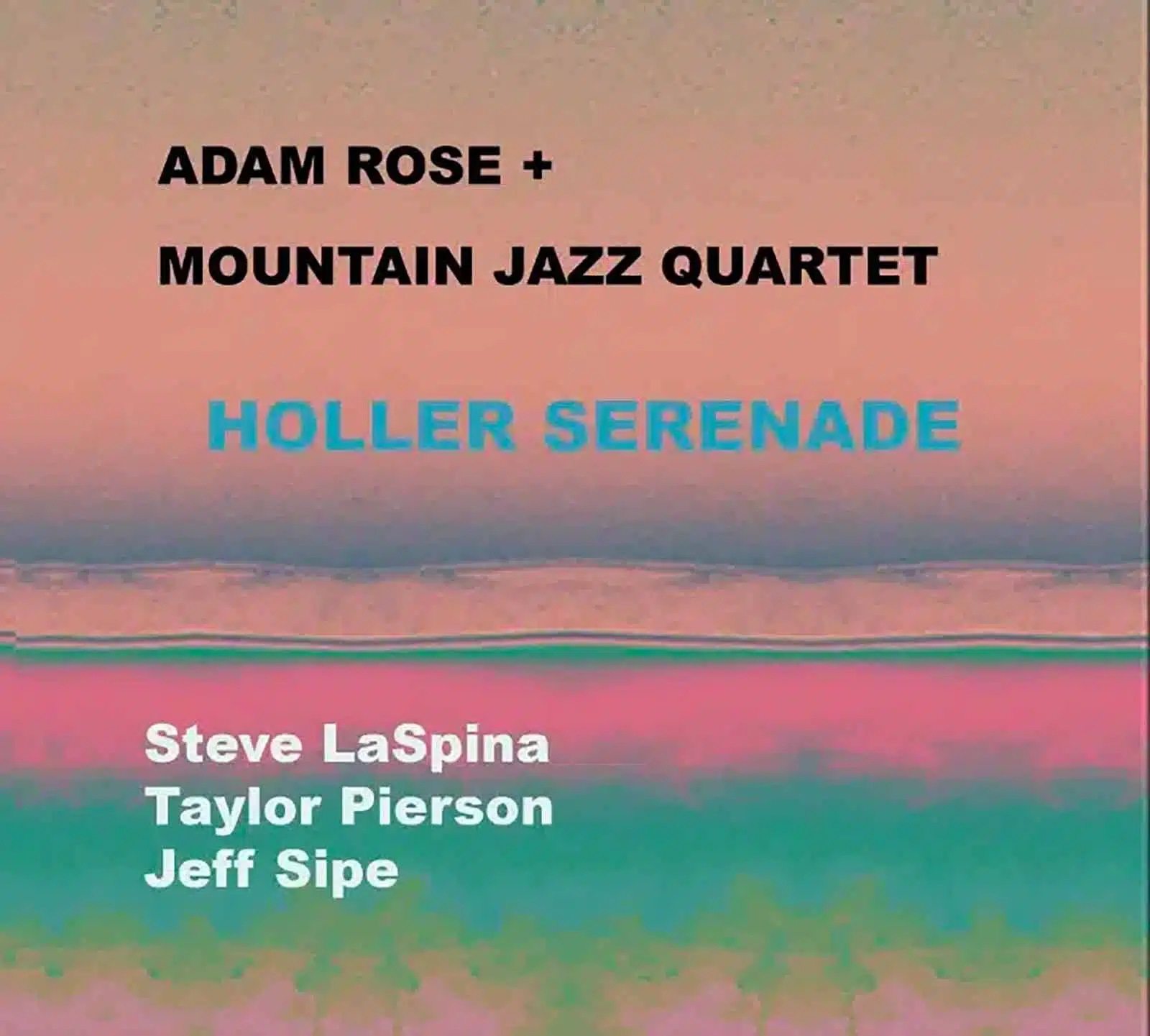
Summary: Adam Rose’s live album blends jazz, bluegrass and funk with remarkable guitar virtuosity, offering an engaging showcase of improvisation, ensemble chemistry and melodic craftsmanship.
Adam Rose Finds the Sweet Spot Between Jazz Virtuosity and Spontaneous Ensemble Playing
Technical brilliance often comes at the expense of spontaneity. Adam Rose’s new live recording argues that the two can coexist, even if the balance occasionally tilts toward virtuosity. Jazz guitar enthusiasts will undoubtedly welcome the opportunity to hear the guitarist and composer leading his newly assembled ensemble, a group that embraces risk from the very first notes. Recorded with little concern for polish or perfection, the album quickly reveals itself as a celebration of instrumental fluency. Rose’s commanding presence on the fretboard naturally becomes the focal point, occasionally drawing attention away from compositions that deserve a little more room to breathe. For listeners who delight in exceptional musicianship, however, that emphasis is likely to be part of the album’s appeal rather than one of its shortcomings.
Now based in Asheville, North Carolina, Rose draws inspiration from the city’s distinctive blend of bluegrass traditions, jam band culture and modern jazz. That musical crossroads is reflected throughout the record, where carefully crafted melodic writing coexists with freer structures that evolve organically in performance. “I wanted to make an album that combined those flavors with the traditional jazz language of New York,” Rose explains, bringing together elements of funk, groove driven writing and classic swing within an ensemble whose chemistry feels earned rather than manufactured.
The recording itself embraces immediacy over perfection. With very few takes and minimal prearranged material, the musicians deliberately left room for discovery. “We didn’t plan the introductions or endings before the session,” Rose recalls. “I hope the recording captures that freshness.” It certainly does. More importantly, the album captures the rare sensation of musicians listening as intently as they are playing. Rather than presenting carefully rehearsed arrangements, it documents conversations unfolding in real time, allowing each performance to find its own shape through collective instinct and mutual trust.
Rose belongs to a generation of jazz musicians increasingly unconcerned with stylistic boundaries. His music absorbs Appalachian folk traditions, New York jazz vocabulary, funk rhythms and improvisational freedom without treating any of them as fixed categories. Whether every experiment succeeds is almost beside the point. The album’s greatest strength lies in its willingness to embrace conversation over certainty, allowing each performance to remain open to possibility while preserving the excitement of genuine discovery.
Listeners should not come expecting dramatic twists or grand conceptual statements. This is, above all, an album built around craftsmanship, particularly the expressive possibilities of the guitar. Yet its emphasis on virtuosity never entirely overshadows its melodic sensibility. At its finest moments, the music recalls the golden age of fingerstyle and jazz guitar recordings that filled the shelves of discerning record stores throughout the 1950s, 1960s and 1970s. There is an unmistakable club atmosphere throughout, wrapped in a warm sense of retro nostalgia that feels especially comforting in unsettled times. Rather than relying on spectacle, the album invites listeners into an intimate space where nuance and subtle interaction become its greatest strengths.
Originally from Philadelphia, Rose developed his musical voice through formal jazz studies at the Philadelphia Clef Club before continuing at the New School for Jazz and Contemporary Music in New York. His career spans performance, composition and production, extending beyond jazz into film scoring and independent projects. The album’s most memorable melodic statement is arguably found on “Fog Valley Sunrise.” Here, the music and the title seem perfectly aligned, with every member of the ensemble sounding deeply inspired. The performance settles almost imperceptibly into an unhurried groove that gradually fills the musical landscape with effortless warmth and quiet confidence. “Fog Valley Sunrise” is the emotional center of the album. Rather than dazzling through complexity, it succeeds through restraint, allowing melody, silence and ensemble interplay to unfold with remarkable patience. It is one of the rare moments where instrumental brilliance quietly steps aside, giving atmosphere and emotional resonance the final word.
Perhaps the recording’s biggest revelation is keyboardist Taylor Pierson, who emerges as the ensemble’s quiet architect. Rather than competing with Rose’s guitar, Pierson constantly reframes it, introducing harmonic detours and rhythmic suggestions that subtly redirect the music without ever disrupting its natural flow. His imagination gives the arrangements much of their depth, providing an ever changing backdrop that encourages the ensemble to venture beyond familiar territory. As the album unfolds, its stylistic palette broadens to embrace touches of jazz funk while occasionally borrowing textures and rhythmic sensibilities associated with world jazz. The result is something of a musical patchwork whose coherence depends less on stylistic consistency than on the chemistry shared by the musicians themselves. At times, however, one cannot help but wonder whether the guidance of an outside producer or artistic director might have helped channel these diverse influences into a more focused and immediately compelling artistic statement without diminishing the group’s adventurous spirit.
Even so, the album offers an abundance of material for serious guitar students and aspiring improvisers. Careful listening reveals valuable lessons not only in technique but also in phrasing, ensemble interaction and compositional thinking. There is an undeniably academic dimension to the project, one that will resonate strongly with musicians interested in the mechanics of jazz guitar. Other listeners may find themselves wishing for stronger thematic development or greater emotional immediacy. Yet this is not an album that seeks instant gratification. It rewards patience, repeated listening and genuine curiosity about the language of jazz guitar. Those willing to meet it on those terms will discover a recording rich in ideas, generous in musicianship and consistently engaging, even if its emotional narrative occasionally yields to instrumental ambition.
Like many thoughtful jazz recordings, it asks more of its audience than passive listening, and for the right listeners, that invitation will prove to be one of its greatest rewards.
Thierry De Clemensat
Member at Jazz Journalists Association
USA correspondent for Paris-Move and ABS magazine
Editor in chief – Bayou Blue Radio, Bayou Blue News

PARIS-MOVE, July 14th, 2026
Follow PARIS-MOVE on X
::::::::::::::::::::::::
Musicians :
Adam Rose | Guitar
Steve LaSpina | Bass
Taylor Pierson | Piano, Keyboards
Jeff Sipe | Drums
Track Listing :
Sailing On the Potomac
Bye Bye Blackbird
Fog Valley Sunrise
Haywood Commons
Double Entendre
Little Ms. Understanding
Theresa’s Journey
The Turnaround
Recorded at The Eagle Room, Asheville, NC
Matt Williams – Audio Engineer
Mixed + Mastered at Darlington Studios, NYC
By David Darlington