| Jazz Fusion |
Summary: Adam De Lucia’s The Man Who Would Be King is an ambitious jazz fusion album that blends orchestral grandeur, progressive rock, and contemporary improvisation. Featuring Donny McCaslin and an exceptional ensemble, it offers a richly cinematic listening experience that rewards adventurous music lovers.
Adam De Lucia’s The Man Who Would Be King: A Bold and Cinematic Jazz Fusion Masterpiece
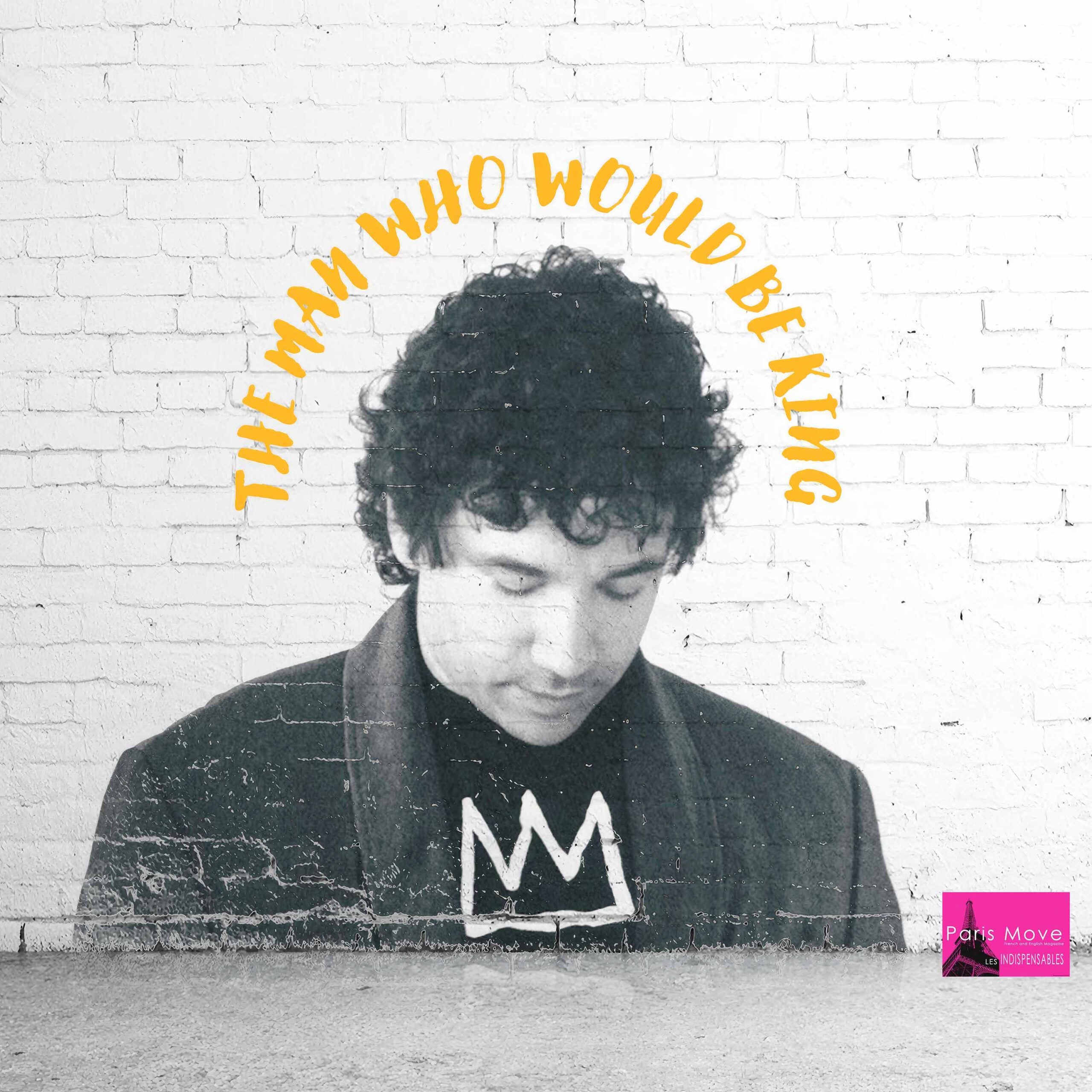
Some albums announce themselves with confidence. Others arrive with quiet elegance. The Man Who Would Be King, the latest work from guitarist and composer Adam De Lucia, does something far more compelling. It opens like the first scene of an epic film, inviting the listener into a world where orchestral grandeur, jazz fusion and progressive songwriting coexist with remarkable ease. From its very first moments, the album makes no attempt to conform to expectations. Instead, it proposes an immersive musical experience that rewards curiosity, patience and repeated listening.
The opening composition, Cycle One, establishes this ambitious vision immediately. Symphonic textures unfold with cinematic scale before dissolving naturally into a sophisticated language of jazz fusion colored by the melodic sensibilities of 1970s pop and rock. The transition feels effortless, never forced, reflecting a composer who understands how to balance complexity with emotional accessibility. Rather than overwhelming the listener, the arrangement gradually reveals its many layers, allowing every musical idea to find its place within an expansive sonic landscape.
The second piece, Gorilla, retains this rich vocabulary while moving toward a more urban and rhythmically driven form of contemporary jazz. Throughout the record, De Lucia treats genre as a source of inspiration rather than limitation. Jazz, progressive rock, chamber music, orchestral writing and subtle pop influences are woven together into an intricate musical architecture that feels unified by vision rather than confined by style. Every composition contributes another chapter to a larger artistic statement, making the album feel less like a collection of individual tracks than a carefully constructed narrative.
Although Adam De Lucia composed every piece and personally crafted the arrangements, production responsibilities were shared by Cody McCorry and Tim Lefebvre. Lefebvre’s contribution is particularly significant. Long admired for his work on numerous releases for the German jazz label ACT, he brings a refined production aesthetic that emphasizes space, depth and clarity. The recording possesses the same elegant transparency often associated with the finest European jazz productions, allowing every instrumental voice to emerge naturally while preserving the dramatic sweep of the music. The result is a mix that feels simultaneously intimate and expansive, capable of revealing new details with every listen.
De Lucia’s relationship with the guitar is equally revealing. Although he is an accomplished instrumentalist, he consistently resists the temptation to dominate the music. His guitar frequently functions as the connective tissue of the ensemble, providing harmonic color, rhythmic momentum and subtle atmosphere while creating space for the other musicians to develop their own voices. It is the approach of a composer whose primary concern is the integrity of the entire work rather than individual virtuosity. Such artistic restraint is increasingly rare, particularly among guitarists leading projects of this scale and ambition.
Among the distinguished guests, Donny McCaslin occupies a central place. International audiences first encountered many dimensions of his extraordinary artistry through David Bowie’s final masterpiece, Blackstar, where his fearless improvisation became one of the defining elements of the album. Yet McCaslin’s career extends far beyond that celebrated collaboration. For decades he has stood among the most adventurous voices in contemporary jazz, combining technical brilliance with an unmistakably lyrical and emotionally charged sound. On The Man Who Would Be King, his saxophone becomes far more than a featured instrument. It often serves as an emotional narrator, guiding the listener through moments of tension, reflection and release. His presence elevates the project without ever overshadowing De Lucia’s vision, embodying the collaborative spirit that defines the entire recording.
The remaining musicians are equally accomplished figures whose individual careers have shaped today’s contemporary jazz landscape. Their contributions never feel ornamental. Each performance reflects years of artistic maturity, and together they create an ensemble whose collective identity is stronger than the sum of its individual talents.
The album’s instrumentation deserves particular attention. Alongside the traditional jazz ensemble, violin and cello play essential expressive roles, enriching both the harmonic language and the emotional range of the compositions. These classical textures coexist naturally with improvisation, expanding the music’s color palette without diminishing its jazz identity. On Girl, listeners may recognize even stronger echoes of the melodic sophistication that characterized sophisticated popular music during the 1970s. The result is not nostalgia but reinterpretation, as familiar influences are transformed into something unmistakably contemporary.
The album’s title inevitably evokes John Huston’s 1975 film The Man Who Would Be King, starring Sean Connery, Michael Caine and Christopher Plummer. Whether De Lucia intended a direct reference or simply found inspiration in the title’s mythic resonance, the association encourages reflection on the creative climate of that remarkable period. During the same era, artists such as Weather Report with Tale Spinnin’, Return to Forever with Mystery, and Miles Davis with Agharta were redefining the possibilities of jazz by embracing experimentation, technology and increasingly ambitious compositional forms. The relationship between those landmark recordings and De Lucia’s work lies not in imitation but in shared artistic philosophy. Like those innovators, he approaches composition as an act of exploration, drawing from multiple traditions while remaining committed to discovering a distinctive personal language.
This willingness to embrace complexity gives the album much of its lasting appeal. The listener constantly moves between recognition and surprise. Familiar echoes of jazz history emerge only to dissolve into unexpected harmonic turns, orchestral colors and rhythmic ideas. Those seeking immediate gratification may find the music demanding, yet listeners who enjoy adventurous and intellectually engaging works will discover a recording that reveals new dimensions with every return. Subtle traces of Miles Davis occasionally seem to hover over certain passages, joined by fleeting reminders of other visionary musicians. These moments function less as quotations than as respectful conversations with the broader history of creative music.
Perhaps the album’s greatest strength lies in its structural coherence. Every composition serves a larger dramatic purpose, making it essential to experience the record from beginning to end. Heard in sequence, the music gradually reveals an unmistakable narrative arc. There are landscapes, emotional conflicts, recurring motifs and evolving characters that emerge through purely instrumental means. Like an engrossing novel or a carefully directed film, The Man Who Would Be King asks for the listener’s complete attention and rewards that commitment with increasing emotional and intellectual depth.
At a time when streaming culture often encourages fragmented listening and instant accessibility, Adam De Lucia has chosen a different path. He has created an album that values continuity over convenience, patience over immediacy and artistic vision over commercial formula. That decision alone deserves recognition.
More importantly, The Man Who Would Be King stands as evidence that contemporary jazz remains one of today’s most fertile creative spaces, capable of absorbing influences from classical music, progressive rock, cinematic composition and modern production without sacrificing its identity. Rather than revisiting the past, Adam De Lucia transforms his influences into something distinctly his own.
The result is a recording of uncommon ambition, remarkable craftsmanship and genuine emotional resonance. It may not be an album designed for every listener, but for those willing to surrender to its expansive vision, it offers one of the year’s most rewarding musical journeys and confirms Adam De Lucia as a composer whose future work deserves very close attention.
Thierry De Clemensat
Member at Jazz Journalists Association
USA correspondent for Paris-Move and ABS magazine
Editor in chief – Bayou Blue Radio, Bayou Blue News

PARIS-MOVE, July 9th, 2026
Follow PARIS-MOVE on X
::::::::::::::::::::::::
Musicians :
Adam De Lucia, guitare électrique (Telecaster/ Gibson SG/ Stratocaster), compositeur, arrangeur
Oz Noy, guitare électrique, production guitare additionnelle
Cody McCorry & Tim Lefebvre, basse électrique/ production additionnelle de basse
Jordan Perlson, batterie/cymbales/ tambourin/ claquements de mains/ jam-block
Alex Fortes, violon/arrangements
Ben Russell, violon
Nick Revel, alto
Hamilton Berry, violoncelle
Donny McCaslin, saxophone ténor
Henry Hey, Rhodes/ synthétiseurs (Roland Juno 60/ Oberheim OB-X8/ Hybrid Synth/ Prophet 6), production additionnelle de synthétiseurs/ piano acoustique
Michael Ghegan, saxophone ténor/ chant
Brian Lawlor, claviers
Chrissi Poland, chant
Kevin Grossman, claquements de mains
Track Listing :
Cycle One
Gorilla
Store On The Corner
6 Day Regimen
Will You Follow?
Girl
8 Out
Carousel