| Jazz |
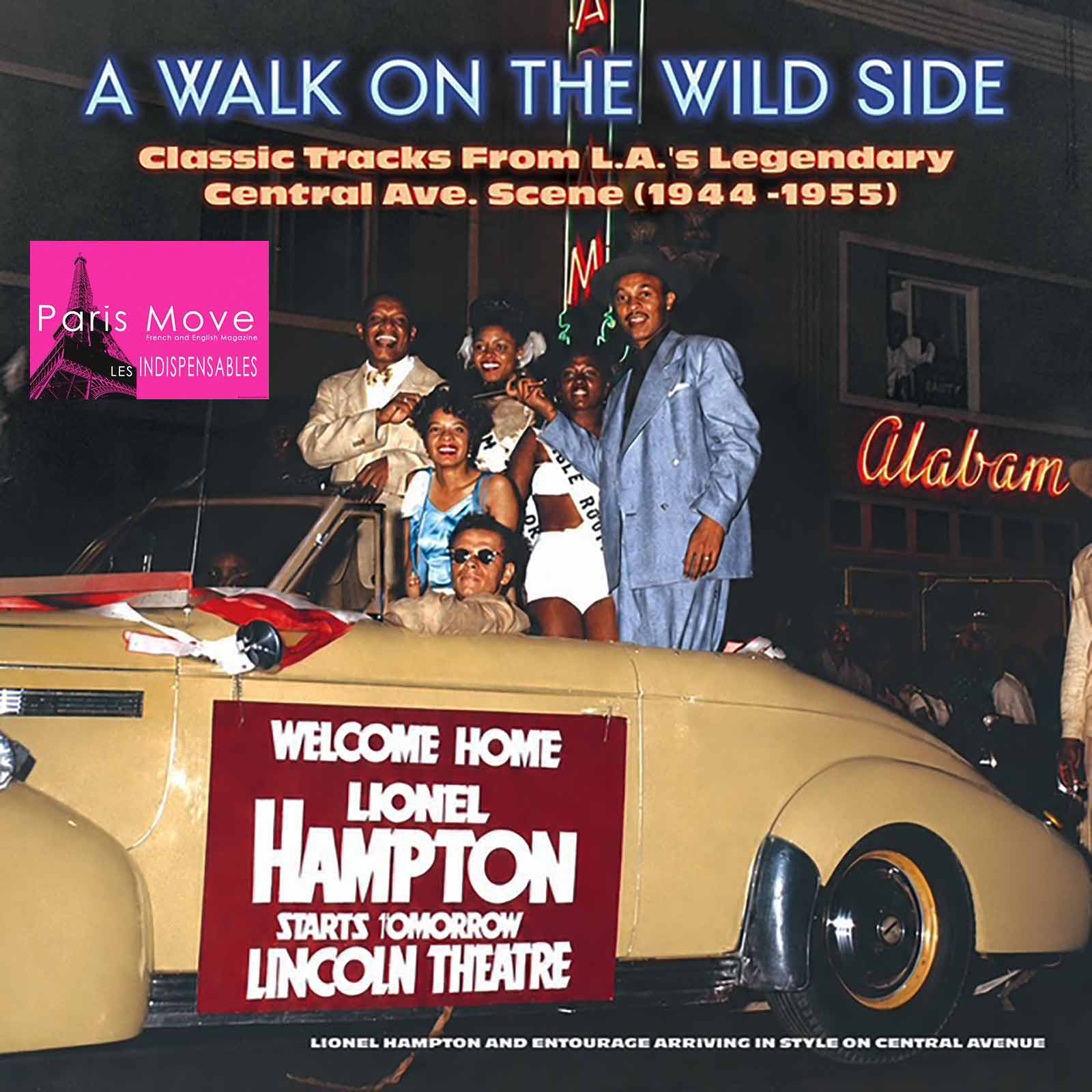
A Walk on the Wild Side
Classic Tracks from L.A.’s Legendary Central Ave. Scene (1944–195)
Summary: Shanachie revisits the legendary Central Avenue jazz scene with 12 restored recordings featuring Dexter Gordon, Charles Mingus, Percy Mayfield and other Black music legends who shaped Los Angeles jazz, blues and R&B.
Central Avenue: The Lost History of Black Jazz in Los Angeles
There are reissues that simply bring old recordings back into circulation, and then there are reissues that seem to open a door onto an entire vanished world. Shanachie’s Central Avenue, Scene of Los Angeles belongs firmly to the second category. For a label best known for its work with contemporary smooth jazz artists, this release represents a remarkable departure, because it is not simply a collection of historic recordings. It is a document of a place, a community and a moment in American history when music became one of the most powerful ways for Black Los Angeles to define itself, resist exclusion and make its presence impossible to ignore. Across 12 carefully restored tracks, the album brings together musicians whose names are inseparable from the development of jazz, blues and rhythm and blues, while also allowing us to hear something more elusive: the atmosphere of Central Avenue itself, the clubs, the recording studios, the late nights, the ambitions and the extraordinary cultural energy that once made this stretch of Los Angeles one of the most important centers of Black music in America. For that reason, this album deserves more than a conventional review. It deserves to be considered as a piece of living history, and for that reason there will ultimately be two reviews, one devoted to the CD edition and another to the LP when the vinyl version becomes available.
From the very first moments, the listener is transported into another period of American music. What makes the restoration so compelling is that it does not simply make these recordings louder or cleaner. It preserves their personality. The instruments have definition, the performances retain their natural warmth and the listener can almost sense the recording technology of the period, including the character of the tube equipment and mixing consoles that helped give so many early recordings their particular texture. There is something wonderfully intimate about hearing these performances today. The sound can be warm, slightly raw, remarkably direct and at times almost tactile, as if the musicians had somehow been allowed to step back into the room. There is a nostalgia here, but it is not the artificial nostalgia of a museum piece. It is the nostalgia of hearing real musicians making real music at a time when jazz, blues and rhythm and blues were still evolving rapidly and when the boundaries between those traditions remained wonderfully fluid. Listening to this album is therefore not simply an exercise in looking backward. It is an invitation to understand where so much of American popular music came from.
The names alone tell an extraordinary story. Big Jay McNeely, Hosea Sapp, Wardell Gray, Jimmy Witherspoon, Pee Wee Crayton, Dexter Gordon, Charles Mingus, Helen Humes, Buddy Collette, Percy Mayfield and Cecil Gant were not peripheral figures in American music. They were among the artists who helped establish the vocabulary of an era, musicians who moved between jazz clubs, blues venues, recording studios, radio stations and increasingly sophisticated entertainment businesses. Dexter Gordon, a musician whose recordings continue to be heard regularly on Bayou Blue Radio, represents just one example of the extraordinary careers that emerged from this musical environment. To hear these artists in the context of Central Avenue is to understand that their careers were not isolated stories. They were part of an interconnected cultural ecosystem in which musicians, club owners, record store operators, radio personalities, producers and independent record labels all contributed to the creation of something much larger than any individual performance. The music was being made in clubs, but its influence was already beginning to travel far beyond them.
That influence would eventually reach Hollywood. Percy Mayfield is perhaps one of the clearest examples of the extraordinary distance these artists could travel. Mayfield wrote “Hit the Road Jack,” a song that would become world famous through Ray Charles, but reducing his legacy to that one composition would miss the larger story. His music belonged to a tradition that captured the emotional complexity of postwar Black America, and it would find its way into films, documentaries and visual portraits of Los Angeles that sought to confront the city’s less glamorous history. Charles Mingus followed an equally remarkable path. His music eventually entered the world of cinema, including his association with John Cassavetes’ Shadows in 1959, while his compositions would continue to be rediscovered and reused by filmmakers and documentarians because they possessed an intensity and dramatic architecture that seemed almost naturally suited to the screen. Mingus understood something that great film composers understand instinctively: music can establish a sense of place and tell a story without saying a single word.
Dexter Gordon offers perhaps the most striking example of this relationship between jazz and cinema. Years after the Central Avenue period, Gordon would become one of the defining figures in the film Round Midnight, a work in which jazz history, Hollywood and the personal mythology of the musician became inseparable. The soundtrack was supervised and composed or arranged by Herbie Hancock, whose work earned him the Academy Award for Best Original Score in 1987. Gordon’s saxophone performance is one of the film’s great strengths, particularly in pieces such as “Body and Soul” and “Una Noche Con Francis,” where his sound carries the weight of an entire musical tradition. He appeared alongside other giants including Wayne Shorter and Chet Baker, reminding audiences that the musicians who had once played in clubs and studios were not simply relics of an earlier generation. Their music had become part of the cultural language of cinema itself. When we hear Gordon, Mingus, Mayfield and the other artists represented here, we are therefore hearing more than the soundtrack to a particular period. We are hearing the foundations of a cultural influence that would eventually reach television, film, rock music, popular culture and audiences around the world.
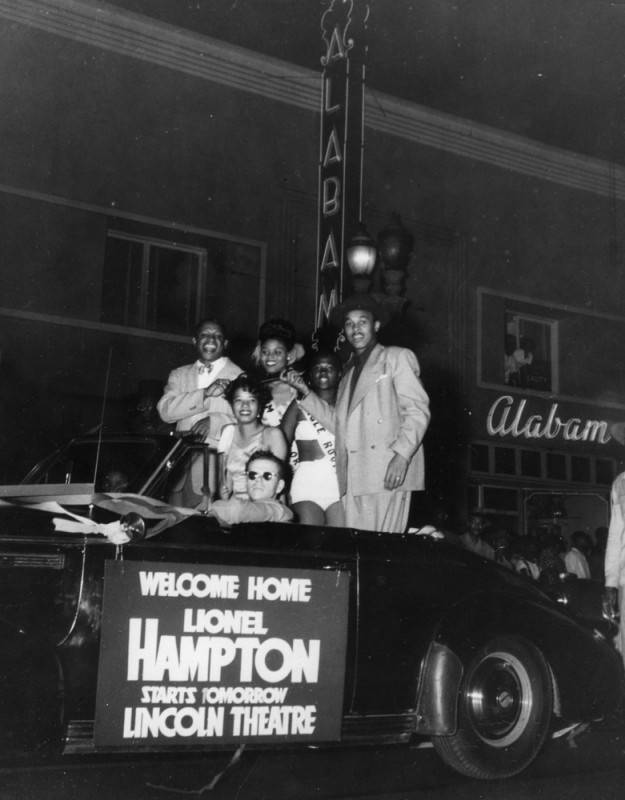
But the history contained in Central Avenue cannot be understood without understanding the history of Black Los Angeles. The two stories are inseparable. During the first decades of the 20th century, thousands of Black Americans migrated from the South to Los Angeles in search of opportunity, safety and a different future. Yet the promise of Los Angeles was severely limited by segregation, discriminatory housing practices and racist restrictions that confined many Black families to South Central. What emerged from those restrictions was not simply a neighborhood, but a remarkably resilient community with its own businesses, institutions, newspapers, churches, entertainment venues and cultural networks. By the 1920s, Central Avenue had begun to develop into one of the most important Black cultural corridors on the West Coast. The Lincoln Theater and the Dunbar Hotel, both opened in 1928 and both owned by Black entrepreneurs, became important landmarks in a nightlife that would soon attract some of the most significant names in American music. Duke Ellington, Count Basie and Billie Holiday were among the artists who would appear in this environment, helping establish Central Avenue as a destination for musicians and audiences alike.
The Second World War accelerated that transformation. As Los Angeles expanded its industrial capacity and shipyards and other industries urgently needed workers, Black Angelenos gained access to better paying jobs and a larger economic base. Money circulated through the community; businesses grew and the demand for entertainment increased. Central Avenue became a place where jazz, blues and the emerging rhythm and blues could coexist and influence one another. The distinctions that music historians sometimes impose retrospectively were far less rigid on the street itself. Jazz could be deeply blues oriented, blues could contain sophisticated jazz harmonies and rhythm and blues could draw freely from both. The result was a distinctive sound that was sophisticated without losing its connection to the street, emotional without becoming sentimental and energetic without sacrificing musical intelligence. Music historian Jim Dawson captured the extraordinary density of the scene when he described being able to walk down the street and hear Charles Brown at the Downbeat, Pee Wee Crayton at the Last Word, Joe Liggins and Roy Milton at Jack’s Basket, Nellie Lutcher and Amos Milburn at Club Congo, Big Joe Turner at Club Alab and Nat King Cole or Billie Holiday at the Turban Room. In any other city, such a concentration of talent might have been regarded as a cultural miracle. On Central Avenue, it was simply what happened on a night out.
One of the most fascinating figures in this story was John Dolphin, an African American music entrepreneur whose ambitions extended far beyond the conventional record store. In 1947, after being prevented from opening a record store and recording studio in Hollywood because of racist restrictions governing property use, Dolphin responded with a declaration that was as provocative as it was visionary: if he could not go to Hollywood, then he would bring Hollywood to South Central. He opened his store in the heart of the Black entertainment district on Central Avenue and called it Dolphin’s of Hollywood. The name itself was a statement. Dolphin understood that the dividing line between Hollywood and South Central was not simply geographic. It was economic, racial and cultural. His answer was to challenge that boundary directly. And remarkably, Hollywood came to him.
Dolphin’s of Hollywood became far more than a place where records were sold. Dolphin understood the power of radio and publicity and used both aggressively. He purchased airtime on popular stations and arranged for DJs to broadcast from the large storefront window of his shop, allowing the public to see and hear the latest rhythm and blues records being played. In the early 1950s, young White and Latino listeners began traveling across Los Angeles to buy records there. The store remained open 24 hours a day, and when the nightclubs closed at two in the morning, Dolphin’s became a gathering place for musicians, DJs, fans and curious Angelenos. On some nights, as many as 1,000 people reportedly gathered outside. Elvis Presley, Fats Domino and Sam Cooke were among the famous names who passed through. The scene reveals something essential about the cultural power of music during this period. Segregation could determine where people lived, where they could buy property and which businesses they could enter, but it could not completely contain the music. Records traveled. Radio traveled. Word of mouth traveled. And eventually the people followed.
Dolphin also understood that controlling the means of distribution was only part of the equation. He operated a small recording studio and produced records by vocal groups working in jazz, blues, rhythm and blues and the emerging world of rock and roll. Other Black entrepreneurs were doing the same. Dootsie Williams established Dootone Records, while Leon and Otis Renee operated Exclusive and Excelsior, Leroy Hurte built Bronze and Dolphin developed additional labels including Hollywood, Cash, Money and Lucky. These entrepreneurs created something that was crucial to the development of American popular music: an independent infrastructure capable of recording and distributing artists who might otherwise have remained invisible to the larger industry. They were not simply businessmen capitalizing on a musical trend. They were building institutions in a city where the mainstream industry did not necessarily believe Black artists deserved equal access, investment or visibility.
That history becomes particularly important when we remember how difficult it was for Black artists to reach audiences outside their own communities during the 1940s and early 1950s. Many records by Black performers were simply unavailable in mainstream stores. Yet White listeners were increasingly hearing rhythm and blues on the radio and looking for the records behind the music. Central Avenue became one of the places where those cultural barriers began to break down. Wealthy Hollywood residents could send chauffeurs in limousines to buy records from Central Avenue shops, while young listeners from across the city made the journey themselves. The contradiction was impossible to miss. A society that had built physical and legal barriers around Black communities was simultaneously discovering that the music created within those communities was becoming impossible to ignore. The commercial success of rhythm and blues, the growing popularity of Black performers and the emergence of rock and roll would eventually make those contradictions even more difficult to sustain.
This is why the historical significance of an album such as Central Avenue; Scene of Los Angeles extends well beyond the twelve recordings themselves. At a time when historical memory is increasingly contested, when uncomfortable chapters of American history can be minimized, rewritten or reduced to political slogans, preserving the evidence of what actually happened becomes essential. Music provides one of the most powerful forms of evidence because it carries history in a uniquely human way. A recording preserves not only a melody or a performance but the sound of a particular technology, a particular room, a particular generation and a particular cultural moment. It allows us to hear people who lived through circumstances that we can study in books but can never fully experience ourselves. In that sense, restoration is not merely a technical exercise. It is an act of preservation.
The story is also much larger than Los Angeles. From the late 19th century through the present day, music created by Black American communities has repeatedly transformed the cultural identity of the United States and influenced audiences across the world. Jazz, blues, gospel, rhythm and blues, soul, funk, rock and roll, hip hop and countless other forms of American popular music emerged from communities whose history was shaped by migration, discrimination, economic struggle, creativity and extraordinary entrepreneurial determination. These musical traditions did not simply entertain America. They changed America. They influenced fashion, language, film, advertising, politics and the international image of the United States. They crossed borders that governments could not easily control and reached audiences who might never have encountered the communities from which the music emerged.
Central Avenue therefore deserves to be remembered not as a footnote to the history of Los Angeles, but as one of its essential chapters. It was a place where Black musicians created opportunities when opportunities were denied to them, where entrepreneurs-built businesses when the established industry offered limited access, and where audiences discovered music that would eventually reshape American culture. The artists represented on this Shanachie release were part of that extraordinary process. Their recordings allow us to hear the ambition, sophistication, energy and humanity of a community that refused to remain invisible.
Ultimately, the greatest achievement of this release is that it does not ask us merely to admire old recordings. It asks us to listen differently. Behind every horn, every voice, every rhythm and every crackle of vintage recording technology is a story about people who built a cultural world under circumstances that were often designed to exclude them. That is what makes these twelve tracks so valuable today. They preserve a sound, but they also preserve a memory. They remind us that Central Avenue was not simply a street filled with clubs and record stores. It was a place where musicians changed the course of American music, where Black entrepreneurs created their own economic and cultural institutions, and where the distance between South Central and Hollywood began to collapse one record, one radio broadcast and one performance at a time. Shanachie has done more here than reissue music. It has given us an opportunity to hear a lost chapter of Los Angeles again, and perhaps, in doing so, to understand a little better the America that produced it.
Thierry De Clemensat
Member at Jazz Journalists Association
USA correspondent for Paris-Move and ABS magazine
Editor in chief – Bayou Blue Radio, Bayou Blue News
PARIS-MOVE, August 27th, 2026
Follow PARIS-MOVE on X
::::::::::::::::::::::::
A Walk on the Wild Side: Classic Tracks from L.A.’s Legendary Central Ave. Scene (1944–1955)
- BIG JAY MCNEELEY: Deacon’s Hop
Big Jay McNeeley: tenor saxophone
Britt Woodman: trombone
Devonia Williams: piano
drummer and any other musicians: unknown session players…2. ROY MILTON & HIS SOLID SENDERS: Thrill Me:
Hosea Sapp: trumpet
Clifton Noel: alto sax
Buddy Floyd: tenor sax
Camille Howard: Vocal, piano
Roy Milton: drums3. WARDELL GRAY: Sweet & Lovely
Wardell Gray: tenor saxophone
Hampton Hawes: Piano
Lawrence Marable: drums
Harper Cosby: bass
Art Farmer: trumpet
Robert Collier: congas4. JIMMY WITHERSPOON: Ain’t Nobody’s Business
Jimmy Witherspoon: vocal
Jay McShann: piano
Benny Booker: bass
Pete McShann: Drums
Forrest Powell: trumpet
frank Sheet: alto saxophone
Charles Thomas: tenor saxophone5. JIMMY LIGGINS & HIS HONEYDRIPPERS:
Pink Champagne (original Exclusive version)6. PEE WEE CRAYTON: Blues After Hours
Pee Wee Crayton: guitar
Buddy Floyd: tenor sax
David Lee Johnson: piano
Bill Davis: bass
Candy Johnson: drums7. DEXTER GORDON: Mischievous Lady
Dexter Gordon: tenor sax
Melba Liston: trombone
Charlie Fox: piano
Red Callendar: bass
Chuck Thompson: drums8. CHARLES MINGUS: These Foolish Things
Charles Mingus: bass
Buddy Collette: alto sax, clarinet
Jimmy Bunn: piano
Chuck Thompson: drums9. HELEN HUMES: All I Ask Is Your Love
10. BUDDY COLLETTE: It’s April
11. PERCY MAYFIELD: How Wrong Can A Good Man Be
Percy Mayfield: vocals
Monroe Tucker: piano
Marshall Roy: alto saxophone
Floyd Turnhall: baritone saxophone
Roy Hamilton: bass
Harry Williams: drums
Chuck Norris: guitar
Vernon “Geechie” Smith: trumpet12. CECIL GANT: I Wonder (original version)
Cecil Gant: vocal and piano