Henrik Olsson’s interview
by Frankie Pfeiffer
Editor in chief – PARIS-MOVE
July 3rd, 2026
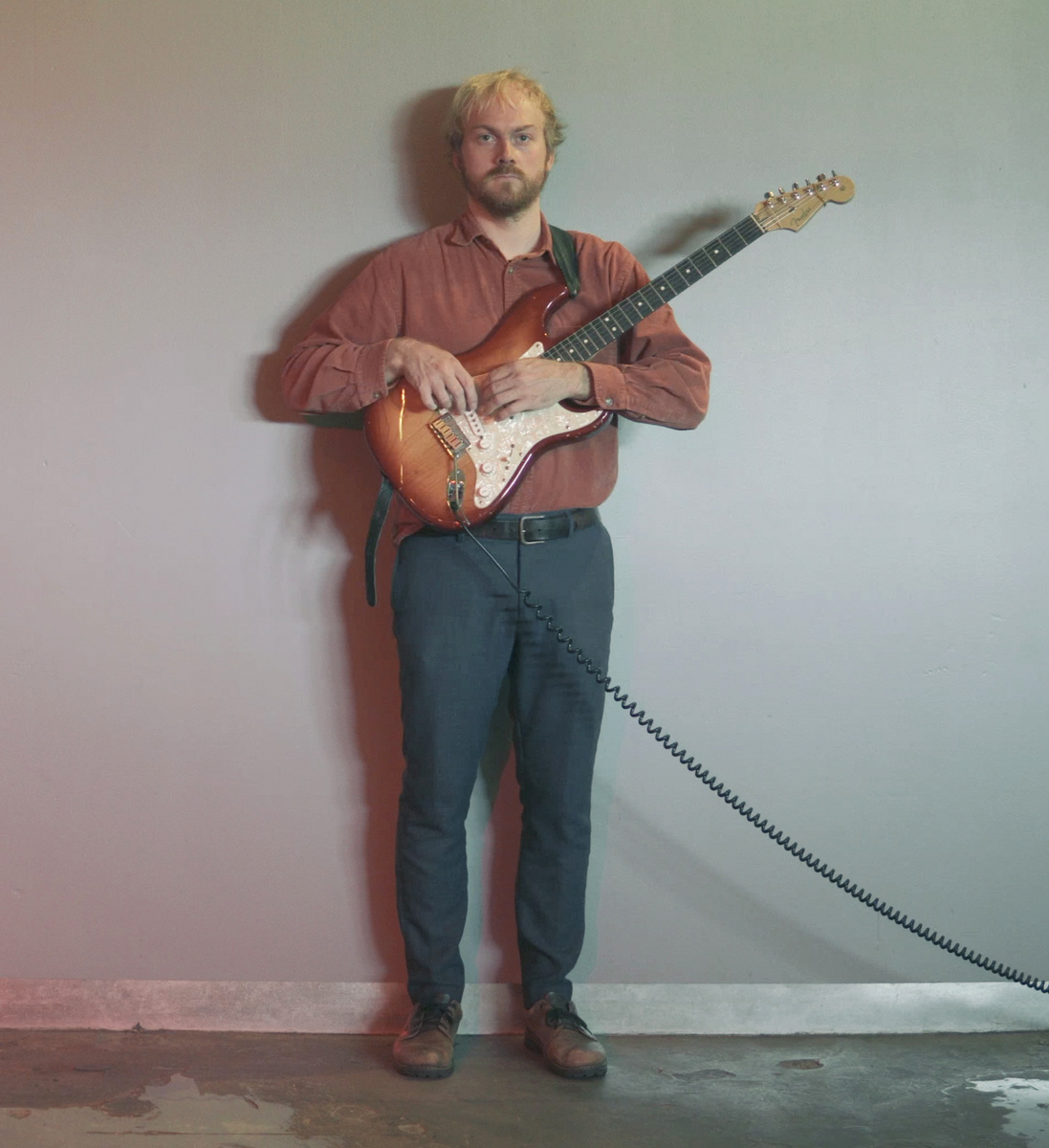
Photo: Ola Rubin
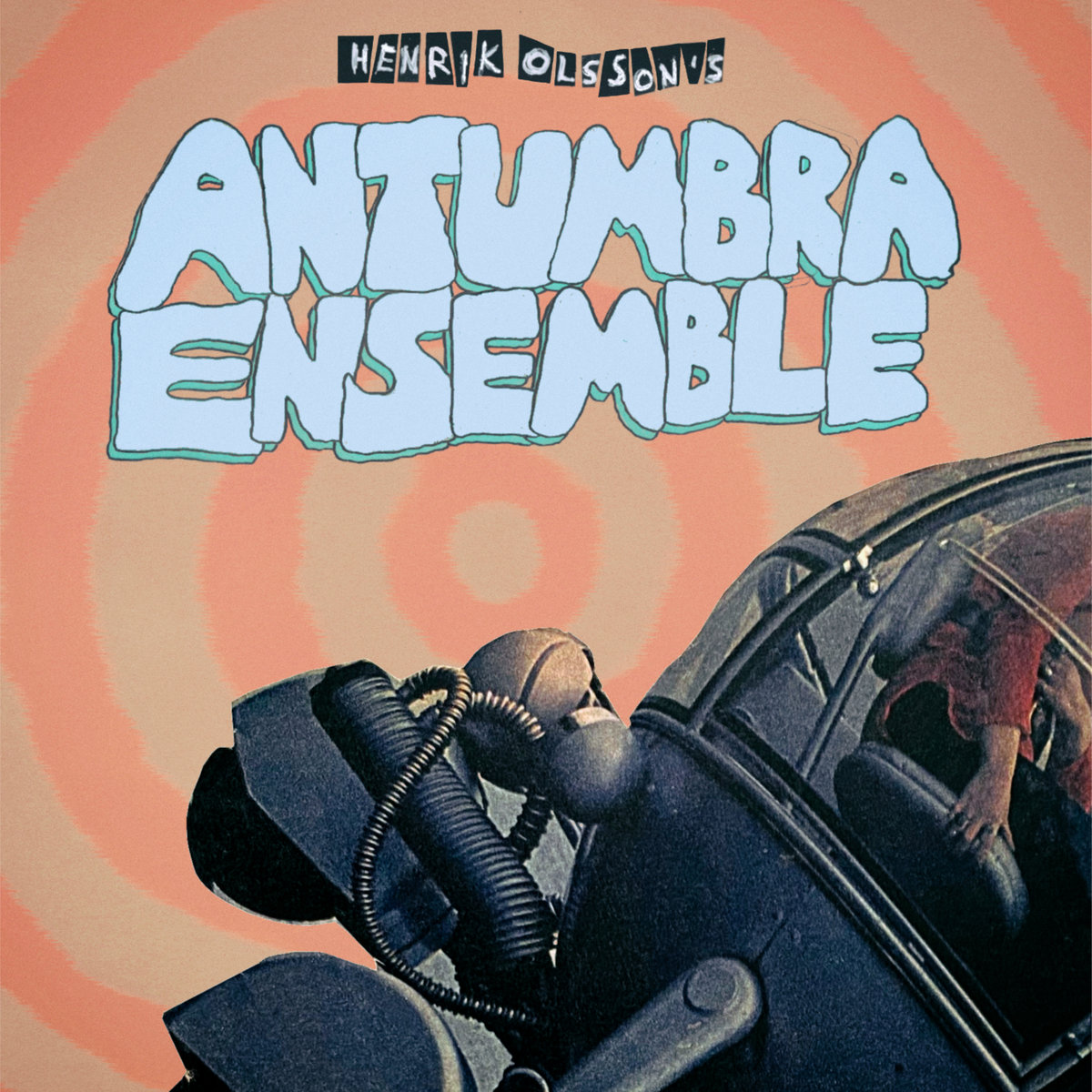
A debut album often serves as an introduction to an artist’s musical personality. In the case of Antumbra Ensemble, guitarist and composer Henrik Olsson does something far more ambitious: he presents a fully formed artistic universe, one where progressive rock, avant-garde jazz, contemporary composition, and fearless improvisation intersect with remarkable imagination.
Henrik Olsson’s interview
Frankie Pfeiffer: Henrik, you are a Swedish guitar player and composer, based in Copenhagen. Can you introduce yourself to the readers of Paris-Move?
Henrik Olsson: I’m Swedish and came to Denmark in 2007 to study here at the conservatory. I have been living here since then except for half a year in Berlin and been active mainly on the improvising scene here and internationally, playing gigs and touring with different improvising groups and ad hoc things while I´ve at the same kept my own writing practice/bandleading thing at a somewhat slow pace, at least in terms of what I’ve chosen to release. But my own groups active right now are Hand of Benediction and Antumbra Ensemble, and I play as “sideman” in a band called Jeppe Zeeberg & The Absolute Pinnacle of Human Achievement. I´m also in collaborative more improvising constellations like the duo Olsson/Rubin, Ytterlandet.. and a few other things.
Frankie Pfeiffer: What is your musical background?
Henrik Olsson: Started playing the oboe when I was 8 years, then switched to guitar when I was around 10. As a child/pre-teen I listened to a lot of punk, and I had a black metal band in my teen years. Also checking out the usual “guitar music” that your exposed to as a guitar novice. Then, still in teen years, I listened to classical music, studied scores and was specifically very much into Stravinsky, Shostakovich, Prokofiev, Messiaen, Satie and a little later the Second Viennese School while also learning as much as I could about jazz. The first jazz CDs I bought were compilation albums with Charlie Christian, and Django Reinhardt and then Giant Steps by John Coltrane, which is an interesting introduction. Then later, hearing Ornette Coleman´s The Shape of Jazz to Come as well as Keith Jarrett’s American quartet was a game changer for me, and from there I dug into the world of free jazz, and later free improv. That record The Avantgarde with John Coltrane and Don Cherry, I bought it and listened to it a lot. From a guitarist point of view, Bill Frisell has always been inspiring, of course his playing but foremost his openness and attitude to music and the world he created that is entirely his own. I love especially the slightly darker and twisted stuff, his late 80s/ early 90s records, and I think they are a bit overlooked. They are important. I have a master’s degree in music from Copenhagen Rhythmic Conservatory. But it´s mostly through meeting/playing with other musicians and digging into things myself, that I have learned the most.
Frankie Pfeiffer: Who are the musicians who influenced you?
Henrik Olsson: There are so many. And they are probably very familiar names to you, for a good reason. But from the top of my head and in no particular order, some names that I always return to is; Bill Frisell, Marc Ribot, Fred Frith, the so-called no-wave scene, Monk, Henry Threadgill, Brazilian music, Stravinsky, Prokofiev, Schubert, Deerhoof, Swedish and Norwegian folk music, Sun Ra, Django Reinhardt, Morbid Angel… etc, etc, really… the list is endless and naming a few can only go wrong. I’m checking new music out as much as I can. And old music. I admire composer/ improvisers who creates their own musical universe to exist in, like for example Monk, Mingus, Coleman and Threadgill, Cecil Taylor etc. You mention Frank Zappa in the review, but he was never someone I listened a lot to even though the very first CD I got was a Frank Zappa single where one of the tunes were “My guitar wants to kill your mama”. I really liked that, but I started to really check him out much later. I love Zappa and there is still a lot more to explore there but I don’t see him as a direct influence on my music. I hope I didn´t disappoint you there! But influences and inspirations are tricky things. Sometimes looking at the cover of an album, and imagining what the music sounds like, can be an endless inspiration for me, as well as drinking lots of coffee and just getting into the work. And I’m inspired by impossible juxtapositions, like how would it sound to merge Stravinsky’s L’Historie du Soldat with the attitude of Boredoms etc. Stravinsky has written some of the most incredible pieces of music, and some of them sound almost improvised to me. Like his Étude for Pianola, written in 1917 for the player piano. It’s like an early piece of computer music in that it’s “programmed” and not playable by hand but still has the spontaneity of an improvisation which is quite amazing. When thinking of my own music, I have often – in thought – wished to combine that kind of wild, twisted harmonic stuff found in Stravinsky/ Prokofiev’s music with a dirtier/rock approach, but it never really works for me to actively TRY to achieve something like that. It must first be digested in my subconsciousness, to later naturally come out – or not come out – in whatever form. I can’t be too cognitive about it. And Frank Zappa already did that in a way, to great success, combine Stravinsky with rock instruments, and a billion other avant-rock bands later have built upon that idea of chamber-rock. But I still think that there is more to do there, in a way that is not sounding too bombastic or forced.. a lot of so called progressive/ avant-garde rock stuff gets a bit “lost in the forest”, lost in itself, where my goal is to keep it on “street level”, a bit rowdy, dirty, “loose in the ends” and not super polished and that’s maybe why I rather relate to the (free)jazz tradition than the “progressive rock” even though I’m playing electric guitar the way I do.
Frankie Pfeiffer: Antumbra Ensemble is a debut album as a bandleader… with this septet. But not your first one as a bandleader. We will come back on that a bit later, but first of all can you introduce us to the musicians who accompany you on this album?
Henrik Olsson: Yes, Erik, Petter, Rune, Kristian and I studied at the conservatory here at the same time. I knew Petter from even before we came to Denmark. We have played together in many different constellation’s criss-crossing one another through the years. They all play in the band Horse Orchestra which I’ve also subbed in a few times. Jeppe and I have also played in some different constellations through years as well. Michaela hasn’t lived here for as long time as the others, but we met here in Copenhagen, and we had played a bit improvised music before she joined. She has a solo project, where she explores and amplifies the “hidden”, softer sounds on the alto saxophone and then works rhythmically with that. All of us are based here in Copenhagen, but there are only two Danes, Jeppe and Rune. Michaela is from Slovakia, Erik and Kristian is from Norway and me and Petter from Sweden. I don’t know if that’s interesting to know but there you go.
Frankie Pfeiffer: Can we say that Antumbra Ensemble is the name of the album but also the name of this band… the name of this project?
Henrik Olsson: Yes it’s the name of the project and the title of the album. It can seem confusing, but as how I see it, I just have this project called Antumbra Ensemble and this project called Hand of Benediction and let them be filed under the name Henrik Olsson, for practical reasons, so that people can find it all in one place. And I am the one who leads the projects and write the music, so I guess it makes some sense, to emphasize that a bit. I could also have just called all albums Henrik Olsson and then a title after that, but I still feel there are different things explored in each group, and I like to think that they are separate entities with their own identities. If everything were released as Henrik Olsson only, I would probably confuse myself. It might change, but this is how it is right now.
Frankie Pfeiffer: In what state of mind did you compose the different tracks for this album? How do you compose?
Henrik Olsson: Ideally, I’m in a blissfully historically ignorant state when I create, with a childlike mind where I just perceive sounds on an emotional level without preconceptions and forget everything about what’s supposed to be “good/bad”. Then first when I’ve created something, I can take revisit the material with an “editorial”, more critical mind. This is the ideal situation, and sometimes easier said than done. The process can look very different from day to day as well. And sometimes it is enough to just drink lots of strong black coffee and get into the work right away from the morning hours. I try to write every day. And I’m quite slow usually, though I can have periods where it just bursts out. I’m more of a seeker, sculpting things out, finding things, stumbling on things and then working with that. I rarely say to myself “Now I want to make a composition that sounds like this, ends with this and begins with that”. The process is a mix of following intuition, making a dialogue with the material, and playful experimentation.
I’ve found out it helps to scribble all new ideas down quickly and store them. Then some months later I open it again, and at that point I might have forgotten how or why I wrote it, so then it’s more like I stumble upon an unknown piece of music. Then, if it’s still appealing to me I like to think it must have something in it of value an then I only need to “arrange” it, let it unfold. It feels a bit freer in that way, to trick myself to be an arranger of a piece of music (that happens to be my own) instead of having the pressure of being The Composer with capital C. But I also like the idea of the composer with a capital C.
Frankie Pfeiffer: During the recording sessions, what instructions did you give to the six other musicians when you recorded your compositions? How much freedom to play and improvise did you give/offer them? Did the musicians have an influence on the recording of your compositions?
Henrik Olsson: The music is pretty much all written out exactly how I want it and then it’s just rehearsed. Some things I change/ erase/ rewrite after rehearsals. There are “windows” where somebody has a solo or a few places where everyone improvises but I don’t need to/want to direct the way they improvise, because they are all amazing improvisers. And, for example the horn players know more about their instruments than me, so they come with helpful suggestions in terms of phrasing etc. And they also have an influence in the sense that I think of them when I write.
Frankie Pfeiffer: As I mentioned earlier, Antumbra Ensemble is a debut album for you as a bandleader with this septet, but not your first one as bandleader. Tell us more about the Hand of Benediction project and the two albums you recorded as a trio, and then as a quartet.
Henrik Olsson: Yes, I started Hand of Benediction in around 2017, as a trio. I always liked the trio format, and wanted to explore what I could do with that. I had the idea to mix the more sound-based stuff I worked with in improvised settings with the way I play when I play more “actual guitar playing” with notes etc… And I wanted it to be within some kind of free jazz/rock idiom. And then for the next album I invited Egil Kalman, which opened for me and him going total textural/sound exploration mode while Jeppe and Rune keep the groove freejazz/rock element going… so drums and bass could exist as a separate unit in contrast to me and Egil as a more textural unit. But the modular synthesizer can also have a more melodic role or be a soloist. Or could build a sonic “frame” around the guitar trio, make it atmospheric or whatever, he could by using very low percussive frequencies function as an extra bass player or drummer that gives Rune more space etc etc… Many possibilites!
Frankie Pfeiffer: Do you plan to record a Hand of Benediction III album?
Henrik Olsson: Yes, that will happen for sure. But I´m already working on the next Antumbra album, so that will probably come first. I also want to do some sort of solo record.
Frankie Pfeiffer: Before Hand of Benediction, you were the leader of the quintet Penumbra Ensemble. Why did you change the name of your project/band after Penumbra Ensemble? Is it to highlight the shifts in the music you compose?
Henrik Olsson: Yes, Hand of Benediction is – at least in my head – another thing than Penumbra/ Antumbra which I fell are more connected to another kind of composition. Hand of Benediction involves composition too, but it’s more open, especially when we play live.
The name Antumbra Ensemble came quite late in the process, but I would like to think that the name was already “there” in my subconsciousness. Because it’s true that after Penumbra Ensemble ended, or maybe even before that, I had the idea of also creating an Antumbra Ensemble in the future, where the music would somehow reflect that name. Penumbra is the dark side of the shadow and Antumbra is the light side of the shadow… something like that😉… It sounds good to me, which is the most important thing.
Frankie Pfeiffer: You made only one album with Penumbra Ensemble. Why not a second one?
Henrik Olsson: It was my very first real project where I felt “THIS is the thing I really want to do from now on”. The first person I choose for the project was an amazing alto sax player, Søren Pendrup Jørgensen, whom I felt really good connection with, and having him in the band, I knew he would understand the music and bring it to a higher level. I carefully picked the other players, and it felt good, but we played a few gigs only. Unfortunately, not too long after, Søren passed away. Of course, I could have continued the band, but somehow it felt natural to move further. I was quite young and still in school (The Rhythmic Music Conservatory in Copenhagen) and needed some time to explore things. I had started to become more interested in totally improvised music and was a bit unsure of the whole thing with written music –or at least how I would deal with it in my music. I had lived in Berlin on and off around the same period which affected me a lot, with its vibrant scene of improvisers.
Frankie Pfeiffer: Can you also tell us more about that astonishing duo with Ola Rubin on trombone. What prompted you to record as a duo as the duo is one of the most challenging formats in jazz as in rock? And do you plan to make a second album, one day, with him?
Henrik Olsson: I love Ola’s playing and we have played quite a lot together through the years. Our duo started around 2018 or so. I prefer the duo format when it’s in a totally improvised setting. When playing solo, you have the freedom to deal with all the musical elements like silence/ space/ dynamics etc just as you wish, and when playing duo, you have to deal with those elements together, which creates this very naked and interesting dialogue. When we began playing, we explored this very reactive dialogue where the “small” textural sounds of our instruments often where the main material. There was a way with communication through sounds/textures that I think we both wanted to pursue at that time, and we didn’t have to talk about it. Then as often when you have established something, inevitably you run into a situation where you feel like you “perform” that thing and then things need to change to not become predictable. Not to say that we did that, but I think we both are very aware of not letting the music stagnate. We have talked about making a new record, but things must move naturally. There are always new things to explore when we play, but we live in different cities. I also like the idea that we develop ourselves in other projects and when we play again after a while, it feels fresh, and some new things happen when we play.
Frankie Pfeiffer: You have also played in formations as different as they are surprising, such as EHM (a trio with a female singer), The HUM (a quartet) and the YTTERLANDET trio, recording only one album with each of them. Why did you never make a second album with these groups? Is it because you felt you had already explored everything there was to explore, and that making another album would be pointless? Or because, deliberately, you, or another member of these groups, decided that the recorded album should remain the unique, one-of-a-kind statement of that particular ensemble?
Henrik Olsson: Again, I must say things happen naturally. And to rephrase your question as an answer, it’s important for me to not make pointless albums. And if you feel that a project can’t continue because it has explored everything there was to explore, I think it’s natural to not continue. But there can also be other reasons, personal reasons, prioritizing etc. With EHM we have recorded two albums. Marcela, the vocalist, moved to Brazil for a while but is now back in Denmark. We are just all very busy with other things, but we still play ca once a year and it´s always a blast. The Hum released two cassette tapes. That project doesn’t exist anymore. Ytterlandet is still going to some extent and is run collective by the members of the trio. We do ca one tour per year. I think it’s the same for all these projects, in all of them everyone involved is busy with many other projects.
Frankie Pfeiffer: Henrik, you are still young… How do you see your music evolving?
Henrik Olsson: I’ve become more focused on composing. I always was, but somehow, I feel that I’m becoming better at getting things done lately and I have many ideas that I want to manifest into albums/projects etc. Musically speaking I can’t say, and it works best when I discover the paths intuitively rather than “mapping them out” them in advance.
Frankie Pfeiffer: And in how many more new projects do you want to be involved?
Henrik Olsson: Only those that I think it’s worth being involved in! It’s a balance. I’m very focused on my own projects but I’m always up for playing in other bands if I like what they do. I have plenty to do with my own bands. I’m only “sideman” in one band. I try to only engage with things that is meaningful to me somehow, and that’s probably why I have so little money.
Frankie Pfeiffer: Which famous musician(s) would you like to play with? …and have them play on one of your next albums?
Henrik Olsson: I’m very happy for playing with the people I play with. There are many great musicians in Copenhagen. But of course, there are a thousand musicians out there that I want to play with, but I can’t name one that I particularly want to play with. I like surprises. But I saw Alan Bishop live some weeks ago.. If I could have him singing on the next Antumbra album?
Frankie Pfeiffer: How do you imagine your next album? With the same musicians? Will it be a Antumbra Ensemble II, or a Hand of Benediction III, or… a solo album, with just Henrik and his guitars?
Henrik Olsson: I’m already writing new material for Antumbra, and Hand of Benediction III is next in line, plus some sort of solo album, because I really want to do more solo gigs. So that’s the focus right now.
Frankie Pfeiffer: Congratulations, in any case, for this first Antumbra Ensemble album! It gets the highest mark on Paris-Move, ‘A must have’!
Henrik Olsson: THANKS!