Gregg Hill’s ITW
par Thierry De Clemensat
Member at Jazz Journalists Association
USA correspondent for Paris-Move and ABS magazine
Editor in chief – Bayou Blue Radio
April 2026
Follow PARIS-MOVE on X
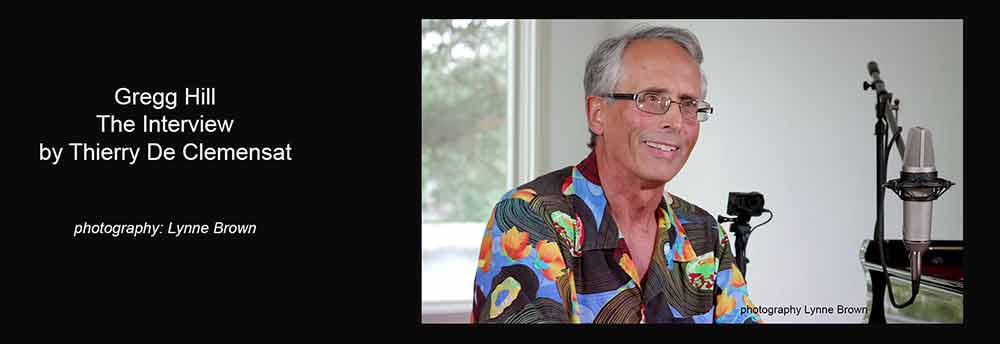
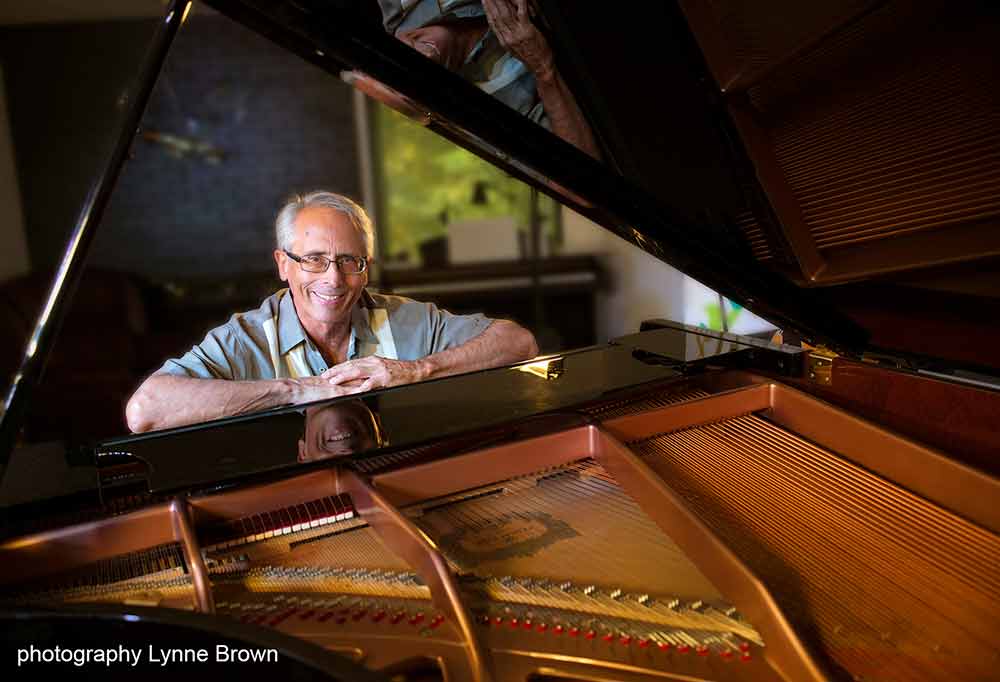
Without much fanfare, at the start of 2026 we launched a series of composer interviews, beginning with our friend Andy Emler, followed by Anthony Branker, Yelena Eckemoff and Franck Amsallem, artists whose paths into composition could hardly be more different. Today, it is the turn of composer Gregg Hill, who, through his own label, Cold Plunge Records, as well as through collaborations released on other imprints, continues to bring his work to listeners. There is, it must be said, a palpable admiration that seems to accompany each of his projects, reflected in the caliber of musicians he works with, some of whom are also associated with our partner and friend, Origin Records.
Thierry De Clemensat: Gregg, thank you for joining us. Let me start by asking you to look back: do you remember when, and at what point in your life, you realized you wanted to become a composer? Was there a defining moment, or did that awareness emerge gradually over time?
Gregg Hill: As a young child I was attracted to keyboard instruments wherever I found them, from my grandparent’s parlor to a garage in a rental house. I think what hooked me was a working pump organ in that said garage when I was around ten. I would go in there for hours and make up tunes and do some sound exploration. I swear a muse lived there in that garage.
Thierry De Clemensat: When you compose, what is your process? Do you take notes from what you observe in your daily life and travels? Are those experiences your primary source of inspiration, or do you tend to begin with a blank page, letting your first ideas take shape spontaneously? And has your approach evolved over the years?
Gregg Hill: Both are key. Overhearing random conversations sparks ideas for tunes. Also nature sounds, particularly bird calls and evening frog symphonies, stand out as inspiration. The blank page is also big. Sometimes it is best to sit and wait for the tunes to come to you, rather than chase ideas or rely strictly on a conceptual approach.
Thierry De Clemensat: I often have the impression that your compositions are deeply collaborative, particularly when listening to albums by Rodney Whitaker, Rick Roe, or Michael Dease’s City Life. Is that an accurate reading of your work? If so, how does that collaboration unfold in practice? Where does your role end and the musician’s begin? And how much freedom do you leave to interpretation?
Gregg Hill: I have a simple strategy for collaboration with these great artists. Everything is based upon trust. If I can put something together with some interesting structure and strong melodic movement, I am ready to hand it off to the next level of creativity. I pick the best bandleaders who can arrange or have access to good arrangers and let them assemble the band. Then I let them highlight their own playing and improvising. For all soloists I leave plenty of room in the compositions for stretching out and exploring. The only rule is to stay true to the composition itself.
Thierry De Clemensat: I imagine that some of your projects are commissioned by labels or organizations. In those cases, do you approach your work differently? Does a commission impose constraints, or perhaps open up new creative possibilities? And how do you balance expectations with your own artistic voice?
Gregg Hill: I am my own producer and publisher, so I am able to avoid those pitfalls.
Thierry De Clemensat: Let’s talk about your musical universe. Your work clearly draws from both classical music and jazz, yet I often sense other influences that are harder to identify. As a European listener, I may not fully grasp all the cultural references at play. Could you shed some light on this? What traditions or genres have shaped your voice as a composer? Are there particular composers or artists, past or present, who have left a lasting imprint on your work?
Gregg Hill: I am sure that you are aware of a fairly common pattern among musical pros. Most had parents in many cases who were classical musicians or grew up in a household where the music was always playing. I grew up to the sounds of big bands, bebop and piano/organ trios. Also strong doses of classical and folk music was on the daily playlist. On my own I lived through the rock era. I was totally captivated by avant guard jazz. Big fan of Ornette Coleman in particular. So many influences over many years. My head is a non-stop radio broadcast, so when I compose, it may have something to do with what is playing in my head at the time.
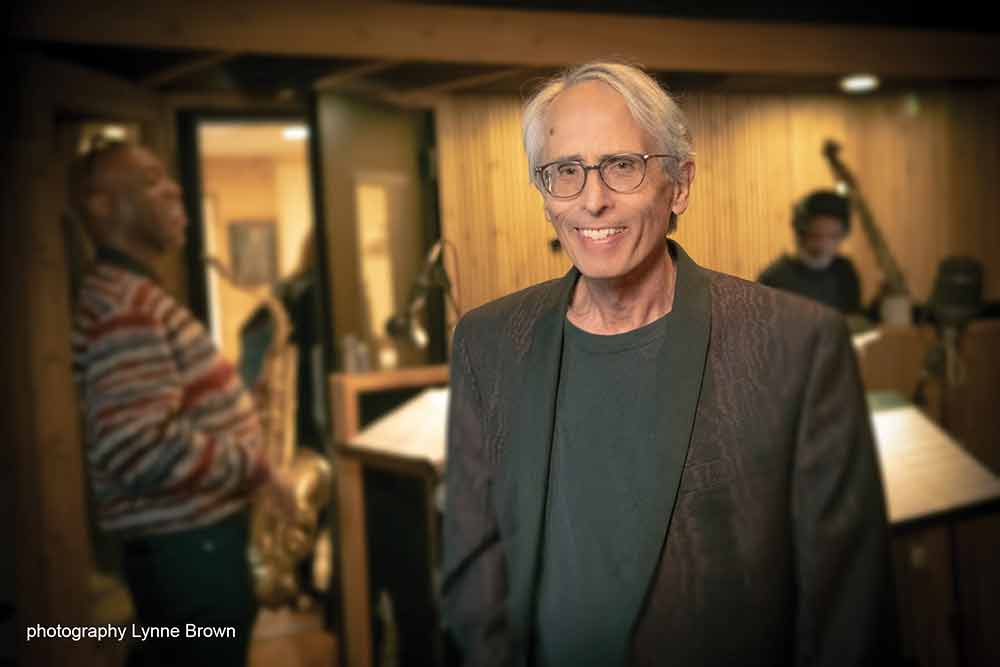
Thierry De Clemensat: Given the remarkable number of works bearing your name that are now available on record, how do you view your body of work as a whole today? Do you see continuity, evolution, or perhaps distinct creative phases? And more specifically, which instruments do you feel most drawn to when composing, and why? Does that preference extend to your approach to orchestration as well?
Gregg Hill: I view my body of work as an organic whole that expands continually. When my time is up, rather than going face down in my soup, I would rather face-plant a piano keyboard. As far as instruments, I am a one piano pony. I have a digital Yamaha piano that records. All I need is that and a binder of blank manuscript paper. With that combination I am able to capture and preserve any promising ideas. No more lost tunes for me.. Yes, very distinct creative phases. I know exactly when they begin and when they end. Weird , but true.
Thierry De Clemensat: Your catalog is both prolific and diverse. How do you decide when a piece is finished? Do you ever feel the urge to revisit and revise earlier works? And how do you navigate the tension between productivity and refinement?
Gregg Hill: The tune itself will let you know when it is finished. Try a couple minor revisions, wait about a week, then put the final touches on. Works great. The only time I revise earlier work is when I spot a crying need for a B section or a coda. I am not aware enough of the productivity/refinement dichotomy to comment.
Thierry De Clemensat: In practical terms, how do you structure your time as a composer? Do you follow a disciplined routine, or is your creative process more fluid? And how do you deal with moments of doubt or creative block?
Gregg Hill: Both. I have noticed lately that being in a warmer climate does affect me, particularly being in New Orleans or on The Jazz Cruise. Back in Michigan I have been averaging about a tune a month for quite a while. Double that in warm surroundings. There is no cure for creative block. Time and patience is your only course of action.
Thierry De Clemensat: We live in a turbulent world. Does that reality influence your compositions? If so, in what ways does the broader social or political climate find its way into your music? Do you see music as a form of commentary, or more as a space of refuge?
Gregg Hill: Mostly a valuable space of refuge, but it is possible to write period pieces that can satirize current goings on. If you can bring up a visual image through the music, you know you are on the right track.
Thierry De Clemensat: The recording industry has undergone profound changes in recent years. As a composer working both independently and with labels, how do you view these transformations? Have they altered the way you create, produce, or distribute your work?
Gregg Hill: Not really. I have my own label, Cold Plunge Records, so I can produce at will. I also use Origin sometimes for bigger projects.
Thierry De Clemensat: Your collaborations often bring together musicians with strong individual voices. How do you select the artists you work with? Is it a matter of musical affinity, personal connection, or something less tangible?
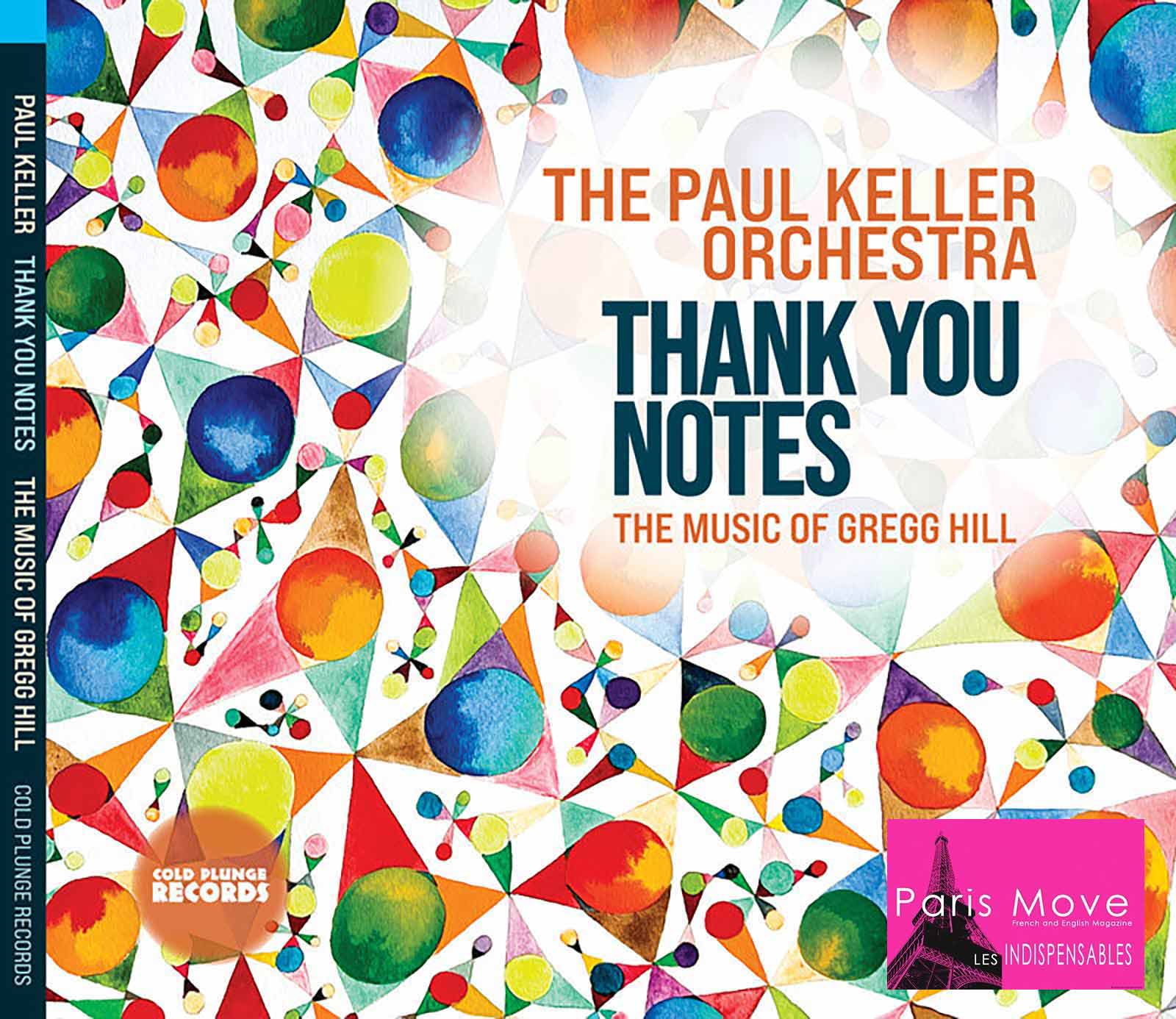
Gregg Hill: Mostly these relationships have been built up over many years, My current album, Thank You Notes, was put together over a five year period with bassist/ bandleader/ arranger Paul Keller. In many cases, long friendships evolved into musical projects. I knew Rodney Whitaker, Randy Napoleon and Michael Dease for a long stretch before we recorded anything together.
Thierry De Clemensat: How important is the audience in your creative process? Do you think about how listeners will receive your work while composing, or does that come later?
Gregg Hill: Nothing is better than having a music lover come up to me after a show and telling me how much they enjoyed the material. That is rocket fuel to keep the whole thing going.
Thierry De Clemensat: Looking ahead, are there directions you have not yet explored but would like to pursue? New formats, new ensembles, perhaps even other artistic disciplines?
Gregg Hill: We are assembling a new book of tunes called Distant Valley this week. I collaborated with an illustrator to match the images of the tune title. At some point , they may turn into live costumed figures capable of dance routines, singing and dialogue. Just a notion at the moment.
Thierry De Clemensat: Finally, what advice would you give to a young person hoping to begin a career as a composer today? What should they focus on, and what pitfalls should they avoid? And perhaps just as importantly, what sustains a lifelong commitment to composition?
Gregg Hill: I would use the writer’s trick of composing fragments of material, put them in a jar and when you have enough to work with, get started on a composition. Starting out, it is too frustrating to tackle big ideas. Do enough of this and you will discover your own style and that will propel you a long ways if you have the desire and inspiration to stick with it
::::::::::::::::
Gregg Hill and the Paul Keller Orchestra Revive Big Band Jazz on “Thank You Notes”: Review on PARIS-MOVE