
| Jazz |
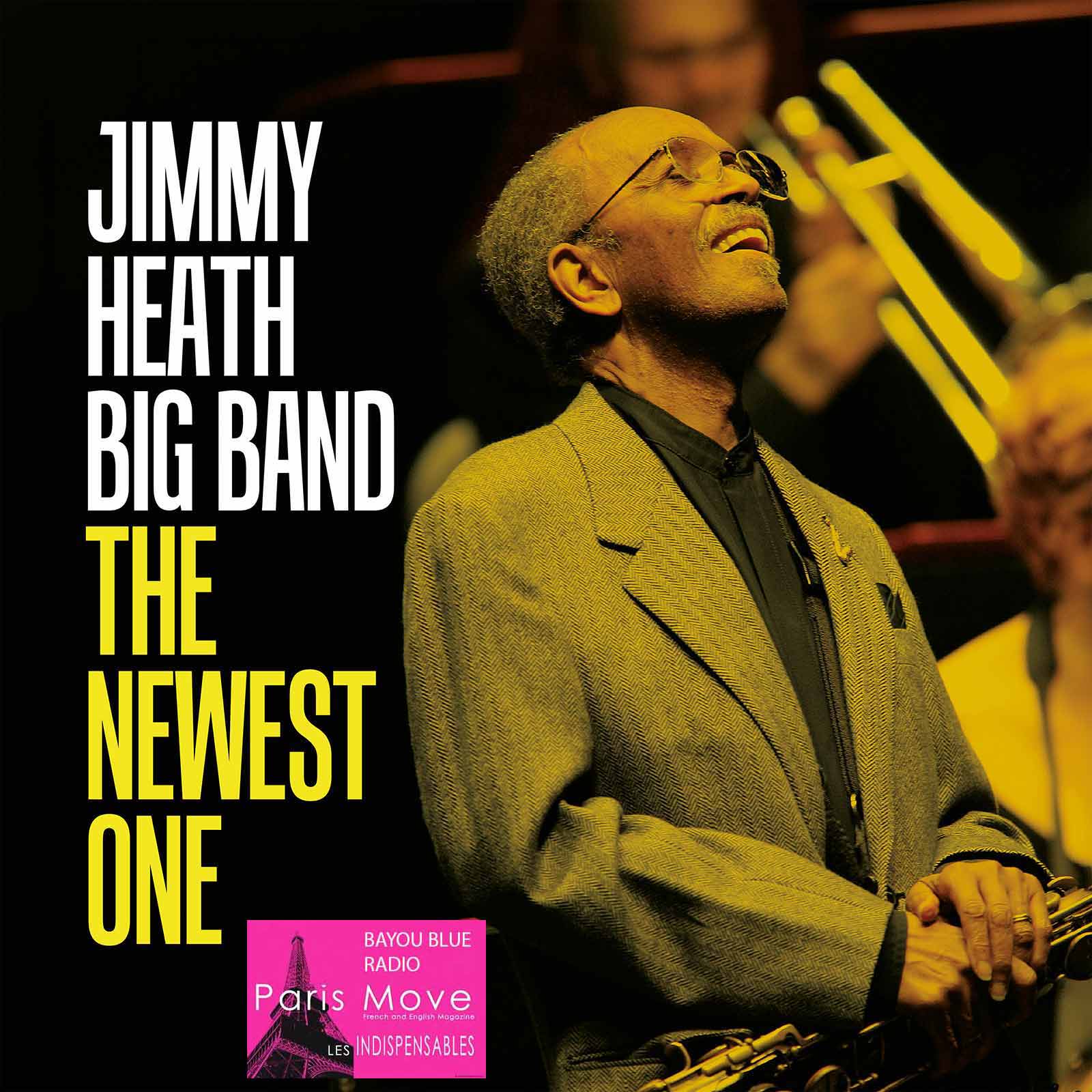
The fog wraps the studio in the coolness of an autumn morning. Outside, the streets are quiet, except for the birds calling to one another in their familiar morning conversation. The light is slow to emerge, and time seems momentarily suspended. I settle into the studio and put on The Newest One, the recording by the Jimmy Heath Big Band. Within a few bars, I am drawn into a sound world that feels both familiar and remarkably alive: warm brass, rich saxophones, an easy swing, and an elegance that never calls attention to itself. There is a particular pleasure in hearing a big band that understands how to breathe. The sections converse rather than compete; the rhythm section provides a supple foundation, and the arrangements leave room for individual voices to emerge without disturbing the larger picture. Nothing feels forced. The music moves with quiet confidence, carrying the unmistakable warmth of an earlier era without becoming trapped in nostalgia. This is what I would call its retro sensibility-not an attempt to recreate the past, but a way of preserving its musical grace. Jimmy Heath knew this language from the inside. Born in Philadelphia in 1926, he came of age during the transition from swing to bebop, absorbing the influence of Charlie Parker before developing a distinctive voice as a saxophonist, composer, and arranger. Known as “Little Bird” in his early years, he eventually became much more than a gifted instrumentalist. His real achievement lay in understanding how individual musicians could become part of a larger musical conversation. His work with figures such as Dizzy Gillespie and Miles Davis belongs to the history of modern jazz, but his contribution as an arranger and bandleader deserves equal attention.
Philadelphia was central to that formation. The city produced an extraordinary generation of jazz musicians, including John Coltrane, Benny Golson, McCoy Tyner, and members of the Heath family. In the mid-1940s, Jimmy Heath was already organizing his own musical projects, with musicians such as Coltrane and Golson among those associated with his early circle. The story is worth remembering, but it is the music itself that matters here: the sound of a musician who spent a lifetime learning how to make an orchestra speak with one voice without silencing its individual members. Recorded in late 2018, when Heath was 92, The Newest One captures him still fully engaged as composer, arranger, and bandleader. He died in January 2020, before the recording could be released. The project was eventually brought to completion through the efforts of bass trombonist Douglas Purviance, alto saxophonist Antonio Hart, and the Heath family. Its release, scheduled for November 20, 2026, gives listeners access to a session recorded under Heath’s own direction. That distinction is important. This is not a posthumous reconstruction or an attempt to manufacture an ending. It is music he made while he was still actively shaping his own artistic world.
The title track establishes the album’s character with a relaxed, almost strolling groove. Heath allows the arrangement to unfold naturally, giving the different sections room to contribute to the whole. Changes reveals another aspect of his craft, with its shifting instrumental exchanges and carefully balanced orchestral colors. The writing is sophisticated, but never inaccessible. Heath understood that complexity need not come at the expense of pleasure. The presence of Roberta Gambarini on Life in the City and Without Song adds a welcome vocal dimension. Her voice fits naturally into the ensemble, complementing its warmth rather than competing with it. Both compositions had previously appeared with the Heath Brothers on their 2015 album Connecting Spirits. Here, they take on a new orchestral dimension while retaining their melodic identity. I would also single out Silver Threads, which closes the album. A fanfare introduces the piece before giving way to a succession of brief instrumental statements. Each musician seems to offer a final thought in a conversation that has continued throughout the recording. Given the circumstances surrounding its release, the moment carries an emotional weight, but the music never slips into sentimentality. Its restraint is precisely what makes it moving. The ensemble deserves to be heard as more than the vehicle for Heath’s arrangements. Antonio Hart, Frank Basile, Mark Gross, and Sam Dillon contribute to the cohesion of the saxophone sections, while Jeb Patton on piano, David Wong on bass, and Evan Sherman on drums provide a rhythm section that is both grounded and flexible. Douglas Purviance’s contribution is particularly significant, not only as a musician but also as one of the people who helped ensure that this recording would finally reach the public. The players share a clear understanding of Heath’s musical language, yet retain their own personalities.
A few of Heath’s best-known compositions offer a measure of his lasting influence. For Minors Only, C.T.A., and Gingerbread Boy have long been part of the modern jazz repertoire. Their melodic strength and openness to improvisation explain why musicians continue to revisit them. Heath could write themes that stayed with the listener while leaving performers enough freedom to make each interpretation their own. Swing, bebop, hard bop, and orchestral writing were not separate territories for him. They belonged to a language that was always evolving.
That understanding of jazz as a living, collective art is especially relevant today. Large ensembles require time, rehearsals, organization, and financial support-resources that the contemporary music industry rarely provides. Their survival often depends on universities, cultural institutions, festivals, and musicians determined to keep this essential form alive. The involvement of the label associated with Temple University’s Boyer College of Music and Dance in Philadelphia gives The Newest One an added significance. It is a reminder that musical culture depends not only on commercial success, but also on institutions willing to support artists and bring important works back into circulation. Still, the institutional story should not overshadow the essential point: this is first and foremost a beautiful record of music. The recording allows us to appreciate the balance between the sections, the precision of the arrangements, and the richness of the instrumental colors. I find myself drawn as much to the exchanges around the solos as to the solos themselves: a brass response, a saxophone phrase, the quiet movement of the rhythm section. Much of the album’s character lives in those details.
Jimmy Heath’s career brought him into contact with some of the defining figures of jazz, but his importance cannot be measured by prestigious collaborations alone. He was a composer and arranger with a distinctive sense of orchestral color, a musician whose curiosity never diminished, and an artist who never separated rigor from the pleasure of playing. At a time when novelty is often treated as an obligation, The Newest One offers a different understanding of invention. Originality can also emerge from mastery, from a deep knowledge of musical forms, and from the ability to make them speak with renewed conviction. The retro warmth of this big band is no refuge from the present. It is a reminder of values that remain essential: thoughtful writing, beautiful sound, attentive listening, and the pleasure of creating something together. This music does not chase contemporary trends. It follows its own rhythm and invites us to slow down, listen closely, and rediscover the expressive power of a well-balanced ensemble.
When the listening session comes to an end, I am left with the feeling of having encountered music that never needs to announce its importance. The Newest One carries the story of a man and a city, but it is first and foremost a generous, vivid, and deeply musical album. It brings swing and bebop into conversation while preserving the unmistakable character of Jimmy Heath’s writing. Outside, the fog may have lifted. The birds have continued their morning conversation, indifferent to the hours I have spent in the studio. Yet something of that atmosphere remains in the music: a sense of calm, a warmth that never excludes depth, an elegance that asks for no attention.
Posthumous recordings can sometimes feel like the closing chapter of a life. This one does something quite different. It brings back into circulation music recorded while its creator was still at work, reminding us that art does not always follow the calendar of human existence. Jimmy Heath is no longer here to lead his orchestra, but his arrangements still breathe, his compositions continue to be played, and the musicians around him keep his musical world alive. That is the finest tribute: not to place the work under glass, but to let it continue to live. The main change is deliberate: the reader hears the band before learning the biography. Philadelphia and Heath’s career now provide context rather than interrupting the opening momentum.
Thierry De Clemensat
Member at Jazz Journalists Association
USA correspondent for Paris-Move and ABS magazine
Editor in chief – Bayou Blue Radio, Bayou Blue News
PARIS-MOVE, November 19th, 2026
Follow PARIS-MOVE on X
::::::::::::::::::::::::
Jimmy Heath Big Band:
Saxophone: Mark Gross, Antonio Hart, Sam Dillon, Jimmy Heath, Bobby LaVell
Baritone Saxophone: Frank Basile
Trombone: James Burton, Steve Davis, John Mosca
Bass Trombone: Douglas Purviance
Trumpet: Frank Greene, Freddie Hendrix, Michael Philip Mossman, Mike Rodriguez
Bass: David Wong
Piano: Jeb Patton
Drums: Evan Sherman
Track Listing:
For Minors Only
Longravity
Mona’s Mood
Changes
Life In The City
Without Song
The Newest One
New Picture
Silver Threads
Recorded on November 20, 2018 at Sear Sound, New York, NY
Producers: Robert Stroker, David Pasbrig, Douglas Purviance, Antonio Hart
Recording Engineer: Chris Allen
Assistant Recording Engineer: Steven Socco
Mixing Engineer: Ken Gregory
Mastering Engineers: Ken Gregory, David Pasbrig
Graphic Design: Nadja von Massow / nad.works
Liner Notes: Shaun Brady