
| Jazz, Noël |
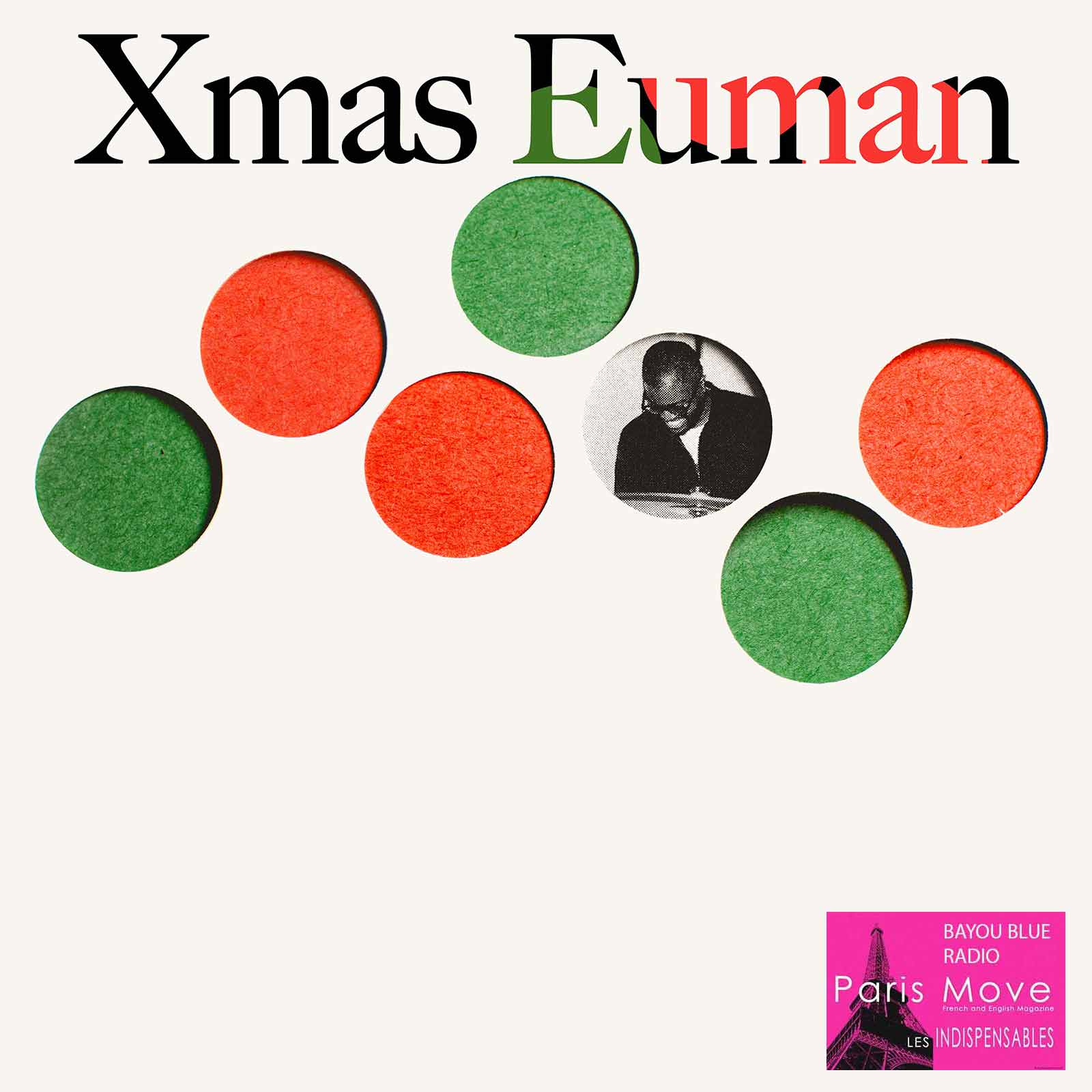
I have to admit that I am beginning to suffer from a certain degree of Christmas album fatigue. Year after year, the same familiar titles resurface: “Winter Wonderland,” “Jingle Bells,” and a handful of other seasonal staples that seem almost impossible to avoid. Their constant repetition has reached the point where even listening to some of these records for review purposes can feel like an exercise in endurance. Surely, it is time for a new generation of songwriters and composers to bring fresh ideas to a repertoire that has become increasingly predictable, rather than simply recycling arrangements that audiences have heard countless times before.
And yet, every so often, an album comes along that makes me reconsider my reservations. This is very much the case with Christian Euman’s latest Christmas project. The presence of Michael Mayo, together with a remarkably resourceful group of musicians, makes a genuine difference. What emerges is far more than another collection of familiar holiday songs dressed up in jazz arrangements. In several instances, we are dealing with something closer to a complete musical reimagining. These musicians bring an impressive command of both jazz and classical traditions to the material, allowing them to transform melodies that have long been taken for granted into sophisticated, fully realized jazz performances.
There is a fundamental distinction here. The objective is not simply to add a few sophisticated chords, an improvised solo or a more adventurous rhythmic pattern to songs that everyone already knows. It is to reconsider their musical architecture, to explore what lies beneath their familiar melodies and to reveal possibilities that have been obscured by decades of conventional interpretations. The results are often striking. What initially sounds recognizable gradually becomes something altogether different, without losing the identity of the original composition.
The personal story behind the project offers an additional perspective on its artistic intentions. Christian Euman describes the Christmas traditions of his childhood in Chicago’s South Side suburbs as thoroughly conventional. “There was a tree, presents, food, family. It was the quintessential Christmas,” he recalls. After spending several years trying to celebrate the holidays among palm trees rather than evergreens, he eventually decided that something had to change. But instead of simply booking the first flight back to the Windy City, he contacted Joon Lee, owner of Los Angeles jazz club the Blue Whale, to ask whether the venue was planning any holiday performances. Lee’s response was straightforward: no, but would Euman like to put something together?
That seemingly casual exchange would eventually develop into a musical undertaking that has become a holiday tradition in its own right. What began as an attempt to recreate a familiar atmosphere from childhood evolved into an opportunity to bring together a group of musicians whose collective imagination could take an established repertoire in unexpected directions. The album, recorded with this musical community, captures the spirit of that undertaking while giving it a more permanent form.
This background matters because it helps explain why the project feels so different from the usual seasonal productions. It is not simply another attempt to capitalize on the Christmas market, nor is it an exercise in nostalgia designed to reproduce the comforting sounds of an idealized holiday. There is a genuine artistic motivation behind it: the desire to reconnect with personal memories while transforming them into a shared musical experience. Christmas provides the starting point, but the music itself is what ultimately matters.
There is also a broader cultural dimension worth considering. In much of Europe, Christmas has gradually moved away from its strictly religious foundations. Particularly since the late 1960s, the holiday has increasingly become a social and family occasion, often celebrated independently of religious belief. Gathering around a dinner table, exchanging presents and reconnecting with relatives and friends have become central elements of the season for a substantial part of the population. This evolution is neither universal nor complete, but it has undeniably changed the way Christmas is experienced and understood.
The Christmas tree itself is an interesting example of this cultural transformation. Today, it is one of the most recognizable symbols of the holiday, yet its historical associations reach back to older winter celebrations and the symbolic significance of the seasonal transition. At the darkest point of the year, when nature appears to have come to a standstill, the return of light becomes a powerful collective symbol. The winter solstice, with its promise of longer days and eventual renewal, provides a historical and cultural context that extends well beyond contemporary religious practices. By late January, when the first daffodils begin to emerge in parts of Europe, the landscape offers an early reminder that winter is not an endless condition but a passage toward spring.
This may seem like a considerable detour from the music itself, but I believe it offers a useful way of understanding Euman’s project. What he appears to be seeking is not merely the reproduction of familiar Christmas imagery, but a return to the underlying ideas of gathering, remembrance, transmission and shared experience. Music becomes the actual meeting place, rather than the decorative soundtrack to a holiday whose symbols have sometimes lost their original meaning.
The quality of the album is hardly surprising when one considers Euman’s musical background. The Chicago-born drummer has developed a remarkably broad musical vocabulary through collaborations with artists working across different traditions and disciplines. His professional journey has brought him into contact with Herbie Hancock, Kurt Elling, Billy Childs, Jacob Collier, Rufus Wainwright and Larry Goldings, among others, as well as the acclaimed vocal ensemble säje. These collaborations reflect a musical curiosity that extends well beyond the conventional boundaries of jazz.
His education also played an important role in shaping that perspective. After studying at Western Michigan University, Euman continued his development at the Thelonious Monk Institute of Jazz Performance, now known as the Herbie Hancock Institute of Jazz. The influence of musicians such as Herbie Hancock and Wayne Shorter is particularly relevant when considering his approach to rhythm and ensemble interaction. In this musical tradition, rhythm is never simply a foundation upon which soloists perform. It is an active, evolving element of the composition, capable of reshaping its structure and influencing the direction of the entire performance.
Euman’s experience also extends into film music, with credits associated with productions including La La Land, Green Book and Ford v Ferrari. This work has undoubtedly contributed to his understanding of orchestration, musical storytelling and the relationship between different instrumental textures. The ability to move comfortably between jazz, contemporary composition and cinematic music gives him an unusually broad perspective, one that is clearly reflected in the arrangements presented here.
The musicians assembled for the project are equally important to its success. Michael Mayo handles the vocals, while Josh Johnson contributes on alto saxophone, Josh Nelson on piano and harmonium, Anna Butterss on bass, and Andrew Renfroe on guitar. This is no collection of players brought together merely to fill out a seasonal recording session. Each musician has a distinct personality and a genuine understanding of the musical language being explored. The arrangements leave sufficient room for individual expression without sacrificing the cohesion of the ensemble. Ideas circulate naturally, instrumental exchanges develop organically, and the music retains a sense of spontaneity that is essential to its appeal.
Michael Mayo, in particular, deserves special attention. His vocal approach is one of the album’s defining strengths. Rather than treating the songs as conventional vocal standards, he approaches them as opportunities for musical dialogue. His remarkable flexibility allows him to move between registers, manipulate rhythmic phrasing and explore subtle variations in tone without resorting to unnecessary vocal theatrics. He understands that the voice does not always need to occupy the foreground. At times, it becomes another instrument within the arrangement, responding to the musicians around him and contributing to the overall musical architecture.
This ability to move between vocal interpretation and instrumental interaction is especially effective because Mayo never seems disconnected from the ensemble. His phrasing reflects a deep understanding of jazz, but also a willingness to explore its more contemporary possibilities. The result is an interpretation that feels both technically assured and remarkably natural.
One of the most compelling examples of this approach can be heard in “Little Drummer Boy.” Few Christmas songs are more exposed to the risk of musical repetition. Its melody and rhythmic identity are so deeply embedded in popular culture that finding a genuinely fresh interpretation is no small challenge. Yet here, the familiar composition becomes an extraordinary musical playground. At several points, it is almost impossible to determine where the arrangement ends and the improvisation begins. That ambiguity is not a technical curiosity; it is evidence of how thoroughly the musicians have absorbed the original material.
The rhythmic treatment is particularly impressive. The familiar pulse, which traditionally evokes the persistent beat of a small drum, is transformed into an evolving musical structure. It becomes something far more flexible, allowing for shifts in dynamics, rhythmic displacement and unexpected exchanges between the musicians. Euman’s drumming does not simply reproduce the song’s original pattern. It interacts with the bass, responds to harmonic developments and shapes the spaces between musical phrases. The other instruments participate in this ongoing conversation, gradually giving the performance a collective dimension that goes well beyond a straightforward reinterpretation.
This attention to musical detail can be found throughout the album, whether in “Winter Wonderland,” “Carol of the Bells,” “I Saw Three Ships” or “Jingle Bells.” Not every composition is approached in the same way, which is precisely what prevents the recording from becoming monotonous. Some arrangements favor lightness and rhythmic flexibility; others explore harmonic contrasts and more pronounced dynamic shifts. The inclusion of “Great Pumpkin Waltz” also provides an interesting departure from the conventional Christmas repertoire, broadening the seasonal context and adding another dimension to the program.
What makes the album particularly engaging is the musicians’ ability to maintain a balance between familiarity and discovery. The melodies remain accessible, but their surroundings are constantly changing. The listener is never entirely sure where the music will go next, and that sense of anticipation is one of the recording’s greatest strengths. Rather than relying on predictable arrangements, the musicians allow the compositions to develop through interaction, improvisation and a shared understanding of the material.
Ultimately, what interests me most about this project is the way it challenges our understanding of tradition. Tradition is often presented as something that must be preserved in its original form, as though any attempt to modify it represents a departure from its essential meaning. But traditions remain relevant precisely because successive generations continue to question, reinterpret and reinvent them. Jazz has demonstrated this principle throughout its history. Its evolution has been shaped by the reinterpretation of existing compositions, the incorporation of different musical languages and an ongoing dialogue with traditions that sometimes seem far removed from its origins.
Euman and his collaborators clearly understand this process. They do not approach Christmas music as a collection of untouchable cultural artifacts. Instead, they treat it as living material, capable of absorbing new influences and supporting fresh artistic ideas. Their work demonstrates that respect for a musical tradition does not require blind adherence to its conventions. On the contrary, genuine respect sometimes demands the courage to take familiar material somewhere unexpected.
I am certainly not about to abandon my reservations about the annual flood of Christmas albums. Too many productions continue to rely on familiar formulas, offering little more than slightly different versions of songs that have already been recorded countless times. But placing this album in the same category would be unfair. Christian Euman and his fellow musicians understand that simply giving a jazz treatment to popular holiday songs is not enough. The challenge is to rediscover their musical essence, explore their structural possibilities and bring them into contact with a level of musicianship that gives them a genuinely new identity.
That is ultimately what makes this recording so satisfying. Its success rests not only on the quality of the arrangements, but also on the intelligence of the performances, the chemistry between the musicians and Michael Mayo’s particularly inspired contribution. It is a reminder that even the most familiar songs are not condemned to endless repetition, provided that the musicians approaching them possess the imagination, experience and cultural understanding necessary to give them a second life.
After all, I have to admit that this is one Christmas album I was happy to listen to all the way through. And, given my growing fatigue with the genre, that is no small achievement.
Thierry De Clemensat
Member at Jazz Journalists Association
USA correspondent for Paris-Move and ABS magazine
Editor in chief – Bayou Blue Radio, Bayou Blue News

PARIS-MOVE, November 17th, 2026
Follow PARIS-MOVE on X
::::::::::::::::::::::::
Musicians :
Christian Euman – Drums
Michael Mayo – Voice (1, 2, 4, 5, 6)
Josh Johnson – Alto Saxophone (1, 2, 3, 4, 6, 7)
Josh Nelson – Piano, Pump Organ (5)
Andrew Renfroe – Electric Guitar (2, 6, 7)
Anna Butterss – Bass (1, 2, 3, 4, 6, 7)
Track Listing :
Winter Wonderland
Great Pumkin Waltz
Carol Of Bells
I Saw Three Ships
Introduction to Jingle Bells
Jingle Bells
Little Drummer Boy
Tannenbaum
“Winter Wonderland” written by Felix Bernard and Richard B. Smith (Bregman, Vocco & Conn, Inc.)
“Great Pumpkin Waltz” written by Vince Guaraldi (Lee Mendelson Film Productions)
“Little Drummer Boy” written by Katherine K. Davis, Henry Onorati and Harry Simeone (EMI Mills Music Inc. / International Korwin Corp.)
“Carol of the Bells” traditional, based on “Shchedryk” by Mykola Leontovych (public domain), arranged by Josh Nelson
“I Saw Three Ships,” “Jingle Bells” and “O Tannenbaum” traditional (public domain)
Executive Produced by Chris Leon, Andrew Horowitz and Coyle Girelli
Produced by Christian Euman and Chris Leon
Recorded April 7, 2026 in the A Room at Altamira Sound, Alhambra, CA
Engineered by Chris Leon and Patrick Miller
Mixed by Chris Leon at The Vesper Room, Franklin, TN
Mastered by Scott Hull at Masterdisk Studios, Peekskill, NY
Photography and Design by Livia Blanc