CALLIGRAM RECORDS
Independent Jazz, Artistic Freedom, and the Power of Creative Community
by Thierry De Clemensat
Member at Jazz Journalists Association
USA correspondent for Paris-Move and ABS magazine
Editor in chief – Bayou Blue Radio
November 12th, 2026
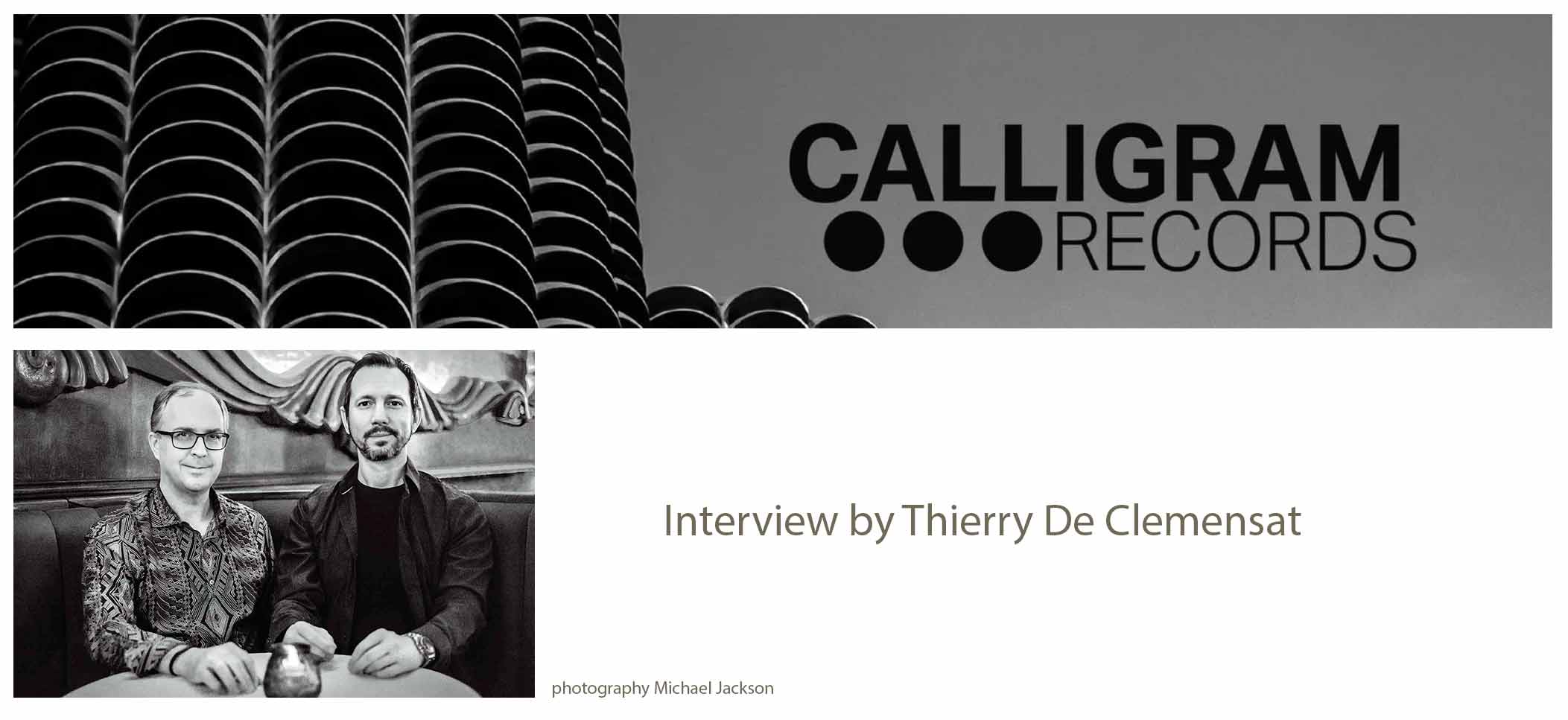
In today’s jazz landscape, certain record labels play a role that extends well beyond producing and distributing albums. They become meeting places, creative spaces, and essential institutions for sustaining the vitality of a musical community. Calligram Records belongs to this tradition of independent labels that place musicians and their artistic vision at the center of everything they do.
Founded in Chicago in 2023 by saxophonist and composer Geof Bradfield and trumpeter Chad McCullough, Calligram Records carries forward a longstanding tradition of musician-run labels created by artists, for artists. Like the independent labels that have helped shape the history of jazz, its mission is to support ambitious music, encourage artistic exploration, and give musicians a meaningful platform for their work.
Although Chicago remains central to the label’s identity, its catalog reflects a broader geographic and musical perspective. From intimate ensembles to large-scale projects, from chamber jazz to more adventurous forms of improvisation, Calligram embraces a vision of jazz that resists stylistic boundaries and places individual artistic voices first.
At the helm of this venture is Geof Bradfield, whose experience as a performer, composer, bandleader, and educator informs the label’s direction. His musical journey, shaped by numerous collaborations and an ongoing engagement with diverse musical traditions, contributes to the identity of a label seeking to balance artistic independence, high standards of production, and a strong sense of community.
But what does it really take to build a jazz label today? What can an independent label offer musicians beyond releasing their recordings? And how can artistic freedom be protected in an industry where the economic realities of independent music production are increasingly challenging?
These are some of the questions we wanted to explore with Geof Bradfield, in a conversation about the origins, ambitions, and guiding principles of Calligram Records.
The Origins and Identity of Calligram Records
Thierry De Clemensat: Geof, you founded Calligram Records alongside trumpeter Chad McCullough. When did you first feel the need to create your own record label? Was it primarily a desire for greater artistic freedom, a response to something missing in the independent jazz world, or the ambition to build an organization that reflected your own musical values?
Geof Bradfield: This was in the back of my mind for a long time as the record industry went through the changes we’re all living with now- a shift to streaming, the decline of record stores and major record labels and so on. While I felt like I had artistic freedom in my previous relationships with labels, I wanted to be more involved in all the details, from aesthetic aspects like art and design to the business of release dates and publicity campaigns. I approached Chad about starting something when we were both sitting on projects that weren’t yet committed to a label; he suggested broadening our scope to include friends and colleagues in Chicago. There was a vacuum at the moment and artists on the scene were going to outside labels like Shifting Paradigm and Origin; it seemed like a great opportunity to be something around and for our scene here.
Chad McCullough: Yeah – when Geof approached me about it, it seemed like both a no-brainer, and also a big mountain to climb in the midst of a snowstorm. I had spent many years working at both Origin, and a bit at Greenleaf, and I knew the positives of having a label identity to help bolster a music scene would outweigh the detractions caused by the state of the industry, and the massive amounts of time needed to “do it right.” I don’t think there was anything that many of the other labels that are around today didn’t cover… it was more that we wanted something that was uniquely Chicago in its nature – while obviously being a direct reflection of our own values.
Thierry De Clemensat: Both of you are active musicians who understand the realities of the profession firsthand. To what extent did your own experiences working with record labels, as recording artists, influence your decision to become label owners and producers yourselves?
Geof Bradfield: After years of being on the artist side of the table I felt like I had a good understanding of what needed to happen at different stages of the process, and I knew I had or could learn some of these skills but definitely was lacking in other areas. Chad provides those other skills- art and design, for example- plus years of experience in the industry with Origin and as an independent producer and designer. Some of the impetus for forming our own label was certainly fueled by frustration with the existing options, or lack of those options in Chicago. For example, I released two albums with Delmark, a legendary Chicago label, before we founded Calligram, but their main focus is really blues and the historical recordings in their catalogue- they’re not going to give my release the same degree of attention that I’m going to, and we try to extend that care to our intentionally small roster of artists.
Chad McCullough: I’ve been doing design and layout work for hundreds of albums over the last 25 years, and had a lot of industry experience – as Geof said, I worked for a number of years, starting in 2006, with Origin Records in Seattle, and learned from the best in John Bishop and Matt Jorgensen. I even did a little work at Greenleaf when I first moved to Chicago nearly 15 years ago. I’ve released albums on several labels so I certainly knew how to temper my expectations. I would say that Geof and I have a lot of overlap in terms of musical taste, and not as much in terms of skillset. He’s on the case with numbers, and stringing together coherent sentences for press releases, and I love photography, and graphic design. So it’s been an easy way to keep things from getting too overwhelming for either of us!
Thierry De Clemensat: There is a long tradition of independent record labels founded by musicians for musicians. Some have gone on to build remarkable identities while supporting several generations of artists. Do you see Calligram as part of that tradition? And what, in your view, makes the label distinctive within today’s independent jazz community?
Geof Bradfield: I love that history, especially DIY underdogs like Strata East. I think the best of those labels at least began by focusing on their community and having a clear artistic vision, whether you’re talking about Strata East, Greenleaf, or Origin Records, and we’re trying to do the same thing with the artists in our orbit.
Chad McCullough: I guess from one perspective it’s not too dissimilar, but I feel like comparison to those bigger (and legendary) labels isn’t necessarily on the table. They were doing it at such a different time in the industry… but the By-Musicians-For-Musicians kind of rule does apply. I think what makes us distinctive in the community is that, while there’s a lot of great music we’ve released that could fit well on other labels, what Geof and I have created is a label that only we could have curated because of who we know and work with – together and separately.
Thierry De Clemensat: The name Calligram has an almost literary and visual quality. It suggests a form of poetry in which words create an image of what they represent. What led you to choose this name, and how does it reflect your understanding of music and the identity you want the label to convey?
Geof Bradfield: A calligram is, of course, a poem in the shape of its subject- it’s about a pear and it’s shaped like a pear on the page- so it represents the thing visually and textually but it’s not the thing. In the same sense, a record is a “text” that produces sound and represents music- but it’s not the music itself. Is that too esoteric? It made perfect sense over that second glass of wine… and anyway, it’s really fun to say, sort of posh but not too pretentious (we hope)!
Chad McCullough: Yeah… it sounded nice, and the logo was whipped up in about 12 seconds… and we’ve run with it!
Thierry De Clemensat: If you had to describe the philosophy of Calligram Records in a few words, what would be the fundamental principles you would never want to compromise?
Geof Bradfield: We will never put out music we don’t love, and we will always be honest and open with our artists.
Chad McCullough: Thankfully, neither of us want to be in a position where we might be depending on a certain quantity of albums per capita to make things financially solvent. I want to make sure we’re able to draw attention to some of what we love that is being created by our friends and peers.
Musical Identity and Artistic Vision
Thierry De Clemensat: Chicago has an extraordinary history in jazz, from its early traditions to some of the most adventurous expressions of improvised music. What role does the city play in shaping Calligram’s identity? Is the label also a way of celebrating and supporting a particularly vibrant musical community?
Geof Bradfield: Chicago has an amazing jazz scene, or really jazz scenes, and that has absolutely shaped my identity as a musician and our identity as a label. Some aspects of Chicago are well-known outside the city, particularly the AACM and the northside free scene around the Hungry Brain, etc. But there’s always been a significant modern jazz scene that doesn’t get as much attention, and that scene is especially strong at the moment. Not only are there many outstanding young players – on the label guitarist Joshua Achiron and Arman Sangalang come to mind – but also lots of folks who were in NYC or elsewhere (myself included) have moved to Chicago or moved back in recent years. Greg Ward, Jon Irabagon, Derrick Gardner and Ben Waltzer are great examples of this influx of established, mature artists of the highest caliber- and they’ve all been featured on Calligram Records!
Chad McCullough: I chose to move to Chicago nearly 15 years ago because the music scene was so strong and I wanted to be a part of it. The city has its own unique set of problems (like any city…) and the people who choose to navigate those – the cold; the rats; the bleakness of the sports teams; the Malört;… – creates a certain type of creative person. It’s a strong scene, full of hard-working musicians of all ages and angles, and I have a deep admiration for the blue-colar nature of so much of it. I think it turns out genuine artists, who aren’t afraid of hard work, and who seem to maintain an internal sense of joy and perseverance.
Thierry De Clemensat: Your catalog brings together artists and ensembles with very different musical personalities, ranging from contemporary jazz to chamber music and projects drawing on the traditions of soul jazz. How do you embrace such diversity while maintaining a recognizable artistic identity for the label?
Geof Bradfield: Since we’re a new label this is an ongoing conversation between Chad and me, and we do sometimes pass on a great project that just isn’t in our wheelhouse. We want to build a label identity that means fans can take a chance on an artist or record they aren’t familiar with because they trust the Calligram label, and this means we can’t put out everything. At the same time, we both have pretty broad musical interests, so intersect with a variety of artists. Still, it’s not all the right fit for Calligram- Chad tours with Mono of Japan, and I work and study with traditional Shona mbira players, and neither is likely to be in the catalogue anytime soon!
Chad McCullough: Like I said before, a lot of these projects we’ve released COULD be on big fancy labels, but the catalogue of what we have released is truly only a collection because of who Geof and I are. And it’s not to say that we’re remotely important by any stretch, but rather more as a showcase of what we have done, who we’ve worked with, and who we love to shine a light on. I think that’s a common thread throughout – the albums don’t sound similar, but they’re all projects that only could exist in the same collection because of Geof and I.
Thierry De Clemensat: How does your artist selection process actually work? Are you primarily looking for a distinctive musical voice, an individual personality, strong compositional skills, or a particular approach to making music?
Geof Bradfield: Those are all factors, but we’re also looking for artists who are connected to our community, whether in Chicago or beyond. This is probably one of the factors that lends us some consistency across diverse projects- there’s a lot of cross-over in personnel and long term relationships between the artists on the label. And of course we’re looking for a project that the artist is truly invested in and excited about; for us the thrill is helping them to realize that vision and get their music out there in a way that does justice to their investment and creativity.
Chad McCullough: Exactly – it has to be meaningful on a few different fronts. The timeline, the history, the artistic integrity, the style, recording quality, the nature of how someone communicates… all of those are factors that make the decisions easy one way or another.
Thierry De Clemensat: How important is artistic risk-taking to your philosophy? Can a project that moves beyond the usual conventions of jazz actually become more appealing to you precisely because it challenges familiar expectations?
Geof Bradfield: We love artistic risk! For me that’s one of the main reasons being starting the label, the freedom to stretch out a bit. Several of our recordings feature non-traditional instrumentation- my recent CD Open and Close is a bass-less quartet, for example, with Ben Goldberg picking up some of the low end duties on the contra alto clarinet. James Davis’ Beveled Arc and Edge is another one- no chords, 2 bass clarinets, drum, bass, and 2 flugelhorns.
Chad McCullough: Yeah – just looking solely at my projects on the label: a chordless group playing music inspired by Messianic principles; a live quintet project full of chords and Americana; a trio with Scottish whistle, trumpet, and vibraphone; and two albums with a rhythm section from Macedonia… I hope it’s safe to say I thrive on change and experimentational risk-taking!
Thierry De Clemensat:Although Calligram is deeply connected to Chicago, the catalog is increasingly open to musicians from other cities and countries. Do you envision the label as a project rooted in a local musical community but with an increasingly international outlook?
Geof Bradfield: In every case so far, those records have come about through our personal connections to the artists involved, so in a way it’s just an extension of our Chicago community- one we’re very excited about expanding in the coming years.
Chad McCullough: Absolutely – there’s no shortage of incredible music being made around the world and we’ve been able to grow our circle to include more than a few of the artists we’ve worked with. I don’t know that I have a clear vision for what I expect for the label other than to constantly be pleased by surprises.
Supporting Musicians and the Economics of Independent Jazz
Thierry De Clemensat: Today, many musicians have the technical means to produce and release their own albums independently. In this environment, what added value can a label like Calligram bring to an artist who may already have the resources to record and release a project on their own?
Geof Bradfield: I think that varies from artist to artist. Some folks don’t want to deal with the nuts and bolts of putting out a record and promoting it, or to engage in the project management aspects involved. Or perhaps they’re putting out their first record and need some help navigating the system. But more than that, we try to create a community where the success of one record can amplify the profile of another one on the label- if you love Dana Hall and Clark Sommers with Scott Hesse on “Intention” maybe you’ll be inclined to check out Clark’s “WaBaSH” and from there slide over to Kenny Reichert’s “Colours with Clark and Devin Drobka and so on. This is how I got into new records as a kid- loved Wayne Shorter with Art Blakey, then delved into all the other Blue Note sides he led or was part of. I believe this can still be effective.
Chad McCullough: I think that’s a big one – community. We’re doing what we can to draw attention to our community. The idea that a rising tide can lift all boats applies here. I think there’s value in being a part of that – bigger than just a few albums or just presenting a limited one or two artist roster. There is value in our connections with press, radio, and print reviewers. There is (hopefully) value in what I can create with the art and design. I’ve always tried to be someone who helps people where I can, when I can, and I think – after almost 3 decades in the music industry (yikes) there will hopefully be some value in that too!
Thierry De Clemensat:Does Calligram Records provide financial support to help musicians bring their projects to life? Do you offer recording budgets, advances, contributions toward production costs, or other forms of financial assistance?
Geof Bradfield: We do our best to keep our fees very low- this is essentially a labor of love for us- and we split earnings from our direct sales on bandcamp generously with the artists. In a handful of cases I’ve helped artists write grants to support their projects, which is great when it can work out but of course is not a guaranteed outcome or right for every project.
Chad McCullough: I wish we were able to bankroll projects, but it would make an outlook that’s very different in today’s industry landscape. By not being financially invested in products that we create, we can be emotionally invested in products that we enjoy. And that’s a really nice way of saying “no… we’re just as broke as you are!”
Thierry De Clemensat: How are financial responsibilities divided between the label and the artists? How do you approach production-cost recovery, artist compensation, and the sharing of revenue generated through physical sales and digital streaming?
Geof Bradfield: We’re essentially a bundle of services post-production; the artist is bringing us a finished master in most cases. The artist retains all the rights to all of their music. We license it for a set period of time and share revenues with the artist.
Chad McCullough: Yeah, we try to keep all of the costs low through our industry connections, and not farming out the work elsewhere. Geof and I do so much of it so we can keep things affordable – and roughly what it might cost someone who is interested in self-releasing an album on their own.
Thierry De Clemensat: At a time when physical album sales have declined considerably, how do you maintain a sustainable business model while preserving high standards of recording, production, and artistic quality?
Geof Bradfield: Define sustainable. Just kidding, but as I said before this is mostly a labor of love for both us and the artists.
Chad McCullough: Well, we started with two million dollars in capital, and are just about to hit one million now. Ha! I will say that the good thing is there are high standards that can be met more and more throughout the industry with lower and lower costs – steps like recording, mixing, and mastering for example. As much as physical sales have dwindled, there still is an audience that enjoys physical media – and they are awesome. I think the way we’ve been able to keep things sustainable for ourselves is to keep a relatively tight leash on the amount of releases we do, and partnering with artists who understand realistic expectations as to where the industry is at and how to exist in this reality. No one is making CTI records and expecting to turn a profit, and thankfully we’re not in a position where we have to exist with those types of pressures.
Thierry De Clemensat: What role do physical releases, particularly CDs and vinyl, still play in your vision of the label? Do you consider the physical album an essential format for presenting music, preserving an artist’s work, and establishing a lasting relationship with listeners?
Geof Bradfield: People love vinyl right now; it generally outsells CDs for artists who are playing a substantial number of live shows. While most listeners probably stream most of the time, we think the physical thing is still important- it looks better, sounds better, and I feel like it makes you consume it differently, to pay more attention and commit to listening. Especially if it’s vinyl and you have to get up and turn the record over!
Chad McCullough: For our artists who are touring a lot, the physical is crucial. For the reviewers and radio people who love physical media, we love being able to send it. For me, the CD was so important to how I learned and why I love this music. As I’ve gotten older and developed more ways to lose money, I’ve gotten more and more into hifi systems and albums on vinyl. From my personal perspective it also feels so great to hold something that you’ve created.
Thierry De Clemensat: Beyond producing and releasing albums, how far does your support for musicians extend? Does the label also assist with publicity, press relations, radio promotion, international distribution, and finding performance opportunities?
Geof Bradfield: We handle almost all publicity in-house. This includes radio and press relations. We sell to many international fans on Bandcamp, but right now our distribution through Big Shoulders is entirely digital. That may change in the coming years; there’s room to grow in that regard. Chad has put together some great performance opportunities for artists this year, including a four day festival and a recent collaboration with Burnout Coffee- I’ll leave him to add the details.
Chad McCullough: We’ve been lucky to try to grow attention to our artists and brand even more over this past year. We had a Third Anniversary festival with 14 bands this summer, hosted at Andy’s Jazz Club in Chicago. We’ve partnered with my new favorite coffee roaster for some giveaways and discounts, and we’re all about fostering support for what we do by sharing it with others who value the same within our community. That being said, we’re also professional musicians with very busy schedules, so sometimes it feels like a full time job just working on design, and PR work!
Thierry De Clemensat: How do you view the relationship between a record label and an artist over the long term? Is your goal to build lasting relationships based on mutual trust, working with musicians across several albums rather than simply focusing on individual releases?
Geof Bradfield: We are interested in building and maintaining long-term relationships; we live here! By which I mean we’re putting out music from the scene we’re deeply embedded in. If an artist wants to do a second release with us we’re doing our job.
Chad McCullough: I think all we get out of this career is relationships – that’s really it. I consider myself lucky to have had so many long term relationships with so many wonderful people – for example… Geof was my teacher 28 years ago, and now here we are (and we both don’t really look a day over 30…).
Running the Label and the Creative Process
Thierry De Clemensat: You and Chad McCullough share responsibility for running the label while continuing to pursue your own musical and educational careers. How do you divide the responsibilities? Has the combination of your different backgrounds and professional strengths been one of the keys to Calligram’s development?
Geof Bradfield: This has been maybe the greatest single thing for me in this process, discovering just how well Chad and I work together. It’s surprisingly seamless- he has certain skills I don’t, like photo, art and design- and tons of industry experience. I handle most of the press side and the bookkeeping. We both spend lots of time talking to artists about their projects- that’s the fun part.
Chad McCullough: We do a pretty good job of keeping on top of things, and talk nearly every day. I think the way we work together has made it easy for both of us to put our full attention into what we do, and maintain a really high level of quality – and maintain a healthy sense of wanting to keep this whole thing rolling!
Thierry De Clemensat: Being both an active musician and the head of a record label requires an extraordinary investment of time and energy. How do you balance your own artistic projects, teaching commitments, and the day-to-day responsibilities of running Calligram?
Geof Bradfield: Ask my wife if we should use the word balance here, I think Amy would find that amusing. I do my best to stay on top of everything with the usual organizational tools. Everything is on the schedule, including my practice time and writing time for my own projects, promotional cycles for releases, and my obligations as a professor at NIU. It’s color-coded. There’s not much white space. But I’m not interested in being one of these cats who performs busy-ness and constantly complains about the bed they made for themselves. I’m doing what I love every day, all day. Well, ok, not taxes, but everything else. Also, I find time for swimming, rucking, and meditation (at an amazing neighborhood Rinzai Zen temple) regularly- that keeps me healthy and sane.
Chad McCullough: I’m working on this at 11pm. I arrived home from Australia last night where I was conducting an epic rock concert with a full orchestra and choir that I composed to go along with a performance of Departure Songs by the band We Lost The Sea. I had a jazz session at 10am this morning, started the design for our next two albums, and will teach at DePaul University for 9 hours tomorrow. I have a 6 year old. I’m learning how to program eurorack synths, and have a pretty strict trumpet practice routine I have to do to stay in shape. Sometimes I forget to eat. Thankfully there is coffee. Next question,… please?
Thierry De Clemensat:A successful album is about much more than the music itself. The choice of repertoire, sound engineering, artwork, photography, and liner notes all contribute to its identity. How much attention do you give to these different aspects of the production process?
Geof Bradfield: Chad handles the design aspects beautifully, so I’ll leave that to him to address. We’re lucky to have an amazing engineer in Chicago, Ken Christianson- truly one of the greats and he loves the music. He recorded, mixed and mastered a significant chunk of our releases, and they reflect his true-to-life aesthetic; he wants you to feel and hear what it was like standing in the room.
Chad McCullough: I’ve always loved the experience of holding an album, and the visual identity that accompanies deep listening. I remember certain albums with covers that had the “right” colors and others with the “wrong” colors. I still don’t really know what that means, but it’s been an important aspect of what I’ve grown up with as a listener and as a graphic designer. I’m an amateur photographer, and I have figured out that sometimes a bad photo that wouldn’t work for much as art has the absolute right movement to pair with music – or allows the right kind of negative space to fit text in. The sonic qualities and utmost care at every step are an important part of the entire process. That’s the FUN of creating an album.
Thierry De Clemensat: What role do relationships with journalists, music critics, festival programmers, and specialist radio stations play in your development strategy? Has it become increasingly difficult for independent releases to gain visibility in an environment saturated with music and information?
Geof Bradfield: There’s a lot of music out there, and part of my role at the label is to get folks to notice our releases. As you know, a lot of that has to do with establishing and maintaining relationships with like-minded people in the industry. I do my best to stay on top of that and make sure our friends in radio and journalism know how much we appreciate their hard work.
Chad McCullough: Like I said before, I firmly believe that the relationships we have and form are all that we get out of this life… sounds campy, but I think it’s at the bedrock of a successful life in music. It’s difficult to cold-call someone for any reason, but as we go along we’re able to form more meaningful relationships with people in all avenues of the business. While they might not give much more than a glance to a one-off package, getting a box with our new releases every month or two where they know they can trust the quality, it increases our ability to grab a few minutes of their time.
Thierry De Clemensat: How do you approach international distribution? Is one of your ambitions to bring the work of Chicago-based musicians to a wider audience in Europe, Asia, and other parts of the world where independent jazz continues to have a dedicated following?
Geof Bradfield: Right now all of our distribution is digital, but as I mentioned earlier I hope this can grow as we grow. We do have relationships with international critics and radio, and those have expanded in the last year or so through releases that connected in different parts of the world- Chad’s work with musicians in Macedonia is a great example.
Chad McCullough: I’ve been fortunate to work this year alone in the Czech Republic, Slovakia, the UK, Belgium, Netherlands, Macedonia, and all over the states with artists from the label. While physical distribution would be nice – it does come with ups and downs of the industry like anything else. We would absolutely love to get the product and the music into more hands and ears around the world, and when the right opportunity arises, we will!
The Artists, the Albums, and the Future of Jazz
Thierry De Clemensat: Among Calligram’s releases, your own album Colossal Abundance stands out for its instrumental scope, compositional richness, and wide-ranging musical influences. To what extent does this personal project also reflect the kind of artistic freedom you want to encourage and defend through the label?
Geof Bradfield: Thanks for the kind words. That record wasn’t my first release on Calligram, but it was some of the impetus for starting the label. I was working towards it for several years, not the least by traveling to Zimbabwe to study mbira with master musicians. It took a lot of time to realize that project (and to get it funded!), and I didn’t feel inclined to hand it over to someone else who might not be as invested. So yes, for me that is something I want to offer artists on our label- if you bring us something you are deeply invested in we’re going to treat it with commensurate care.
Thierry De Clemensat: Your work reveals a deep interest in African musical traditions, the music of the African diaspora, the roots of the blues, and the possibilities of contemporary jazz. Do these cultural and musical influences also shape the way you listen to, evaluate, and produce projects by other artists?
Geof Bradfield: I’m strongly drawn to music that reflects, embraces, and reframes those African elements. But I’m also excited about almost any music that is simultaneously rooted and adventurous. Those roots could be Irish fiddle music, Slavic dances, or really anything with the depth to provide a foundation for the creative work to flower.
Chad McCullough: Jazz – whatever that can mean – means so much to so many people around the world. We’re lucky to get to work with so many different reframings and retellings of tradition in our professional career – not only as a label, but also in our performances. I’d go so far as to say it’s largely those experiences for both Geof and I that not only helps to shape how we listen, and produce, but how we live our lives.
Thierry De Clemensat: What place do you envision for young musicians and emerging voices in the future of Calligram? Is it important to give artists an opportunity to make their first significant recording and introduce their music to a wider audience, even if they have not yet established a strong reputation?
Geof Bradfield: I mentioned Arman and Joshua earlier. We’re definitely interested in providing this sort of opportunity to young artists. Next month we’re releasing a record with an incredible group of high school students (now college) from the Jazz Institute of Chicago. I’m a guest and the musical director/arranger; we partnered with JIC to make this happen and look forward to more in the future!
Chad McCullough: I have heard 16 year olds play better than I could ever imagine I will be able too. Good music is, and always will be good music. If it makes sense for us to help draw attention to that, then we’re the lucky ones.
Thierry De Clemensat:Contemporary jazz is increasingly shaped by a wide range of influences. Musicians are drawing freely from classical music, rock, electronic music, traditional musical cultures, and many other sources. Do you see this openness as one of the greatest strengths of jazz today?
Geof Bradfield: Absolutely, it allows everyone to find their personal voice in the music. The jazz tradition is extremely important to me- it’s who I am as an artist, and most of the other aspects of my playing or influences people might identify- roots music, African rhythms, etc- I view as an integral part of that tradition. But I also like the idea of jazz as a process (it was a verb originally), a way you interpret your source material.
Chad McCullough: I’ve been fortunate to work with some of the most talented rock stars, folk musicians, and world musicians, and I’d like to think I can function at a high level in those various directions in large part due to my training and study of jazz as a harmonic and stylistically rich art form. This openness is absolutely the richest strength of jazz artists throughout the last century.
Thierry De Clemensat: Streaming platforms have fundamentally changed the way people discover, listen to, and consume music. How do you view this transformation? Can streaming create meaningful opportunities for a small independent label, or does it risk making life even more difficult for the musicians and organizations working to sustain independent music?
Geof Bradfield: Streaming is awesome and terrible. What can I say? I love the access, especially as a teacher, but it’s happened way faster than we’ve been able to respond as an industry or individuals and it has done irreparable damage in terms of diverting income from artists into the pockets of corporations, more so than any of the traditional record labels ever achieved. But you can’t ignore it; we’re constantly reassessing best practices.
Chad McCullough: It’s a tool. It’s a dumb tool, but for most people it’s the final tool in how they listen. We can yell about how you shouldn’t microwave food in plastic, but it works to get the food warm and to your mouth, so it still persists despite how many fools ignore the warnings about the health detractions. Streaming is a great way to preview all kinds of music. Does it hurt everyone who is making the music? Without question. It might turn someone onto some music that they were unfamiliar with, and that can be a good thing. As an independent label, that is crucial. But, let’s be honest – those streaming services aren’t spoonfeeding anyone new independent music with the hopes they’ll go elsewhere to spend money. Most of the time it actually costs us more to keep the digital distribution service account active than we bring in from streaming revenue. Not to mention the amount of runaround needed because the intake systems are not designed for album information and metadata like a jazz record often involves. My two cents? For the price of 2 years of spotify you could buy a CD player and some nice speakers and a receiver and have better sound, and a better experience, and help artists, and feel better about yourself. And your living room will look cooler. Then you’ll need a turntable, so you buy one. See how much better your life is?
Looking Ahead: The Future of Calligram Records
Thierry De Clemensat: Now that Calligram has moved beyond its initial years, how do you assess what you have accomplished so far? Has there been a particular album, artistic collaboration, or experience that confirmed you had made the right decision in establishing the label?
Geof Bradfield: I’m amazed we will have 37 albums out at the end of this year. We had set a modest goal of 6-8 per year, but once it got rolling people wanted to be part of it, and that feels great. The 3rd Anniversary Festival was really affirming in that regard; it was great to see so many folks in our community out and to hear the breadth of music from the artists involved.
Chad McCullough: Like Geof said – it’s all gone so far beyond our expectations! I have all of the albums on a shelf by my desk and it’s such a strange source of pride for me. So much is really just because we have so many great artists that want music out in the world. For me, I don’t really have a moment that made it all feel right, because it’s just been so rewarding from the start.
Thierry De Clemensat:What are your ambitions for Calligram Records over the next few years? Are you looking to expand the catalog, welcome more international artists, develop new collaborations, or perhaps create events that bring musicians from the label together around shared projects?
Geof Bradfield: We have some more collaborations coming around in the next few months – the Jazz Institute of Chicago record, some stuff with our friends at Burnout Coffee, another fest at Andy’s- and several great records already on the books for 2027. On a personal note I’m excited about a new Chamber Music America commission I’m premiering and recording next week; it’s a double drum/double bass project with some African instruments (mbira and guimbri) mixed in and my old friend Jeff Parker on guitar- it’s been a few years since we worked together, but it’s always a joy.
Chad McCullough: Yeah – all of the things you listed! But, I don’t want anything to feel forced, or like we’re not “where we want to be.” I just hope we can keep releasing great music by great artists in a package that looks good. So far, 2027 is going to be full of exactly that.
Thierry De Clemensat:Finally, I would like to return to a fundamental question. At a time when the music industry often prioritizes immediate visibility, streaming numbers, and rapid consumption, what place would you like Calligram Records to occupy in the history of contemporary jazz? And what message would you offer musicians today who are looking for a label genuinely committed to defending their music with conviction, independence, and respect for their artistic identity?
Geof Bradfield: You said that perfectly, those are exactly the qualities we would like to be known for. We’re here for the music and the artists. But also, head over to Bandcamp and buy all the records. Today.
Chad McCullough: Ha! We want to release the best music we can. If that means someone thinks of us, that’s just a cool concept that I still have trouble wrapping my head around sometimes. If I had one message for today’s musicians it would be to make good relationships while make the very best art you can, and well, also,… call me for gigs!