
| Jazz |
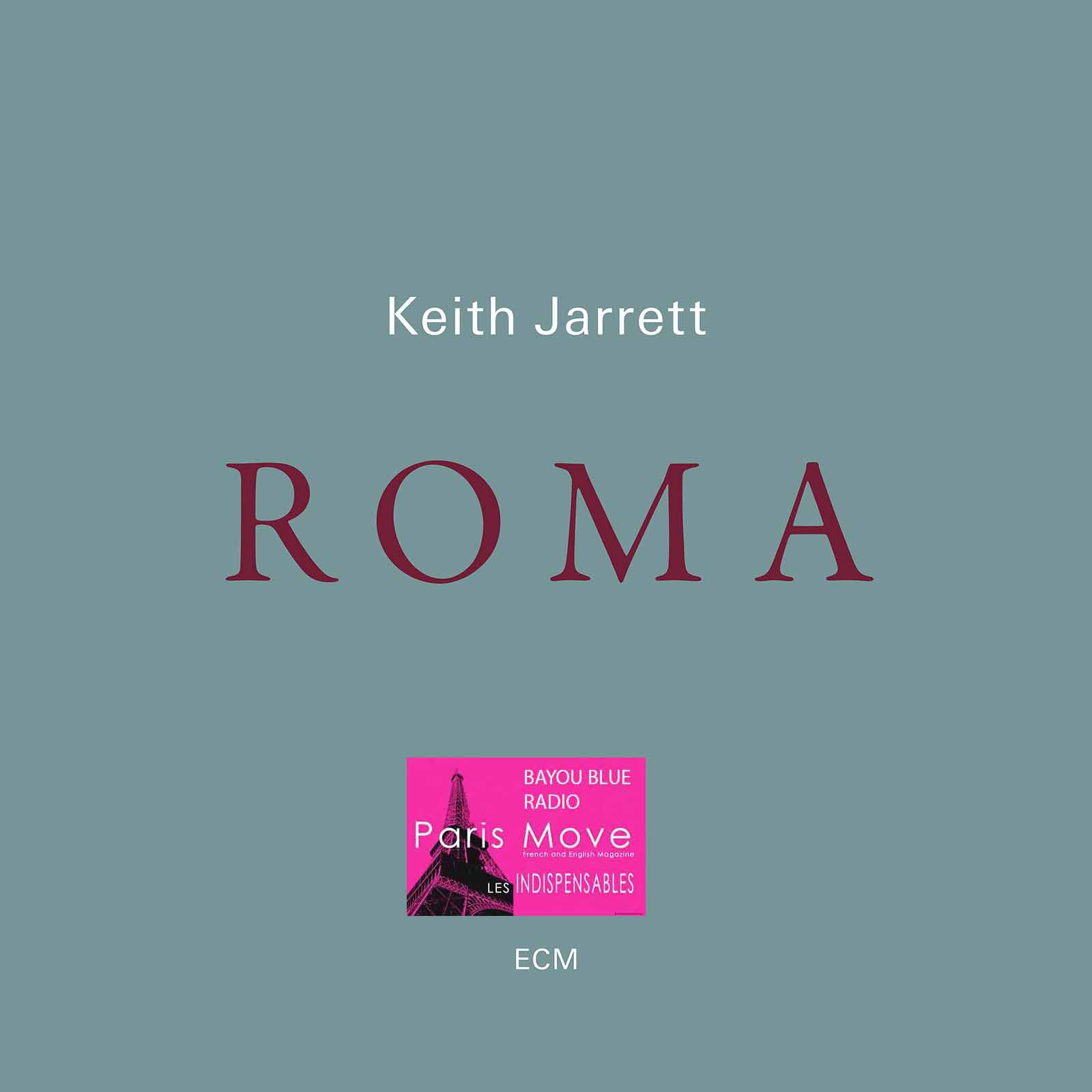
KEITH JARRETT’S ROMA: THE ARCHITECTURE OF THE MOMENT AND THE ART OF MUSICAL FREEDOM
Some musicians enter your life at a particular moment and never really leave. Keith Jarrett is one of them for me. I first began listening to his music in the 1970s, at a time when jazz seemed to be questioning almost everything about itself: its forms, its language, its relationship to tradition and, above all, the limits of improvisation. Jarrett was already a singular presence. What struck me then, and what continues to hold my attention today, was not simply his extraordinary technique. It was the feeling that he was thinking, searching and making decisions at the piano in front of you. His music never seemed entirely settled. It was alive to possibility. I remember the impact of The Köln Concert in 1975. It is difficult now to recapture what that recording meant to listeners who encountered it at the time. It reached far beyond the usual boundaries of the jazz audience. People who had little or no interest in jazz found themselves listening to an extended solo piano performance with an attention they might previously have reserved for a classical work or a favorite song. For me, its importance went beyond its enormous success. It confirmed something I had begun to sense in Jarrett’s playing: improvisation could possess the emotional reach and structural coherence of composition without surrendering the risks of the moment. The music could be carefully shaped and completely unpredictable at the same time.
Nearly half a century later, Roma brings me back to that essential question: what happens when a musician has spent a lifetime exploring freedom, and still has something to discover? Recorded on July 12, 2016, at Rome’s Sala Santa Cecilia and released ten years later, this performance has a particular place in Jarrett’s story. It belongs to the final period of his public concert career, before two strokes brought an end to his ability to perform. Knowing that history inevitably changes the way I hear the recording. But I resist the temptation to listen to it simply as a farewell. That would be too easy, and it would do the music an injustice. Roma is not valuable because it tells us that a great pianist was nearing the end of his performing life. It is valuable because the pianist we hear is still taking risks, still following an idea wherever it may lead. I do not hear a musician trying to summarize his past. I hear someone continuing to work. That distinction is important. There is no calculated nostalgia here, no deliberate return to the gestures that made Jarrett famous. The music has its own identity, its own pace and its own internal logic. It is more reflective than the Köln performance, perhaps, but reflection should not be confused with retreat. The energy is still there. It has simply acquired a different balance between impulse and restraint, between the desire to move forward and the willingness to remain with a musical idea until it has revealed everything it can.
The ten principal improvisations that make up the performance offer a remarkably wide view of Jarrett’s musical imagination. What interests me most is the way he builds form without making the process sound mechanical. He does not begin with a fixed structure and then fill it with improvisation. He discovers the structure as he plays. A phrase suggests a harmonic direction; a change in the bass opens another possibility; a rhythm that initially seems incidental gradually becomes the organizing force of a passage. The music grows through listening and response. That may sound like a simple description of improvisation, but in Jarrett’s hands it becomes an extraordinarily sophisticated process. The opening establishes this approach. Rather than announcing a clear theme or a stable harmonic center, Jarrett allows the music to emerge through fragments, chromatic movement and carefully balanced tensions. The notes do not always resolve where the ear expects them to. A chord may seem to offer stability, only for a change in the bass to unsettle it. A melodic line may approach a familiar destination and then turn away. I find this quality particularly compelling. Jarrett does not use harmonic ambiguity as an intellectual exercise. He makes it expressive. The uncertainty becomes part of the emotional character of the music. His relationship with the piano’s two hands is central to this achievement. They are not simply assigned the conventional roles of melody and accompaniment. The left hand can establish a pulse, outline a bass movement or repeat a rhythmic figure, while the right hand follows a melodic line that seems to have its own independent sense of time. At other moments, the roles shift or become difficult to distinguish. The hands converse, disagree, interrupt and eventually find common ground. This independence gives the music a kind of internal drama. Even when the texture is relatively spare, several things seem to be happening at once.
I have always admired Jarrett’s ability to make rhythm feel physical without reducing it to a regular beat. In Roma, that ability is still very much in evidence. There are passages in which the left hand provides a steady foundation while the right hand stretches phrases across the pulse, creating a subtle tension between movement and suspension. Elsewhere, the rhythm becomes more forceful, almost percussive. Chords are struck with a directness that gives the piano an unexpected weight. Then, just as the music seems ready to settle into a groove, Jarrett changes the balance. The pulse loosens, the phrasing becomes more elastic, and the listener is once again left without a predictable route. This is one of the reasons I have never found it useful to describe Jarrett simply as a virtuoso. The word is accurate, but inadequate. It tells us something about his command of the instrument and very little about what he does with it. His technique serves a musical intelligence that is constantly at work. He can move through intricate passages with astonishing fluency, but he is equally capable of making a single note carry the weight of an entire phrase. In Roma, the most impressive moments are not necessarily the fastest or loudest. Often, they are the moments when he knows exactly what not to play.
As the improvisations develop, the music moves through a number of expressive worlds that have long been part of Jarrett’s language. Gospel and blues are present, but never as borrowed styles or convenient references. They are part of his musical memory. I hear them in the shape of a phrase, in the insistence of a repeated chord, in the way a melody seems to rise from somewhere deeper than the written or improvised notes themselves. There are passages in which the piano seems almost to sing. The emotional directness is unmistakable, yet Jarrett rarely allows it to become sentimental. A lyrical idea may be interrupted by a darker harmonic shift; a seemingly simple melody can suddenly acquire an unexpected intensity.
That combination of warmth and restlessness has always seemed to me one of the most distinctive features of his playing. Jarrett can make a melody feel immediately familiar, even when it has been invented on the spot. But he does not leave it alone for long. He tests it, changes its harmonic surroundings, shifts its rhythmic placement or moves it into another register. The melody remains recognizable while its meaning changes. It is as though he wants to discover not only what a tune can say, but what else it might be capable of saying.
The middle sections of Roma are particularly revealing in this respect. Jarrett moves between delicate arpeggios, dense chordal passages and textures in which individual voices seem to emerge from the resonance of the instrument. His control of register is remarkable. The upper notes can sound exposed and fragile, almost suspended in the air, while the lower register brings a sense of gravity and physical presence. At times, the piano seems to expand beyond its normal dimensions. The sound becomes orchestral, not because Jarrett is trying to imitate an orchestra, but because he understands how much can be suggested through the relationship between registers, harmony and touch.
Counterpoint is another essential part of the performance. Jarrett often allows several melodic lines to coexist rather than placing a single tune above a block of supporting chords. An independent bass figure may continue beneath a moving upper voice, while inner notes create tension between the two. These lines are not simply decorative. They shape the direction of the music. What fascinates me is that this complexity never feels like an academic demonstration. Jarrett has absorbed the lessons of classical counterpoint, but he uses them in the service of an improvisational language that remains open and unpredictable.
There are moments when I am reminded of the pianist’s deep familiarity with classical music, not because he imitates a particular composer, but because of the way he thinks about musical architecture. He understands how a phrase can be developed, how one voice can answer another, how a harmonic change can alter the emotional meaning of material already heard. Yet he never sounds confined by those principles. The classical tradition is part of his vocabulary, not a set of rules he must obey. The same is true of jazz. Jarrett has absorbed its history so thoroughly that he can move beyond its conventions without losing contact with its spirit.
The quieter passages are just as important. Jarrett sometimes reduces the music to a few notes, allowing the natural resonance of the piano to do much of the work. Silence becomes more than a pause. It gives the preceding phrase time to settle and changes our expectations of what might come next. I have always believed that one of the real tests of a pianist is the ability to make silence meaningful. In Roma, Jarrett passes that test repeatedly. He does not seem afraid of leaving space, and he does not rush to fill it. The music is allowed to breathe. As the performance progresses, its emotional range becomes increasingly apparent. There are passages of great tenderness, others of rhythmic urgency, and moments when the harmony darkens without warning. Yet I do not hear these changes as a sequence of unrelated moods. There is a deeper continuity at work. A rhythmic figure, an interval or a particular harmonic color may return in a different context, giving the music a sense of memory. Jarrett is not repeating himself. He is allowing earlier ideas to reappear transformed.
The tenth improvisation brings many of these qualities into focus. It does not function as a conventional finale, with a clearly defined dramatic climax followed by a neat resolution. Instead, Jarrett builds a sequence of tensions and releases. The left hand can establish a firm rhythmic foundation while the right hand opens into increasingly expansive melodic lines. Then the two hands come together in powerful chordal passages, giving the piano a density and force that seem to exceed the limits of a solo instrument. The energy rises, withdraws and returns. The music does not simply move toward an ending; it keeps testing the possibilities of its own momentum. What I find most moving here is the absence of any obvious effort to make a grand statement. Jarrett has nothing to prove. He knows the instrument, knows the language and knows the risks. He can draw on decades of experience without allowing experience to become a formula. That is no small achievement. Many musicians eventually become prisoners of the sound that made them successful. Jarrett, even at this late stage of his performing career, remains willing to let the music take him somewhere unfamiliar. The two standards, Somewhere Over the Rainbow and It’s a Lonesome Old Town, add another dimension to the recording. Their presence is especially meaningful because they bring us back to the idea of song, to melodies that exist outside the private world of the improviser and already carry an emotional history for listeners. Jarrett approaches both with great care. He does not treat them as opportunities for virtuoso display, nor does he dismantle them simply to demonstrate his freedom. He listens to what is already there.
In Somewhere Over the Rainbow, the melody retains its familiar identity, but Jarrett changes the way we hear it. His phrasing is patient, and the spaces between notes matter as much as the notes themselves. The song’s apparent innocence is balanced by a sense of longing. Its beauty is not made more effective through excessive ornamentation; it comes from the pianist’s willingness to let the melody speak. I find the restraint especially affecting. Jarrett seems to understand that some songs become less powerful when a musician tries too hard to improve them.
It’s a Lonesome Old Town is more inward-looking. The melody carries an unmistakable melancholy, and Jarrett does not attempt to soften it. The performance unfolds slowly, with a measured touch and a keen awareness of the emotional weight of each phrase. The silences are particularly telling. They give the song a sense of distance, as though the melody were being remembered rather than simply played. It is a quiet interpretation, but not a passive one. Beneath its apparent simplicity lies the same harmonic sensitivity that informs the longer improvisations. These two standards also reveal something important about the relationship between Jarrett the improviser and Jarrett the interpreter. I have never regarded them as separate musical identities. His treatment of a familiar song depends on the same qualities that make his improvisations distinctive: an instinct for harmonic movement, a flexible sense of time and an ability to discover new meaning in a melodic line. Conversely, the extended improvisations are never entirely detached from the world of song. Even at their most abstract, they retain a sense of melodic purpose. Jarrett can take music into unfamiliar territory without losing the listener’s emotional bearings.
This, perhaps, is what has kept me listening to him over the years. His music refuses the easy division between intellectual sophistication and emotional communication. It can be harmonically complex without becoming cold, rhythmically adventurous without losing its physical appeal, and deeply personal without closing itself off from the audience. Jarrett is capable of taking enormous risks, but he rarely makes those risks feel like a challenge directed at the listener. He invites us to follow him.
There is also the unmistakably physical nature of his playing. Anyone familiar with his concerts knows that his performances have never been detached affairs. His body moves with the music; his gestures, his posture and even his occasional vocalizations are part of the process. The piano seems to demand a total physical commitment. In Roma, that commitment remains audible. The music may be reflective, but it is not disembodied. Beneath the delicate passages there is still a powerful sense of physical energy, of a musician working with the instrument rather than merely operating it. The album inevitably carries a particular emotional resonance for listeners who have followed Jarrett since the 1970s. I hear echoes of the excitement I felt when I first discovered his music, but I also hear the distance traveled since then. The pianist in Roma is not simply revisiting the past. He has refined and altered his language, found new ways of balancing density and space, and developed an increasingly subtle relationship with musical time. There is a greater sense of patience, but not of diminished curiosity. If anything, the music suggests that the act of discovery has remained essential to him. The ten-year interval between the Rome performance and its release gives the recording an unusual historical perspective. We now hear it with the knowledge that Jarrett would no longer be able to return to the concert stage after his strokes. It is tempting to make that knowledge the central point of the listening experience. I understand the impulse, but I would rather begin somewhere else. I would rather listen to the music before turning to the biography. The performance deserves that respect. Its value does not depend on the sadness of what followed. It stands on its own terms.
Roma also reinforces a conviction I have carried with me since my earliest encounters with Jarrett: improvisation is not the absence of structure. It is the discovery of structure under conditions of uncertainty. Freedom is not simply the ability to play whatever comes to mind. It requires discipline, memory, an acute sense of proportion and the capacity to hear several possibilities at once. Jarrett’s freedom is earned. It comes from a lifetime of listening, studying, performing and questioning. That is why his music can sound so spontaneous while remaining so carefully shaped. I would not claim that Roma replaces The Köln Concert, or that it occupies the same place in Jarrett’s discography. It does not need to. Köln remains a landmark, a recording whose impact is inseparable from the moment in which it appeared. Roma offers something different: a more mature and inward-looking view of a pianist who has spent decades testing the limits of his own language.
The comparison is useful only up to a point. What matters is that both recordings reveal the same essential commitment to the unknown. Listening to Roma, I find myself thinking less about the end of a career than about the persistence of a musical instinct. The body may eventually impose limits that imagination cannot overcome, but the performance itself contains no surrender. There is concentration, curiosity, humor, tenderness and, at times, an almost startling force. Above all, there is the sense of a musician still listening for what might happen next.
That is why Roma matters to me. It brings together many of the qualities that first drew me to Keith Jarrett, while revealing a musical perspective shaped by the passage of time. It reminds me that the most compelling artists are not necessarily those who repeat their greatest achievements, but those who continue to put themselves at risk, even after they have nothing left to prove. Jarrett spent a lifetime making the piano a place of encounter between memory and invention, discipline and freedom, structure and surprise.
I began listening to him in the 1970s because his music seemed to open doors. Listening to Roma now, I recognize that same impulse, though the view beyond those doors has changed. The music is more reflective, perhaps, but it has lost none of its appetite for discovery. And that is the point I keep coming back to: Keith Jarrett did not make improvisation sound free because he ignored its demands. He made it sound free because he understood those demands so completely that he could follow the music wherever it led. Roma is a deeply moving reminder of that achievement, and of the rare privilege of hearing an artist remain true to the act of searching.
Thierry De Clemensat
Member at Jazz Journalists Association
USA correspondent for Paris-Move and ABS magazine
Editor in chief – Bayou Blue Radio, Bayou Blue News

PARIS-MOVE, November 8th, 2026
Follow PARIS-MOVE on X
::::::::::::::::::::::::
Keith Jarrett: Roma (ECM 2880)
Keith Jarrett: piano
Track Listing:
Part I
Part II
Part III
Part IV
Part V
Part VI
Part VII
Part VIII
Part IX
Part X
Somewhere Over The Rainbow
It’s A Lonesome Old Town
Recorded live July 12, 2016 at Sala Santa Cecilia,
Auditorium Parco della Musica, Roma
Producer: Keith Jarrett
Engineer: Martin Pearson
Design: Sascha Kleis
Executive producer: Manfred Eicher