| Jazz |
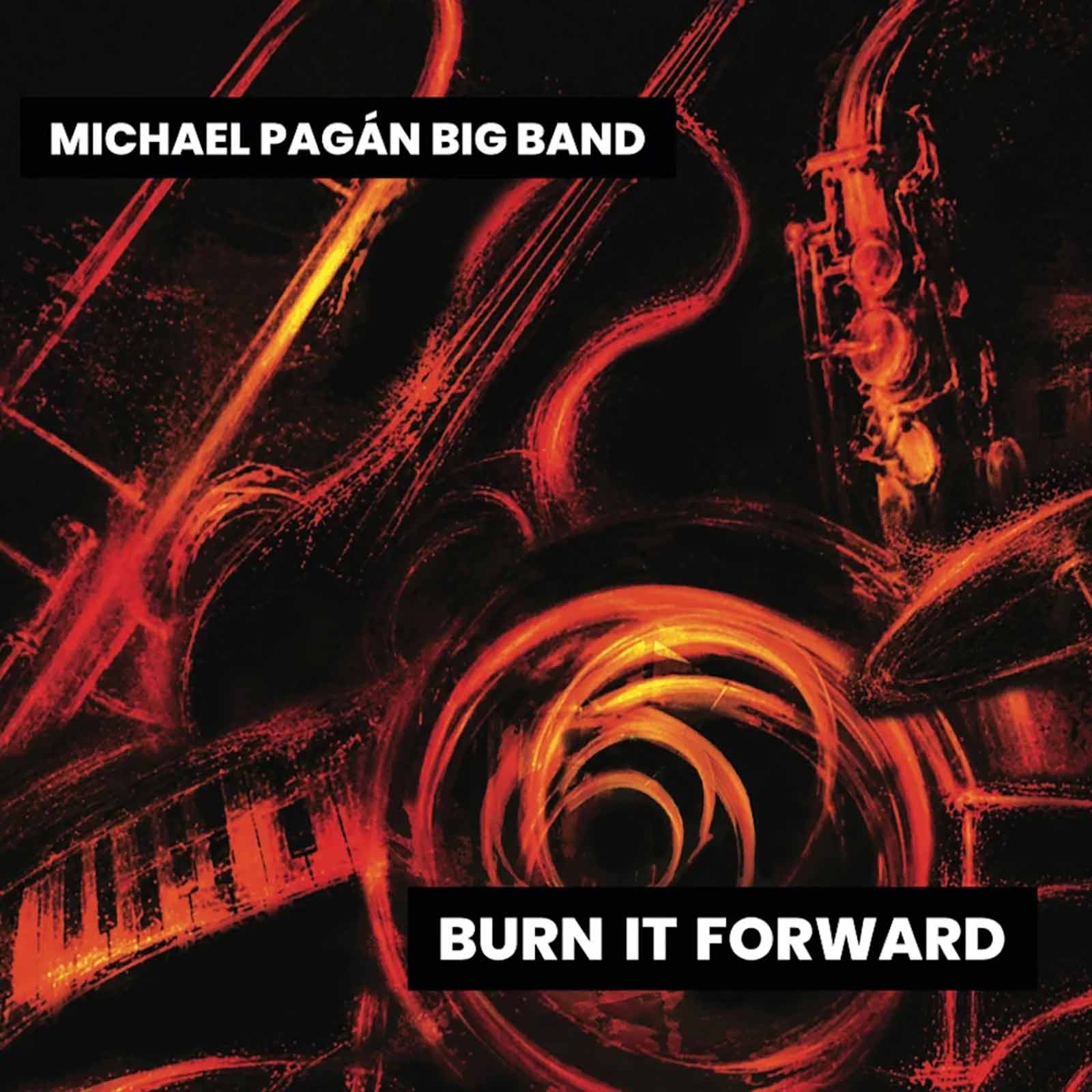
Michael Pagán’s Burn It Forward: A Big Band That Knows Where It’s Going
There is something particularly satisfying about putting on a good jazz record first thing in the morning. The sun is out, coffee is brewing, and I have Burn It Forward, Michael Pagán’s latest album, ready to go. A few bars in, I find myself turning up the volume. The brass has real bite, the rhythm section settles into a wonderfully relaxed groove, and the whole band sounds as if it is enjoying every minute of the performance. That kind of energy is hard to fake. And it is a pretty good way to start the day. As I listen, familiar names come to mind. There are moments that recall Count Basie, particularly in the way the ensemble swings without ever sounding heavy handed. Some of the musical exchanges have the ease and fluidity I associate with Oscar Peterson, while certain instrumental colors bring Lionel Hampton to mind. These are not comparisons I would push too far. Pagán is not trying to recreate anyone’s sound. Rather, he seems to have taken in a great deal of jazz history and found a way to make those influences part of his own musical vocabulary. That distinction matters. Burn It Forward is rooted in the big band tradition, but it never feels trapped by it. Pagán understands what makes a large jazz ensemble exciting: the power of the brass, the interplay between sections, the freedom given to individual players and, above all, the sheer pleasure of hearing so many musicians move as one. Yet he is not interested in simply revisiting a familiar formula. The music has its own identity, and it sounds firmly at home in the present.
Writing for a big band is no small undertaking. There is a lot going on, and getting all those voices to work together takes more than good charts. It requires a clear musical vision and a real understanding of what each section can bring to the table. On this album, the arrangements are carefully shaped, but they never sound stiff. The musicians have room to stretch out, respond to one another and occasionally take the music somewhere unexpected. That balance between discipline and spontaneity is one of the album’s strongest qualities. The brass is especially enjoyable. It can hit hard when the music calls for it, but there is also plenty of subtlety in the way the sections interact. The rhythm section deserves equal credit. It does not simply provide a foundation for the horns. It gives the music its pulse, its character and much of its personality. The result is an ensemble sound that feels full without becoming crowded. Everyone has a part to play, and nobody seems particularly interested in stealing the show.
There are passages that remind me of Earth, Wind & Fire, not because Pagán is working in the same musical territory, but because he understands the appeal of combining sophisticated arrangements with a groove that gets under your skin. That is no small achievement. The music can be intricate without becoming cerebral, energetic without turning into a wall of sound. You can listen closely to the writing, follow the solos and appreciate the musicianship, or simply let the rhythm take over. Both approaches work. And the groove really does deserve attention. It is never just a matter of keeping the beat moving. The rhythm shifts, opens up and tightens when necessary. The musicians know how to use space and dynamics, and they understand that a little restraint can make a powerful passage all the more effective. There is a natural ease to the playing that suggests a band comfortable with one another. Nothing sounds forced, and that is part of the pleasure. Pagán’s association with Kansas City adds another dimension to the album. The city has a deep connection to jazz, and its musical history is difficult to separate from the evolution of the music itself. One can hear echoes of that tradition in the rhythmic confidence and the importance given to individual voices. But I would be reluctant to define the album by its geographical roots alone. Burn It Forward is not an exercise in regional nostalgia. Pagán draws on the musical culture around him, but the result is very much his own.
The recording also deserves mention. The sound has presence and clarity, allowing the different sections to come through without losing the impact of the full ensemble. The brass has plenty of sparkle, the rhythm section has depth, and the details of the arrangements remain easy to follow. What I particularly like is that the production does not seem intent on making everything louder or bigger than it needs to be. It lets the musicians do the talking.
That clarity makes repeated listening especially rewarding. There are little details in the arrangements that may pass unnoticed the first time around: a response from one section, a change in the rhythmic pattern, a brief instrumental exchange that gives a familiar phrase a different character. This is not an album that reveals everything at once. It is also not the kind of record that needs a lengthy explanation before it can be enjoyed. It works immediately, but there is enough going on to keep bringing you back.The solos are an important part of that appeal. They feel like a natural extension of the compositions rather than obligatory showcases. Each player has room to develop an idea, but the larger shape of the music is never forgotten. That relationship between individual expression and collective purpose is central to jazz. It is also one of the hardest things to get right in a large ensemble. Pagán and his musicians handle it with confidence.
The title track is a particularly good example. Burn It Forward brings the album’s strengths together in a way that makes its intentions clear. The orchestration has room to unfold, the sections answer one another, and the solos add to the momentum rather than interrupting it. There is power here, but also a sense of pacing. The music builds, pulls back and builds again. It has a dramatic shape without ever sounding calculated. The writing is ambitious, yet the performance remains relaxed enough to let the music breathe.
That, perhaps, is what I appreciate most about Pagán’s approach. He knows the big band repertoire and understands its conventions, but he does not rely on them as a shortcut. The big brass passages are all the more effective because they are not used constantly. Quieter moments matter. Individual instruments get room to speak. The ensemble has weight, but it also has flexibility. There is more to this music than sheer volume, and Pagán clearly knows it.
Listening to the album also brought back a memory of Past, Present & Future, one of Frank Sinatra’s later recordings that left a strong impression on me. The connection is not really about musical style. It is about the role of the orchestra itself. In both cases, the arrangements are more than a backdrop. They help shape the character of the music, adding color, depth and a sense of scale that would be impossible to achieve otherwise. It is a reminder of how much an orchestra can contribute when the writing is thoughtful and the musicians are given something worthwhile to play. There is also something fitting about the title Burn It Forward. Jazz has always been a music of inheritance and reinvention. Musicians learn from those who came before them, absorb what they find useful, and eventually put their own stamp on it. That process has never been about preserving the past exactly as it was. It is about keeping the music moving. The tradition matters, but it only remains meaningful if musicians continue to make something new with it. Pagán seems to understand that instinctively. He is not trying to reinvent the big band just to make a statement. He is exploring what the format can still do, respecting its strengths while giving the music room to develop in his own way. I find that approach far more convincing than attempts at modernization that seem to forget why the big band was exciting in the first place.
What stays with me after listening is the sheer enjoyment of the record. There is the pleasure of hearing a large ensemble in full flight, the satisfaction of musicians playing with precision and purpose, and the discovery of arrangements that reward attention without demanding it. The album has energy, elegance and a strong sense of character. More than anything, it sounds like a group of musicians who genuinely want to be there, playing this music together. I could spend another few paragraphs discussing the writing, the production or the individual performances. They all deserve attention. But that would miss the simplest point. I put on Burn It Forward because I wanted to hear some good jazz. By the time the album ended, I wanted to hear it again. That is not something I take for granted.
The coffee is cold now, the sun is still shining, and I am tempted to start the disc over. I think I will. Some records make you admire the work that went into them. Others make you want to spend more time in their company. Burn It Forward manages to do both.
Thierry De Clemensat
Member at Jazz Journalists Association
USA correspondent for Paris-Move and ABS magazine
Editor in chief – Bayou Blue Radio, Bayou Blue News
PARIS-MOVE, November 2nd, 2026
Follow PARIS-MOVE on X
::::::::::::::::::::::::
Musicians:
Michael Pagán, composition and piano
+ Michael Pagán Big Band
Track Listing:
Why Not
Septo Calypso
Good Trouble
The Healing Hymn
Gone Home
Man Of Action
Unlucky
Pontifex
Black Eyes