
| Contemporary music |
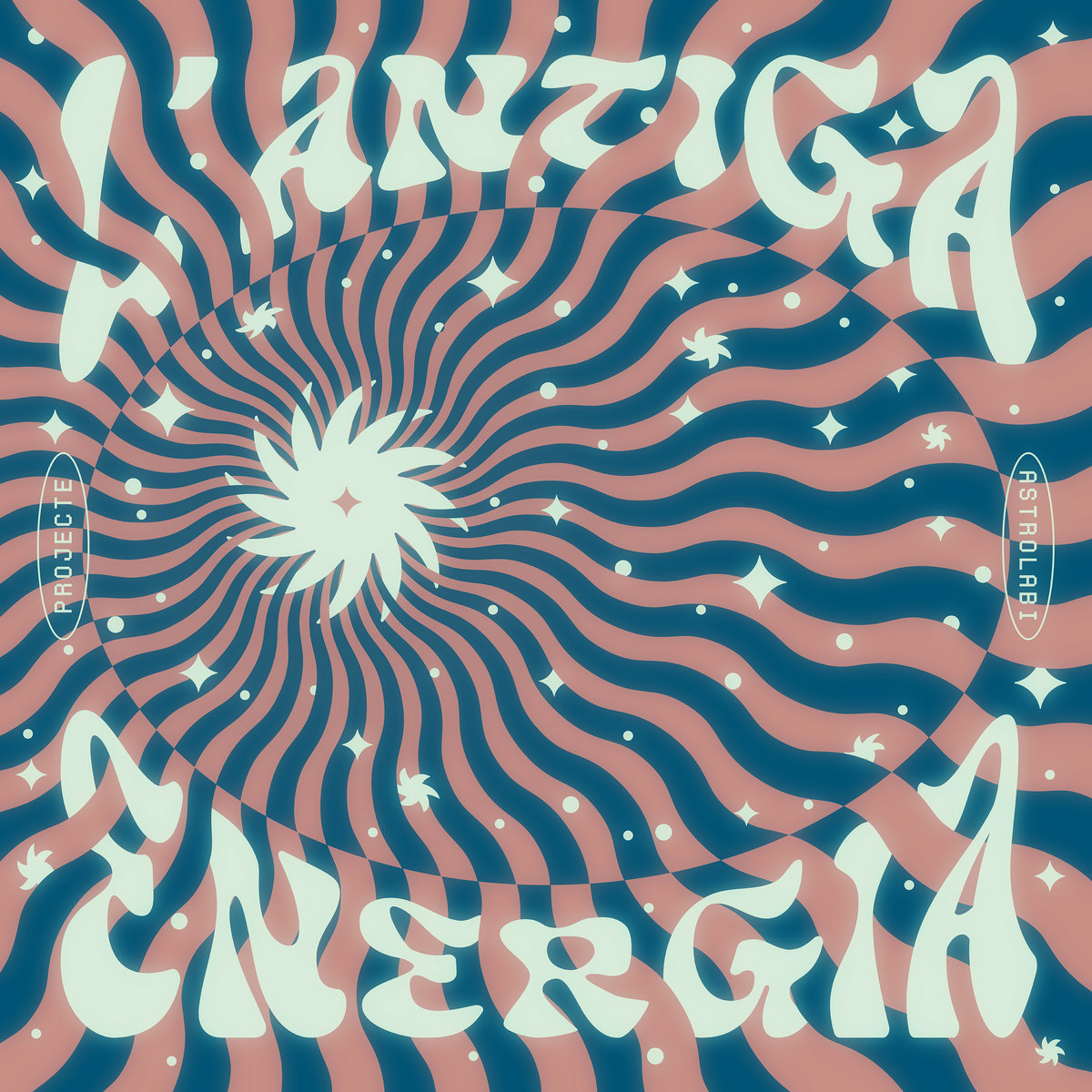
Projecte Astrolabi’s L’Antiga Energia Review: A Cosmic Instrumental Voyage with Krautrock in Its Blood
L’Antiga Energia, the third album from Projecte Astrolabi, is an album you don’t want to land: when the needle lifts, you turn the record over, play the other side, and then start again. It is a rare thing for an instrumental record to be this generous, this quietly addictive and this easy to enter, and it is why this review ends with the highest mark.
Projecte Astrolabi is an instrumental quartet formed in 2019. Guitar, keyboards, bass and drums are all it takes. Their music moves between jazz-rock, psychedelia, improvisation and progressive rock without worrying about fitting neatly into any of those categories. They released a self-titled debut in 2019 and La Singularitat in 2023, and this new album, L’Antiga Energia, continues the same idea: using the universe as a source of musical imagination.
Live, the band accompanies the music with short scientific explanations of the phenomena behind each piece, so that music and science communication become two sides of the same story. The sleeve of the vinyl does the same job. Ten numbered texts, one for each piece, explain the astronomy in plain, poetic language, and the booklet-style layout, with the band photographed under an observatory dome and beside an old telescope, makes the record feel like a small object of curiosity as well as a piece of music.
L’Antiga Energia concept? Ten tracks, ten compositions, ten points of view on the cosmos. Each track starts from a cosmic idea, and the sleeve notes tell you which:
- “Portadors de l’antiga energia” (“Bearers of the ancient energy”) reminds us that the atoms in our bodies were forged in stars billions of years ago.
- “Laniakea” is our cosmic address, the vast supercluster whose name means “immense heaven” in Hawaiian.
- “On és tothom?” (“Where is everybody?”) takes its question from the Fermi paradox: if life should be common, why is space so silent?
- “Tholins” are the complex organic compounds formed by ultraviolet light in the cold outer solar system, giving Titan its orange haze.
- “Velocitat de quasar” describes the brightest objects in the known universe, powered by supermassive black holes.
- “Desplaçament al roig” (redshift) explains how light from distant galaxies stretches toward red as space expands.
- “Espectre òptic continu” looks at the dark lines in a star’s spectrum, the fingerprints that tell us what it is made of.
- “Un horitzó després de l’altre” (“One horizon after another”) follows Voyager 1 across the edge of the heliosphere.
- “Un punt blau pàl·lid” (“A pale blue dot”) takes its inspiration from Voyager’s 1990 photograph of Earth as a speck of light.
- “La força de l’invisible” closes with dark matter, the unseen force that holds galaxies together.
As the musicians say, this is not an astronomy lesson set to music. The ideas are starting points, and the band uses them to imagine atmospheres, landscapes and journeys. You can enjoy every note without reading a word of the sleeve, and reading it makes the trip richer.
What is the sound of L’Antiga Energia? For me, it’s indisputably space rock with a Krautrock heart! This is where the album really lifts off. Projecte Astrolabi are not trying to go back to the roots. Even so, in several tracks you can hear the spirit of the great German bands of the late 1960s and 1970s, in the long, floating, hypnotic lines, the keyboard colours, and the sense of a band travelling together rather than showing off. The clearest example is “Un punt blau pàl·lid”. Listen to it and you cannot say for sure whether it could have been played by Wallenstein, by Amon Düül II or by Ash Ra Tempel. The echoes are there, but you cannot pin them to one record, and that is exactly why the track works. Projecte Astrolabi is a band that has absorbed a whole tradition and speaks it in a voice of its own. Fans of that period, and of the wider progressive and jazz-rock scene of the same years, will feel at home straight away.
The four players also share the space with unusual generosity. The bass and drums give the music a living foundation that carries each composition without ever freezing it and still leaves room for moments of real freedom. The balance between guitar and keyboards is beautifully handled. The guitar has a luminous presence that never tries to dominate, and the keyboards bring a wealth of harmonic colour. The melodies are bright and seem driven by a sense of liberty, felt as much by the listener as by the players.
What makes this album so rewarding is the contrast between how easy it feels and how carefully it is built. The rhythms of the bass and drums, the harmonic dialogue between guitar and keyboards and the structure of all ten pieces show subtle, detailed writing. Some compositions are complex, but none of them seems to be trying to impress with its sophistication. They move with a fluency that hides the work behind them, which is why the pleasure of listening is immediate. Each piece has its own identity and tempo, and the record still feels like one coherent whole. Calm, contemplative passages give way to more intense moments and open spaces for improvisation. Pieces follow one another naturally without flattening the contrasts. At around four minutes each, none of the tracks overstays its welcome, and the album keeps its sense of spaciousness from start to finish.
The album is A journey that changes as you listen. It does not tell a space story in the conventional sense, but it has the power to raise expectations, to exceed them, and to shift how we hear and feel. What we thought we understood changes as the vinyl turns on the turntable and the music reveals new possibilities. Each track is a space onto which the listener projects images, memories and sensations, and its power to evoke grows with each play. This is not an escape from everyday life. It is a way of shifting our gaze toward the universe around us and toward what we think we know.
The sound of the vinyl edition deserves its own paragraph. It is monumental. The bass keeps a deep, divine weight whatever it is playing, the drums stay precise and full of relief, the keyboards keep all of their harmonic richness, and the guitar sits with a bright presence that never pushes forward. Credit goes to engineer and mixer Guillem Realp and to mastering engineer Joan Peiron. It has the grandeur of the best classic albums of the Krautrock era, of which this band is a worthy heir, and the vinyl only confirms how good the music is. If you can, hear it on a good turntable.
L’Antiga Energia is a beautiful, generous and confidently played record. It makes the listener want to keep travelling, it sounds exceptional on vinyl, and it shows a “young” band at the height of its powers, grounded in tradition and facing forward. Highly recommended, and unquestionably “a must”!
Frankie Pfeiffer
Editor in chief – PARIS-MOVE
PARIS-MOVE, November 1st, 2026
Follow PARIS-MOVE on X
:::::::::::::::::::::
Listen and buy: the album is on Bandcamp, on vinyl and digital platforms.
Tracklisting :
1. Portadors de l’antiga energia 04:19
2. Laniakea 04:39
3. On és tothom? 03:49
4. Tholins 04:40
5. Velocitat de quàsar 03:39
6. Desplaçament al roig 03:18
7. Espectre òptic continu 04:29
8. Un horitzó desprtés de l’altre 04:31
9. Un punt blau pàl·lid 04:36
10. La força de l’invisible 04:17
Musicians:
Guillem Plana – guitar
Eloi Escudé – keyboards
Isaac Coll – bass
Arnau Altimir – drums
Credits:
Recdording and mixing: Guillem Realp
Mastering: Joan Peiron
Art: Jordi Farrés