| Electro-Jazz |
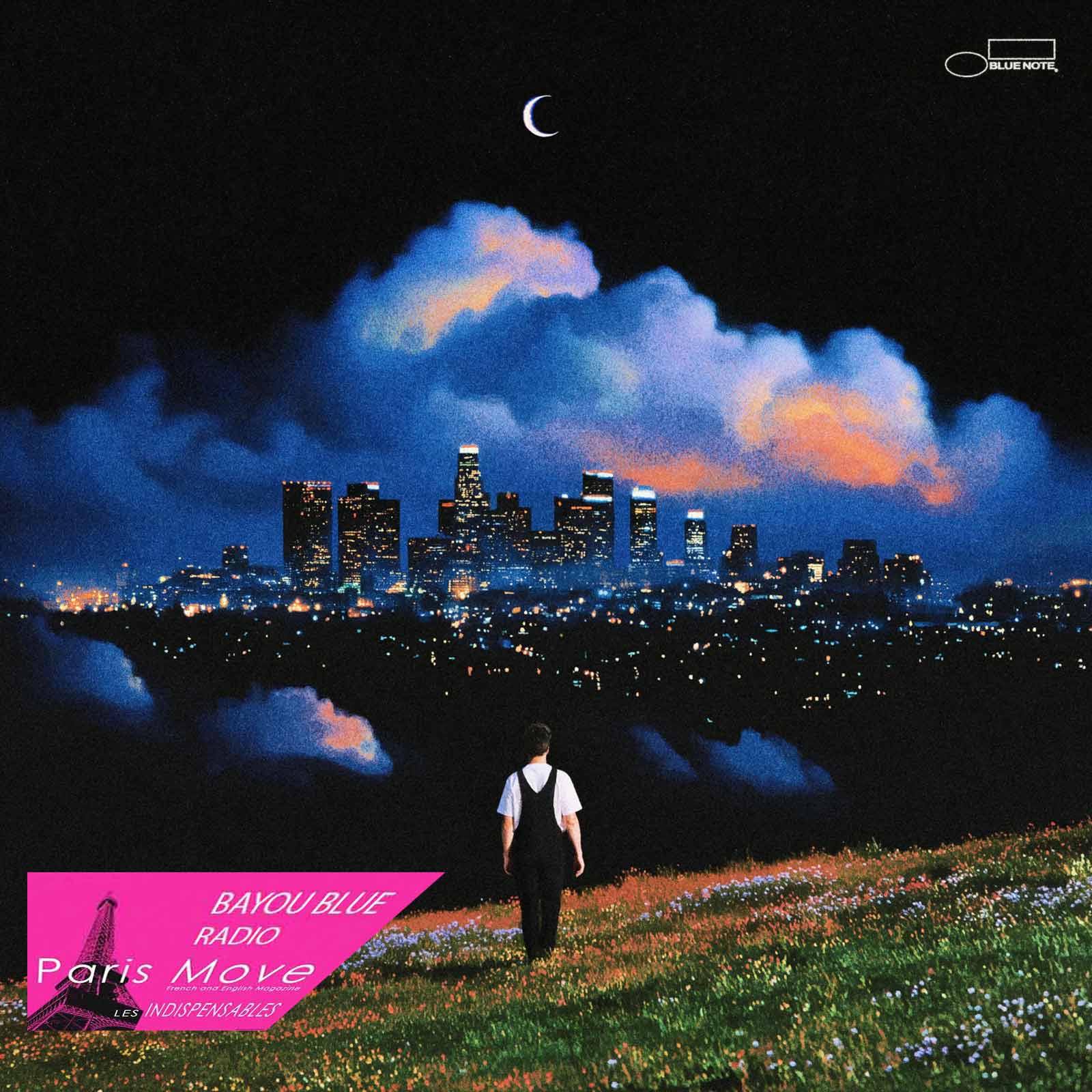
Summary: Kiefer’s Memory Bomb blends jazz, hip-hop, soul and electronic music into an intimate, richly textured exploration of memory, urban life and the beauty of everyday moments.
Kiefer’s Memory Bomb: Where Jazz Meets the Pulse of the City
Let’s not complain. The album has arrived late, but at least we now have the opportunity to give it the attention it deserves. Until recently, our access to certain new releases was limited to audio files supplied by record labels, making it difficult to cover as much music as we would have liked. Keeping up with every monthly release would have required an almost absurd amount of digital storage. But listening should never be reduced to collecting files, any more than criticism should become a race to publish one review after another. Music deserves time. It asks us to return to it, to discover the details that escape us at first, and to allow its ideas and emotions to unfold at their own pace. That is how I approach Memory Bomb, the album by Kiefer, the California-based pianist, composer and producer whose name I had encountered in conversations with jazz musicians but whose work I had not yet explored firsthand. There is something liberating about discovering an artist without the weight of expectations, without immediately trying to fit the music into an established lineage or assign it a place in the contemporary jazz landscape. What strikes me first is Kiefer’s refusal to remain within conventional boundaries. His music moves freely among jazz, hip-hop, soul and electronic production, treating these traditions not as separate territories to be crossed but as elements of a common language. That distinction matters. Too much so-called genre-blending amounts to little more than an assortment of recognizable influences, as though putting different ingredients together were enough to create something original. Kiefer takes a more instinctive, integrated approach. His rhythms, harmonies and electronic textures interact so naturally that the music becomes something greater than the sum of its parts. The piano remains at its center, but Kiefer never insists on occupying the foreground. It slips into the arrangements, almost disappears, then resurfaces with a melodic phrase that feels less like a calculated gesture than a thought arriving in real time. The result is music that sounds both carefully constructed and wonderfully unforced, the work of a musician who has absorbed several musical languages so thoroughly that he no longer needs to announce which one he is speaking.
Made with close collaborators Shibo and CARRTOONS, Memory Bomb brings together an impressive cast of instrumentalists, singers and rappers, including Nate Smith, Walter Smith III, Cisco Swank, Tony Stone, Erick the Architect, Planet Giza, Rae Khalil, Amber Navran and Gareth Donkin. With so many contributors, the album might easily have become a succession of guest appearances, each track serving as a showcase for a different personality. Instead, Kiefer maintains a remarkably consistent emotional atmosphere without sacrificing variety. His collaborators do not simply add their signatures to finished compositions; they enter a musical environment that remains open to their individual contributions. The arrangements are precise, the production polished, yet the music never feels sealed off from possibility. This is one of Kiefer’s strengths as a producer: He understands that artistic identity need not depend on controlling every detail. It can emerge from the ability to bring different sensibilities into conversation. Shibo and CARRTOONS provide much of the rhythmic foundation, connecting the album to contemporary beatmaking while allowing the piano to retain its expressive freedom. The bass lines have weight, the percussion establishes a supple pulse, and the vocals alter the shape of the compositions rather than merely adding another layer. At times, the music recalls St Germain, particularly in the way jazz harmonies interact with electronic rhythms and the energy of urban life. But the resemblance only goes so far. Kiefer seems less interested in the immediate appeal of a groove than in what can happen inside it. Repetition, so often treated as an end in itself in electronic production, becomes a starting point for subtle changes in mood and perspective. A loop begins to feel different when the piano shifts its accents, a harmonic turn changes the atmosphere, or a voice introduces an unexpected inflection. The pleasure comes from the tension between the stability of the beat and the freedom of everything moving around it. Electronic production does not erase the human element; in Kiefer’s hands, it gives that element a different way to express itself. Beneath the precision of the arrangements lies a welcome sense of unpredictability, as though the music were still discovering what it wanted to become even as we listen.
What I find most compelling about Memory Bomb is the feeling that Kiefer occasionally surprises himself at the piano. This is not to suggest that spontaneity comes at the expense of discipline. The apparent ease of these compositions rests on a sophisticated understanding of harmony, arrangement and production. Yet Kiefer possesses the rare ability to keep technique from becoming the main attraction. His phrases hesitate, turn unexpectedly or wander into directions that the preceding measures could hardly have predicted. Listening to him can feel less like watching a musician execute a carefully prepared idea than witnessing a thought take shape. That quality gives the album an almost conversational intimacy. The music does not lecture or demand our attention; it seems to think alongside us, moving at its own pace and leaving room for our own interpretations. A deceptively simple piano melody may suddenly take an unexpected harmonic turn, transforming the entire atmosphere. A motif returns, but its meaning changes as other instruments enter or recede. Kiefer’s ability to develop an idea without overworking it is among the album’s greatest virtues. Even within a thoroughly modern production, he preserves something essential to improvisation: the possibility that the present need not be entirely determined by what came before. The tracks unfold like entries in a private notebook, each carrying traces of an encounter, a memory or a passing emotion. “Daydreaming” establishes this reflective mood through the contributions of Cisco Swank, Luke Titus, Relyae and CARRTOONS. Rather than reaching for an immediate dramatic effect, the track gradually draws us into a world where rhythm becomes the framework for a fluid exchange of musical ideas. “Nowhere Fast,” featuring Rae Khalil, introduces a vocal presence that gives the instrumental movement a more narrative dimension, while “Overture,” with Nate Smith among its contributors, brings a more assertive energy. Smith has a rare ability to move between musical settings without losing his identity, combining the precision of a jazz drummer with an instinctive understanding of groove. His playing does more than support the piano. It challenges it, sharpens its rhythmic possibilities and encourages it to move in unexpected directions. From the outset, the album makes its priorities clear: exploration over display, interaction over virtuosity for its own sake. Kiefer does not need to persuade us that different genres can coexist. He makes that freedom sound entirely natural.
The title Memory Bomb suggests a conception of memory worth considering. A memory bomb does not restore the past in the orderly sequence of a story we can comfortably control. It releases fragments, sensations and images all at once, allowing their collision to produce an entirely new emotional experience. Memory is not an intact archive. It changes in contact with the present, absorbing what we have become and what we still hope to be. Dreams operate in much the same way. They are the images that visit us in sleep, but also the aspirations that shape our lives, the desires we continue to nurture despite setbacks and the possibilities we refuse to abandon. Kiefer inhabits these meanings without attempting to illustrate them too literally. His music has a narrative quality, but it rarely tells a story in the conventional sense. Instead, it suggests, reveals fragments and leaves the listener to make the connections. This openness accounts for much of the album’s emotional range. There is melancholy in certain harmonies, lightness in the rhythms and a quiet serenity in passages where the piano seems to suspend time. Yet an underlying energy prevents the music from becoming a retreat into private reverie. Kiefer is a sensitive artist whose work carries a distinctly optimistic outlook. That distinction matters. This is not music that pretends the world is uncomplicated or that life is beautiful under every circumstance. Rather, it preserves the ability to recognize what remains worthy of our attention and gratitude despite uncertainty. The album does not turn that conviction into a slogan. It allows us to feel it. Sometimes a chord, a bass line or a brief piano phrase is enough to suggest a quiet, unforced joy that requires neither explanation nor justification. In a cultural landscape where emotions are often expected to announce themselves immediately, and where every song seems obliged to explain what it means, Kiefer’s restraint is refreshing. He does not tell us what to feel. He creates the conditions for an encounter in which each listener can discover something of their own inner landscape. “Get to the Moon,” featuring Amber Navran and Relyae, captures this openness particularly well. The voices find their place without overwhelming the instrumental space, and the production maintains an airy quality without slipping into sentimentality. Dreaming, here, is not an escape from reality. It is a way of seeing it differently.
The urban character of Memory Bomb is equally important, though it has little to do with simply reproducing the sounds or rhythms associated with city life. It emerges from an experience of time and space, from the contradictory movements that shape the modern metropolis. Cities accelerate our movements, multiply our distractions and impose their own rhythms. Yet they also offer unexpected moments of solitude, brief encounters and fleeting impressions that interrupt the surrounding commotion. Kiefer captures something of this contradiction. The beats maintain a sense of forward motion, while the piano creates spaces for contemplation within the pulse itself. The music keeps moving without rushing, never confusing speed with intensity. “NewLevels NewDevils,” featuring Tony Stone, Erick the Architect and CARRTOONS, brings a more direct energy to the album. The voices settle into a pronounced groove, the production gains density, and Kiefer demonstrates that his music is not confined to introspective soundscapes. He knows how to accommodate rap without treating it as an outsider to jazz, just as he does not require acoustic instruments to legitimize electronic production. The different traditions meet on equal terms, each contributing its own rhythmic, melodic and expressive resources. This approach reflects a broader reality in contemporary music, where traditions are no longer transmitted exclusively within sealed-off boundaries. Musicians move between scenes, recording techniques and listening cultures, borrowing, transforming and recombining what they encounter. Jazz itself, shaped throughout its history by encounters, migrations and reinvention, cannot be defined by an unwavering allegiance to its historical forms. The more important question is what these exchanges actually produce. New technology and a diversity of influences do not, by themselves, guarantee compelling art. What matters is the ability to transform those materials into something artistically necessary. Memory Bomb succeeds because its production choices never feel detached from the sensibility guiding them. Technology is not an end in itself; it becomes a means of shaping texture, depth and movement. Groove is not a formula but a way of organizing time. And jazz is not simply a label attached to the finished product. It remains a practice of listening, responding and inventing.
The title track is among the album’s most revealing moments. With Walter Smith III on tenor saxophone, Flanafi on guitar and Shibo contributing to the production, Kiefer allows the instrumental side of his musical language to breathe more freely. The saxophone brings an expressive depth that changes the track’s perspective, while the guitar enriches the soundscape without disturbing its clarity. Rather than occupying every available space, the piano listens to the other instruments, answers them and occasionally steps back before resuming its own line of thought. Jazz comes to the fore, not as a nostalgic return to an earlier form but as a way of allowing musical ideas to develop through interaction. Improvisation is not an ornament added to give an electronic production a veneer of jazz credibility. It is a principle of movement, the means by which a composition remains alive and open to change. This becomes all the more apparent because Kiefer never feels compelled to overcrowd the arrangement. The instruments retain their space, silence becomes part of the conversation, and the melodies seem to continue beyond the notes actually played. There is a quiet confidence in this restraint. The music does not need a succession of effects to hold our attention. It can allow a phrase to linger and disappear without fearing that the listener will lose interest. “Entr’acte,” a brief interlude midway through the album, contributes to this carefully considered architecture. Its presence reminds us that transitions matter as much as climaxes, and that an album is shaped not merely by what it contains but by the way it moves between contrasting moods. “BusyForYa,” featuring Planet Giza and Shibo, restores a more pronounced pulse, combining rhythmic immediacy with melodic flexibility. “Won’t Be Long,” with Amber Navran and Phil Beaudreau, favors a more delicate atmosphere, while “Don’t Fail Me Now” brings the instrumental writing back into focus. On “Can’t Let a Good Thing Go,” Gareth Donkin and CARRTOONS help propel a more mobile composition, before “As She Was,” featuring Omari Jazz and Shibo, continues the movement between musical worlds. Finally, “I Let My Hair Grow,” on which Kiefer handles the instruments and programming himself, brings the album back to a more solitary space. After so many voices and contributions, this return to an individual presence reminds us that the project’s coherence rests on a personal sensibility capable of welcoming others without losing itself.
It would nevertheless be reductive to describe Memory Bomb simply as a successful fusion of jazz and hip-hop. Its real interest lies less in its relationship to any particular genre than in its ability to turn listening into a sensory experience. Rhythms, harmonies and electronic textures create an environment through which the listener can move freely. Some passages command immediate attention; others reveal their richness only after repeated listening. A few vocal contributions occasionally feel more functional than essential, and certain arrangements might have benefited from allowing the instrumental passages more room to develop. Such reservations do not undermine the project’s coherence. They simply acknowledge that music this open cannot avoid every unevenness. What remains is the sense of an artistic world that never quite closes in on itself. Kiefer gives his compositions a recognizable identity without forcing them into a repetitive formula. He understands that sophistication is not a matter of multiplying elements but of establishing relationships among them that preserve the music’s depth. At a time when production technology makes it possible to correct, smooth and control almost every detail, he manages to retain a sense of movement, a slight instability that gives the music its human character. Precision does not eliminate uncertainty; it makes room for it. That quality makes the album inviting, but it also allows it to withstand more than a casual listen. Memory Bomb can accompany a walk or an evening at home, yet closer attention reveals the harmonic shifts, changes of perspective and instrumental exchanges that give it substance. The album accommodates different ways of listening. It can accompany the routines of everyday life without interrupting them, then suddenly become the center of attention when a previously inconspicuous detail changes our perception of the whole. That flexibility is particularly valuable in an age saturated with distractions, when music itself is often reduced to a continuous, interchangeable stream designed to fill the gaps in our days. Memory Bomb offers something different: music that can accompany us without becoming disposable, remain accessible without sacrificing nuance, and invite us to slow down without asking us to stand still.
What I ultimately appreciate about Kiefer is his ability to turn listening into a walk through the city, complete with detours, changes of pace and moments of unexpected clarity. The tracks resemble a sequence of poems, each with its own atmosphere yet contributing to a larger movement. Sometimes the music speaks more eloquently than words, not because it possesses some mysterious truth beyond language, but because it allows emotions to exist without trapping them inside an explanation. We move through the album as we might wander through a city we know well but have never fully explored. A street leads us toward a memory; a melody brings an image to mind; a pulse draws us back into the present. Sometimes a track ends and a sense of fullness washes over us, as though something has briefly fallen into place. But the calm rarely lasts. The next track begins, another idea emerges, and we are moving again. Here, the peculiar urgency of city life makes itself felt: the sense that every moment already contains the beginning of the next. Kiefer’s music soothes and propels us, gathers our thoughts and scatters them, offers a pause even as it prepares us to move on. It reminds us that beauty does not necessarily reside in a lasting state of contentment. It can emerge in an interval, in the fleeting realization that, despite the world’s agitation, there is still something waiting to be discovered. For Kiefer, dreaming does not mean permanently withdrawing from reality. It means returning to it with renewed attention, finding something unexpected in ordinary gestures and familiar landscapes. Jazz can do the same when it remains faithful to its spirit of invention: It begins with a structure, shifts it, explores its possibilities and returns to it changed by the journey. Memory Bomb makes this freedom both a compositional principle and a way of being in the world. The album does not claim to reconcile every musical genre or resolve the contradictions of our time. It offers something more modest, and perhaps more valuable: music that embraces complexity without surrendering joy, accepts its modernity without sacrificing emotion, and turns the encounter between sounds into an opportunity to see our surroundings differently. When the final note fades, the walk seems far from over. The city continues to move, our thoughts carry on, and something lingers from the experience: the quiet but persistent feeling that life retains its beauty precisely because it never stops surprising us.
Thierry De Clemensat
Member at Jazz Journalists Association
USA correspondent for Paris-Move and ABS magazine
Editor in chief – Bayou Blue Radio, Bayou Blue News

PARIS-MOVE, October 24th, 2026
Follow PARIS-MOVE on X
::::::::::::::::::::::::
Musicians :
Shibo: Bass, modular synthesizers, rhythm programming, co-production
Nate Smith: Drums
Walter Smith III: Tenor saxophone
Flanafi: Guitar
Amber Navran (of Moonchild): Vocals, flute
Rae Khalil: Vocals
Cisco Swank: Vocals, keyboards
Relyae: Vocals
Tony Stone: Drums, percussion, vocals
Erick the Architect: Vocals / rap
Planet Giza: Vocals / rap, production
Luke Titus: Drums
Phil Beaudreau: Guest artist
Gareth Donkin: Guest artist
Omari Jazz: Guest artist
Track Listing:
Daydreaming (feat. Cisco Swank, Luke Titus, Relyae, CARRTOONS)
Nowhere Fast (feat. Rae Khalil)
Overture (feat. Nate Smith, Shibo)
NewLevels NewDevils (feat. Tony Stone, Erick the Architect, CARRTOONS)
Get to the Moon (feat. Amber Navran, Relyae, CARRTOONS)
Memory Bomb (feat. Walter Smith III, Flanafi, Shibo)
Entr’acte
BusyForYa (feat. Planet Giza, Shibo)
Won’t Be Long (feat. Amber Navran, Phil Beaudreau, Shibo)
Don’t Fail Me Now
Can’t Let a Good Thing Go (feat. Gareth Donkin, CARRTOONS)
As She Was (feat. Omari Jazz, Shibo)
I Let My Hair Grow