
| Jazz |
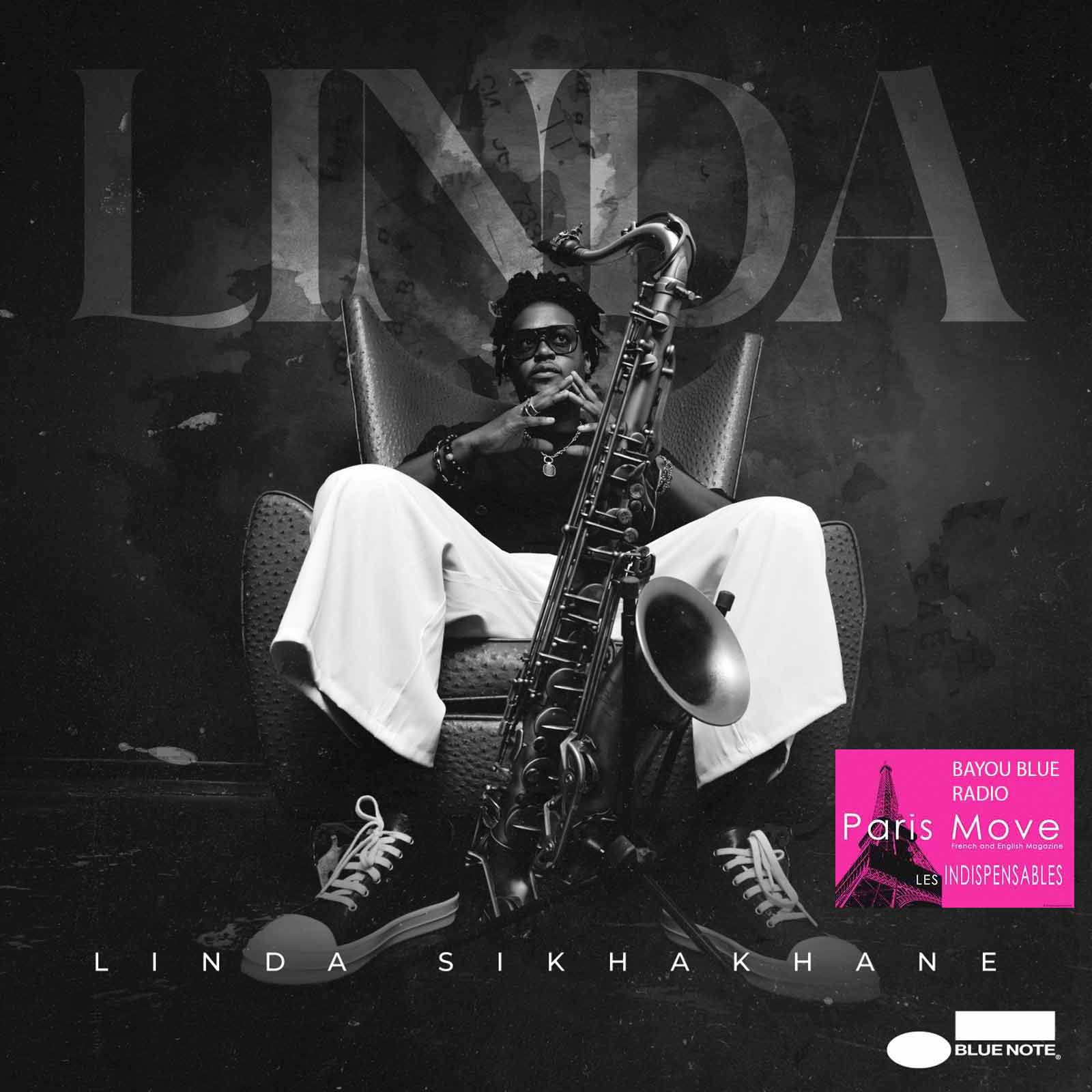
Summary: South African saxophonist Linda Sikhakhane blends jazz, spirituality and contemporary African sounds on Linda, an album exploring identity, heritage and belonging.
Linda Sikhakhane: Finding a Voice in South African Jazz
With Linda, his latest album for Blue Note, South African saxophonist Linda Sikhakhane explores a question that has long animated jazz: how can a musician honor the past while finding a language entirely his own? Released in September, the album is an inward-looking journey through memory, spirituality, family and belonging, shaped by the conviction that identity is not a fixed inheritance but something continually remade. From the opening track, “Days Begin to Sing,” featuring vocalist Omagugu, Sikhakhane unsettles expectations. The music initially moves through the open textures of contemporary improvisation, seeming to resist familiar harmonic landmarks before gradually revealing a more recognizable jazz vocabulary. This movement from uncertainty toward connection establishes the album’s central tension. Sikhakhane is not searching for a definitive answer so much as testing how music might give form to questions that resist easy resolution.
Born in Umlazi, near Durban, in South Africa’s KwaZulu-Natal province, Sikhakhane belongs to a generation for whom jazz is both an international language and an expression of a particular cultural experience. His musical imagination draws on John Coltrane’s spiritual intensity and the distinctive voice of South African saxophonist Winston Mankunku Ngozi. Yet these influences are not templates to be reproduced. Sikhakhane treats them as part of a living tradition, one that gains meaning through reinterpretation rather than imitation. His recognition as the Standard Bank Young Jazz Artist in 2022 marked him as an important emerging figure in South African music. Linda, however, suggests a musician looking beyond virtuosity or professional recognition toward more fundamental questions: What does it mean to create from a specific cultural inheritance? How can that inheritance remain alive without becoming a constraint? And how can a deeply personal voice speak across borders without losing the history that gives it meaning?
Produced by pianist Nduduzo Makhathini, the album brings together pianist Cameron Campbell, bassist Conway Campbell and drummer Kabelo Mokhatla, alongside guests Omagugu, Zuluboy, Ovuyonke, trumpeter Thabo Sikhakhane and Phila Dlozi. Their contributions create a sound grounded in attentive exchange rather than display. The ensemble can move from spacious, exploratory passages to more concentrated rhythmic interplay without sacrificing its collective character. Makhathini’s production preserves the immediacy of the performances while allowing their different textures to breathe. The result is not simply a showcase for a saxophonist, but a conversation among musicians whose distinct voices contribute to a larger inquiry.
That conversation extends into the contemporary sounds of South Africa. Hip-hop, neo-soul and amapiano are part of the musical world Sikhakhane inhabits, not fashionable additions intended to make jazz more accessible. Their rhythms and vocal approaches meet the improvisational freedom of jazz in ways that reflect how people actually listen, create and move between musical cultures. The encounter does not erase the differences among these forms; it makes those differences productive. Jazz emerges not as a sealed tradition protected from outside influence, but as a practice continually transformed by its surroundings. In this respect, Linda reflects a country whose musical life cannot be reduced to a single style or a simple narrative of national identity.
The historical context matters. South African jazz developed amid the racial hierarchies and political violence of apartheid, and its history remains inseparable from questions of exclusion, resistance and cultural survival. The end of apartheid changed the country’s political order, but it did not erase the inequalities or unresolved memories that shaped it. Nor did it settle the question of what South African identity should mean. For contemporary musicians, inheritance is therefore neither a burden to discard nor a reassuring badge of authenticity. It is contested ground, marked by rupture as well as continuity. Sikhakhane engages this complexity without turning every composition into a political statement. His approach is quieter but no less significant: he allows personal experience, collective memory and musical experimentation to coexist without forcing them into a single interpretation.
Spirituality is central to this search. On Linda, it is not an exotic ornament or an appeal to some supposedly timeless African essence. It offers a way of understanding the individual in relation to ancestry, community and a larger continuity of experience. Vusumzi Ngxande’s book Journey Kwantu: Exploring African Spirituality Identity provides a useful point of reference for considering these connections between spirituality and selfhood. Sikhakhane’s music similarly suggests that finding oneself need not mean separating oneself from others. Identity takes shape through relationships—with family, inherited knowledge, the living community and those whose influence persists across generations. The music’s reflective passages thus reach beyond private introspection. They seek to locate individual experience within a broader sense of belonging, while acknowledging that such belonging is never entirely settled.
This movement between personal reflection and collective expression becomes especially tangible in “Uzalo,” featuring Sikhakhane’s younger brother, trumpeter Thabo Sikhakhane. Their family connection gives the performance an added resonance: inheritance becomes something heard and negotiated, not merely described. The exchange between saxophone and trumpet suggests continuity without demanding sameness. Two musicians share a history, yet each brings a distinct voice to the conversation. The title itself evokes lineage, reinforcing the album’s interest in how identity passes between generations and changes in the process. Here, tradition is not preserved behind glass. It is renewed through the act of making music together.
Other tracks explore different dimensions of that dialogue. “Ubizo” and “Indlela” contribute to the album’s searching, inward atmosphere, while “Ilanga,” featuring rapper Zuluboy, brings jazz into contact with the verbal force and rhythmic momentum of hip-hop. “Vumani” and “Izibusiso,” featuring Ovuyonke and Makhathini, deepen the relationship between voice and ensemble. The vocals do not simply decorate instrumental arrangements; they expand the music’s emotional and communal reach. “Abalimi,” featuring Phila Dlozi, and the closing track, “Izwi,” continue the exploration of shared experience and expression. Across these performances, Sikhakhane avoids treating cultural identity as a finished product. What matters is not the preservation of an untouched past, but the possibility of carrying inherited forms into an uncertain future.
The album also raises a larger question about how African musicians are heard internationally. Too often, artists from the continent are introduced to global audiences primarily as representatives of their origins, their work framed as evidence of cultural authenticity before it is considered as art. The opposite approach is equally reductive: ignoring the histories that inform the music and judging it against established Western expectations. Both leave little room for complexity. Sikhakhane should be heard neither as an ethnographic curiosity nor as a peripheral variation on an American tradition. Jazz itself emerged through histories of movement, exchange and struggle, and its evolution has never respected neat geographical boundaries. To recognize the particularity of South African jazz is not to confine it to a national category; it is to understand the experience from which its possibilities emerge.
What distinguishes Linda is the way it brings these strands together without pretending that their tensions can be resolved. Modern jazz, contemporary South African music, spirituality and family history become parts of a single, evolving conversation. The album can be demanding, especially when its improvisations move away from familiar structures, but that demand is integral to its purpose. Sikhakhane asks listeners to resist the expectation that music must explain itself immediately. Meaning develops through attention, through the willingness to remain with a phrase or a shifting rhythm before deciding what it signifies.
Ultimately, Linda is less a declaration of identity than an exploration of how identity comes into being. Sikhakhane does not attempt to define South African jazz for an entire generation, nor does he offer a reassuring portrait of cultural belonging. Instead, he creates music in which memory and invention, local experience and international exchange, individual expression and collective history remain in active dialogue. Its achievement lies in keeping those relationships open. Jazz, at its best, is not a museum of inherited forms but a continuing act of discovery, requiring musicians to venture beyond what is already known and listeners to reconsider what they think they hear. With Linda, Sikhakhane makes that search his own; and invites South African jazz to be heard not as a footnote to a familiar history, but as one of the forces shaping the music’s future.
Thierry De Clemensat
Member at Jazz Journalists Association
USA correspondent for Paris-Move and ABS magazine
Editor in chief – Bayou Blue Radio, Bayou Blue News

PARIS-MOVE, October 24th, 2026
Follow PARIS-MOVE on X
::::::::::::::::::::::::
Produced by Nduduzo Makhathini, the album features the saxophonist with pianist Cameron Campbell, bassist Conway Campbell, drummer Kabelo Mokhatla, and special guests Phila Dlozi, Omagugu, Ovuyonke, ZuluBoy, and Thabo Sikhakhane.
Track Listing:
Days Begin To Sing (Feat. Omagugu)
Ubizo
Indela
Ilanga (Feat. Zuluboy)
Vumani
Izibusiso (Feat. Ovuyonke)
Uzalo (Feat. Thabo Sikhakhane)
Abalimi (Feat. Phila Dlozi)
Izwi