| Jazz |
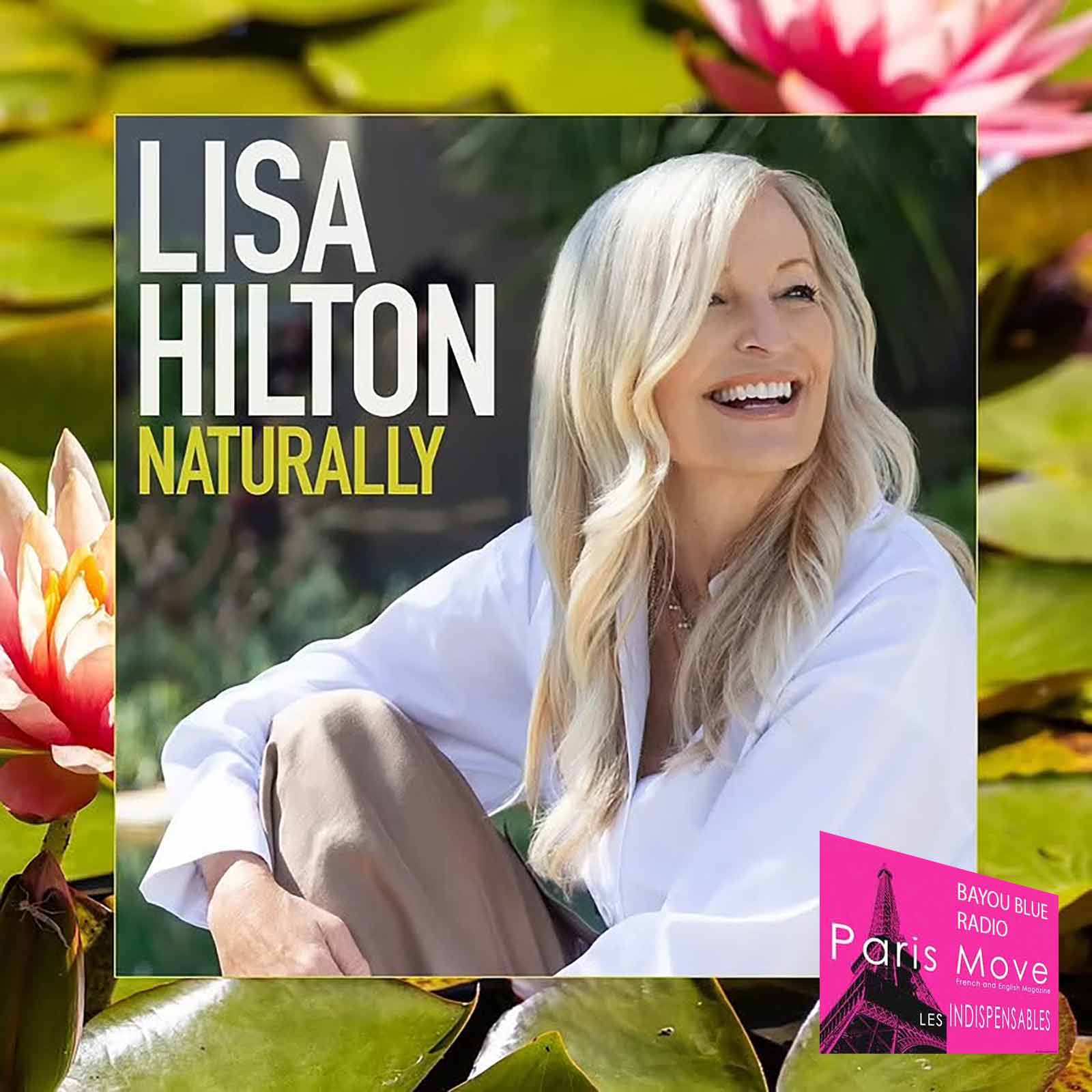
Summary: Lisa Hilton blends modern jazz, classical influences and Latin rhythms into a compelling musical journey.
Lisa Hilton’s Naturally: The Quiet Art of Jazz Reinvention
Some records announce themselves before we have even heard a note. Their reputations precede them, their place in musical history seems settled, and we approach them with expectations shaped by what we have read or heard. Other discoveries arrive without such preparation. We press play without a settled opinion, without a reputation to confirm or a critical position to defend. Sometimes, that is precisely when music has the greatest opportunity to surprise us. My introduction to Lisa Hilton’s work came about in this way. I knew little of her music before hearing Naturally, and I approached the album without preconceived ideas about the pianist or composer. At first, its title and atmosphere suggest something luminous and uncomplicated, as though nature itself were a metaphor for effortless expression. But the music soon reveals a more intricate character. Beneath its apparent ease lies a carefully constructed world of musical references, understated tensions and connections that emerge gradually. Naturally does not seek to impress through sheer force or virtuoso display. Its sophistication lies in the balance between its elements, the way melodies pass from one musician to another, and the space it creates for intelligence and emotion to coexist without competing.
That distinction matters in a musical culture where virtuosity is often confused with accumulation and complexity can become a performance in itself. Hilton takes a different approach. Her writing reflects a command of the material that never insists on being noticed, and an understanding of jazz in which freedom does not mean abandoning structure or turning away from tradition. The music flows naturally, but that ease is earned. Melodic lines intersect, rhythms subtly shift the center of gravity, and harmonies open unexpected paths without breaking the music’s continuity. What initially sounds simple gradually reveals greater depth. Listeners can enter the music without mastering its technical vocabulary, while repeated encounters disclose details that may have escaped them the first time. Accessibility here is not a concession. It is evidence of an artistic intelligence capable of making complexity inviting without diminishing it.
From the opening moments, certain rhythmic gestures awaken unexpected associations. The pulse of the first track brought Georges Bizet’s Carmen to mind, a connection that surprised me as much as it delighted me. This is not an attempt to place jazz within the supposedly superior lineage of classical music, nor to suggest that Hilton is consciously quoting Bizet. It is the peculiar logic of musical memory, through which a rhythm, a color or a surge of energy can summon something long buried in the mind. I found myself thinking of the director of the first music school I attended, whom I remember as Bizet’s grandson. I cannot say precisely what prompted the recollection. Perhaps it was the rhythmic momentum, the restrained theatricality or the way the music builds tension without becoming heavy-handed. The comparison does not erase the differences between the two musical worlds. It simply reminds us that musical traditions are not sealed compartments. The ear makes connections that scholarship alone cannot always explain, and the past sometimes returns not as a quotation but as a flash of recognition.
This interplay of influences is one of Naturally’s most compelling qualities. Classical echoes, Spanish and Latin colors, modern jazz and post-bop do not sit side by side like entries in a cultural catalog. Hilton absorbs them into a personal musical vocabulary, using them to shape melodies, animate rhythms and establish distinct atmospheres. She does not parade her influences; she transforms them. The result avoids both pastiche and superficial eclecticism. Individual traditions may be recognizable, but none is allowed to overwhelm the whole. They enrich the compositions without reducing them to a predetermined style. In Hilton’s hands, engagement with the past does not obstruct invention. It helps make invention possible. Tradition remains vital not because it must be preserved unchanged, but because it offers material that artists can question, reshape and make newly relevant.
The piano naturally occupies the center of this process. Hilton has a sure sense of musical architecture, allowing melodies to emerge without separating them artificially from their harmonic surroundings. Her instrument can lead the narrative, sharpen its contours or recede just enough to let another voice change the perspective. This flexibility is essential. The ensemble is not simply an accompaniment arranged around a featured soloist; it is a collective space in which each contribution can alter the meaning of what came before. The compositions have direction without feeling predetermined. They provide a framework sturdy enough to support improvisation while leaving room for discoveries that cannot be fully planned in advance.
The musicians around Hilton — saxophonist JD Allen, trumpeter Igmar Thomas, bassist Luques Curtis and drummer Rudy Royston — bring distinct personalities to the ensemble without crowding its sound. The combination of saxophone and trumpet creates a rich palette of colors and responses, while bass and drums give the music its physical grounding. Rhythm is never merely a platform for the melodies. It participates in the storytelling, sharpening an inflection, shifting the intensity or creating the breathing room a phrase needs. The rhythm section sustains momentum without trapping the soloists in predictable patterns. The horns, meanwhile, ensure that the piano never becomes the exclusive center of attention. The ensemble’s strength lies in its ability to reconcile precision with openness, individual expression with collective responsibility. Each musician contributes to the album’s identity without trying to dominate it.
Tracks such as “Carefree Chronicles” and “Transcendental Tango” demonstrate Hilton’s ability to combine movement with subtlety. Energy never degenerates into agitation, and harmonic exploration does not undermine the immediate pleasure of listening. “Scene from a California Dream” and “Waterlily World” suggest interior landscapes, passing impressions and images that the music allows listeners to develop for themselves. Hilton does not dictate what we should feel. She creates sonic spaces in which personal memories and associations can take shape. Her compositions are defined enough to retain their individuality, yet open enough to resist a single interpretation. That is no small achievement: guiding the imagination without taking possession of it.
“Thinking of Somewhere Else” extends this sense of movement, suggesting the possibility of leaving one’s immediate surroundings for a place that may exist only in the mind. “Once Upon a Blues Day,” meanwhile, draws on one of jazz’s essential sources: the expressive language and enduring memory of the blues. The blues is not invoked as a ceremonial tribute to the genre’s origins. It remains a living language capable of holding contradictory emotions at once — melancholy and resistance, hurt and irony, solitude and fellowship. Jazz is a music of memory, but memory remains alive only when it is reinterpreted. Hilton seems to understand that obligation. She does not need to underline the historical weight of every phrase. The inheritance is present in the music’s shapes and inflections, not as an untouchable monument but as a resource for the imagination.
Her reimagining of “My Favorite Things” is particularly revealing. First associated with musical theater, the song became, notably through John Coltrane, a vehicle for some of jazz’s most adventurous exploration. Its history makes any new interpretation a delicate undertaking. A melody this familiar can easily pull listeners back toward earlier versions, turning the experience into a contest of comparisons. Hilton avoids that trap. She neither reproduces established arrangements nor rejects them simply to prove her independence. Instead, she claims the melody on her own terms, shifts its perspective and brings it into her musical world. Familiarity becomes the starting point for discovery. The achievement lies not in trying to outdo previous interpretations, but in showing how a well-known composition can be heard anew through another musician’s sensibility. Music remains alive when it can be revisited, transformed and inhabited by different imaginations.
That approach illuminates the larger philosophy of creation running through Naturally. Composition is not simply a matter of producing original themes. It also means deciding how musical material can accommodate the unexpected, and how a structure can be strong enough to let musicians move beyond it without losing their way. Hilton treats composition as an invitation to dialogue. Her pieces are carefully shaped, but their architecture never suffocates the life within them. The music refuses to choose between control and surrender; instead, it makes their coexistence the basis of its freedom. The naturalness suggested by the album’s title does not mean that the music comes without effort. It describes the moment when mastery no longer feels like a constraint and becomes a form of readiness: the ability to listen, respond and invent.
This readiness distinguishes the album from a strain of jazz that treats complexity as proof of superiority. Naturally does not require listeners to recognize technical feats before they are permitted to feel something. Technique is everywhere, but it serves an expressive purpose. The musicians seem less interested in demonstrating what they can do than in discovering what the music might become in the moment. The distinction is substantial. When virtuosity becomes an end in itself, it can close a piece around the performer’s individual achievement. Guided by attentive listening, however, it opens a space in which invention passes from one musician to another and ultimately reaches the audience. Hilton’s album is a reminder that sophistication and accessibility are not mutually exclusive, any more than simplicity necessarily signals a lack of ambition.
A quiet humanism runs through Naturally, expressed less through explicit statements than through the way the musicians play together. Mutual attention, sensitivity to nuance and a reluctance to reduce every contribution to a spectacular effect amount to an ethic of collective creation. No instrument needs to dominate for an extended period to establish its identity. Individual voices emerge within a shared structure that allows them to develop without canceling one another out. In a world where competition, speed and visibility increasingly serve as measures of success, this music offers a reminder of the value of attention, restraint and cooperation. That does not turn a jazz album into a political manifesto. It recognizes instead that music can embody a vision of human relationships through the very way it is organized. Here, exchange takes precedence over confrontation, and individual freedom flourishes alongside respect for the freedom of others.
The joy running through several compositions should not be mistaken for superficial optimism. It does not erase the album’s subtleties or its more contemplative passages. Rather, it feels like an energy earned through the precision of the playing and the trust among the musicians. Gentleness does not exclude strength; it can be one of strength’s most accomplished forms. Hilton creates music that is expressive without being overwrought, luminous without becoming shallow, refined without losing contact with lived experience. This combination gives Naturally a soothing quality, but never a passive one. The album invites us to slow down, pay attention to detail and accept that emotion can emerge from a restrained gesture as powerfully as from a dramatic declaration.
The solo performance of Bill Evans’ “Peace Piece” extends this aesthetic in a particularly meaningful way. In an ensemble, listening becomes audible through the relationships among instruments. In a solo performance, it turns inward, focusing on the relationship between the musician, silence and the unfolding of musical thought. Contemplation does not mean stillness. The music continues to move through subtle harmonic shifts and through the way each note changes our perception of those that came before. By choosing a work by Evans, Hilton does more than add a celebrated name to the album. She reveals an affinity of sensibility: the belief that the piano can become a space for inward exploration, capable of awakening emotion without imposing it. This moment of intimacy reinforces the album’s balance and reminds us that solitude, too, can become a form of dialogue.
As the record unfolds, “naturally” takes on a more complex meaning than its apparent simplicity first suggests. Nature is not the absence of culture, just as spontaneity is not the opposite of work. Naturalness emerges from experience, discipline and trust. It becomes possible when influences have been absorbed deeply enough to stop functioning as mere quotations, when technique makes listening possible rather than calling attention to itself, and when composition creates room without dictating every movement. Classical references, Spanish colors, post-bop and the memory of the blues become part of a language whose individuality depends on its ability to welcome different traditions without losing coherence. Hilton does not announce a break with the past. More quietly, she demonstrates that invention remains possible when inheritance is treated as a living resource.
I finish the album with the feeling that I have discovered a musician whose work deserves more of my attention than I had previously given it. There is some regret in that realization: I wish I had encountered this particular meeting of rigor and freedom, memory and invention, intelligence and feeling sooner. Yet there is also the distinctive pleasure of a late discovery, the moment when we realize that certain works have been waiting for us without our knowing it. Naturally reminds me that listening remains an open-ended experience, not confined to familiar artists or musical territories we assume we already understand. Sometimes all it takes is approaching a record without expectations for it to rearrange our sense of what is possible. Hilton does not seek to revolutionize jazz through grand gestures. She explores its possibilities with a distinctive sensibility, a sure command of her craft and a genuine appetite for musical exchange. Beneath its apparent lightness, Naturally reveals a thoughtful, generous and deeply human work; one that turns sophistication into pleasure, tradition into freedom and music into a place of shared discovery.
Thierry De Clemensat
Member at Jazz Journalists Association
USA correspondent for Paris-Move and ABS magazine
Editor in chief – Bayou Blue Radio, Bayou Blue News
PARIS-MOVE, October 24th, 2026
Follow PARIS-MOVE on X
::::::::::::::::::::::::
Musicians :
LISA HILTON / PIANO
J.D. ALLEN / SAX
IGMAR THOMAS / TRUMPET
RUDY ROYSTON / DRUMS
LUQUES CURTIS / BASS
Track Listing:
Carefree Chronicles
My Favorite Things
Nocturnal
I Want To Spend More Than A Moment With You
Waterlily World
Stop & Go Chaotic Show
Transcendental Tango
Thinking Of Somewhere Else
Peace Piece
Once Upon A Blues Day