| Jazz |
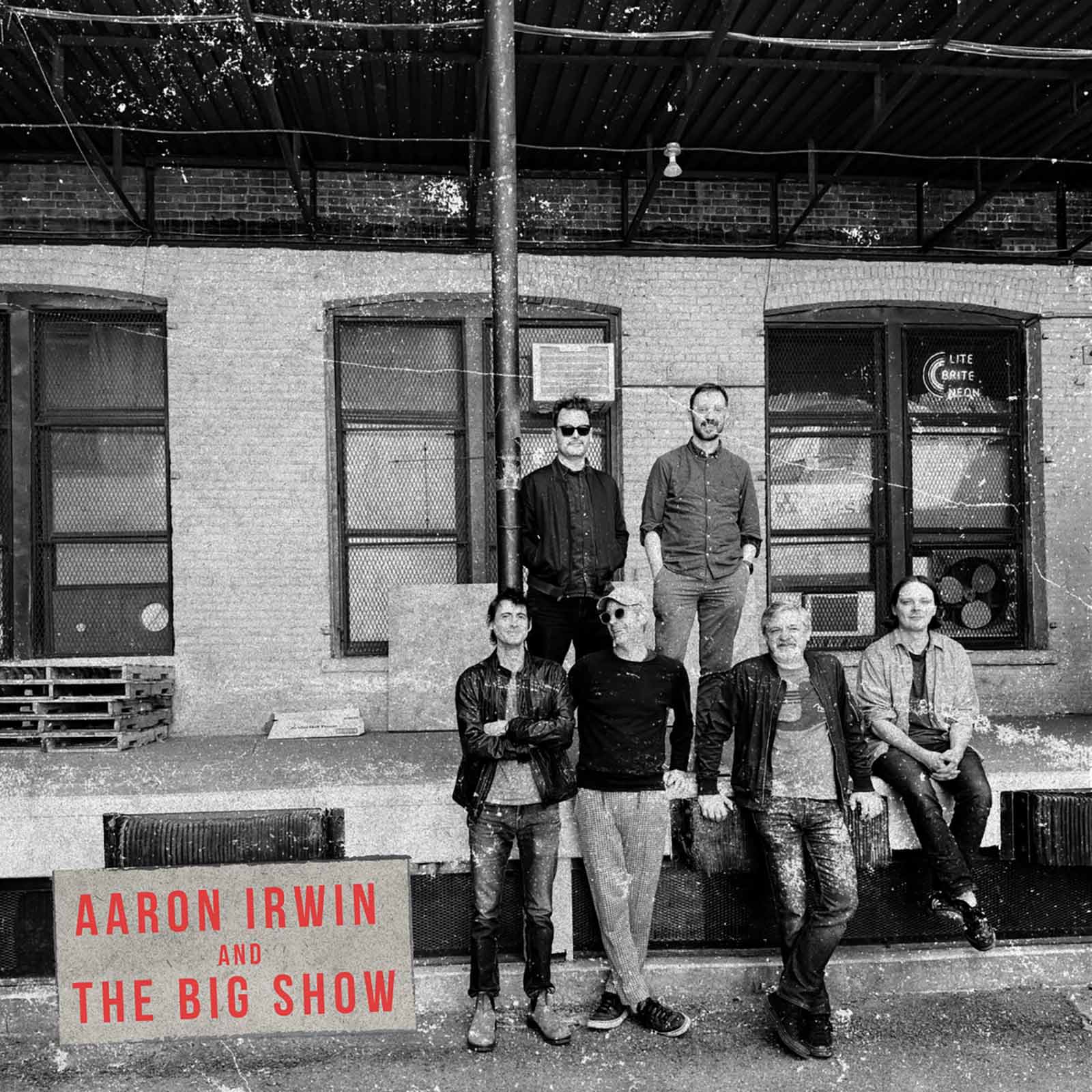
On a soft, sunlit afternoon, I put on The Big Show, the new album by saxophonist and composer Aaron Irwin, and find myself considering a question that reaches beyond the usual boundaries of jazz criticism: what happens when musicians stop treating musical genres as territories to defend and begin using them as languages through which to understand one another? The opening notes of “Springfield” initially suggest a familiar answer. Its melody has the easy appeal of a song that might have been circulating on American radio for decades, somewhere between pop, rock and the hazy borderlands where musical identities begin to overlap. One can almost imagine a blonde singer with long, flowing hair stepping into the picture to complete the illusion. Yet the apparent familiarity raises a more interesting possibility. Perhaps the point is not to invent another musical vocabulary, but to discover how much remains unexplored within the one we already know. That, to my ears, is the central proposition of The Big Show. Irwin brings together the melodic accessibility of American popular music and the open-ended possibilities of jazz, allowing folk, rock and improvisation to interact without reducing them to a marketable hybrid. The objective is not simply to blend styles, but to discover what each can become in the presence of the others. There is something here that recalls the cinema of Wim Wenders, with its wandering cameras, its anonymous streets and its solitary figures moving through landscapes that seem to contain entire lives just beyond the edge of the frame. I imagine fading motel signs, empty avenues and the rain darkening the pavement of a Midwestern town. The puddles catch the light, and a familiar landscape suddenly reveals another dimension. Irwin’s music works in much the same way: it begins with recognizable materials, then invites us to hear them differently.
The project took shape in the spring of 2024 around a deceptively simple idea: bring six musicians together and give them enough time to become a band. Rather than assembling an ensemble for a recording session, Irwin wanted to develop a collective musical identity through regular performances in New York City and Brooklyn. The group played roughly once a month in neighborhood venues, including Fiction Bar, Pete’s Candy Store and Threes Brewing, using each appearance to test new compositions, revise arrangements and discover possibilities that might not have emerged in the studio. The process matters because it illuminates the album’s larger argument. Musical traditions do not remain alive simply because musicians reproduce their established forms. They survive because each generation finds new ways to inhabit them, challenge them and make them relevant to its own experience. Irwin’s compositions provided a starting point, not a set of instructions to be followed unquestioningly. As the musicians grew more familiar with one another, their individual contributions began to reshape the material, turning the composer’s initial ideas into a shared language. This is an old principle in jazz, but its implications extend well beyond the genre. At a time when music is increasingly packaged around instantly recognizable identities, The Big Show suggests that a distinctive sound can emerge through collaboration rather than branding, through the slow development of mutual understanding rather than the immediate assertion of a musical signature.
The ensemble’s instrumentation reinforces that proposition. Irwin plays alto saxophone and clarinet, while Jeremy Udden contributes alto saxophone and the lyricon, an electronic wind instrument that expands the group’s timbral possibilities. Olli Hirvonen plays acoustic guitar, Chris Parker electric guitar, Matt Pavolka bass and Bill Campbell drums. The configuration creates an intriguing balance between acoustic intimacy and electric energy, between the expressive directness of the horns and the different harmonic colors supplied by the guitars. But the instruments are not simply representatives of separate traditions assembled to demonstrate the group’s eclecticism. Their real purpose is to create opportunities for interaction. The two saxophonists can establish a melodic conversation or introduce competing perspectives; the guitars can support a composition’s underlying structure while subtly altering its emotional temperature; bass and drums can provide continuity without confining the music to a predictable groove. The challenge is to make these different resources contribute to a coherent musical argument without smoothing away their differences. Irwin’s decision to develop the ensemble through repeated performances gives the musicians the time to negotiate that challenge. The resulting ideal is neither a conventional jazz group dressed in rock and folk colors nor a collection of popular songs embellished with improvisation. It is a band seeking a common language without requiring its members to speak in exactly the same voice.
The title, The Big Show, carries a certain irony. The music emerged from neighborhood clubs rather than from the grand machinery of the entertainment industry, and its ambitions are more exploratory than spectacular. Yet the title also suggests the theater of everyday American life, the succession of encounters, disappointments and fleeting revelations that gives ordinary places their emotional weight. The track titles evoke a broad cultural geography, from “Springfield” and “Land of Lincoln” to “Mississippi Hurt,” “Ol’ 78” and “Jimi Hendrix.” These references suggest an engagement with American places, histories and musical memories, but their value depends on what the music does with them. Americana can easily become a reassuring inventory of familiar sounds and images, a way of turning the past into something comfortably recognizable. Irwin’s more interesting possibility is to treat that inheritance as unfinished business. Folk, rock, blues and jazz are not fixed categories but evolving traditions whose meanings change when they encounter new performers, new arrangements and new circumstances. A melody may evoke a familiar landscape, but its interpretation can complicate the nostalgia attached to it. A rock-inflected passage may introduce tension into an otherwise lyrical composition, while jazz improvisation can loosen the boundaries of a song without destroying its identity. The question is not whether these influences can coexist. It is whether their interaction produces something that none could have achieved alone.
That distinction also provides a useful standard for judging the album’s musical success. The accessibility of “Springfield” is an asset, but accessibility alone is not an artistic achievement. A memorable melody can invite listeners into a composition, yet it can also become a limitation if everything that follows merely reinforces its initial appeal. Improvisation has the opposite risk: in its pursuit of freedom, it can lose sight of the musical idea that gives it direction. The most compelling possibilities emerge when the two impulses remain in tension, when a familiar melodic shape becomes the foundation for an unexpected exchange or when a change in rhythm, texture or phrasing reveals something that was present in the original idea but not yet fully heard. The group’s long period of collective development offers the conditions for this kind of discovery. It allows the musicians to move beyond the accurate execution of arrangements toward the more elusive art of listening, responding and knowing when to disrupt an established pattern. The central question, then, is not whether The Big Show successfully combines jazz, folk, rock and pop. It is whether the ensemble can use those traditions to create a music that feels both familiar and genuinely open to change. That is a more demanding ambition than stylistic versatility, and it is what gives the project its critical interest.
Returning to “Springfield,” I find myself thinking again of a film by Wim Wenders, a camera moving through an American town in search of stories that remain invisible until someone takes the time to look. There are anonymous streets, tired faces, reflections in shop windows and the sudden transformation of a landscape after a shower of rain. Nothing dramatic has happened, yet the world appears different. The image offers a way of understanding what Irwin is attempting on The Big Show. The album does not need to invent an entirely new musical language to make its point. It asks instead whether the languages already embedded in American musical life can be opened up, placed in conversation and renewed through the experience of playing together. Its central thesis is ultimately a human one as much as a musical one: a common language need not require uniformity, and tradition need not become repetition. Six musicians can share a musical framework without surrendering their individual identities, just as a familiar melody can acquire new meaning without losing the qualities that made it memorable in the first place. The success of this undertaking rests on the degree to which the music transforms recognition into discovery, allowing its accessible surfaces to lead toward deeper possibilities. If The Big Show promises a spectacle, its real subject is the quieter process through which something new emerges from what already exists. The rain has begun to fall, the puddles have changed the color of the pavement, and the town looks different without having moved an inch. In Irwin’s musical world, that transformation is not a metaphor for novelty for its own sake. It is an argument for listening more closely, for treating tradition as a living conversation and for recognizing that the most meaningful change sometimes begins with the simple act of hearing familiar things anew.
Thierry De Clemensat
Member at Jazz Journalists Association
USA correspondent for Paris-Move and ABS magazine
Editor in chief – Bayou Blue Radio, Bayou Blue News
PARIS-MOVE, October 23rd, 2026
Follow PARIS-MOVE on X
::::::::::::::::::::::::
Musicians :
Aaron Irwin – alto saxophone, clarinet
Jeremy Udden – alto saxophone, lyricon
Olli Hirvonen – acoustic guitar
Chris Parker – electric guitar
Matt Pavolka – bass
Bill Campbell – drums
Track Listing :
Springfield
Abel Farm
Land Of Lincoln
Mississippi Hurt Intro
Mississippi Hurt
Ol’ 78
The Bear
Jimi Hendrix
The Railsplitter
The Big Show