
| Jazz |
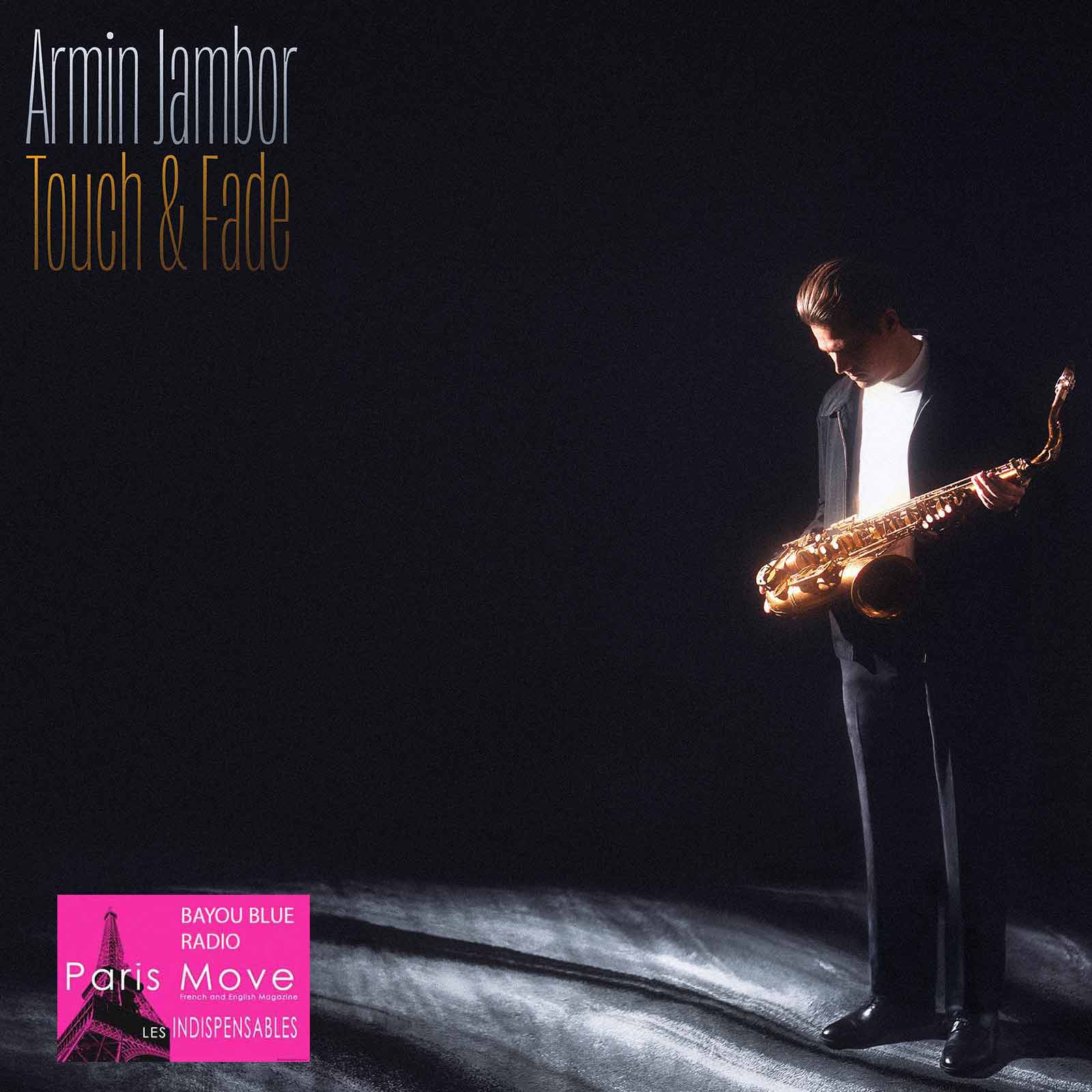
Summary : Hungarian saxophonist Armin Jambor blends jazz tradition and European influences on Touch & Fade.
Armin Jambor’s Touch & Fade: A Fresh Voice in European Jazz
European jazz has never been a single, easily defined tradition. Its vitality lies in the diversity of its musical languages, the histories that inform them and the unexpected encounters they make possible. Touch & Fade, the new album by Hungarian saxophonist Armin Jambor, offers a persuasive illustration of that creative openness. Moving between the improvisational freedom of American jazz and the structural imagination of European classical music, Jambor creates a sound that acknowledges its influences without becoming captive to them. This is not an exercise in cultural fusion, nor an attempt to reconcile two supposedly incompatible traditions. It is a more personal undertaking: music shaped by accumulated experiences, artistic encounters and memories that have gradually become inseparable from the musician himself.
The dialogue between Charlie Parker, universally known as Bird, and Hungarian composer Béla Bartók provides one of the album’s most revealing points of reference. Yet Jambor never treats these figures as opposing poles between which he must negotiate a stylistic compromise. Parker’s rhythmic urgency and improvisational daring emerged from a different musical world than Bartók’s exploration of folk traditions, asymmetrical rhythms and modernist forms. In Jambor’s hands, however, their legacies coexist naturally, not as intellectual citations but as elements absorbed into a living musical vocabulary. The same openness recalls Joe Zawinul, whose career demonstrated how deeply rooted musical identities could flourish through encounters with different traditions. It also brings to mind pianist Sylvie Courvoisier, whose singular artistic language challenges the boundaries separating jazz, contemporary composition and improvisation. I will be publishing an interview with Courvoisier soon, offering an opportunity to explore some of these questions in greater depth.
Jambor has received several awards, but recognition alone says little about the substance of a musician’s work. What matters here is the clarity of his artistic direction. He approaches contemporary jazz with a pronounced lyrical sensibility, combining the expressive freedom of the saxophone tradition with an ear for the colors, structures and tensions associated with European classical music. His tone is full-bodied and assured, capable of delivering a melody with warmth while retaining the edge required for more searching improvisations. There is no gratuitous display of technique, no suggestion that virtuosity must announce itself at every turn. His playing serves the larger musical argument. Even when the arrangements become intricate and the rhythmic landscape shifts beneath him, the melodic line remains a point of orientation, allowing complexity to retain its emotional force.
Listeners familiar with Sonny Rollins and Dexter Gordon may recognize something of their approach in Jambor’s robust sound and his willingness to let a phrase unfold through rhythmic variation rather than decorative excess. The resemblance, however, is not a matter of imitation. Rollins and Gordon developed highly individual ways of inhabiting a melody, using the physicality of the tenor saxophone to give their improvisations both intellectual weight and unmistakable human presence. Jambor draws on that tradition while placing it in a contemporary, distinctly urban setting. His playing understands that jazz history is not a museum to be visited reverently. It is a language that remains meaningful only when musicians continue to speak it in their own voices.
The quartet at the heart of Touch & Fade grew out of an encounter in Vienna. Pianist Mátyás Bartha invited Jambor to perform at ZWE, and the two musicians, who had worked together before, discovered a natural foundation for a more sustained collaboration. Bassist Danny Ziemann and drummer Oleg Markov completed the lineup, creating an ensemble whose identity developed through performance rather than through a rigidly prescribed concept. Jambor began introducing his own compositions, and what had started with a concert invitation gradually became a shared musical project.
Subsequent concerts and tours across Germany, Austria, Slovenia and Hungary gave the music time to mature before it was committed to tape. That process matters. A group that develops onstage learns to recognize the difference between a written arrangement and the music that emerges when four musicians begin responding to one another. Tempos acquire flexibility, transitions become more intuitive, and passages that might appear merely functional on paper can take on an expressive life of their own. On Touch & Fade, the compositions retain a clear sense of direction without reducing the musicians to interpreters of a fixed blueprint. Bartha, Ziemann and Markov each bring a distinct musical personality to the ensemble, and those personalities remain audible within Jambor’s compositional vision. The result is a genuine quartet sound, built not on uniformity but on attentive listening.
That balance between individual freedom and collective purpose is central to the album’s appeal. Bartha’s piano provides harmonic definition and rhythmic momentum while opening spaces in which the saxophone can move beyond the expected resolution of a phrase. Ziemann anchors the music without merely reinforcing its harmonic foundations, while Markov helps determine the character of each piece through his placement of accents, his management of tension and his subtle reshaping of time. The rhythm section is never simply there to support the soloist. It participates in the music’s development, responding to shifts in energy and helping the compositions move between lyrical reflection and more assertive improvisation. The quartet’s sophistication lies as much in what it leaves unsaid as in what it plays.
Jambor’s earlier album, Fragments, released in 2018 with Nexus LineUp, offers a useful point of comparison. Touch & Fade suggests an artist who has continued to refine his compositional thinking while allowing the experience of playing with a stable group to influence the writing. The newer material accommodates contrasting moods and structures without feeling like a collection of unrelated pieces assembled to demonstrate versatility. Instead, the album develops a coherent musical personality, one that embraces the directness of a memorable melody, the rhythmic complications of an unconventional meter and the open-ended possibilities of improvisation.
“First Song” offers a particularly revealing example of that evolution. Originally written roughly a decade ago as a ballad, the composition has been reworked as a waltz. The transformation does more than change its rhythmic framework. A melody that might once have unfolded with a familiar sense of spaciousness now moves with a gentle rotational pull, creating new relationships between its phrases. The earlier composition is not discarded but reconsidered, as though the passage of time has altered the light in which Jambor hears it. The revision suggests something essential about the album’s broader approach: a composition need not remain frozen at the moment of its creation. It can continue to change as the musician who wrote it accumulates experiences and discovers new ways of listening.
“Space Monk,” with its unmistakable nod to Thelonious Monk, draws on a different strand of the jazz tradition. Monk’s musical world was defined by angular melodies, unexpected silences and rhythmic gestures that could sound eccentric until their underlying logic became apparent. His influence is easy to invoke and difficult to absorb convincingly, precisely because his individuality was so pronounced. Jambor approaches that legacy without reducing it to a collection of recognizable mannerisms. The reference becomes a point of departure, allowing the composition to explore the productive tension between melodic shape and rhythmic displacement. The music acknowledges Monk’s singular contribution while preserving its own identity.
“Sonnytude” similarly places Jambor in conversation with Sonny Stitt and Sonny Rollins, two saxophonists whose distinct approaches helped expand the expressive possibilities of modern jazz. The title suggests a shared lineage, but the piece is more compelling as a reflection on how that lineage continues to develop. Jazz musicians have always learned by listening closely to their predecessors, absorbing fragments of phrasing, tone, harmonic imagination and rhythmic feel before transforming them through their own experience. The tradition survives not through exact reproduction but through reinterpretation. In that respect, “Sonnytude” belongs naturally on an album that regards musical history as a resource rather than a set of rules.
The rhythmic design of “BB Sketches” offers another perspective on Jambor’s compositional imagination. Built around a piano ostinato and a bass line in 9/4, the piece establishes a distinctive framework without turning its unusual meter into a technical stunt. The repeating piano figure gives the music continuity, while the nine-beat cycle creates a subtle instability beneath the surface. The listener is invited to feel the pattern before attempting to count it, to experience its momentum rather than solve it as a mathematical puzzle. This is where the quartet’s collective intelligence becomes particularly apparent: a complex rhythmic structure remains inviting because the musicians give it movement, shape and room to breathe.
“Quartet No. 4” brings the album’s European dimension into sharper focus. Its relationship to Hungarian folk material and Bartók’s musical world is not merely a matter of quotation or national identity. Bartók’s achievement lay in discovering how traditional melodies and rhythmic patterns could become the foundation for a modern compositional language without losing their character. Jambor approaches that legacy in a similarly exploratory spirit, allowing folk-inflected gestures to coexist with the harmonic sophistication and improvisational openness of contemporary jazz. At moments, the piece evokes the meeting of composition and improvisation associated with Don Grolnick and Michael Brecker, whose collaborations demonstrated how carefully constructed music could remain open to spontaneity. The comparison is less about direct stylistic resemblance than about a shared understanding of the ensemble as a place where writing and improvisation continually reshape one another.
The album’s title track, “Touch & Fade,” carries a more personal history. The composition followed Jambor’s meeting with saxophonist Rick Margitza in 2022, an encounter that eventually gave the album its name. The title suggests something fleeting: contact followed by disappearance, the way a musical phrase can linger in the mind after the sound itself has vanished. That tension between presence and absence runs naturally through jazz, an art form whose most compelling moments are often impossible to reproduce exactly. A performance exists in the instant in which musicians create it, yet it leaves behind a memory that can change with every subsequent hearing. The title captures that paradox without insisting on a single interpretation.
What distinguishes Touch & Fade, ultimately, is the way its influences converge in a coherent personal language. American jazz, Hungarian musical heritage, the discipline of composition and the freedom of collective improvisation are not separate ingredients whose proportions must be carefully measured. They have become part of the same musical experience. Jambor’s writing gives the quartet a clear framework, but the music remains open to the unpredictable decisions that make jazz a living art. The compositions are intricate without becoming hermetic, lyrical without lapsing into sentimentality, and grounded in tradition without treating the past as an authority beyond question.
There is a welcome sense of proportion in the album’s ambitions. Touch & Fade does not attempt to make a grand declaration about the future of European jazz, nor does it claim to have resolved the long-running conversation between American and European musical identities. Its achievement is quieter and, for that reason, more persuasive. It demonstrates how a musician can draw on several histories without being defined by any single one, and how an ensemble can preserve individual character while building a shared musical vocabulary. Jambor’s saxophone remains the album’s unmistakable center, but the music’s strength lies in the relationships around it: the responsiveness of the quartet, the elasticity of the arrangements and the sense that each composition has been shaped by real musical encounters.
At a time when jazz is often discussed in terms of categories, genealogies and stylistic boundaries, Touch & Fade offers a reminder that the music’s vitality depends on the freedom to move among them. Jambor is neither turning away from the American tradition nor simply importing it into a European setting. He is working within a history that has always been international, transforming what he has inherited through the experiences that have made him the musician he is. The album’s most persuasive statement may therefore be its least declarative: musical identity is not a fixed point of origin but something continually formed through listening, collaboration and change. On Touch & Fade, that process becomes audible in every shift of rhythm, every unfolding melody and every moment when four musicians find, together, a way forward.
Thierry De Clemensat
Member at Jazz Journalists Association
USA correspondent for Paris-Move and ABS magazine
Editor in chief – Bayou Blue Radio, Bayou Blue News
PARIS-MOVE, October 21st, 2026
Follow PARIS-MOVE on X
::::::::::::::::::::::::
Musicians :
Armin Jambor | Tenor Saxophone
Matyas Bartha | Piano
Danny Ziemann | Double Bass
Oleg Markov | Drums
Track Listing
- First Song – 6:22
- Space Monk – 4:15
- BB Sketches – 8:12
- Sonnytude – 6:11
- Three Little Words – 7:43 (Harry Ruby/ Bert Kalmar)
- Blues Quarter – 5:05
- Touch & Fade – 8:18
- Quartet No. 4 – 5:42
All compositions written by Armin Jambor except Three Little Words.
Liner Notes:
Recorded on 24.01.2026 at Hideout Recording Studio
Mixed by Danny Ziemann
Mastered by Marton Fenyvesi