
| Jazz |
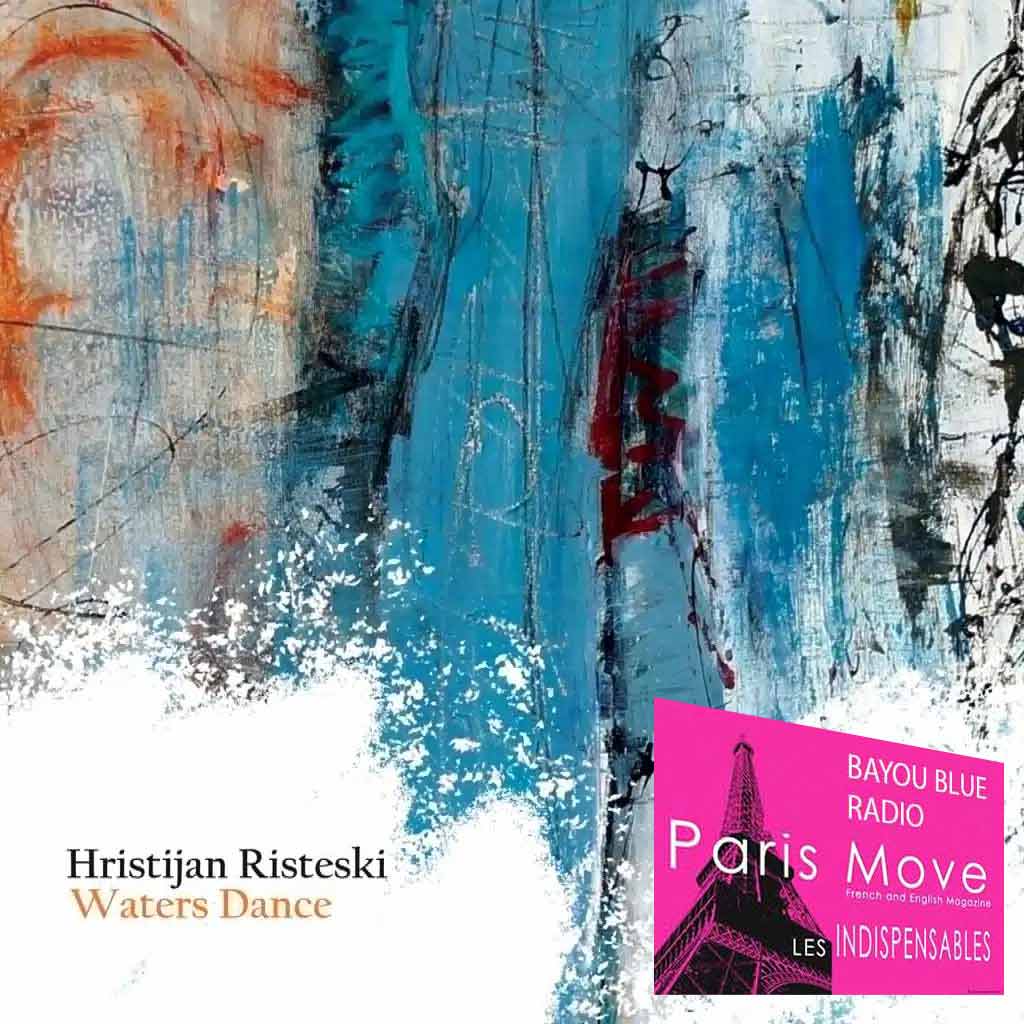
Hristijan Risteski’s Waters Dance: A Saxophonist Finding His Voice
The real test of a jazz musician isn’t simply whether he can play well, but whether he can make the music sound unmistakably his own. On Waters Dance, his debut album, Macedonian saxophonist Hristijan Risteski shows that he has the technique, musical sensitivity, and compositional instincts to build a compelling body of work. What remains less certain is how far he’s willing to push beyond the comfort of carefully balanced arrangements and familiar forms. There’s plenty to appreciate here: thoughtful melodies, attentive ensemble playing, and a genuine feel for the give-and-take of improvisation. But the album also reveals a tension between promise and fulfillment. Risteski often hints at more adventurous possibilities without fully pursuing them. That makes Waters Dance an engaging introduction to a musician whose next challenge is not to prove that he belongs in contemporary jazz, but to discover what he can bring to it that no one else quite can.
On “High Away,” Risteski establishes himself as a thoughtful, self-assured player. His tone favors clarity over sheer force, and he gives his phrases room to breathe rather than filling every available space with notes. There’s a welcome sense of purpose in that restraint. He seems to understand that a solo doesn’t have to dazzle to hold our attention. Still, I sometimes wish he would follow an idea farther, even if it led him beyond familiar territory. His playing is appealing, but the moments that intrigue me most are those in which the music hints at possibilities the performance doesn’t quite pursue.
That tension between compositional discipline and improvisational freedom gives Waters Dance much of its character. Risteski writes with a clear sense of structure, providing the group with a solid framework without dictating every turn. The musicians listen closely, respond to subtle changes, and find room to stretch while keeping the larger musical picture in view. The album is at its best when the arrangements become a starting point rather than a set of instructions. In those passages, the players seem to discover the music as they go, and the performances take on a spontaneity that some of the more predictable sections lack.
“Coming Home” takes a more reflective approach. Its melody has a warmth that feels personal without tipping into sentimentality, and Risteski wisely resists the temptation to push the emotion too hard. He lets the tune unfold at its own pace, trusting its simplicity to carry the feeling. I find that restraint effective, although the performance could use a stronger sense of development. The melody is substantial enough to support a more unexpected turn or a sharper contrast between its quieter passages and its moments of release. As it stands, the piece establishes a mood more convincingly than it expands on it.
The title track offers a different kind of movement. Rather than driving toward an obvious climax, “Waters Dance” explores the relationship between rhythm and melody, allowing the music to evolve through small shifts in emphasis and direction. The piece reveals Risteski’s interest in balancing careful composition with the freedom of improvisation. That balance becomes especially compelling when the musicians move beyond the written material and respond to one another in real time. Those moments suggest a greater willingness to embrace uncertainty, and I wish the album ventured into that territory more often. Risteski doesn’t need to abandon structure; he needs to discover just how far he can stretch it.
The rhythm section helps make that exploration possible. The bass and drums do more than keep time. They shape the atmosphere, create tension, and give the soloist room to change course. The strongest exchanges occur when the accompaniment becomes an active part of the conversation rather than simply supporting the saxophone. These moments reveal a group with a good instinct for collective playing, and they point toward one of the album’s most promising possibilities: an interplay in which the music’s direction emerges from the musicians’ responses to one another.
The piano adds harmonic depth and occasionally redirects the music without pulling focus from the ensemble. Its exchanges with the saxophone bring variety to the arrangements, while its interaction with the rhythm section gives several passages added dimension. Yet the group’s instinct for keeping everything tasteful can sometimes work against it. The performances are polished, but polish alone doesn’t create tension. I would have welcomed a few more encounters that felt unsettled, moments when a musician challenged an idea rather than simply extending it. That kind of friction could have given the music a stronger dramatic arc and made its quieter passages all the more affecting.
Risteski’s Macedonian background adds another dimension to the listening experience, though I wouldn’t reduce his music to a question of national identity. What interests me is how a musician draws on his cultural and musical inheritance while developing a language within contemporary jazz. Those influences don’t have to appear as direct quotations or recognizable folk gestures. They can emerge through melodic contours, rhythmic instincts, or the way a phrase takes shape. I hear possibilities along those lines in Waters Dance, although they remain more suggestive than fully developed. I’d like to hear Risteski explore that connection on his own terms, allowing his background to inform the music without turning it into an obligation or a defining theme.
What makes this debut engaging is its quiet confidence. Risteski avoids empty displays of virtuosity and gives his compositions room to speak for themselves. His writing is thoughtful, his playing controlled, and the ensemble shares a clear sense of purpose. Those qualities make Waters Dance a rewarding listen, even when the music doesn’t quite fulfill the promise of its ideas. Some passages settle into familiar patterns before they’ve been fully explored, and the album occasionally favors a smooth, balanced sound over the friction that might make a performance more memorable.
That reservation shouldn’t overshadow what Risteski has accomplished. A debut album is an introduction, not a final statement, and Waters Dance presents a musician with a strong melodic instinct, a thoughtful approach to composition, and a genuine feel for ensemble playing. The next step isn’t simply to play harder or make the music louder. It’s to let his ideas change shape, to allow the unexpected to become part of the composition’s logic, and to create moments when his musical personality comes through with greater force. The foundation is solid. The challenge now is to build something less predictable on top of it.
I finished Waters Dance curious about where Risteski might go next. The album leaves some questions unanswered, but that’s part of what makes it interesting. I’d like to hear him trust his more adventurous impulses and follow them without worrying quite so much about keeping everything in balance. A performance can become memorable not because every element fits neatly into place, but because something unsettles that balance and opens up a new possibility. Risteski has the musicianship and sensitivity to make that happen. What I’m waiting for now is the moment when he lets the music take him somewhere he couldn’t have planned in advance.
Thierry De Clemensat
Member at Jazz Journalists Association
USA correspondent for Paris-Move and ABS magazine
Editor in chief – Bayou Blue Radio, Bayou Blue News
PARIS-MOVE, October 20th, 2026
Follow PARIS-MOVE on X
::::::::::::::::::::::::
Musicians :
Hristijan Risteski | Saxophone & Clarinet
Marko Churnchetz | Piano
Hrvoje Kralj | Bass Chris Smith | Drums
Track Listing
- High Away
- Coming Home
- Lucky Flight
- Lee Wise
- Immersed
- Waters Dance
- Findings
- Departure
- Summer
Background info / Liner Notes:
All the music is composed by Hristijan Risteski
Recorded, mixed & mastered by Stefano Amerio
@Artesuono Recording Studios – Cavalicco (Udine) – Italy
Cover Artwork – Asma Kocjan
Inner Gatefold Photo – Daniel Joveski
Cover design – Ljuben Trajanoski
HRM 2026 – COM
Copyright: © & ™ Hristijan Risteski Music