| Jazz moderne |
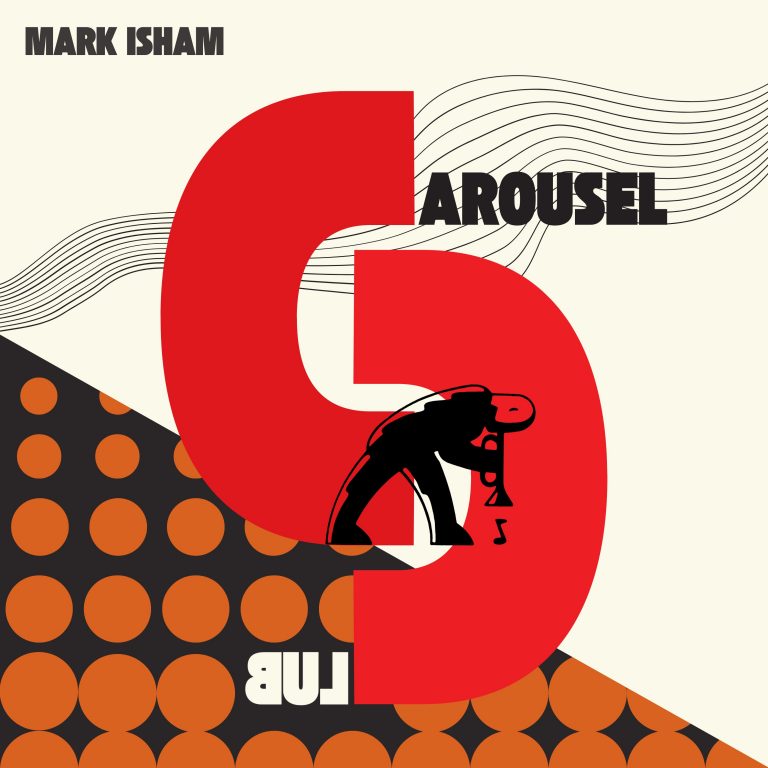
Mark Isham At the Carousel Club: A Trumpeter’s Dazzling Return to His Own Electric, Cinematic World
For four decades, Mark Isham has been the man behind the picture: the composer whose trumpet and synthesizers gave a mood, a memory or a heartbeat to dozens of films and television series. At the Carousel Club, his first solo album in fifteen years, turns the camera around. There is no director, no script, no screen. There is only a trumpet player, a wall of vintage analog synthesizers and some of the finest musicians you could wish for, in a club that exists only in his imagination. It is a rich, adventurous, warm and strikingly human record, and one of the most captivating returns of the year. The mark on Paris-Move: Great.
Born in New York in 1951 to musician parents, Isham studied piano and violin before the trumpet captured him. The family moved to San Francisco, and by fifteen he was already playing in jazz clubs while also appearing with the Oakland and San Francisco symphonies. He later formed his own band, Group 87, and in 1983 released his solo debut, Vapor Drawings. The story of how he became a film composer is delightfully accidental: a demo he had prepared for Manfred Eicher’s ECM label, a piece for classical Chinese instruments and electronics that Eicher passed on, landed in the hands of director Carroll Ballard, who loved it and hired him for Disney’s Never Cry Wolf. Isham had never scored a film before; two music editors who were also composers took him through the process, and he discovered he had a natural talent for telling stories with music.
The career that followed is staggering: Oscar and Golden Globe nominations, Grammy and Emmy awards, and a list of scores that includes A River Runs Through It, Crash, Blade, The Cooler, Miracle, The Black Dahlia, Bobby, Judas and the Black Messiah, and for television Once Upon a Time, The Godfather of Harlem and Little Fires Everywhere. In 2020 he even became the first film composer to give a live concert in the studio at the Cannes Film Market. Alongside the cinema, he never stopped being a jazz musician and an electronic pioneer: he has played with Van Morrison, Joni Mitchell, Stanley Clarke, Pharoah Sanders, Chick Corea, Herbie Hancock and Bobby McFerrin, and records such as Blue Sun and Miles Remembered: The Silent Way Project are highly regarded by critics.
But an artist who spends his life serving other people’s stories eventually wants to tell his own. In an interview with Alceste Ayroldi for the Italian magazine Musica Jazz, Isham explains that he missed making records and wanted to explore what defines him as an artist free from the screen. As a film composer who prefers to stay at home writing scores rather than touring forty weeks a year, he also had a practical puzzle to solve: how to be a recording artist again in a music business that had changed beyond recognition. His answer was simple and brave: release the album himself and learn the new world as he goes. It comes out on his own E-Tones Records.
The album began in the stillness of the first Covid lockdown, when Isham found himself with three uninterrupted weeks. He went to the back wall of his studio, where a tower of vintage analog synthesizers and modular instruments, all patched together, form one huge, temperamental instrument. He compares it to TONTO, the legendary synthesizer system of Malcolm Cecil and Robert Margouleff, heard on landmark Stevie Wonder records: not a tool but a living system, unstable, responsive, capable of generating whole atmospheres. From it came vast, evolving textures, “raw dream material”, built from experimentation rather than assignment.
Then he built the album in layers. He edited these electronic landscapes into forms that could hold live musicians, wrote rhythm-section structures around them, and assembled a band to bring them to life at the Mad Hatter Studios. Finally, he came back alone for a last pass of keyboards, colours and the trumpet sound that is unmistakably his. The result is music that feels designed and discovered at the same time: machines that impose a system, players who gently, joyfully disrupt it.
What a band it is. The drums are in the hands of Vinnie Colaiuta, one of the most admired drummers of his generation, whose precision never gets in the way of his sense of adventure. Guitarist Nels Cline, a master of tone and texture who moves effortlessly between jazz, rock and the avant-garde, brings colour and surprise. Kaveh Rastegar is on bass, Ayo Awosika adds her voice, and the strings are those of the Orchid String Quartet (Molly Rogers and Michelle Shin on violins, Kiara Ana Perico on viola and Leah Metzler on cello), playing parts arranged by Allison Cantor. Isham himself plays trumpets and electronics. These are players who, as Isham says, are not only technically extraordinary but also deep listeners, and you can hear it in the way they respond to each other and to the electronic world around them.
Isham describes the trumpet on this record as an observer and a commentator: a character moving through different environments, taking each one in, reacting to it, and also, at the right moment, becoming the improviser, the jazzman. That is exactly how it sounds. His tone, a sound he has been shaping since his teens, is lyrical, searching and unmistakably human, and it sits in the music like a lead actor in a film that has not yet been shot. You can hear the long shadow of Miles Davis, from the spaces of In a Silent Way to the electric 1980s, but there is no imitation: this is a voice that has long since found its own path.
There is also a dream behind it. When he first heard Weather Report’s I Sing the Body Electric, he saw it clearly: a band that would combine classical influence, jazz improvisation and electronic music. This album is the realization of that dream, with a mature artist who, in his own words, now trusts himself as a creator and is ready to follow an unfamiliar idea, while still drawing on traditional solutions when they serve the music.
“At the Carousel Club” (5:35) is the overture, and a joyful one. It gathers the forces that have always driven Isham’s music, discipline and danger, composition and improvisation, machinery and breath, and opens the door to a place where, as he puts it, musical journeys are offered for the taking and each listener sees the world differently. It is an invitation more than a statement, and you step in gladly.
“Tales of the Street Piano” (5:26) is, in his words, the life of a piano that lives not on the elegant concert stage but in cramped rehearsal rooms, dingy clubs and forgotten basements, and still brings joy, beauty and resilient energy to anyone who touches it. It is driven and optimistic, a love letter to music played anywhere, anyhow, and one of the highlights of the album. “City Lore” (4:53), “Number Theory” (3:50) and “My Night in an Iberian Post Office” (5:15) take us deeper into the club’s stranger rooms. The titles alone tell you that the imagination is working at full speed: urban stories, mathematical patterns, a night in some Iberian postal limbo. Here the cinematic side of Isham shines, with abrupt narrative shifts, rhythmic loops, hypnotic repeating patterns (even, at some point, looping voices that bring minimalist composers like Steve Reich to mind), and the surprising interplay between machines and musicians that makes the album so alive.
“A More Beautiful Question” (4:52) ends the evening with a title that is a perfect summary of the whole project: an artist who, after so many years, is still asking questions, still curious about where the next note will lead. It leaves you with the sense that the carousel is still turning.
At just 30 minutes, with six pieces, the album is concentrated, and rich: it leaves you wanting to hear it again. Recorded at Mad Hatter Studios with engineers Cary Butler and Max Shereshevsky, who also mixed it, and mastered by the renowned Bernie Grundman, it has the wide, deep and detailed sound you would hope for from a record in which synthesizers, drums, guitar, strings and trumpet must all find their space. It is the kind of setting in which the layered textures and the trumpet at the centre have room to be heard.
It is, in the end, a record that belongs to several worlds at once: jazz, rocking jazz, ambient, contemporary and… cinema. Listeners who love the atmospheres of Pat Metheny, Brian Eno, Jon Hassell or Nils Frahm will feel at home, as will anyone who has ever fallen in love with a film score and wished the music could go on without the film.
At the Carousel Club is not a nostalgic return, not a retrospective, not a soundtrack. It is the sound of a seasoned artist taking a risk with his reputation, trusting his instincts, and being rewarded for it. It is electronic but deeply human, structured but open, cinematic without needing a screen. It asks for attention and gives back time, imagination, and a very personal journey. As I did, step into the Carousel Club: you will not want to leave.
Frankie Pfeiffer
Editor in chief – PARIS-MOVE
PARIS-MOVE, October 20th, 2026
Follow PARIS-MOVE on X
:::::::::::::::::::::
Tracklisting:
- At the Carousel Club 5:35
- Tales of the Street Piano 5:26
- City Lore 4:53
- Number Theory 3:50
- My Night in an Iberian Post Office 5:15
- A More Beautiful Question 4:52
Total running time: 29:51
Musicians:
Mark Isham – trumpets, electronics
Vinnie Colaiuta – drums
Nels Cline – guitar
Kaveh Rastegar – bass
Ayo Awosika – voice
The Orchid String Quartet:
Molly Rogers – violin
Michelle Shin – violin
Kiara Ana Perico – viola
Leah Metzler – cello
Credits:
All compositions written and arranged by Mark Isham
Produced by Mark Isham; strings arranged by Allison Cantor; album coordination by Peter Rotter
Recorded at Mad Hatter Studios
Recording and mix engineering by Cary Butler and Max Shereshevsky
Mastering engineering by Bernie Grundman
Design by Courtney Michelle