
| Jazz |
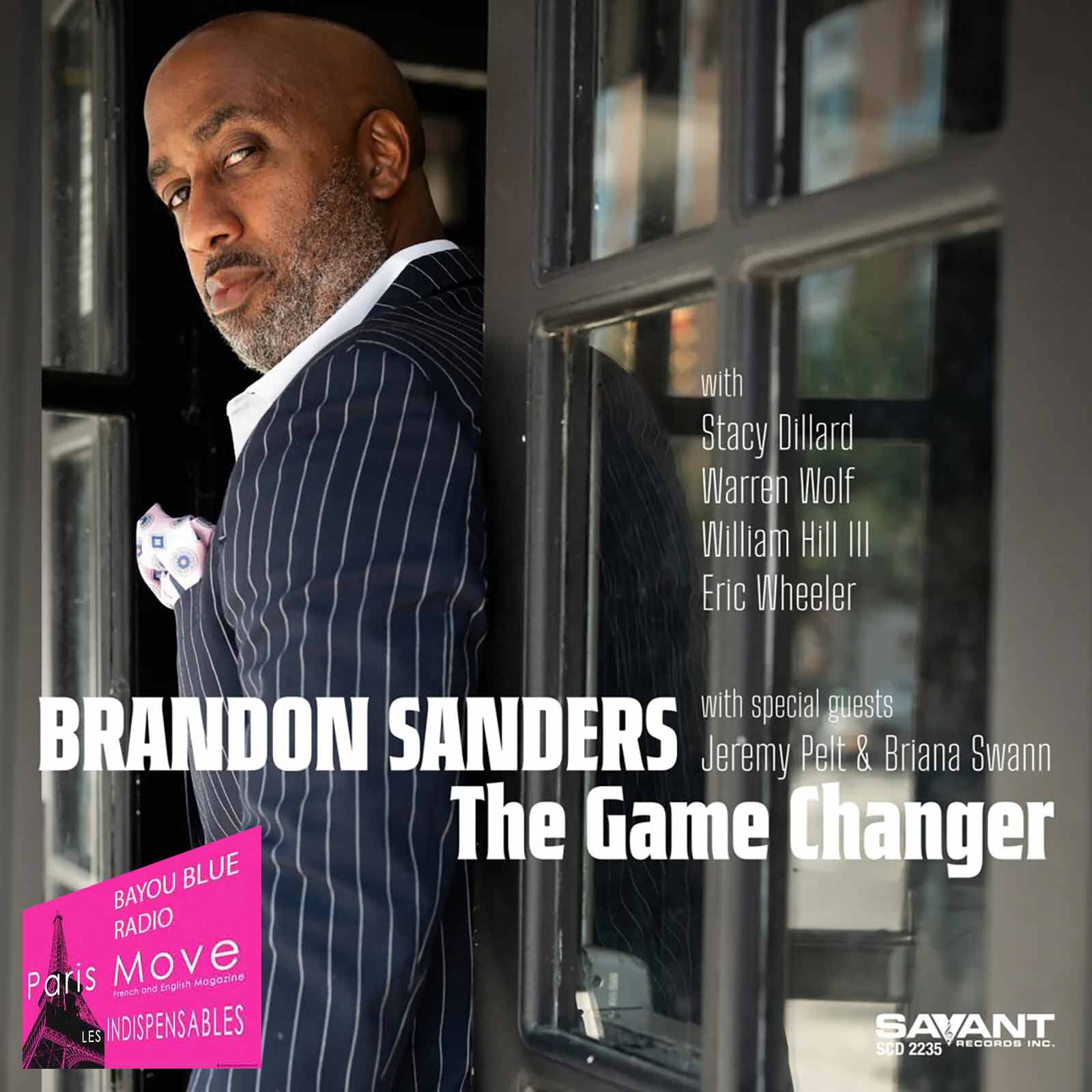
Brandon Sanders Finds His Own Way Through Jazz History on The Game Changer
Every so often, an album comes along that reminds me, with almost irresistible force, why I fell in love with jazz in the first place. Brandon Sanders’s The Game Changer is one of those records. From the first impression to the final moments, what captivates me is the sheer vitality of the music, the intelligence behind its conception and, above all, the palpable pleasure these musicians take in playing together. This is an album I find myself wanting to revisit, not simply to appreciate the individual performances but to experience again the extraordinary sense of connection that runs through them. Sanders has brought together a repertoire rich in possibility, a group of musicians with distinctive personalities and an approach to the music that combines sophistication with warmth. The result is both deeply rooted and wonderfully alive. I hear in this recording the kind of jazz I value most: music that rewards attentive listening, opens up new details with each encounter and never loses sight of the emotional excitement that makes the whole enterprise worthwhile. The Game Changer is, quite simply, a pleasure to hear, and my admiration for it grows with every return.
To understand something of the spirit behind this album, it is worth going back to Kansas City, where Sanders grew up surrounded by music. His grandmother owned the Casablanca club, and the young Brandon had the opportunity to experience jazz in its natural environment, among musicians and listeners, in a place where performances unfolded in real time and the unexpected was always possible. That early exposure matters. Jazz is not merely a body of compositions or a succession of styles to be learned; it is a living practice, sustained by listening, exchange and the willingness to respond to another musician in the moment. Sanders absorbed that understanding early, and I hear its influence throughout The Game Changer. There is an openness to the performances, a sense of shared purpose and a genuine respect for the people making the music together. Nothing about the album feels detached from the human experience of playing jazz. Its sophistication is inseparable from its warmth, and its technical assurance only deepens the pleasure of listening.
The title The Game Changer is particularly fitting for an album whose central achievement lies in the way Sanders brings familiar musical languages into a personal and contemporary conversation. He approaches jazz history with affection, confidence and an infectious sense of possibility. He does not need to distance himself from the tradition to establish his individuality; he draws strength from it, allowing its many resources to feed his own creative imagination. What excites me is the freedom of this approach. The music possesses a clear direction, yet it remains open to the discoveries that emerge when accomplished musicians genuinely listen to one another. The arrangements provide structure without restricting the imagination, and the performances develop with an organic flow that makes the ensemble sound less like a collection of individual talents than a group of musicians thinking and breathing together. That kind of chemistry cannot be manufactured through technical proficiency alone. It comes from shared instincts, mutual trust and a deep understanding of what makes jazz such a remarkable art form.
Sanders’s background as a former basketball player offers an illuminating perspective on his musicianship. Both basketball and jazz demand individual excellence, but neither reaches its full potential without an instinctive understanding of the collective. A player must recognize an opening, anticipate movement and react in a fraction of a second; a drummer must do much the same, responding to a soloist’s phrasing, sensing the ensemble’s changing energy and knowing when a rhythmic intervention can send the music in a new direction. Sanders brings this alertness to his playing. His drumming has drive and authority, but what impresses me most is its remarkable responsiveness. He does not simply keep time; he gives the music momentum, shapes its emotional contours and creates opportunities for his colleagues to express themselves. His rhythmic choices are integral to the performances, constantly influencing the direction of the musical conversation. Listening to him, I am struck by the combination of precision and generosity that defines his approach. He leads with conviction while making everyone around him sound more fully themselves.
This is one of the qualities I find most compelling about The Game Changer: its understanding that great jazz is not a competition for attention but an art of mutual discovery. Sanders is unmistakably the driving force behind the project, yet his presence never diminishes the contributions of the other musicians. On the contrary, his leadership seems designed to bring out the best in them. A phrase from the trumpet can prompt a rhythmic response; a change in intensity can open an unexpected melodic path; a moment of restraint can give a solo an expressive depth that a more emphatic accompaniment might obscure. These exchanges give the album its vitality. They also explain why I find the music so engaging on repeated listening. The performances are not simply well executed; they are alive to the possibilities of the moment. Every musician has something to say, and every contribution matters because it becomes part of a larger, continually evolving expression.
The repertoire provides an ideal setting for this musical philosophy. Sanders moves among the songwriting traditions associated with Cole Porter, Duke Ellington and Antônio Carlos Jobim, while also drawing on the music of the Isley Brothers. I particularly appreciate the breadth of this selection, which recognizes that jazz has always thrived through its ability to absorb and transform music from different backgrounds. The sophistication of the American songbook, Ellington’s incomparable melodic imagination, the harmonic delicacy of Brazilian songwriting and the rhythmic vitality of soul are not treated as separate territories. They become different avenues into the same creative process. Sanders and his collaborators approach each piece with a clear sense of its character while remaining attentive to the possibilities that improvisation can reveal. The result is a program full of contrast and color, yet united by the ensemble’s distinctive personality. I find this balance immensely satisfying: the music continually offers something new without ever losing its sense of direction.
There is a special pleasure in hearing familiar compositions brought to life by musicians who understand that interpretation is an act of creation. A great melody is never exhausted by a single performance. Its character can change through phrasing, harmonic choices, rhythmic emphasis and the chemistry of the musicians interpreting it. Cole Porter’s songs have long provided jazz performers with material that rewards precisely this kind of exploration, while Duke Ellington’s music reminds us how much expressive power can emerge from the individuality of the performers themselves. Sanders approaches this heritage with the confidence of someone who understands its richness. The compositions remain recognizable, but they are never static. Their melodies become invitations to explore, and the arrangements allow the musicians to reveal nuances that make the material feel immediate. I love this quality of the album: its ability to make the familiar feel freshly discovered, without resorting to novelty for its own sake or losing sight of the musical substance that made these compositions endure.
Sanders’s own compositions, which account for approximately half the album, are equally important to its success. They establish that he is not simply a perceptive interpreter of the jazz tradition but a musician with a creative vision of his own. His writing reflects the same qualities that distinguish his drumming: a strong sense of structure, an instinct for ensemble interplay and an appreciation of the unexpected turns that can make a performance memorable. The compositions give the album a clear identity while providing the musicians with room to develop their ideas. I find this relationship between writing and improvisation particularly rewarding. The material is sufficiently defined to give each performance a sense of purpose, yet it remains open enough for the ensemble to shape it in the act of playing. Sanders’s compositions sit naturally alongside the established repertoire, creating a coherent musical world in which his own voice emerges through both the pieces he writes and the way he brings them to life.
Trumpeter Jeremy Pelt is a formidable presence within that world. His playing combines melodic clarity with expressive force, and his phrasing has the kind of individuality that immediately draws the ear. What I particularly enjoy is the relationship between his trumpet and Sanders’s drums. Their interaction goes well beyond the familiar arrangement of soloist in the foreground and drummer in support. Sanders listens closely to Pelt’s lines, responding to their accents and inflections, while Pelt draws energy from the rhythmic possibilities the drummer creates. The result is a genuine musical dialogue, full of subtle adjustments and moments when one musician seems to anticipate the other’s next move. This is precisely the kind of interplay that makes small-group jazz so exhilarating. The musicians are not merely executing their respective roles; they are shaping the music together, discovering possibilities through the act of listening. Pelt’s contribution adds considerable depth to the album, and the chemistry between the two musicians is one of its most satisfying features.
Pelt’s composition “SMR,” the album’s eighth track, offers another compelling illustration of the collaborative spirit that animates the project. Its inclusion broadens the album’s creative perspective while reinforcing its unity. Sanders has a clear artistic identity, but he is secure enough in that identity to welcome the ideas of his colleagues and allow them to become part of the album’s larger statement. This generosity is central to the music’s appeal. It gives the performances a sense of openness and makes the ensemble feel like a genuine meeting of creative minds. For me, that is one of the strongest signs of Sanders’s achievement as a bandleader: he has assembled musicians whose individual voices are distinctive, then created the conditions for those voices to reinforce and illuminate one another.
Saxophonist Stacy Dillard adds another essential dimension to the ensemble. His presence expands the music’s expressive range, introducing a contrasting melodic voice that enriches the exchanges among the soloists and the rhythm section. The interaction between saxophone and trumpet gives the arrangements additional color, while the rhythmic foundation provides a flexible setting in which each instrument can develop its own character. What I enjoy most is the way these contrasting voices remain connected. The musicians have room to assert their individuality, but their performances are always attentive to the larger musical picture. There is a generosity in the ensemble playing that makes the album particularly inviting. Rather than simply waiting for their turn in the spotlight, the musicians seem continually engaged with what their colleagues are doing. That sense of shared attention is one of the defining pleasures of the record, and it gives the music an energy that extends well beyond the individual solos.
Briana Swan’s interpretation of “Quiet Night of Quiet Stars,” Antônio Carlos Jobim’s composition also known as “Corcovado,” brings a beautiful and deeply welcome dimension to the album. Jobim’s music has an extraordinary ability to combine harmonic sophistication with an almost effortless melodic grace. Beneath its apparent simplicity lies a remarkable sensitivity to phrasing, balance and emotional nuance. Swan understands this instinctively. Her voice brings warmth and intimacy to the melody, allowing its reflective quality to unfold without unnecessary embellishment. I find her performance genuinely affecting. She gives the song room to breathe, trusting the melody and the emotional substance of the lyric rather than attempting to impose a dramatic interpretation upon it. The ensemble responds with equal sensitivity, creating an atmosphere in which every phrase seems to find its natural place. It is one of those performances that can make a listener pause and simply enjoy the beauty of the moment.
Swan’s presence also reveals how thoughtfully Sanders has conceived the album’s overall musical landscape. The shift from instrumental interplay to vocal intimacy feels entirely natural, broadening the emotional range of the record without disrupting its flow. Jazz has always maintained a profound relationship with song, and Jobim’s compositions have become part of its shared vocabulary because they invite musicians to explore the delicate relationship between melody, harmony and feeling. Swan brings that relationship into particularly clear focus. Her interpretation is graceful, expressive and beautifully integrated into the ensemble’s sound. I especially appreciate the way the performance complements the album’s more rhythmically assertive moments. Rather than presenting a contrast for its own sake, it reveals another aspect of the same musical sensibility: the ability to recognize what a composition needs and to create the conditions in which its character can shine.
Throughout The Game Changer, post-bop provides a useful point of reference, bringing together harmonic exploration, rhythmic flexibility and a strong melodic sense. Sanders and his collaborators draw on this language with assurance, but the real accomplishment lies in the life they bring to it. The music is sophisticated without becoming forbidding, adventurous without losing its direction, and carefully shaped without sacrificing spontaneity. The arrangements encourage improvisation while preserving the identity of each composition, and the musicians’ responsiveness gives the performances a constant sense of movement. There is plenty here for the attentive listener to explore, from the details of the rhythmic interplay to the subtleties of the melodic exchanges, but the music’s pleasures are never reserved for specialists. It has an immediacy that makes the first encounter rewarding and a depth that encourages further listening. That combination is one of the reasons I find the album so compelling.
At the center of it all is Sanders’s exceptional understanding of the drummer’s role. He anchors the ensemble while continually stimulating its imagination, providing a rhythmic foundation that is strong enough to sustain the music and flexible enough to let it breathe. His playing shapes the performances without dominating them, and his sensitivity to the other musicians allows the arrangements to unfold with remarkable ease. The best drummers have an uncanny ability to influence everything that happens around them while making their contribution feel completely natural. Sanders demonstrates that quality throughout the album. His leadership is audible in the music’s cohesion, its momentum and its capacity for surprise. Just as importantly, it is audible in the way his colleagues respond to him. The performances have the alertness of musicians who trust one another, and that trust gives the music its distinctive warmth and vitality.
What makes The Game Changer especially meaningful to me is the way it brings Sanders’s personal history into conversation with his artistic achievement. The young musician who encountered jazz in his grandmother’s Kansas City club has become a bandleader with a strong sense of his own direction and a deep understanding of the music’s collective nature. That connection between past and present is audible throughout the album, not as nostalgia but as a living inheritance. Sanders recognizes that jazz remains vital because each generation takes possession of it anew, learning from what came before while finding fresh ways to express its own experience. His record embodies that principle with infectious conviction. It honors the tradition, celebrates the individuality of its performers and demonstrates how much can happen when musicians approach one another with curiosity, generosity and a shared commitment to the music.
By the time The Game Changer reaches its conclusion, my admiration for Sanders’s achievement has only deepened. This is an album whose strengths reinforce one another: the leader’s rhythmic imagination, the quality of the original compositions, the breadth of the repertoire, the eloquence of Jeremy Pelt’s trumpet, the contribution of Stacy Dillard’s saxophone and the expressive warmth of Briana Swan’s voice. Each element adds something distinctive, yet everything belongs to the same musical vision. I find that coherence particularly impressive because it never feels calculated. It emerges from the musicians’ shared understanding of the material and from the pleasure they take in bringing it to life. There is real artistry here, but there is also joy, and the two are inseparable. Sanders has made a record that celebrates the richness of jazz while reminding us that its greatest achievements are often born of the simplest and most profound impulse: the desire to make music together. The Game Changer leaves me with a renewed enthusiasm for the art form, a strong desire to hear these musicians again and the conviction that Brandon Sanders has created something genuinely special.
Thierry De Clemensat
Member at Jazz Journalists Association
USA correspondent for Paris-Move and ABS magazine
Editor in chief – Bayou Blue Radio, Bayou Blue News

PARIS-MOVE, October 16th, 2026
Follow PARIS-MOVE on X
::::::::::::::::::::::::
Musicians :
Brandon Sanders – Drums and bandleader
Stacy Dillard – Tenor saxophone
Warren Wolf – Vibraphone
William Hill III – Piano
Eric Wheeler – Bass (longtime collaborator)
Jeremy Pelt – Trumpet (special guest artist)
Briana Swann – Vocals (special guest vocalist)
Track Listing :
The Game Changer
What Is This Thing Called Love
James Arthur
Sunsets in Santa Monica
Isfahan
Quiet Nights of Quiet Stars
Shrimp and Grits
S.M.B
Pamela the Queen
Footsteps in the Dark