| Contemporary music |
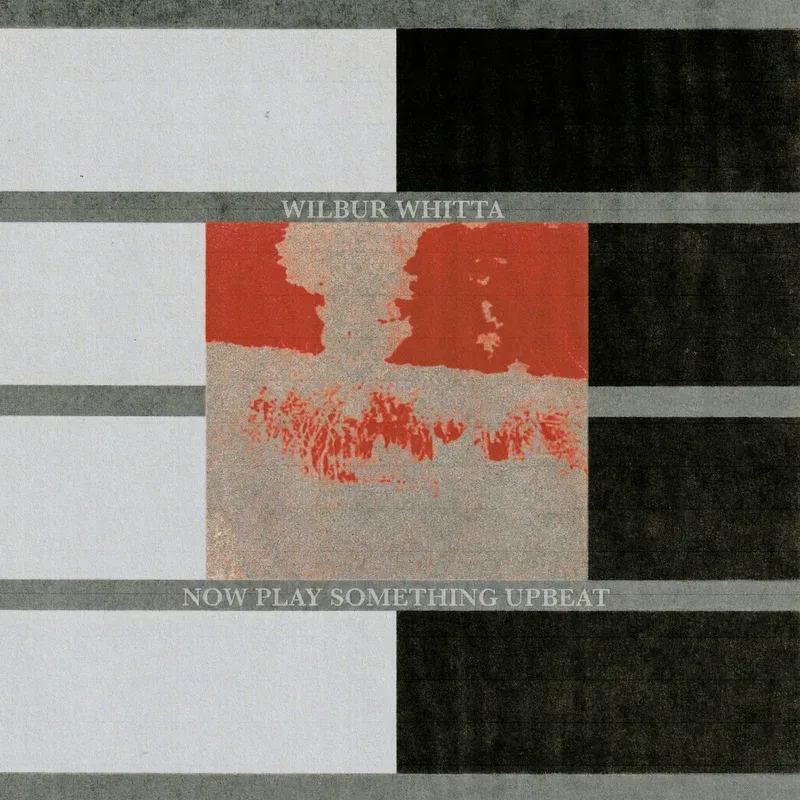
Wilbur Whitta, Now Play Something Upbeat: Solo Piano and Organ in a Sydney Church
The title sounds like a request shouted from the back of a club, and the answer is a wry, risky and often beautiful one. Wilbur Whitta sits alone at a piano and an organ in a historic church in Sydney, with no written material and no pre-set structure. Each piece is developed on the spot, its form, pacing and harmonic direction decided in real time. I find the challenge fantastic, risky, and what you hear is a sequence of musical decisions made once, in the moment.
That makes the album very personal. It is also shaped by what was on the pianist’s mind during the sessions: the loss of biodiversity and the extinction of native species in his native Australia, and restrictions on the right to protest. The album is dedicated to these concerns. This gives parts of the music a dark focus, but LOUMI Records is careful to say it is not meant as uniformly sombre listening, and that is exactly how it plays. Humour, tenderness and anger take turns.
Like me, you have likely not yet heard of Wilbur Whitta, and you are probably wondering who he is. Wilbur Whitta is an award-winning pianist and composer from Ngunnawal, Canberra, who became a mainstay of the Gadigal/Sydney jazz and improvised music community before moving to Switzerland in 2025. He also has played in the legendary Australian jazz group Ten Part Invention. His debut as a leader, Wildfire (ABC Jazz, 2024), was recorded with his quartet of the same name and is built on the idea of composition leading improvisation. Now Play Something Upbeat is a different proposition, a collection of solo improvised pieces.
Blood Drips opens the album with delicacy. The piano notes are light, with a breath of air between them, and fall one after another like drops of gentle rain. It is a track perfect for meditation, and it makes me wonder about the title. Why Blood Drips and not Raindrops? Perhaps that is the point. The sound is calm, and the name tells you what to listen for underneath it. With the album’s concerns in mind, the quiet takes on a second meaning.
Frieza Force then does what its name promises, and the contrast is sharp. The title nods to the army of Frieza, the villain of Dragon Ball Z, and the piano matches it: it drives forward powerfully, like a steamroller, before the piece ends in a less forceful rhythm that offers relief. It is as if, after bursting in, the pianist is apologising for having played with such intensity. Skating is the first of the album’s organ pieces, and with it come grace and lightness. It is a modern dance on ice, with a captivating rhythm that draws the listener into a skating duet with Whitta. It is a dance one cannot refuse.
An Elephant Never Forgets is, for me, the first great emotional peak. The piano conveys solitude and an undeniable sadness, that of an elephant who forgets nothing of the harm humans have done and keep doing to it. The notes are spaced out and steeped in emotion, and they invite us to share a sorrow as immense as the animal itself. Once again it is a moment of meditation, a chance to settle down in a world that has gone a bit mad. Here the album first brings to mind Florian Fricke, founding member of the German group Popol Vuh, and the solo piano tracks of Kailash, the fantastic posthumous compilation released by Soul Jazz Records in 2015. Its first disc gathers piano recordings Fricke made between 1972 and 1989, and its second holds the soundtrack of his film about the pilgrimage to Mount Kailash in Tibet. Listening to Kailash again, I tell myself that yes, Wilbur Whitta could be the pianist I’m hearing play.
Cracked Down brings back a more energetic, ferocious and diabolical piano, whose rhythms sometimes shatter under the force of Whitta’s impulses. It is the other face of the album, and the one that most clearly belongs to the improviser’s risk-taking. Get It While It’s Hot returns to the organ for another moment of introspection. It continues the inner journey, and it raises another question about the title, since the music is so peaceful. Whitta’s titles seem to delight in this gap between name and sound.
Sidelines begins with piano notes falling here and there like drops of water (or tears?), and again the thought of Fricke is hard to avoid. The piano recordings on Kailash are something like the heart of many Popol Vuh compositions, and Whitta’s quiet, spacious playing shares their patience and their spiritual calm. The Revolving Door says it all in its title. For me, it’s a door that opens onto the musical world of Popol Vuh, and Whitta steps through it his own way. Green Light closes the album, and there is little to add. When the piano starts, it confirms the immense talent of a young pianist whose next albums are eagerly awaited. All that remains is to say bravo.
Whitta and Fricke? For me, it’s a meeting across time. The two musicians are not alike in every way: Fricke composed and refined, while Whitta improvises everything on the spot, and he is just as capable of fury as of stillness. But a listener who loves the Kailash piano pieces will recognise a kinship of attitude: music as contemplation, as a place to rest and listen. I even find myself wondering whether Whitta might be a kind of spiritual heir. If he is, and if he keeps finding partners of his own stature, as he did on Wildfire, his future albums could one day be as cherished as Fricke’s and Popol Vuh’s.
Now Play Something Upbeat is bold in conception and generous in execution. A pianist alone with two instruments in an old church, with nothing written down, gives us nine pieces that are by turns gentle, furious and moving. It makes us think about what we are losing and what we can still protect, without ever lecturing. It is also, as the title promises, sometimes upbeat. It rewards repeated listening and a quiet room. A GREAT record!
Frankie Pfeiffer
Editor in chief – PARIS-MOVE
PARIS-MOVE, October 9th, 2026
Follow PARIS-MOVE on X
:::::::::::::::::::::
Label: Loumi Records
Artist: Wilbur Whitta
Tracklisting:
- Blood Drips
- Frieza Force
- Skating
- An Elephant Never Forgets
- Cracked Down
- Get It While It’s Hot
- Sidelines
- The Revolving Door
- Green Light
Musician:
Wilbur Whitta: piano, organ
Recorded primarily in a historic church in Sydney, Australia.