| Jazz moderne |
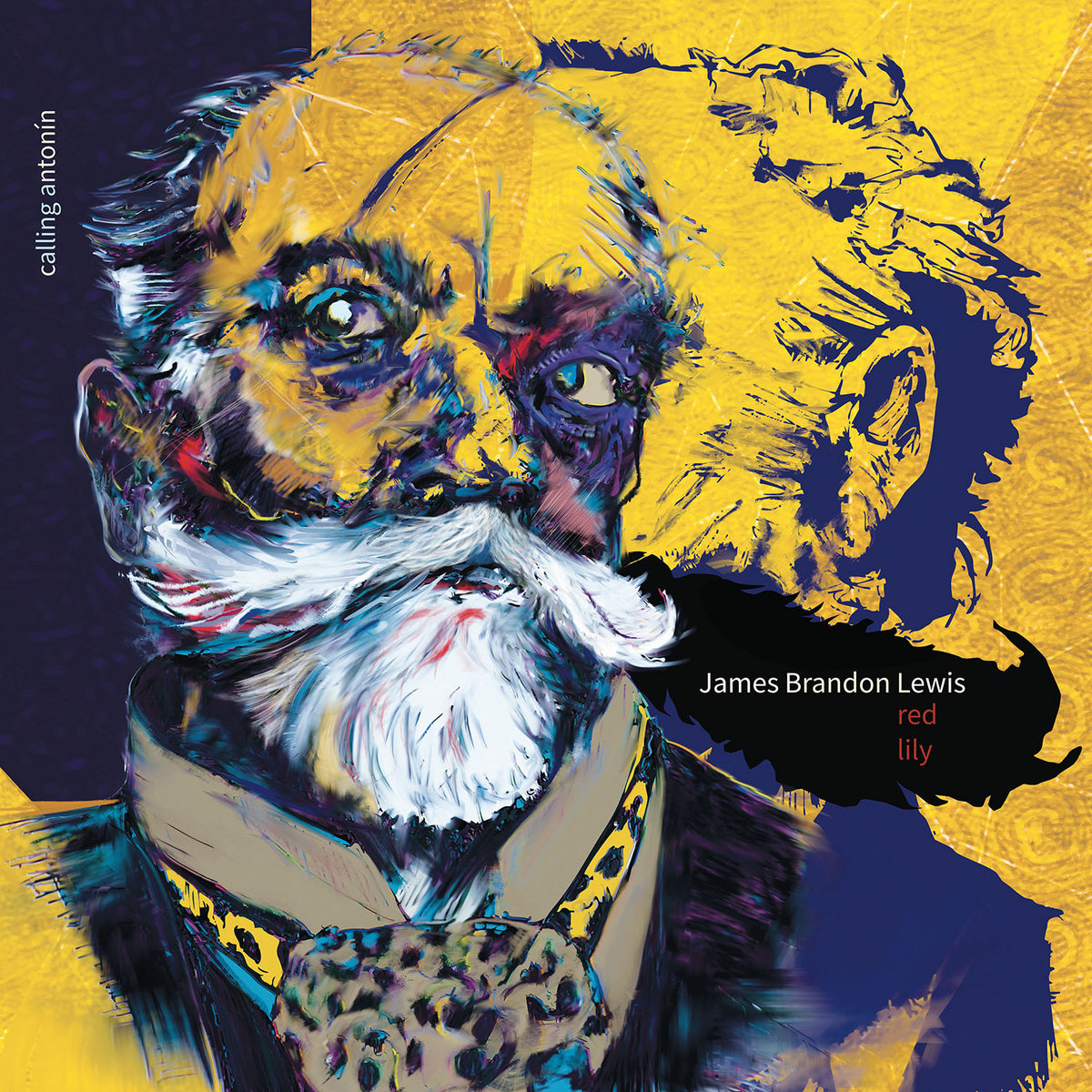
Calling Antonín: James Brandon Lewis and Red Lily Turn Dvořák’s American Years into a Masterpiece
Calling Antonín, the third Red Lily album from tenor saxophonist and composer James Brandon Lewis, is an album that earns the word “homage”. It takes on Antonín Dvořák, the Czech composer who spent three transformative years in the United States starting in 1892, and instead of simply quoting his melodies, it traces the lineage that Dvořák himself helped set in motion. The result is one of the most intellectually rich and emotionally direct jazz albums of the year, and it arrives at the perfect moment in Lewis’s career: fresh off a Tenor Saxophonist of the Year win in the Downbeat Critics Poll, a Guggenheim Fellowship for Music Composition, and a sold-out week with his Quartet at the Village Vanguard.
What makes Calling Antonín more than a simple curiosity is the depth of the research behind it. The idea reportedly took root a decade ago, when bassist William Parker first called Lewis about a Dvořák-themed project, and Lewis went on to become musical director and spent years digging into the composer’s biography. What he found was a story that connects directly to the history of American music itself: in New York, Dvořák befriended the African-American composer Harry Burleigh, who introduced him to spirituals such as “Swing Low, Sweet Chariot”. Those songs fed directly into the “New World” Symphony, and Dvořák, in turn, made the striking claim that America’s true musical source material lay in African-American and Native American traditions, a position well ahead of his time.
Lewis treats that lineage as the real subject of the album. Rather than arranging Dvořák’s themes for a jazz band, he composes original pieces, some built from variations on Dvořák’s melodies, others carrying personal or spiritual significance, that trace a direct line from nineteenth-century Bohemia to the Black American sound Dvořák so admired. It’s a bold conceptual move, and Lewis pulls it off with real subtlety.
Red Lily is, by now, one of the most distinctive working units in American improvised music, and this album may be its most refined statement yet. Kirk Knuffke’s cornet remains a constant, warm and conversational presence, while Chad Taylor’s drumming drives the band forward without ever overwhelming the strings. The new addition of a dedicated string section, Melanie Dyer on viola, Tomeka Reid on cello, and Joshua Abrams on bass, gives the group a genuinely chamber-music texture, something closer to a string ensemble with horn and drums than a conventional jazz quintet. Dvořák scholar and UCLA School of Music dean Michael Beckerman, who wrote the album’s liner notes, captures it precisely: this is a band that blends chamber-like textures with the expressive fire of contemporary jazz.
That blend is audible from the opening bars. The strings don’t simply accompany Lewis’s tenor, they build slow, layered washes of sound that his horn rides on top of, and the effect throughout the record is less about swing than about surge, long tones rising and falling like tides.
The album opens with “Spirit of the Living God”, where Knuffke’s cornet and Taylor’s drums carry much of the momentum in a running conversation, the strings swelling behind them until Lewis steps forward for a solo that feels like a small boat moving through choppy water. “Lento” follows with one of the record’s most commanding tenor solos, full-throated and unhurried, before Knuffke and the strings trade the lead and the rhythm section eases the music back toward more conventional swing.
The emotional and conceptual centrepiece is “Dilemma of Hearts”, inspired by Dvořák’s complicated relationship to his wife’s sister and built from a transformation of the theme from the final movement of the “New World” Symphony. It begins as a slow, head-nodding groove that sits somewhere between jazz, classical music, and hip-hop, and gradually unravels into swirling, almost combustive group improvisation, never once losing the thread back to its original shape. It is a genuinely thrilling piece of writing, patient enough to earn its chaos.
Elsewhere, the album reaches for the sacred. “Ode to P.L.D.” layers voices into the mix, nodding toward a church choir even as the strings remain present, pushed slightly back, while Lewis, Reid, and Knuffke weave lines a half-step apart, like voices in close counterpoint, before the piece dissolves into Lewis reciting lines from a Paul Laurence Dunbar poem. “I Want Jesus to Walk With Me” draws directly from spiritual tradition, with Lewis pushing into the lower register of his horn for a gutbucket, rootsy intensity that builds to one of the album’s most cathartic climaxes, the full band wailing in unison.
The record closes on a note of real tenderness: a solo tenor reading of “Humoresque”, Dvořák’s own, most famous melody, stripped down to just Lewis and his horn, followed by “O’ Rebicku” as a gentle coda. It’s a quietly moving way to end an album built on the idea that genius recognizes genius across centuries and continents.
What elevates Calling Antonín above most tribute albums is that it never feels like ‘homework’. The historical and musicological depth is all there for anyone who wants it, Beckerman’s liner notes alone are worth the price of admission, but the album works just as powerfully as pure listening, as nine pieces of music that move between balladry and full-throated catharsis within the space of under an hour.
Lewis has range here that few tenor players possess: tenderness, grit, spiritual urgency, and absolute command of silence and space, all in service of a story about how American music actually came to sound the way it sounds.
Following two Album of the Year wins for previous Red Lily records, Jesup Wagon in the 2022 Downbeat Critics Poll and For Mahalia, With Love in the 2023 Francis Davis Jazz Critics Poll, Lewis and his band had already set an extraordinarily high bar for themselves. Calling Antonín clears it. This is essential, era-defining jazz: scholarly without being dry, emotionally generous without being sentimental, and performed by a band operating at the absolute peak of its collective powers.
Frankie Pfeiffer
Editor in chief – PARIS-MOVE
PARIS-MOVE, October 4th, 2026
Follow PARIS-MOVE on X
:::::::::::::::::::::
CD – Deluxe 8-panel digipak, printed on heavyweight-stock reverse-board, with copious illustrative artwork; liner notes by Dean of UCLA School of Music Michael Beckerman & James Brandon Lewis. A beauty!
LP – Gatefold jacket printed on heavier weight reverse-board; LPs in poly-lined inners; includes Bandcamp-hosted download card/code with all 9 tracks. Copious illustrative artwork, with liner notes by Dean of UCLA School of Music Michael Beckerman & James Brandon Lewis. A beauty, too!
LP Side A: Spirit of the Living God/ Lento/ Dilemma of Hearts
LP Side B: Calling Antonín/ Going Home/ Ode to P.L.D./ O’ Rebicku
Musicians:
James Brandon Lewis: tenor saxophone, compositions, voice on “Ode to P.L.D.”
Kirk Knuffke: cornet
Melanie Dyer: viola
Tomeka Reid: cello
Joshua Abrams: bass
Chad Taylor: drums
Tracklisting:
- Spirit of the Living God 05:26
- Lento 09:51
- Dilemma of Hearts 05:26
- Calling Antonín 06:03
- Going Home 06:44
- Ode to P.L.D. 05:04
- I Want Jesus to Walk With Me 05:09
- Finale – Humoresque 03:54
- O’ Rebicku 04:33
All pieces composed & arranged by James Brandon Lewis, using some elements in the public domain. © James Brandon Lewis Music (ASCAP)
Recorded (October 7 & 8, 2025), mixed, and mastered by Paul Wickliffe, Skyline Productions, South Orange, NJ
Produced by James Brandon Lewis
Project Coordinator & Production Assistance: Steven Joerg
Executive Producer: Whit Dickey / TAO Forms
Liner Notes by Michael Beckerman
Art & Design by William Mazza Studio