| Jazz |
Summary: Brian Bromberg’s Awakening turns personal adversity into music, bringing together jazz, smooth jazz and powerful collaborations with Dave Koz, David Benoit and more.
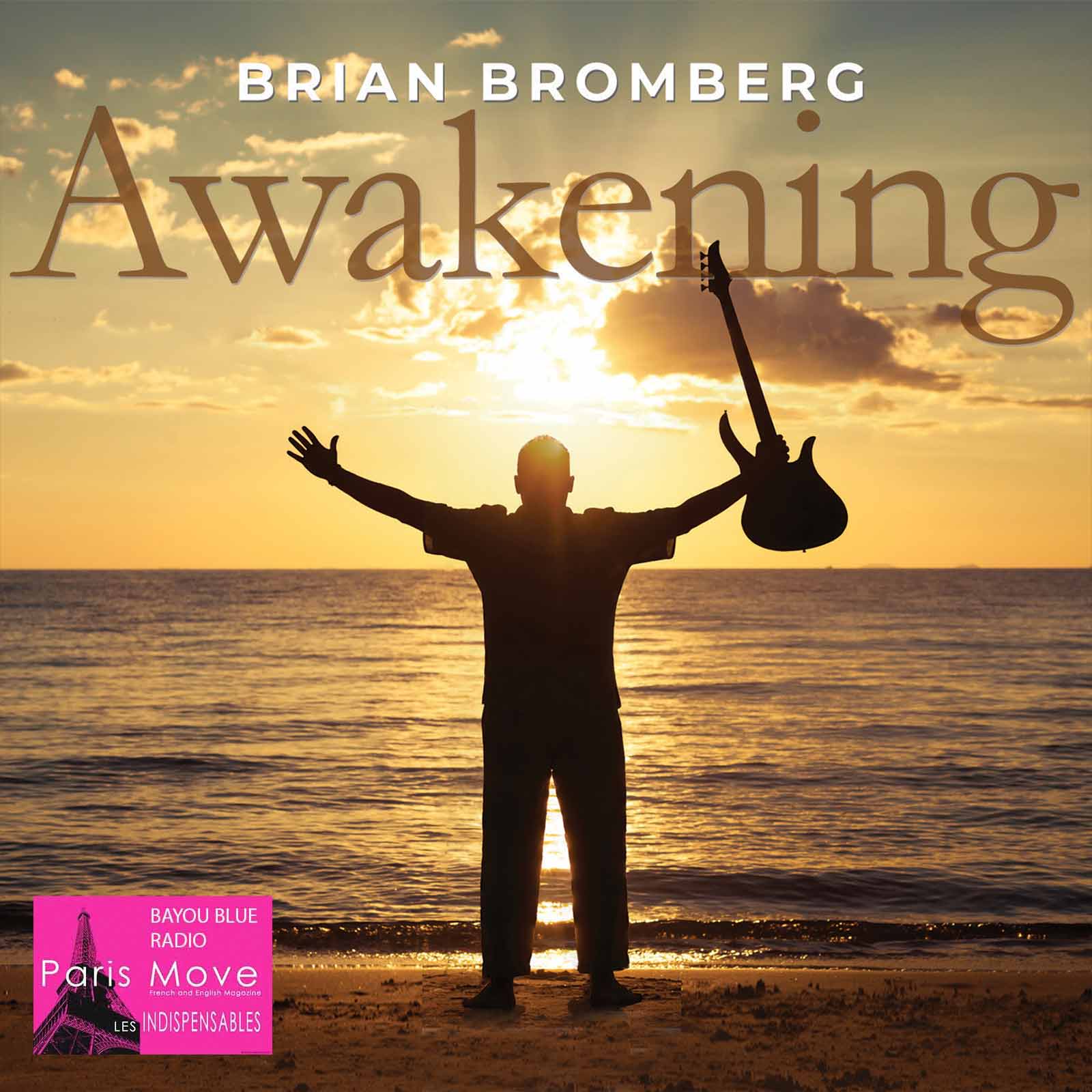
Brian Bromberg’s Awakening: A New Chapter of Jazz, Freedom and Renewal
If one were looking for a common thread between the elegant Bob James and Brian Bromberg, it would probably be their rare ability to move across the different territories of jazz without ever seeming to leave their identity behind. From traditional jazz to smooth jazz, from fusion to funk, from acoustic to electric, both musicians have a way of keeping music in motion rather than allowing it to become trapped inside the categories the music industry so readily assigns to it. For them, genre is never a border. It is a language in motion, a space broad enough to accommodate tradition, modernity, melody, groove and, above all, connection. Brian Bromberg has long belonged to that family of musicians for whom virtuosity is not an end in itself. It is a tool, sometimes spectacular, but always placed in the service of a larger conception of music. With Awakening, his new album for Shanachie, Bromberg is not simply demonstrating that he still commands his instrument. He seems to be telling a much more intimate story: what it means to return to life, creativity and freedom after a period in which almost everything had been called into question.
For this new album, which extends an already substantial discography and marks another stage in his career as a bandleader, Bromberg surrounds himself with friends and musicians whose names will be familiar to listeners of Bayou Blue Radio: Dave Koz, Paul Brown, Euge Groove, Everette Harp, David Benoit, Marion Meadows and Michael Paulo. I have followed and written about many of these artists over the years, so their presence here feels like far more than a collection of prestigious names assembled for an impressive album cover. It reflects a musical philosophy Bromberg has practiced throughout his career: treating collaboration as a genuine encounter. He does not ask his guests to disappear into a record built entirely around his own personality. Instead, he writes, arranges and plays with each musician’s individuality in mind. The music develops from the inside out, track by track, as though Bromberg were less interested in imposing a direction than in creating the conditions for a conversation. That may be what gives Awakening its warmth and naturalness, even within a production that is exceptionally polished.
That approach makes Dave Koz’s presence feel almost inevitable. There is a musical understanding between the two men that goes beyond the pairing of two established names in contemporary jazz. The Dance We Never Had is one of the clearest examples. Bromberg’s bass and Koz’s saxophone never compete for space. They answer one another. Each leaves room for the other to breathe. It would have been easy for two musicians of this caliber to turn the track into a showcase of technique. Instead, they choose restraint, and that restraint makes the conversation more compelling. One of the fundamental lessons of jazz is that music is created not only by what a musician plays, but also by what he allows another musician to say. Bromberg seems to understand that instinctively.
Danny Weiss, Shanachie Entertainment’s vice president of Jazz A&R, has described Bromberg as a musician capable of playing jazz at the highest level while maintaining an unusual ability to connect with a broad audience, placing him in the company of artists such as Stan Getz, Wes Montgomery and Oscar Peterson. Such comparisons are inevitably ambitious, particularly when the musicians involved followed very different paths. Yet Bromberg’s own career helps explain the observation. He has worked with artists as diverse as Stan Getz, Herbie Hancock, Dizzy Gillespie, Sarah Vaughan, Andrea Bocelli, Lalo Schifrin and Kenny Barron. That list matters less for its prestige than for what it reveals: Bromberg has repeatedly entered very different musical worlds without surrendering his own voice. Few bassists have moved so freely among jazz, popular music, studio work, fusion, film music and smooth jazz.
Having had the opportunity to review virtually every Brian Bromberg album, I understand why that quality stands out. His achievement is not simply technical. Bromberg is also a composer, arranger, producer and sonic explorer. His relationship with the bass has consistently gone beyond the traditional role assigned to the instrument. His work with the piccolo bass, in particular, has given the instrument an unusually strong melodic identity. In his hands, the bass can be foundation, counterpoint, lead voice or partner. It can support a group and, a moment later, step forward and speak. Yet the technical accomplishment has never completely overtaken the musician. Bromberg understands that virtuosity only matters when it produces something that exists beyond virtuosity itself.
Awakening becomes particularly meaningful when placed against the circumstances from which it emerged. The album might never have happened. In December 2023, Bromberg experienced a succession of events that profoundly disrupted his life. His relationship with his fiancée ended, and he had to leave their home in Ojai, California. He was not simply leaving a house. He was leaving behind a life, familiar routines, a recording studio and, most painfully, his animals — his dogs, cats and horses, whom he regarded as family. For someone whose personal and professional life had long been closely connected to his creative surroundings, the rupture represented a profound loss of stability. A friend eventually offered him refuge at a ranch more than 100 miles away. He had to begin again in an unfamiliar environment, at a moment when much of what had defined his daily life had suddenly disappeared.
Then came cataract surgery and repeated trips to Santa Barbara for the procedure and follow-up appointments. Then came the accident. While administering the prescribed antibiotic eye drops in unfamiliar surroundings and poor lighting, Bromberg lost his balance and fell onto a concrete floor. He fractured his back and injured the fingers of his right hand. For any musician, such injuries carry consequences that go far beyond ordinary physical pain. The body is the interface with the instrument, the first tool of creation. The hands, back, fingers, mobility and precision are inseparable from the ability to make music. Bromberg suddenly found himself unable to do what he had done throughout his professional life. For months, pain and immobility became part of his existence. He was alone, nostalgic for the life he had known and uncertain about what the future would bring.
That physical reality is essential to understanding the title Awakening. It is not simply a convenient word chosen to give the album a symbolic theme. Bromberg has described the record as emerging from an awakening after an extraordinarily painful period in his life, one that brought new energy, new goals, renewed confidence and a sense of reclaiming his existence. The important word here is not simply healing. It is rebuilding. The goal is not necessarily to return to what existed before, but to discover what might exist afterward. When a life has been abruptly displaced, the challenge is not always to recover exactly what was lost. Sometimes it is to accept that the previous life belongs to the past and find another way forward.
That is what makes the album so interesting. Awakening could have been a record of defiance, a declaration that the virtuoso had returned after adversity. Bromberg would have had every reason to play harder, faster and more demonstratively. Instead, he chooses almost the opposite approach. The record is technically impeccable, but it is never obsessed with technique. The bass is everywhere, naturally, yet it does not overwhelm the other instruments. Bromberg seems more interested in creating a different musical environment on each track than in constantly asserting his own status. His bass becomes one voice among several, capable of stepping back when the music requires it and moving forward when it has something to say. That apparent modesty is one of the album’s greatest strengths.
It is especially evident in the collaborations with Koz, Paul Brown, Marion Meadows and David Benoit. Each brings a distinct musical language and color, yet Bromberg does not simply place these personalities side by side. He integrates them into a coherent whole. The result is not uniform, and that is precisely why it works. Each track has its own breathing space. Each guest reveals a different side of Bromberg’s musical personality. The album belongs comfortably to contemporary jazz and smooth jazz, but it never seems determined to obey a formula. It moves according to the encounters taking place within the music.
That is also why Awakening speaks to something often overlooked about smooth jazz. The genre has sometimes been dismissed as comfort music, a succession of polished and interchangeable productions. Yet many of its strongest musicians have never accepted that limitation. Dave Koz, Euge Groove, Everette Harp, Marion Meadows, Paul Brown and Michael Paulo have demonstrated that music can be immediately accessible while retaining a genuine grounding in jazz, groove and improvisation. Bromberg belongs in that same territory of movement. His work shows that sophistication and accessibility are not opposites. The real question is what a musician does with mastery. In Bromberg’s case, mastery serves the story.
The Dance We Never Had perhaps captures that philosophy better than any other track. The title itself carries a sense of absence: a dance that never took place, a moment that never arrived, a possibility left behind in memory or imagination. Yet the music refuses to remain trapped inside that absence. With Koz, Bromberg transforms regret into dialogue. This is where jazz can be most powerful: a personal emotion becomes universal precisely because it is not explained to exhaustion. The musician does not tell the listener exactly what to feel. He leaves room for the listener’s own history.
The same quality can be heard in Ojai, whose title points directly to a place that became inseparable from this difficult period in Bromberg’s life. It could have been a nostalgic farewell to a vanished existence. Instead, the music seems to look at that place from a certain distance, like a photograph from another chapter. Bromberg does not attempt to erase what happened, but neither does he allow the past to become the permanent center of his work. He remembers, absorbs and moves forward.
What Could Have Been, with David Benoit, takes the idea of possible lives even further. What might have been, what we once imagined and what ultimately failed to happen, is a universal human experience. We all encounter roads not taken. Yet the strength of the piece lies in its refusal to explain everything. It suggests rather than dictates. That allows the music to move beyond Bromberg’s autobiography and into the experience of the listener.
Then comes So in Love, So Alone, which closes the album with a particular emotional weight. It would be easy to draw a direct line between the title and Bromberg’s personal circumstances, and that connection may well exist. But the music is not dependent on that knowledge. What matters is how a deeply personal feeling such as loneliness becomes musical material without turning into confession. Bromberg does not require listeners to know the details of his life. He simply creates a space in which emotion can resonate. That distance is precisely what makes the track accessible.
There is another aspect of Awakening that I find especially revealing: Bromberg seems to have reached a point where he no longer needs to prove anything. After a career this long, with such an extensive discography and so many collaborations, he could easily settle into a formula that works. Yet curiosity has always been central to his identity. He has devoted projects to musicians as different as Jaco Pastorius, Jimi Hendrix and Scott LaFaro. He has explored different approaches to the bass and different forms of production. That curiosity may be what allows Awakening to feel less like a summary of his career than the beginning of another chapter.
Because this is not really a retrospective album. It does not look backward simply to celebrate what has already been accomplished. It looks ahead. Even when it addresses loss, regret or loneliness, it does so from a present that has recovered its ability to move. The album carries the marks of adversity, but it never settles into them. Bromberg has turned a painful period into creative energy without turning pain into spectacle. He does not need to convince us that he suffered. He shows us what he made of it.
That transformation is particularly striking because, after an injury that directly affected the physical abilities required for his profession, he could easily have felt compelled to prove that he could still play. Instead, he plays for the music. The distinction may sound subtle, but it changes the listening experience. The bass is no longer evidence. It becomes a voice again. At times that voice sounds calmer and more conscious of its surroundings, as though the experience had altered not only Bromberg’s life but also the way he inhabits music.
That may be why Awakening conveys such a strong sense of freedom. Not the spectacular freedom of a musician constantly pushing the limits of speed or technique, but a more inward freedom: the freedom that emerges when one stops trying to reproduce exactly who one used to be. Bromberg is not attempting to make the album he might have recorded before this period of his life. He is making the album that belongs to the person he became afterward. That difference is fundamental. It is why the record feels deeply personal without becoming heavy. The listener does not have to treat it as a confession. It can simply be heard as a remarkably assured contemporary jazz album.
And it would be unfair to reduce Awakening to the story of its creation. The record stands on its own. One can listen to Koz and Bromberg in conversation without knowing the pain behind some of the music. One can appreciate Paul Brown, Marion Meadows, Euge Groove, Everette Harp, Michael Paulo and David Benoit simply for what they bring to the songs. One can follow the melodies, arrangements and grooves without thinking about Bromberg’s biography at all. That is one of the marks of a successful work: its context can deepen the listening experience, but it never replaces the music itself.
Bromberg’s arrival at Shanachie also opens a new period in his career. It would be presumptuous to predict what he will do next, but his history suggests that he is unlikely to remain in one musical landscape for very long. His career has always been built on movement, curiosity and encounter. Experience, for him, has never meant settling down. It has meant acquiring another set of tools with which to explore.
Like a phoenix rising from the ashes, Brian Bromberg is here again, but the metaphor needs to be adjusted. He has not returned exactly as he was. He has returned changed. That may be what gives Awakening its deepest significance. This is not simply another confirmation of an already accomplished career. It feels more like a starting point. The music is elegant without being precious, virtuosic without being showy, accessible without being simplistic. It carries the traces of a difficult personal history while refusing to be defined by that history. Above all, it breathes. There is room for the guests, the melodies, the silences, the exchanges and that precious sensation of freedom regained.
For those who have followed Brian Bromberg for years, Awakening offers something different. For those discovering him now, it provides an unusually revealing entry point into the work of a musician whose career has consistently resisted easy classification. Bassist, composer, producer, sideman and leader, Bromberg has spent much of his life demonstrating that an instrument can transcend the function assigned to it. Now he seems to be applying that same idea to his own life. After losing some of the landmarks that once defined him, he is building new ones. After being forced into silence by pain, he is speaking again with the tools he knows best: a bass, his compositions, his friends and an enduring ability to turn personal experience into music. So in Love, So Alone closes an album about loneliness without making it a lonely record, about loss without turning it into a record of mourning, and about renewal without falling into triumphalism. Perhaps that is Brian Bromberg’s greatest achievement: understanding that coming back does not necessarily mean recovering what was lost. Sometimes coming back simply means being able to look ahead and start playing again. With Awakening, Bromberg is not closing a chapter. He is opening a new one. And this new chapter may well prove to be among the most personal, most liberated and most human of his career.
Thierry De Clemensat
Member at Jazz Journalists Association
USA correspondent for Paris-Move and ABS magazine
Editor in chief – Bayou Blue Radio, Bayou Blue News

PARIS-MOVE, September 30th, 2026
Follow PARIS-MOVE on X
::::::::::::::::::::::::
Album Release Concert:
Friday, October 16 and Saturday, October 17
Alpharetta, GA
Sets at 7:30 and 9:30 p.m.
The Velvet Note
To buy this album (October 16, 2026)
Musicians :
Brian Bromberg – Bass (lead artist, producer, composer)
Tom Zink – Keyboards
Shane Theriot – Guitar
Michael White – Drums
Featured Guest Artists & Musicians:
Euge Groove – Saxophone on “California Summer”
Everette Harp – Saxophone on “Apparently Not!”
Dave Koz – Featured on “The Dance We Never Had”
Michael Paulo – Saxophone on “Candlelight” (and part of his live/touring lineup)
Paul Brown – Featured on “Ojai”
Marion Meadows – Featured on “Salutations” and “Just Be Boppin’ Around”
David Benoit – Piano/Collaboration on “What Could Have Been”
Track Listing:
Forever Friends
California Summer – featuring Euge Groove
Apparently Not! – featuring Everette Harp
The Dance We Never Had – featuring Dave Koz
The Dancer
Cherry Blossom
Awakening
Candlelight – featuring Michael Paulo
Ojai – featuring Paul Brown
Salutations – featuring Marion Meadows
What Could Have Been – featuring David Benoit
Just Be Boppin’ Around – featuring Marion Meadows
So In Love, So Alone