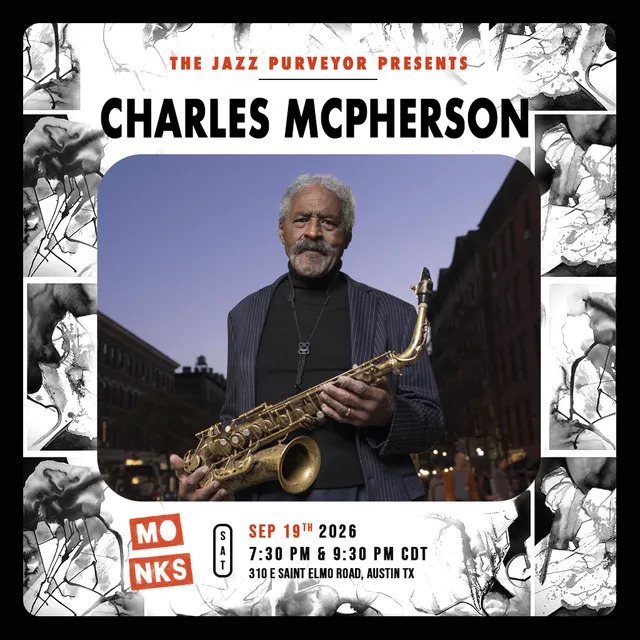
Charles McPherson at Monk’s Jazz Club
Austin TX
September 19, 2026
Report & Photos: Thierry De Clemensat, Member at Jazz Journalists Association
USA correspondent for PARIS-MOVE and ABS magazine
Editor in chief – Bayou Blue Radio, Bayou Blue News
The room is full. The low light at Monk’s Jazz Club settles over the tables and the bar, creating an atmosphere that is warm but intensely focused. From my seat near the far end of the bar, I have a clear view of the stage, enough to miss nothing of what is about to unfold. Behind the bar, the bartenders are moving quickly, while servers begin making their way between the tables with the first orders. Around me, conversations mingle with the clinking of glasses and that particular restlessness that always precedes a concert, when everyone still seems connected to the outside world while already knowing they are about to leave it behind.
Elias Haslanger is sitting beside me. It has been some time since we last saw each other, and we exchange a few words, as musicians and people who love music tend to do when they meet in a club. We are talking quietly when my attention is drawn to a slender figure making his way between the bar and a row of spectators. His face bears the marks of the years, but his eyes remain remarkably bright and gentle. We exchange a quick greeting, a discreet smile, almost a private acknowledgment. He continues toward the stage, and for a few seconds I simply watch him. An extraordinary number of memories suddenly come rushing back, along with the strange feeling that time, despite everything it has taken away, has briefly folded back in on itself.
For me, the Charles McPherson concert had actually begun in Paris in 1979. I was living there at the time, and a friend had taken me to a record store. He handed me an album whose title would remain connected for decades to a very personal part of my life with jazz: Free Bop! I already knew the major figures of bebop, but I was discovering a musician whose name would gradually assume a particular place in my musical world. That record was almost never far from me. Until, during a move, an entire box of records disappeared. It would be easy to dismiss that as a minor mishap, one of those things that happen and are eventually forgotten. But certain objects become repositories of an era. Losing a record you have listened to over and over can sometimes feel like losing a small piece of your own memory.
When you discover jazz in Europe through records, photographs and stories, the great American musicians acquire a particular kind of presence. They become distant figures, sometimes seemingly unreachable, whose music accompanies part of your life without you ever imagining that you might actually meet them. Charles McPherson belongs, for me, to that generation of musicians who have long since moved beyond the simple status of artist. They have become living witnesses to a musical history. His name immediately evokes a tradition and an era, much as Charlie Parker, Sonny Rollins or Miles Davis do for me.
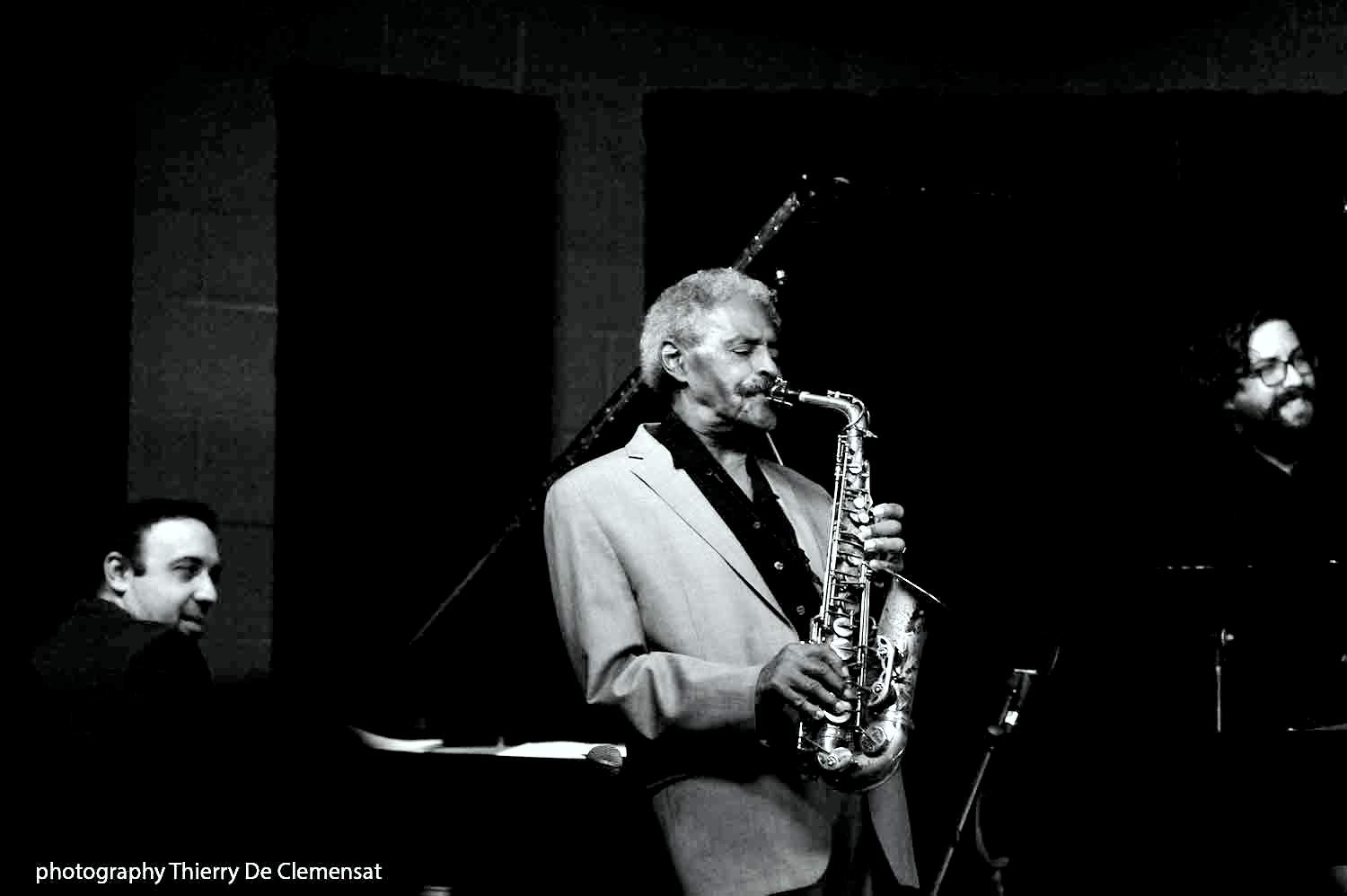
And yet, when McPherson walks onto the stage, there is nothing in his manner that seems designed to remind us of that history. He adjusts his collar, prepares himself and looks toward his partners. I sense a kind of contained energy. There is something extraordinarily simple about the scene, but also deeply moving. After more than six decades devoted to music, Charles McPherson is still here, with the same apparent necessity to get onstage and play.
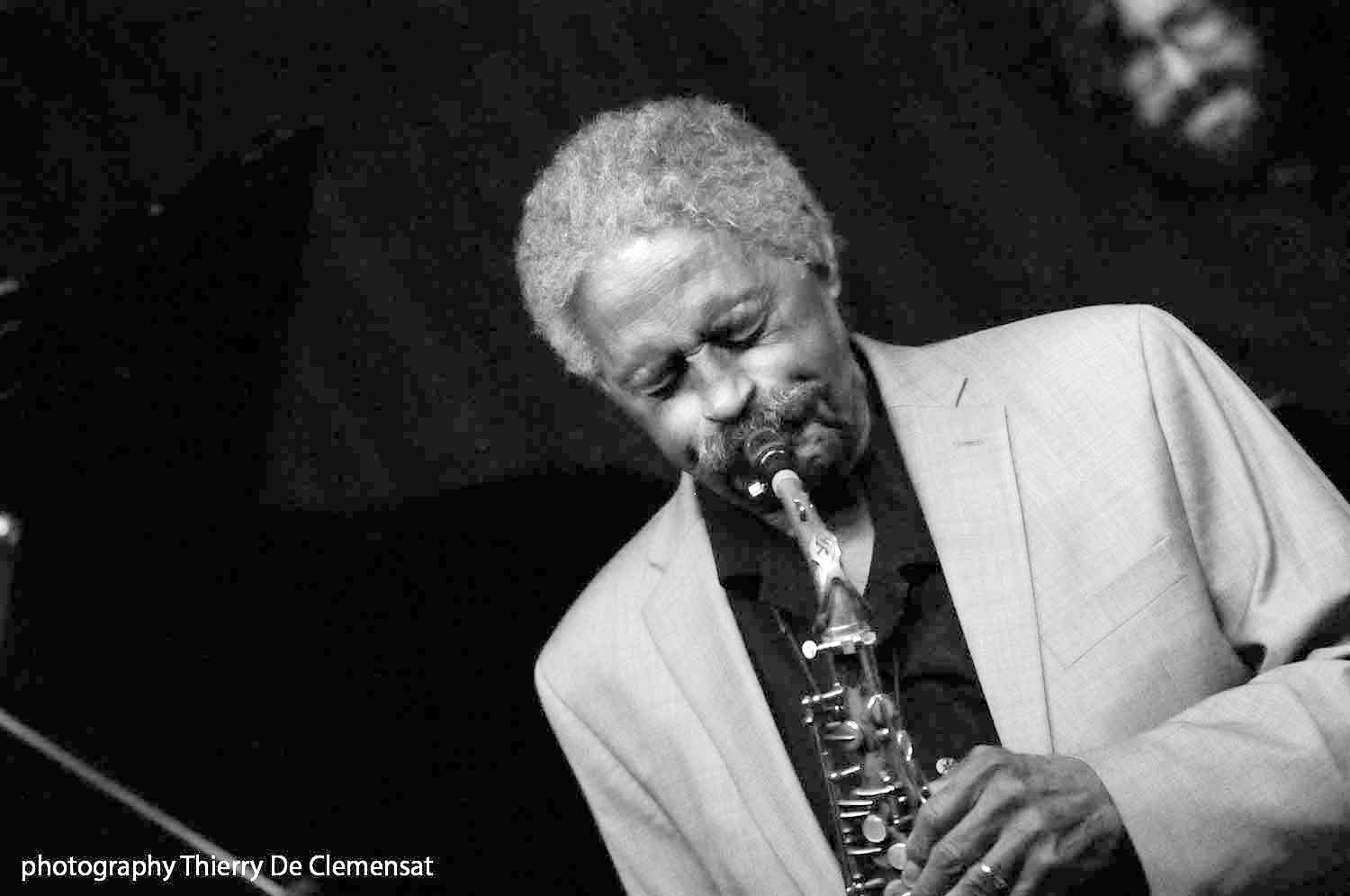
His story could fill several books. Born in 1939 in Missouri and raised in Detroit, McPherson came of age at a time when jazz was not yet a museum piece or a historical artifact. It was a living language, changing constantly, learned through direct contact with musicians in clubs, rehearsals and jam sessions. Detroit played a decisive role in his formation. It was there that he was influenced by Barry Harris, one of the great masters of bebop, and developed the intimate understanding of the tradition that would become one of the foundations of his musical language.
By the end of the 1950s, McPherson had moved to New York. His path crossed with Charles Mingus, one of the most powerful and singular personalities in American jazz. Yusef Lateef, who knew both the young saxophonist and trumpeter Lonnie Hillyer, helped bring them together. Mingus was looking for new musicians and, after hearing them play, hired them. McPherson would work with the bassist and composer for several years, becoming part of one of the most creative periods in the history of the Mingus orchestra.
But to tell the story of Charles McPherson through Charles Mingus alone would miss the point. His career is ultimately the story of a musician who never stopped searching for his own voice. Beginning in the 1960s, he recorded under his own name, developing an aesthetic deeply rooted in bebop and hard bop while retaining the freedom to explore beyond their boundaries. Over the decades, he recorded extensively, collaborated widely and toured without ever giving the impression that he needed to abandon the core of his language in order to move forward. Free Bop!, the record that accompanied me in Paris in the late 1970s, remains for me one of the symbols of that continuity. Since then, his discography has expanded considerably, through a body of work that continues into the present.
Still, no biography and no discography can truly prepare you for what happens when Charles McPherson starts to play. There are musicians whose reputations you know and whose reality you discover onstage. With McPherson, the distance between the legend and the man disappears almost immediately. The first few notes are enough to remind you that you are hearing someone for whom music is not a memory but a present-tense, physical, almost instinctive act.
The room gradually falls silent. Listening becomes almost palpable. From the opening phrases, there is the precision we associate with great instrumentalists, but what strikes me most is the absence of display. McPherson does not string notes together simply to demonstrate that he can play them. He seems to search for them, weigh them and let them arrive at precisely the right moment. Every phrase has direction. Every silence seems to serve a purpose. The virtuosity is unmistakable, but it is never flaunted. It remains in service to the music.
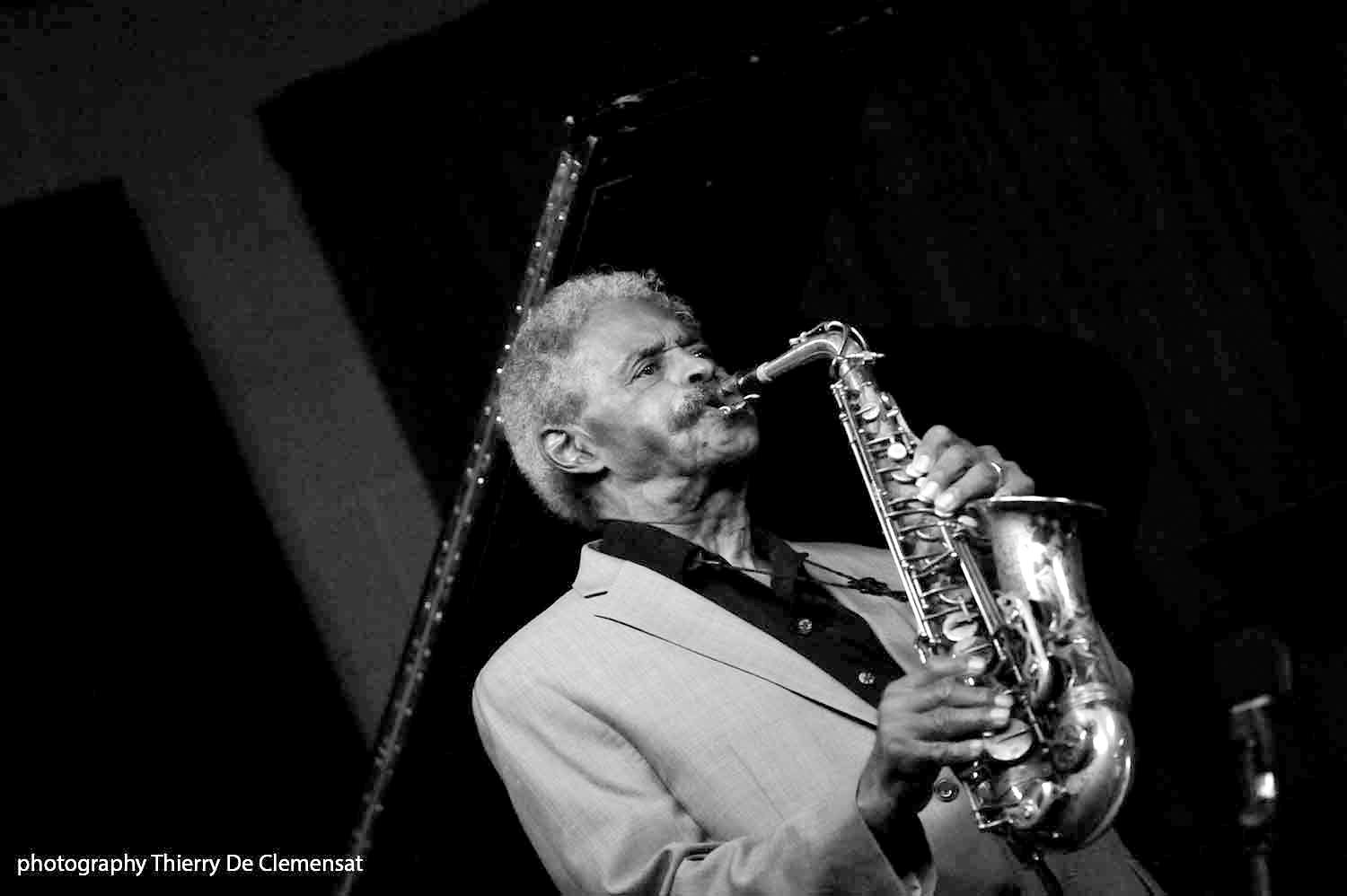
That may be what makes his playing so compelling. He does not simply play his music; he seems to inhabit it. Bebop becomes something more than an inherited vocabulary. It becomes a conversation again, a way of thinking and responding to whatever is happening in the moment. Some of his phrases seem to come from nowhere, followed by unexpected turns or sudden accelerations that compel the other musicians to answer. And yet nothing feels forced. It all sounds natural because that freedom has been built on decades of listening, playing and working.
That night, McPherson is not performing with his regular musicians but with three Austin players who know Monk’s Jazz Club intimately and appear there regularly, both with their own groups and alongside visiting artists. What could easily have been nothing more than a logistical necessity turns into one of the evening’s most rewarding surprises. The encounter between McPherson and this local rhythm section creates a particular kind of tension, giving the concert its own character.
At the drums, Daniel Dufour is especially alert. I had previously tended to hear him as a relatively restrained, precise and conscientious player. Tonight, something gradually opens up in his playing. In McPherson’s company, he pushes harder, turns the music around, provokes, occasionally takes an unexpected route and makes the saxophonist answer him. He never tries to dominate the conversation. His role is to keep it moving, to create the conditions in which the others can take chances.
At the piano, Ross Margitza brings a similar quality. I have always found him subtle and perceptive, with an obvious gift for accompaniment, without necessarily seeing him take many major risks. Tonight, something changes. He listens to McPherson with almost continuous attention, and his contributions gradually become propositions of their own. He does not simply support the saxophone. He answers it, opens doors, suggests other directions. A musical rapport develops before us without ever needing to announce itself.
I am also discovering Ryan Hagler on bass. His playing provides the rhythmic foundation the music needs, but with enough flexibility to let it breathe. His groove seems to particularly appeal to McPherson. Several times I see the saxophonist’s face light up when an interaction clicks. There is something almost childlike in the pleasure he takes in hearing the musicians around him.
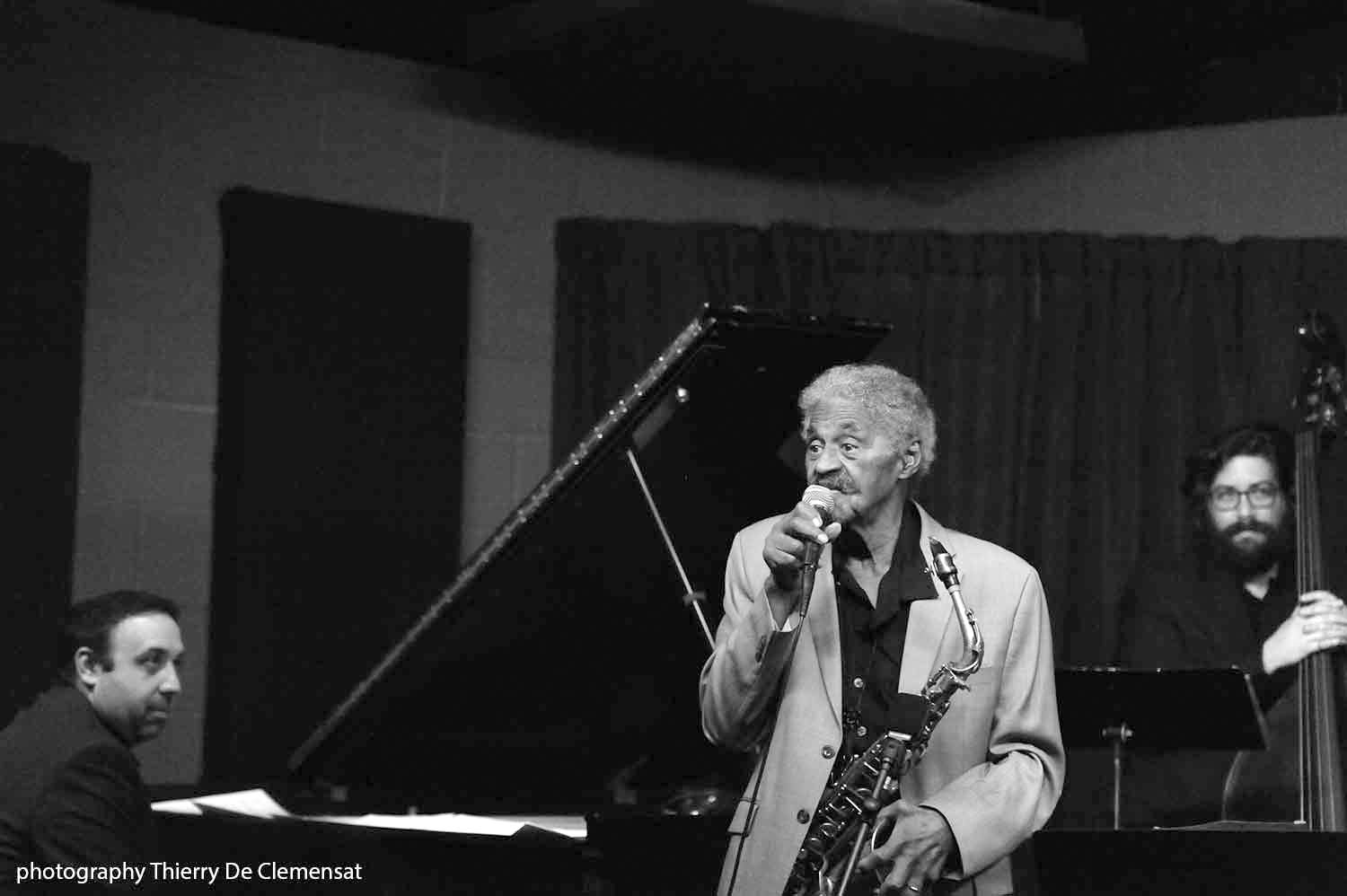
Perhaps that is what moves me most about the evening. After playing with some of the most important musicians in the history of jazz, after accumulating an experience few instrumentalists can claim, Charles McPherson still listens with the curiosity of someone discovering music for the first time. He never seems to regard his partners as mere accompanists. He gives them room. He accepts their ideas. He answers them. He trusts them.
Beside me, Elias Haslanger and I occasionally exchange a smile. We do not really need to talk. A glance is enough when an unexpected phrase suddenly comes out of the alto, when a dialogue between drums and saxophone takes an unpredictable turn, or when an idea introduced by the piano returns transformed a few measures later. We both know what we are hearing. In those moments, commentary becomes almost unnecessary.
Jazz is often described as the music of improvisation. The description is accurate, but it does not tell the whole story. Improvisation is not simply the ability to invent notes in the moment. It requires an enormous musical memory, a deep knowledge of harmony and rhythm, an instinctive understanding of tradition and, above all, the ability to listen to the people around you. It means knowing where you are while accepting that you cannot know exactly where you will end up. With McPherson, that freedom is made possible precisely by the depth of his experience.
There is a lesson here that reaches beyond jazz. A tradition remains alive only when it continues to make invention possible. In trying to preserve a music, we can eventually turn it into an artifact, locked inside a particular era and condemned to repetition. McPherson demonstrates the opposite. The bebop he plays today is not the bebop of the 1940s, even though it carries that history within it. It is the bebop of a musician who has lived through the decades and continues to make that language speak in the present.
That is why it would be wrong to describe this music as nostalgic. Charles McPherson is not reconstructing the past. He is extending it. He belongs to a generation of musicians who received the legacy directly from those who transformed jazz and then passed that legacy on to others. When he plays today in a small room in Austin, that chain of transmission is still audible. It moves through the sound, the phrases and the silences, but also through his understanding of the stage as a place for dialogue rather than a personal showcase.
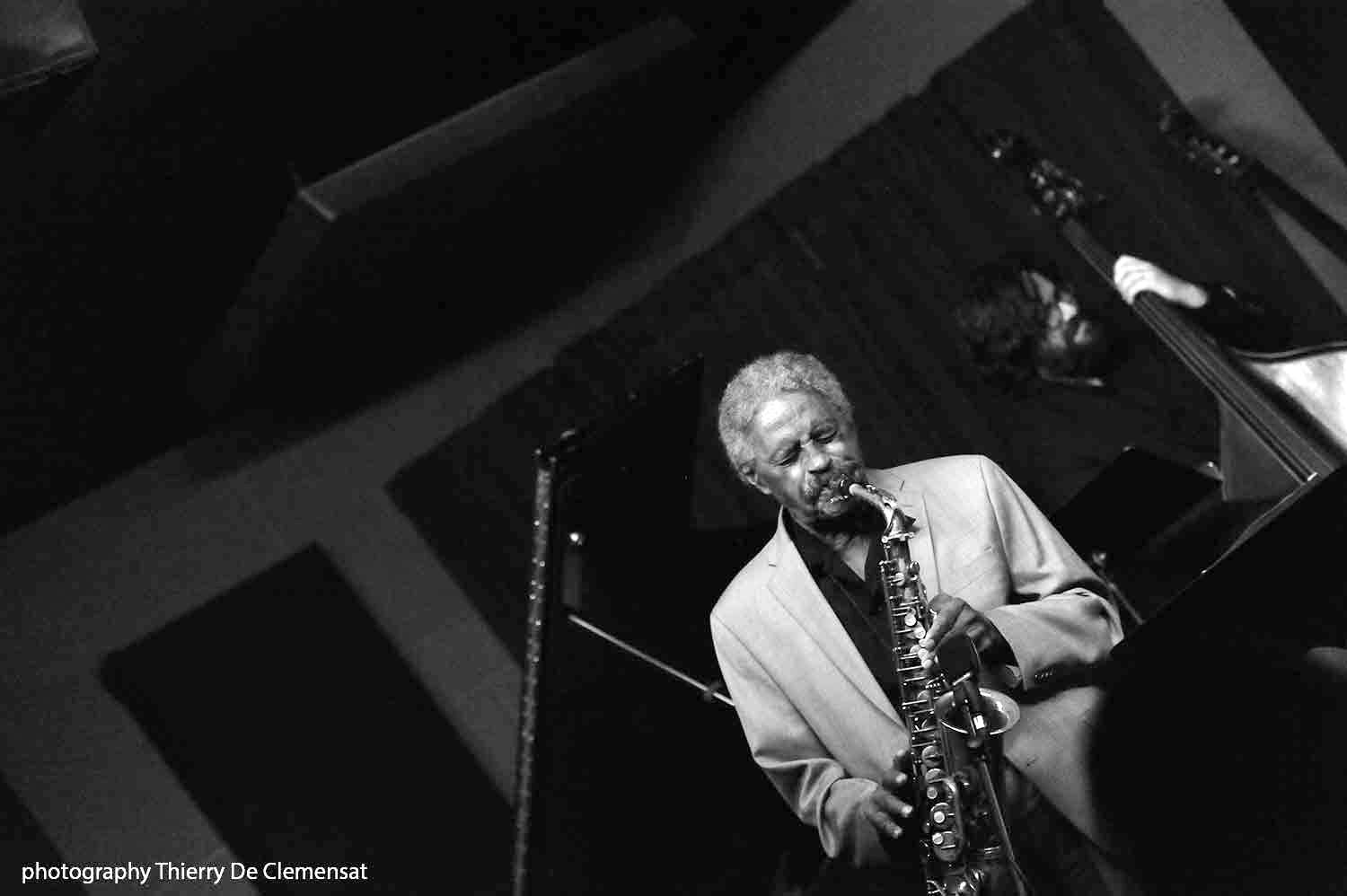
The intimacy of Monk’s Jazz Club makes that feeling even stronger. The audience is not separated from the musicians by a large stage or a ceremonial distance. Everything is close. We see the gestures, the looks, the reactions. We see McPherson listening to his partners and smiling when an idea catches his attention. We see the musicians answering one another. The concert stops feeling like a performance in the conventional sense. It becomes a public conversation, and we have the privilege of being there to hear it.
That proximity also allows us to appreciate something recordings can never fully capture. A record preserves sound, but it does not necessarily preserve risk. It cannot show the moment when a musician decides to take one direction rather than another. It cannot show the glance exchanged between two partners before a rhythmic turn. It cannot show the smile that accompanies an unexpected idea. Onstage, all of that becomes part of the music.
I find myself thinking back to Paris, to 1979, to the friend who handed me Free Bop! in that record store. I think about the album that stayed with me for years and the box that disappeared during a move. At the time, I could never have imagined that one day I would be sitting in a club in Austin, just a few feet from Charles McPherson, watching the man whose music had accompanied me for so long adjust his collar before stepping onto the stage.
That is one of music’s strange privileges. Sometimes it preserves what we think we have lost. A record can disappear, a collection can scatter, an era can seem to have passed, but music heard at the right moment remains somewhere inside us. And when, decades later, the musician who created that music is suddenly standing in front of us, something begins moving again.
That night, Charles McPherson did more than bring back the memory of a lost record. He reminded me why certain musicians become important in a life. They are not simply associated with albums or periods in musical history. They accompany our own history. They become silent witnesses to our discoveries, our journeys, our changes and, sometimes, our losses.
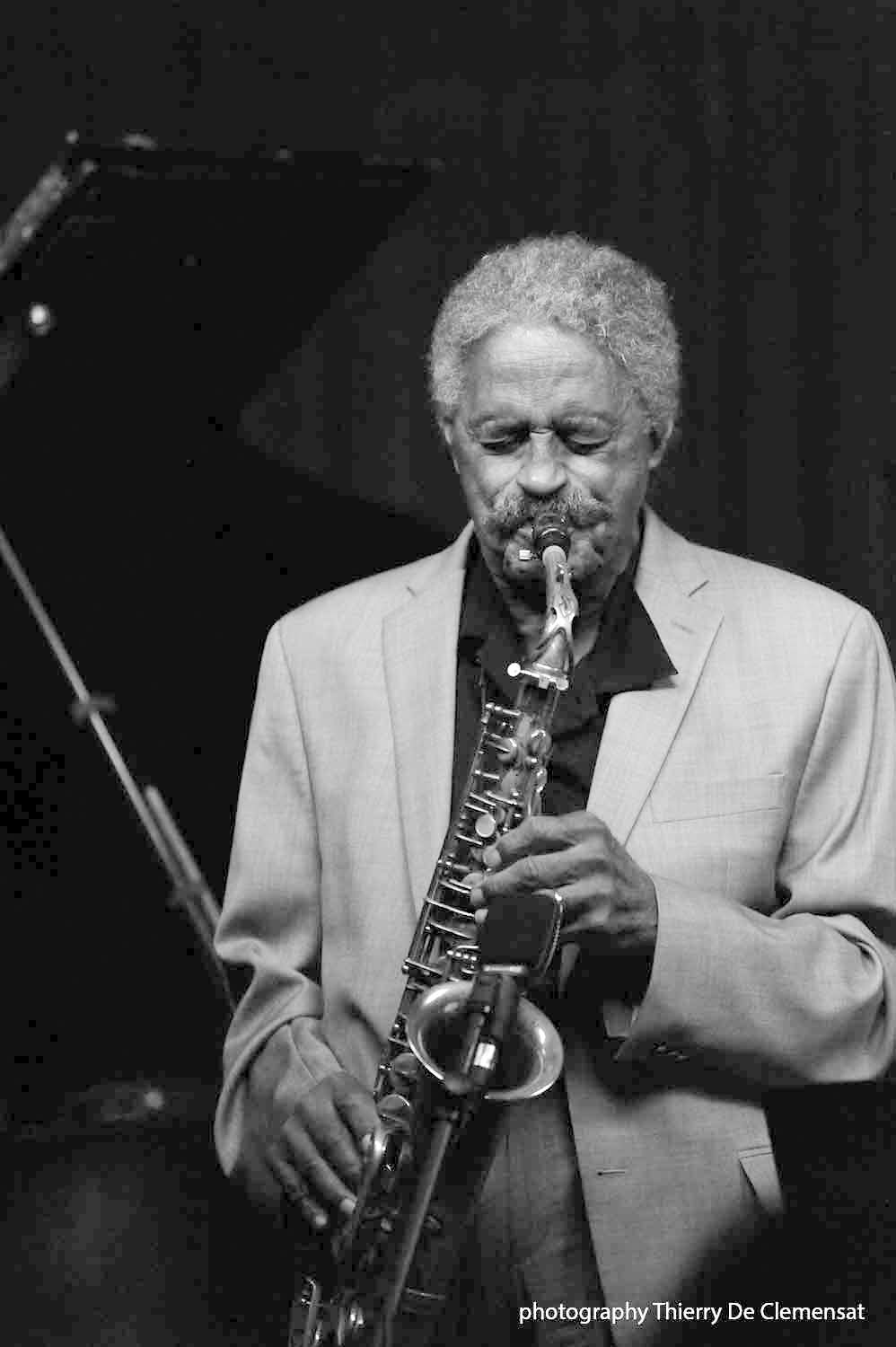
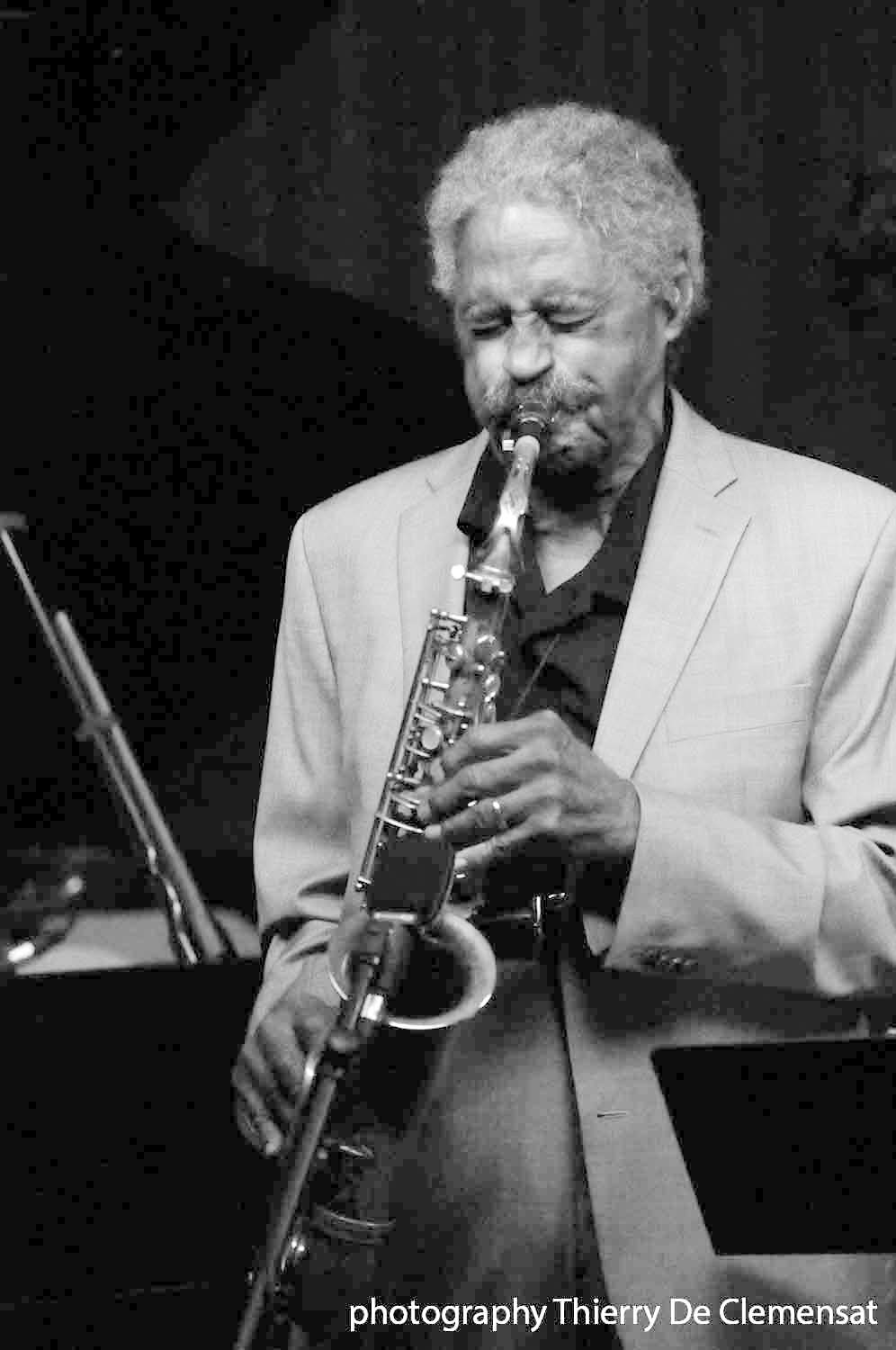
But beyond that personal dimension, the concert also reminds us what it means to have a musician of this generation in front of us. Charles McPherson is a living witness to a history of jazz that connects Detroit to New York, the clubs to the great orchestras, Charlie Parker to Charles Mingus, and the generations that followed to those still to come. Yet that history never weighs down his music. If anything, it gives him the freedom to keep searching.
Perhaps that is ultimately what explains the particular feeling a concert like this leaves behind. When you find yourself in front of a musician with that much experience and knowledge, you might expect to receive a lesson. Instead, you receive something more valuable: the example of a man who, after all these years, continues to listen, to take pleasure in the moment, to respond and to allow himself to be surprised by music.
Whether we are musicians, writers, journalists or poets, certain artists force us to reconsider our own relationship with what we do. They remind us that mastery does not necessarily mean certainty, that experience does not have to become confinement, and that genuine knowledge can lead to greater freedom rather than greater control.
Charles McPherson belongs to that rare category. His career, collaborations, recordings and place in jazz history are considerable, but that is not what will stay with me most from this evening. What I will remember is his face when his partners offered him something unexpected, his attention as he listened to them, the way he leaned slightly into the music, and above all the feeling that, despite the decades, he was still completely present.
Eventually, the room emptied. Conversations resumed, glasses began moving across the bar again, and Monk’s gradually returned to its usual bustle. Yet something remained in the air, as sometimes happens after concerts that matter. I was thinking about that record I bought in Paris in 1979, about all the years separating that moment from the one I had just experienced, and about the strange way music had managed to connect those two points in time.
Charles McPherson continued on his way, as he has for more than six decades, carrying his alto, his history and that intact curiosity that seems to have become one of his greatest strengths. As for me, I was left with the feeling that I had been particularly fortunate. Not simply because I had finally been able to see onstage a musician I have admired for so long, but because I had witnessed something that even the greatest records can never fully convey: real music does not grow old when it continues to be lived.
That night, Charles McPherson did not simply play jazz. He did what great artists do when they remain fully engaged with their art: he turned his history into the present and, for a little more than an hour, invited us to step inside it.
Thierry De Clemensat
Member at Jazz Journalists Association
USA correspondent for Paris-Move and ABS magazine
Editor in chief – Bayou Blue Radio, Bayou Blue News

PARIS-MOVE, September 21st, 2026
Follow PARIS-MOVE on X
::::::::::::::::::::::::