| Jazz |
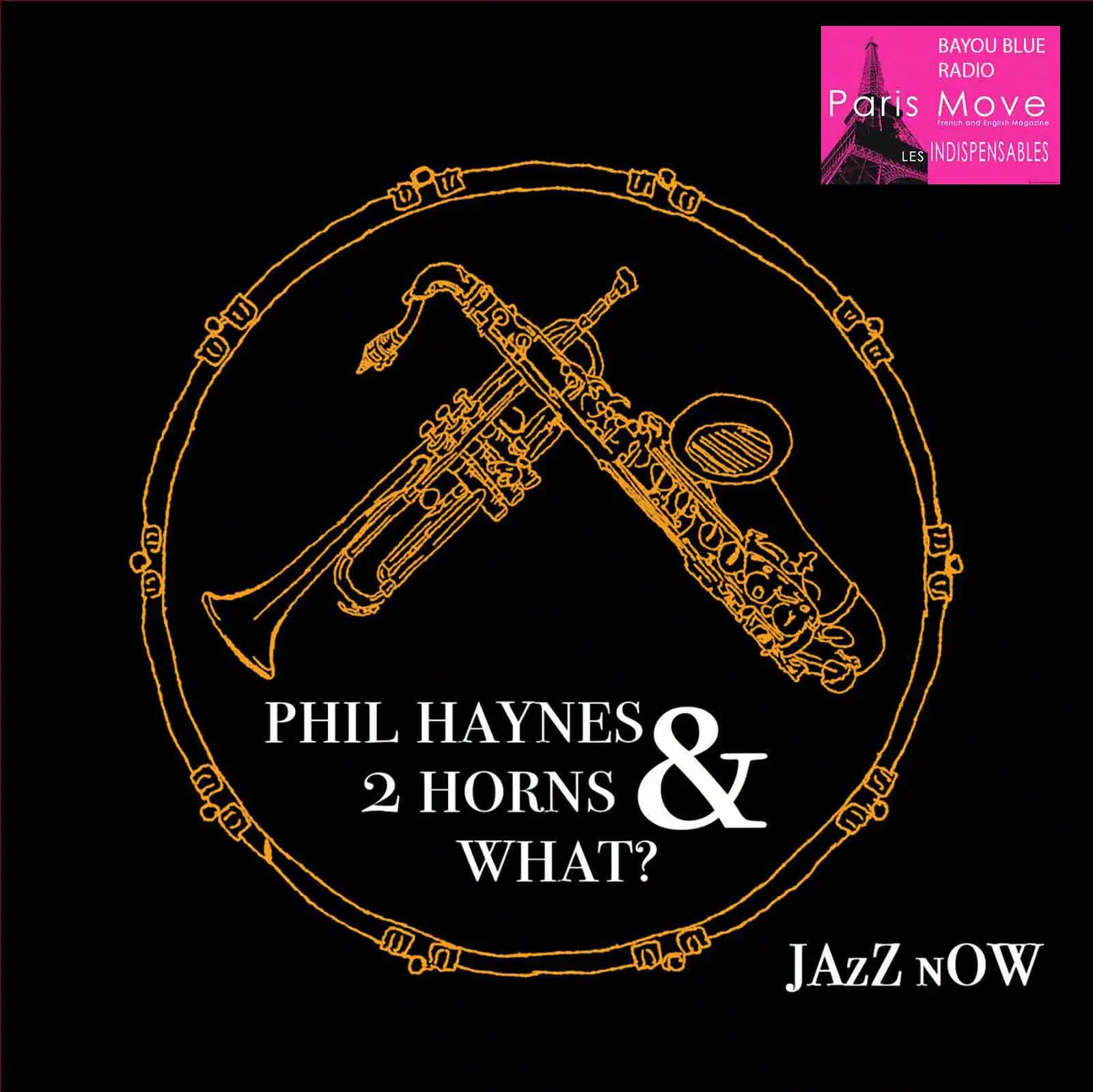
Summary: Phil Haynes turns avant-garde jazz, theater and poetry into a vivid exploration of sound, duality and perception on JAzZ nOW and AvAnt MoDerN.
Phil Haynes’ JAzZ nOW and AvAnt MoDerN: Jazz, Theater and the Art of Perception
For adventurous listeners, the kind who still want music to surprise them, Phil Haynes offers something considerably more than two new albums. JAzZ nOW and AvAnt MoDerN are experiments in perception, where jazz, theater, poetry and improvisation become parts of the same language. Haynes has always been inclined to take an idea to its limits; here, he creates a musical world in which the relationship between two sounds, two musicians, two voices or two moments in time becomes the real subject. His materials may be familiar—horns, drums, voice, rhythm, text—but the way he places them together makes them behave like shapes on a canvas or actors on a stage, constantly shifting in relation to one another.
This is why I hear these recordings less as conventional jazz albums than as a form of musical visual art. Haynes’s fascination with duality is not simply a matter of contrast. It is the mechanism through which the music moves. Two saxophones, two musical personalities, two versions of a composition: each element acquires meaning through its relationship with the other. The result is music that asks to be perceived as much as heard.
There is something almost mischievous about Haynes’s approach. He clearly understands that avant-garde music does not have to behave like a solemn ceremony. Complexity can contain humor, improvisation can have theatrical timing, and even the most rigorously constructed passage can leave room for absurdity. That quality is part of what makes these albums so engaging. The musicians are not simply interpreting a set of compositions; they seem to be inhabiting a world created by Haynes, bringing their own personalities and sense of humor into the structure.
The result is a remarkably well-oiled machine, but one that never sounds mechanical. It generates images as readily as it generates rhythms, and sometimes those images arrive before one has fully understood how the music produced them.
For the repertoire, Haynes reaches back into his own catalog, drawing on pieces associated with his trio with Paul Smoker, his 4 Horn group and his No Fast-Food trio. On paper, this might seem unusual for a composer and improviser so firmly oriented toward the future. Yet the decision is revealing. Haynes is not treating these earlier compositions as museum pieces. He is placing them in a new environment and listening to what they have to say now.
That idea has deep roots in jazz. Joe Henderson, Miles Davis and so many of the musicians who shaped the music understood that a composition could remain recognizable while continually acquiring new meanings. The piece stays; the circumstances around it change. The musicians change. The listener changes. Haynes clearly embraces that principle. As he explains, “So many of my heroes, like Joe Henderson or Miles Davis, played different versions of the same piece over time.” What interested him was the moment when “something new emerged.” His pleasure came from selecting pieces from his early albums with the new musicians in mind and then hearing what they would do with them.
Returning to one’s own past can therefore be a form of artistic rebirth. What was created yesterday re-enters the present carrying everything that has happened since. Theater has understood this principle for centuries: Shakespeare changes with every actor, every stage and every historical moment. Music can do the same. Haynes makes that process particularly visible by placing his earlier material in the hands of musicians with their own histories and instincts.
AvAnt MoDerN makes the theatrical dimension especially apparent. The album seems to occupy a space somewhere between concert music, stage work and poetic performance. The voice merges with the brass, or perhaps the brass merges with the voice; the distinction becomes increasingly difficult to maintain. Music and spoken poetry appear to inhabit separate territories that have been placed inside one another. Neither completely dominates. Instead, each alters the way we hear the other.
The effect is galvanizing. AvAnt MoDerN embraces extremes, making full use of the musicians’ desire to push their instruments beyond conventional expectations through extended techniques, startling textures and unexpected vocalizations. The instrumental vocabulary is deliberately unsettled. An instrument can whisper, fracture, stretch, imitate, interrupt or suddenly seem to become something entirely different.
The human voice gradually becomes another instrument. Haynes delivers spoken recitations on several pieces, further blurring the boundaries between composer, performer, narrator and actor. The words are not simply placed on top of the music; they belong to its architecture. Their rhythm affects the instrumental phrasing, while the instruments alter the emotional weight of the words.
The album opens with “Never Doubt I Love,” a fanfare constructed around several poignant Shakespeare texts that Haynes originally arranged for his wedding, where the piece was performed by his sister, coloratura soprano Mary Beth. The personal origin of the work matters. Something created for an intimate occasion has been carried into a larger artistic setting without losing its emotional charge. It is one of the clearest examples of how Haynes allows private experience, theater and composition to occupy the same space.
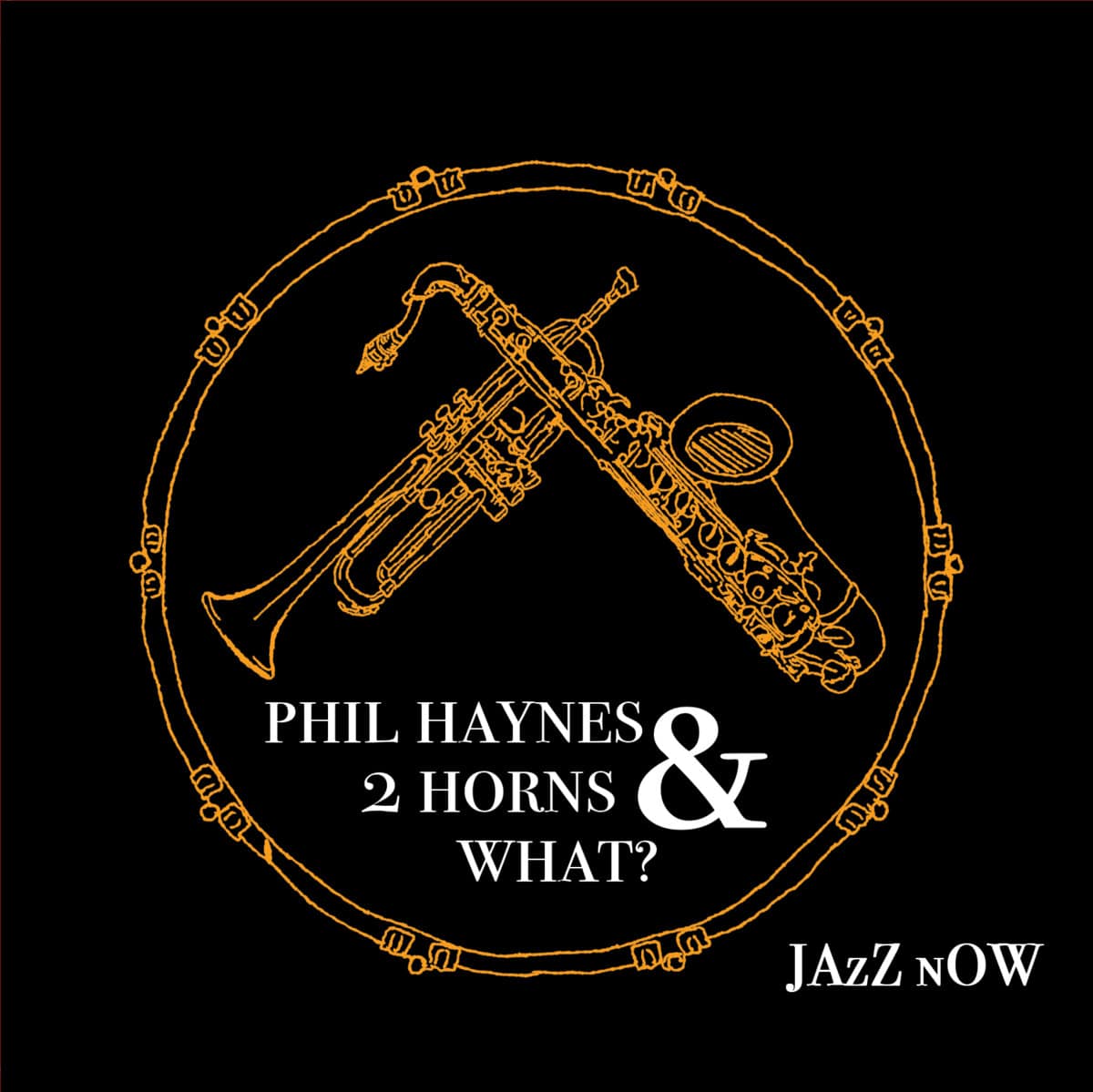
JAzZ nOW takes a different road. It remains closer to the tradition of avant-garde jazz, although with Haynes and his collaborators the term is always somewhat relative. The music does not seem interested in announcing its experimental credentials. It simply follows its own logic, moving between composition and improvisation without treating the boundary as particularly important.
Peyton Pleninger and Jonathan Ragonese are central to that process. Ragonese has known Haynes for many years and is a former protégé of pianist Steve Rudolph, himself a Haynes collaborator in the Day Dream Trio. That history is audible in the music, particularly in the instinctive way Ragonese and Pleninger interact. Their saxophones do not simply alternate; they intertwine, separate, overlap and collide. At times they seem to be having a conversation, at others they appear to be occupying the same sonic territory from different angles.
Haynes’s role as drummer is equally important. He is not merely supplying a rhythmic foundation beneath the horns. He creates the dramatic conditions in which the other musicians can take risks. His drumming gives the music movement without determining its destination. It is closer to stage direction than conventional timekeeping: the scene has a structure, but the players remain free to alter it.
That distinction helps explain why these records are difficult to classify. They are unquestionably connected to jazz, but the word alone does not account for everything taking place. There is contemporary composition, improvisation, theater, poetry, humor and a strong sense of visual design. Haynes seems less interested in protecting genre boundaries than in seeing what happens when they become porous.
This is where Victor Vasarely becomes, for me, an unavoidable reference. Vasarely, the great pioneer of Op Art, understood that visual perception could itself become the subject of an artwork. Simple geometric elements could produce movement, instability and optical tension through their relationships. Nothing needed to physically move; the eye completed the illusion.
Haynes seems to work according to a remarkably similar principle. His music is built from relationships rather than isolated objects. The duality between musicians, instruments, voices, compositions and periods of time generates tension and movement. What matters is not simply what each element is, but what happens when two elements occupy the same space.
That is why these two albums strike me as particularly relevant to listeners who come to music from contemporary art. Haynes seems to think in textures, contrasts, layers and perspective. A rhythmic pattern can behave almost like a geometric form. A saxophone line can suggest a shape. A spoken phrase can bring another sonic element suddenly into focus. The listener is not simply following a musical narrative; the listener is being asked to perceive relationships.
The two-album format makes this especially compelling. JAzZ nOW and AvAnt MoDerN can be heard as two sides of the same artistic investigation. One remains closer to the vocabulary of avant-garde jazz; the other moves toward theater, poetry, extended instrumental techniques and the unstable border between speech and music. Yet both are concerned with the same fundamental question: what happens when familiar material is placed inside an unfamiliar relationship?
The answer is not always comfortable, and that is precisely the attraction. These are not records designed to disappear into the background. They ask for attention. A composition may change direction without warning, an instrument may suddenly abandon its familiar voice, or a passage written years ago may acquire an entirely different emotional temperature. The listener has to participate.
That participation is what gives the albums their richness. There are moments when the music seems almost to resist interpretation, but resistance can be the beginning of listening. Like demanding contemporary artwork, these recordings become more rewarding the longer one remains inside them. Their complexity is not simply a display of technique; it creates possibilities for perception.
Haynes’s attitude toward his earlier repertoire is perhaps the most revealing aspect of the project. He does not appear protective of his compositions. He wants to hear what happens when they are challenged by different musicians and circumstances. “A great composition remains a great composition,” he says, and the statement could almost serve as the quiet manifesto behind these recordings. A composition proves its strength not by remaining untouched, but by continuing to generate possibilities.
This is ultimately what makes JAzZ nOW and AvAnt MoDerN more than a pair of ambitious recordings. They are studies in musical memory, perception and interaction. Haynes brings together compositions, musicians, instruments, poetry and theatrical ideas, then allows their relationships to do the work. Nothing needs to be forced. The music itself creates the tension.
I would therefore approach these albums not simply as jazz records but as two interconnected works of contemporary musical theater, perhaps even as musical paintings. Listen to the compositions, certainly, but also to the spaces between them. Listen to the personalities of the musicians, the humor, the friction, the moments when the voice becomes an instrument and the instrument becomes a character. Allow the music to create images.
Because in the end, Haynes is asking us to do more than listen. He is asking us to perceive. His approach recalls, at least in spirit, a Vasarely translated into sound: duality creates movement, repetition alters perspective, and familiar elements acquire new identities through their relationships with one another. The work does not tell us exactly what to hear. It creates the conditions under which we can discover it.
Perhaps that is the most compelling quality of Phil Haynes’s music. It refuses to stand still. The past enters the present, composition meets improvisation, sound becomes theater, and music begins to behave like visual art. These albums do not offer easy answers, and they should not. They offer something more interesting: an invitation to enter the machine, surrender a little control, and discover what happens when the music begins to move.
Thierry De Clemensat
Member at Jazz Journalists Association
USA correspondent for Paris-Move and ABS magazine
Editor in chief – Bayou Blue Radio, Bayou Blue News
PARIS-MOVE, September 14th, 2026
Follow PARIS-MOVE on X
::::::::::::::::::::::::
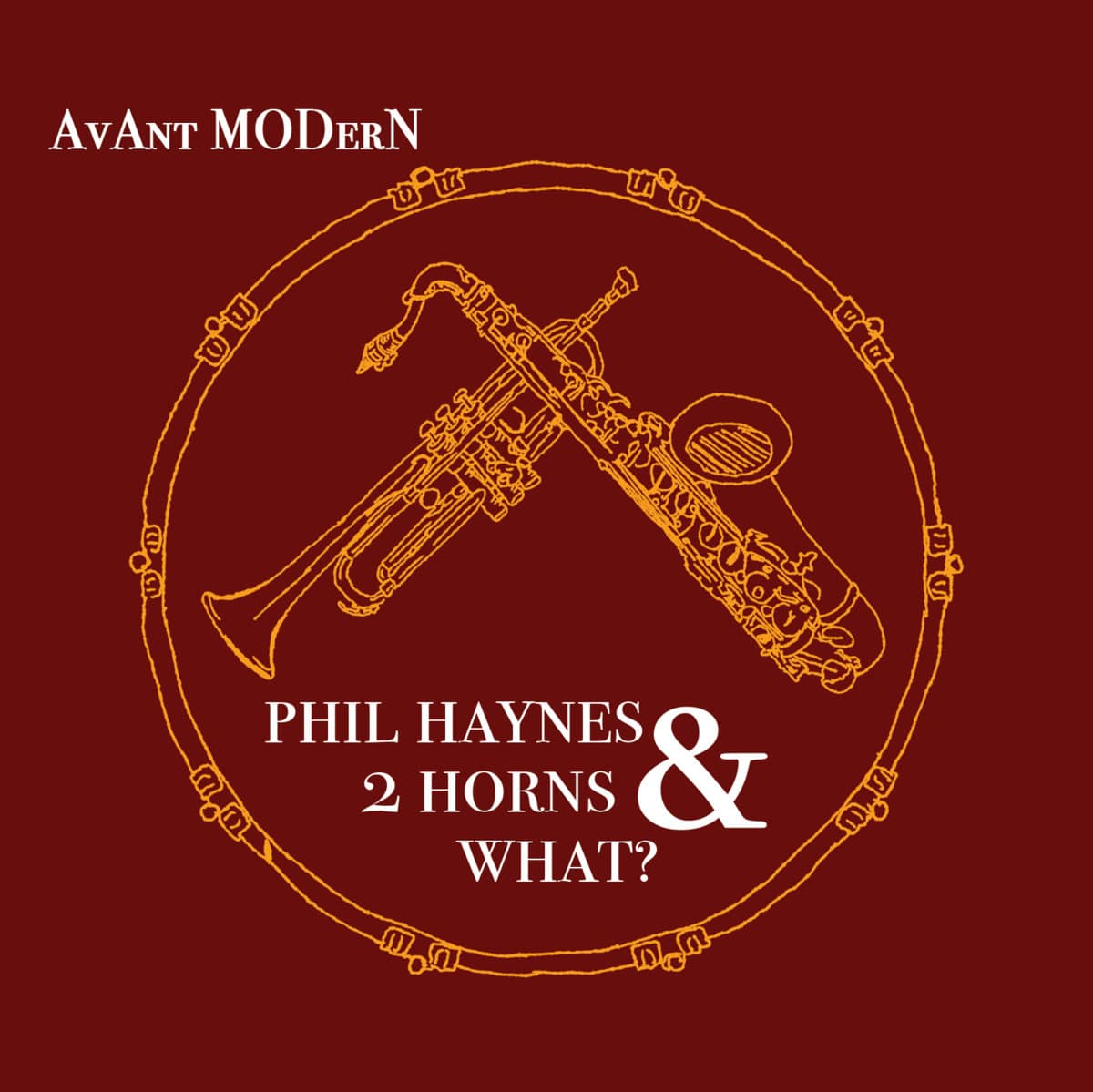
AvAnt MODerN
Nathan Wooley, trumpets
Peyton Pleninger, saxophones
Phil Haynes, drums/tunes/speaking
Jon Rosenberg, engineer
The Weis Center Atrium At Bucknell University, Saturday, 5/9, 2026
1)Never Doubt I Love
2)Out of the Bowels
3)The Code
4)Blue Jungles
5)For Hawk, Doc, & Dee
6)Where Now
7)Smoke Rises
8)Chant
c&p CornerStoreJazz, 2026 (CSJ-0160)
JAzZ nOW
Peyton Pleninger, saxes
Jonathan Ragonese, saxes
Phil Haynes, drums + tunes
Matt Saccuccimorano, engineer
Electric Wilburland Studio, Newfield, New York, May, 5/8 + 5/9, 2026
1) Together
2) Goofus’ Step
3) West Virginian Blues
4) Ragonese
5) Blu Dop
6) Last Dance
7) Longer Shorter
8) Steps
9) Point – Period
10) Pleninger
11) A Lil’ Iowa Get-Down
c&p CornerStoreJazz (CSJ-0161)