
| Jazz |
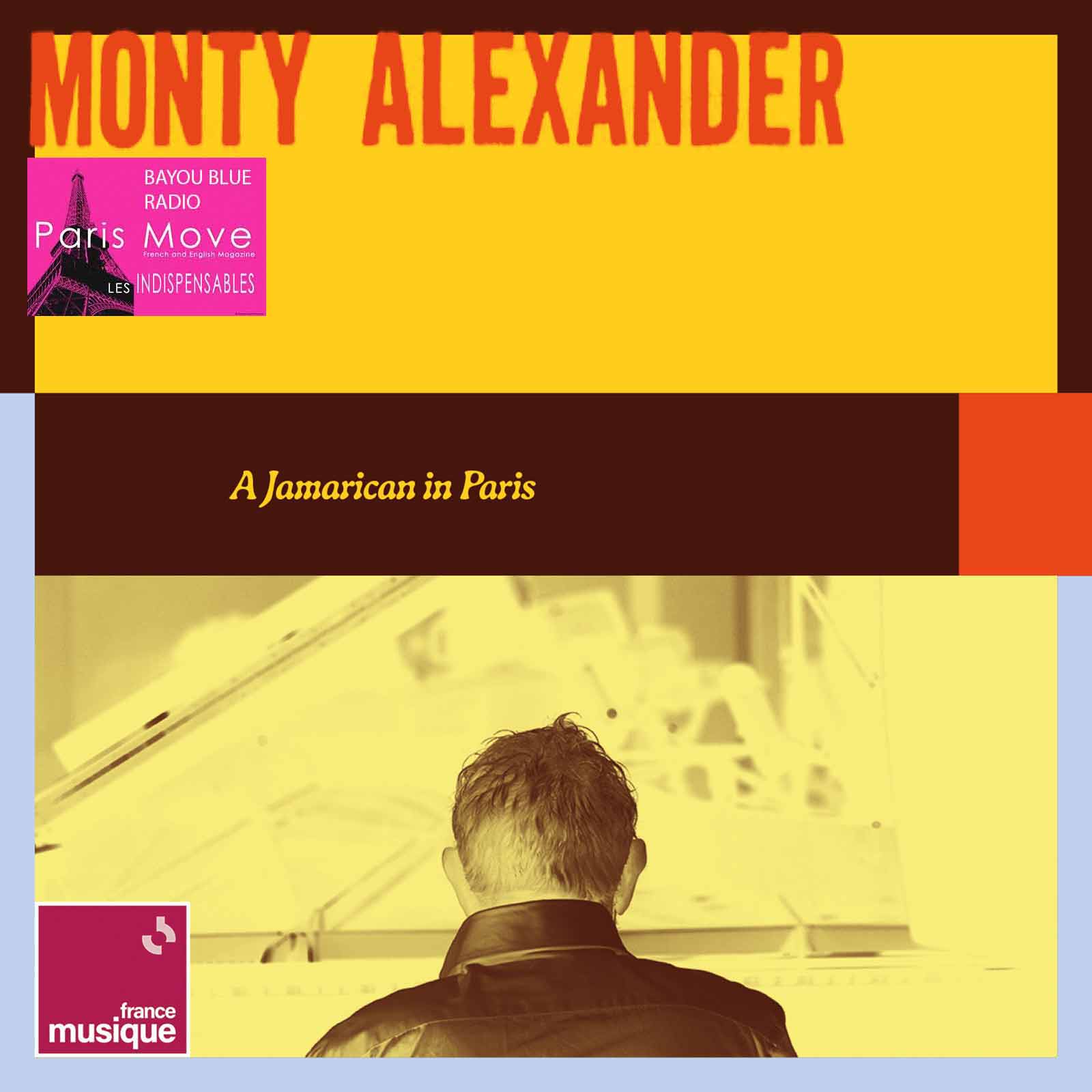
Summary : Monty Alexander’s A Jamarican in Paris brings together Jamaican roots, jazz tradition and Parisian energy in a vibrant acoustic session featuring Jason Brown, Luke Sellick, Bobby Thomas Jr. and Stéphane Édouard.
Monty Alexander: A Jamarican in Paris, A Jazz Legend in Paris
Let’s take advantage of this Saturday morning and let your Frenchaustinian tell you about Monty Alexander’s new album, A Jamarican in Paris, recorded in Paris on December 7, 2025, at Studio Sextan. Monty Alexander is the kind of pianist and composer whose kindness and sense of humor are recognized by just about everyone who has had the pleasure of meeting him, and he starts this album with a title that mixes several things together: “Marcus Garvey,” “So What,” and even, somewhere in the background, a little bit of the French national anthem, “La Marseillaise.” As always, Alexander combines his extraordinary melodic sense with his rhythmic instinct, and when he walks into a studio he knows well, he brings his entire musical journey with him. Deeply concentrated and ready to play, he sits down confidently at a familiar piano, alongside drummer Jason Brown and bassist Luke Sellick, with whom he has probably formed one of the most intimate trios of his career. You can hear it immediately. There is no need for anyone to explain where the music should go. They already know. Alexander has also invited, especially for this session, his longtime collaborator Bobby Thomas Jr., an incredibly elegant percussionist whose countless contributions have left their mark on the history of jazz over the last forty years, and he has also invited one of France’s finest percussionists, Stéphane Édouard.
Selecting some of the best pieces this composer has created over the years, with an energy that keeps developing throughout the album, you eventually begin to wonder whether Monty Alexander might actually be the most Parisian of Jamaican pianists. It sounds strange at first, but after a while it makes perfect sense. Alexander has an enormous and extraordinary memory. The funny thing is that this memory sometimes plays tricks on him, taking him down unexpected roads of inspiration and constantly opening new possibilities. He reaches into this enormous repertoire in the present moment, finding the desire to revisit the melodies that define him most deeply. This is where we are really at the heart of the process behind great jazz, because the past is never really the past when a musician knows how to bring it back into the present.
Monty Alexander is a legend, so just think about it. Somewhere between the ’60s and ’70s, Frank Sinatra was already paying attention. On the back of Monty’s first album there was a quote from Sinatra: “This kid is terrific.” It is only a small detail on the back cover, which also featured a quote from Quincy Jones. Alexander had met Jones at the Playboy Club, at the time when “Q” was working as an artistic director at Mercury Records. Not long afterward, Quincy moved to Los Angeles and began his brilliant career as a film composer, producer and one of the great musical forces of his generation. So when you start a career with people like Frank Sinatra and Quincy Jones telling everyone that you are something special, you can probably assume those compliments were not exactly handed out for free. In Alexander’s case, they turned out to be absolutely right.
A little like Ron Carter, Monty Alexander gradually built a name that became instantly respected by jazz listeners and musicians. He never needed to shout about it. The music did the job. In 1988, we even find Alexander in Clint Eastwood’s magnificent film Bird, and I am going to stop the references right there because otherwise we are going to end up writing something that looks like The Dictionary of 20th-Century Music, although this album belongs completely to the 21st century. Over the years, Alexander’s way of playing has become more and more precise while somehow remaining unmistakably his. That is one of the fascinating things about listening to him today. Nothing has been lost. Quite the opposite. The touch is more controlled, the choices can be even more economical, but the rhythm is still there, the melody is still there, and that particular sense of joy is still there too.
Three days of sessions, marked by long stretches of uninterrupted music, almost like simple and joyful ceremonies celebrating what we might call the great songbook of Monty Alexander. This is a resolutely acoustic album, and the musicians are particularly exciting. Once again, Alexander convinces without any tricks, without needing any studio fireworks, simply with his beautiful musical culture and the people he has chosen to put around him. The music develops naturally, and the longer you stay with it, the more you realize that this is not simply a collection of songs but a musical conversation that keeps changing shape.
The quartet gives us a joyful and sophisticated version of “Come Fly With Me,” a song that already carries so much history but which Alexander manages to make feel completely at home in his own world. There is swing, of course, but there is also that particular Caribbean warmth that seems to be sitting just underneath the surface. The melody remains familiar, but suddenly it has a different life. And then there is the final track, “Sextan Bucket,” which feels almost like a thank-you to Studio Sextan itself. It is a beautiful way to finish the album, relaxed but still full of that energy that has been building since the first notes.
Listening to A Jamarican in Paris, you have the feeling that Alexander is not trying to prove anything anymore. He does not need to. He has already lived through the history. He has played with extraordinary musicians, absorbed an incredible number of musical languages and spent decades developing his own. What we hear now is what remains after all of that has become instinct, and that is probably why the album feels so fresh. There is something very particular about Monty Alexander’s memory. He can remember a melody from years ago, a rhythm, a harmonic movement, a song associated with another period of his life, and then suddenly bring it back into the room as if it had been waiting for him. But he does not simply reproduce the past. He opens it up, looks inside it, and sometimes changes the rhythm, sometimes the harmony, sometimes only the way he touches the notes. Suddenly something we thought we knew becomes something else.
This is where the title A Jamarican in Paris becomes more than a clever title. Alexander arrives in Paris carrying Jamaica, American jazz, gospel, blues, popular song and decades of musical experience, but Paris also has its own musical memory, and the musicians around him bring their own histories into the room. Stéphane Édouard’s percussion is part of that conversation, while Bobby Thomas Jr. knows exactly how to add another layer without ever getting in the way. Jason Brown and Luke Sellick understand Alexander’s language deeply enough to make the trio sound almost telepathic at times. The music moves, but it never loses its center.
That is one of the great strengths of this album. You can hear the Jamaican side of Alexander, but you can also hear the pianist who grew up absorbing American jazz. You can hear the entertainer, the composer, the improviser and the man who has spent a lifetime listening. All of those Monty Alexanders are present at the same time, and somehow they all fit. Perhaps this is also why the album feels so generous. Alexander has nothing to hide behind. No complicated concept is necessary and no great explanation is required. The musicians sit down, they play, and the music tells you what you need to know.
There are albums that demand your attention and albums that simply make you want to stay in the room, and A Jamarican in Paris is definitely the second kind. The more you listen, the more details appear: a rhythmic accent here, a small harmonic change there, a percussion figure that suddenly shifts the entire atmosphere. Alexander can be playful without becoming superficial, sophisticated without becoming academic. And this is probably where his sense of humor also appears in the music. He likes to surprise you, but he never makes you feel that he is trying too hard to be clever. He simply knows where the smile is.
The album also reminds us that great musicians do not necessarily become less adventurous with age. Sometimes they become more adventurous because they know exactly which rules are worth breaking. Alexander has reached that point where experience no longer weighs on the music. It gives him freedom. So here we are, in Paris, with a Jamaican pianist playing an acoustic album with a group of musicians who clearly enjoy listening to each other. There is no need to make the story more complicated than that. Monty Alexander has been doing this for a very long time, but A Jamarican in Paris does not sound like a musician looking back. It sounds like a musician who has opened the door, walked into the studio and asked himself the simplest possible question: what do we feel like playing today?
By the time you reach the end, you may find yourself doing exactly what I did while finishing this review. I suddenly realized that the album had played three times in a row. Three times, but then again, Monty Alexander has always been dangerously close to excellence, and that is probably the reason I am going to listen to it again and again. For you, the date is October 2.
Thierry De Clemensat
Member at Jazz Journalists Association
USA correspondent for Paris-Move and ABS magazine
Editor in chief – Bayou Blue Radio, Bayou Blue News
PARIS-MOVE, September 12h, 2026
Follow PARIS-MOVE on X
::::::::::::::::::::::::
Musicians :
Monty Alexander – piano
Luke Sellick – double bass
Jason Brown – drums
Bobby Thomas Jr. – percussions
Track Listing :
Marcus Garvey 6:07
Look Up 6:12
Hope 7:29
Skamento 4:24
You Make Me Feel Brand New 4:17
Come Fly With Me 3:57
Sketches of Aranjuez 6:21
Yellow Bird 5:04
Mystical Blues 5:58
What’s Going On 5:16
Just Wait 4:30
Sextan Bucket 4:30
Produced by Monty Alexander and Vincent Mahey
Recording, editing, and mixing: Vincent Mahey
General coordination: Caterina Zapponi
Executive producer: Virginie Crouail
Recorded on December 8-9-10, 2025, at Studio Sextan A
Assistants: Tristan Barège and Valentin Moricet
Mixed in February 2026 at Studio Sextan C
Mastering: Raphaël Jonin J RAPH i.n.g.
Graphic design: Atelier Bagarit
Photos: Jean-Baptiste Millot
Videos: Igor Juget