
| Jazz |
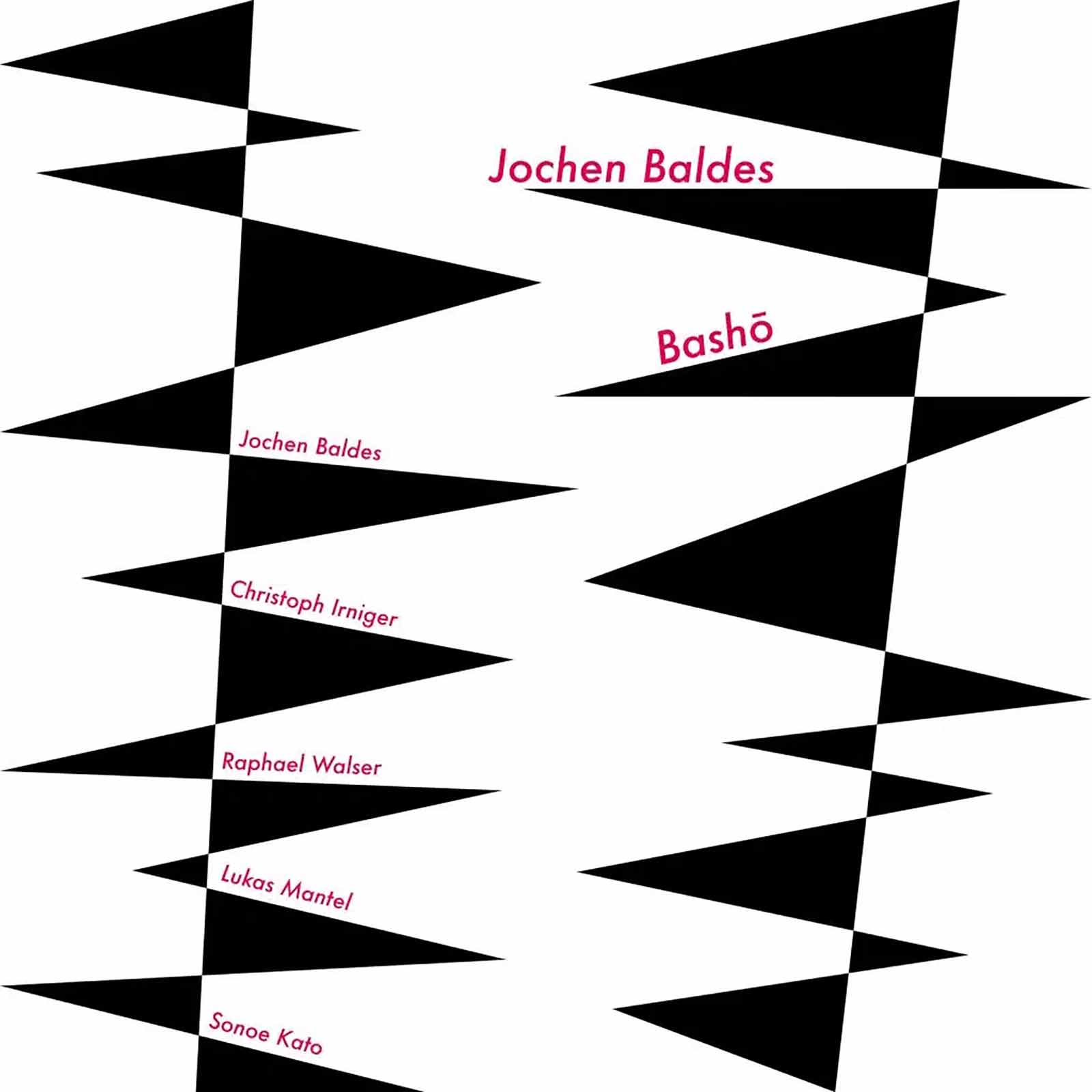
Summary: Jochen Baldes’s Bashō blends jazz and Japanese haiku, but its ambitious concept often overshadows the music.
Bashō: When the Concept Gets in the Way of the Music
There are jazz records that ask you to slow down, listen carefully and allow the music to reveal itself over time. That is hardly an unreasonable request. Jazz has always made room for patience, ambiguity and music that refuses to give everything away on the first listen. Jochen Baldes’s Bashō, however, asks for something more complicated. It asks the listener not only to slow down, but to enter a carefully constructed intellectual and aesthetic world built around Matsuo Bashō, the great Japanese poet and master of the haiku. During the Covid 19 pandemic, Baldes immersed himself in Japanese literature, cinema and art, searching for a way to translate into music the qualities he associated with Bashō’s poetry: simplicity, silence, impermanence, the power of a fleeting image and the ability to suggest far more than is actually said. It is an ambitious project, and on paper it has all the ingredients of an intriguing contemporary jazz album. The difficulty is that, once the music begins, the concept becomes so conspicuous that it often gets in the way of the very experience the album is trying to create.
The structure is straightforward. Eight haikus are recited in Japanese, each one preceding a composition inspired by the poem. Baldes is joined by Christoph Irniger, Raphael Walser and Lukas Mantel in a quartet without piano or guitar, an instrumentation that immediately gives the music a certain openness. There is no conventional chordal instrument constantly filling the background, so the four musicians have to create their own sense of harmonic movement and balance. That choice is one of the strongest aspects of the record. There are moments when the quartet sounds genuinely alert, with each musician responding to the others rather than simply playing a predetermined role. The music can be spare without being empty, abstract without becoming completely cold, and there is an appealing sensitivity to texture and space. The musicians clearly know how to listen, and when they are simply interacting, without the weight of the surrounding concept, something interesting begins to happen.
Unfortunately, just as that interaction starts to take hold, the album returns to the poetry. The haikus are intended as gateways into the compositions, but I often experienced them as interruptions. A piece begins to establish a melodic idea, a rhythmic tension or some subtle conversation between the musicians, and just when the ear begins to settle into that world, the music stops and the listener is brought back to the poem. Then another composition begins, and the process starts again. I found myself repeatedly having to reset my attention rather than being carried deeper into the music. That may be exactly what Baldes intended, but intention alone does not make a listening experience successful. After several attempts to absorb the entire album, I became increasingly aware of the mechanism behind it, and that awareness made it harder, not easier, to surrender to the music.
This is particularly unfortunate because the artistic philosophy behind Bashō is based on an idea that should work beautifully in jazz. The haiku is an art of compression. A few words can establish an entire landscape, a moment can imply a lifetime, and what is left unsaid can be more powerful than anything explicitly described. Bashō did not need to explain the silence surrounding his images; the silence was part of their power. Baldes clearly wants to find an equivalent principle in sound. He leaves room between phrases, allows the musicians to work with small gestures and avoids the kind of constant activity that can make contemporary jazz feel unnecessarily busy. Yet the album surrounds this musical restraint with so much conceptual information that the simplicity begins to feel strangely complicated. We are told, through the structure and presentation of the record, that these silences are important, that these spaces are meaningful, that these musical fragments are connected to Bashō’s vision of nature and impermanence. Eventually the listener becomes conscious not only of the silence but of the instruction to hear the silence as profound.
That is where Bashō begins to lose me. There is a difference between music that has been influenced by a poet and music that continually reminds you that it has been influenced by a poet. The first can be liberating. The second can become a kind of aesthetic supervision. The great musical adaptations of literature tend to work because the original source eventually disappears. The musician absorbs the influence, transforms it and then lets the music develop according to its own instincts. On Bashō, the literary source never quite disappears. The album remains conscious of itself as a project about Bashō, and after a while that consciousness becomes one of its dominant sounds. Everything seems to point in the same direction: Japanese poetry, silence, space, restraint, contemplation, transience. None of these things is objectionable on its own, but when they are all constantly foregrounded, the music begins to feel as though it has been asked to demonstrate an aesthetic proposition rather than simply exist on its own terms.
There is a certain seriousness here that I found increasingly difficult to escape. This is not the seriousness of musicians who care deeply about their work, which is something entirely different and entirely welcome. It is a more self conscious seriousness, the sense that every gesture has been given a philosophical assignment. A pause cannot simply be a pause; it must evoke silence. A sparse melodic phrase cannot simply be a sparse melodic phrase; it must somehow connect to the economy of the haiku. A moment of stillness has to carry the weight of contemplation. None of this would matter if the music consistently transformed those ideas into something emotionally convincing, but too often the intellectual framework remains visible behind the performance. You can admire the care that went into constructing the album while still wondering why the construction has to be so apparent.
The irony is that the quartet itself offers a way out. Baldes, Irniger, Walser and Mantel have enough musical personality to make the album work without so much conceptual guidance. The absence of piano or guitar creates a genuinely interesting environment in which the players have to negotiate their own harmonic space. When they stop trying to illustrate the idea of Bashō and simply listen to one another, the music becomes considerably more alive. The silences feel natural rather than ceremonial, and the spaces between notes become part of an organic conversation rather than evidence of an aesthetic program. Those are the moments in which I began to hear the record I wish Bashō had been. The musicians sound less like performers carrying out a literary concept and more like a quartet discovering something together. The music becomes unpredictable, physical and human, and suddenly the listener does not need to know anything about Japanese poetry to understand what is happening.
That is also why the album’s central contradiction is so difficult to ignore. Bashō is supposedly a record about simplicity, yet its conceptual apparatus is anything but simple. It celebrates suggestion while repeatedly suggesting what we are supposed to find meaningful. It wants to create space while leaving surprisingly little space for the listener to interpret the experience independently. It asks us to contemplate, but it also seems determined to tell us what that contemplation should look like. There is nothing wrong with making a demanding record, and contemporary jazz certainly does not have to make itself immediately accessible. But difficulty is not the same thing as depth. A record can be quiet without being profound, abstract without being mysterious and intellectual without being particularly moving. The listener still has to be given something to hold on to.
I kept waiting for Bashō to let go of its own explanation. I wanted Baldes to take Bashō as a point of departure and then forget about him. I wanted the quartet to wander somewhere the concept had not anticipated. Instead, the album repeatedly returns to its literary foundation, almost as if it were afraid that the music might lose its identity if the reference disappeared for too long. That is a shame because the most convincing passages suggest that the opposite might be true. The musicians do not need to sound like an illustration of Japanese poetry to create something subtle or contemplative. They already possess the sensitivity required to create their own language, and their most successful moments occur precisely when the literary framework recedes and the music becomes its own thing.
Of course, it is entirely possible that another listener will have a very different experience. Someone deeply familiar with Bashō, Japanese aesthetics or the traditions of contemporary European jazz may hear connections here that I did not. That is one of the unavoidable limitations of criticism: listening is personal, and sometimes the distance between a critic and an album has as much to do with temperament as with artistic quality. But that does not make the response irrelevant. A demanding album can challenge the listener and still create a desire to return to it. With Bashō, I found myself admiring the ambition more readily than I felt drawn back to the music. I understood what Baldes wanted to achieve long before I felt that the record had given me a compelling reason to remain inside its world.
And that may ultimately be the album’s greatest weakness. There is a worthwhile quartet at its center, a distinctive instrumental setup and a genuine interest in silence, texture and interaction. There are stretches of music that are thoughtful and beautifully restrained, and there is enough musical intelligence here to suggest a much stronger record beneath the layers of explanation. But the concept keeps stepping in front of the musicians. Instead of allowing the poetry to disappear into the music, the album keeps bringing the poetry back into the foreground, reminding us that this is supposed to be an encounter with Bashō and that we are supposed to hear the music through that particular lens.
The irony is almost impossible to miss. Bashō’s great achievement was to make the smallest gesture feel enormous without ever insisting on its importance. Baldes is attempting something similar, but his album sometimes works too hard to convince us that its quiet gestures matter. The more the record insists on its own contemplative nature, the less spontaneous that contemplation begins to feel. What should be an invitation becomes a prescription. What should feel open begins to feel carefully managed.
I would have liked Bashō much more if Baldes had trusted his musicians as much as he trusts his concept. The quartet has a sound worth exploring, and there are moments when it becomes clear that these four players could have made something genuinely distinctive without the need to keep returning to the literary framework. The strongest passages are the ones in which they simply listen, respond, leave room and take chances. There, the music feels alive. It does not need to be explained as poetry because it has its own emotional language.
In the end, Bashō is not a failure of musicianship. It is a failure of trust. Baldes does not seem to trust that the music can communicate what the concept promises without continually reminding us where the music came from. That is what makes the album frustrating rather than simply bad. There is a better record somewhere inside it, one in which the haikus might have been the spark rather than the scaffolding, and in which the quartet could have been allowed to wander beyond the boundaries of the original idea.
For all its talk of simplicity, Bashō ultimately feels too determined to make its point. The album wants to teach us how to listen to silence when it might have been better simply to give us some silence and let us decide what we hear. It wants to turn contemplation into a musical language, but sometimes turns contemplation into an obligation. And after spending so much time with the record, I came away with an oddly simple conclusion: the music becomes most convincing when it stops trying to prove that it is poetic.
Perhaps that is the one lesson Baldes could have taken most directly from Bashō. Say less. Trust the listener. Let the image stand on its own. And, above all, let the music breathe without constantly reminding us why we are supposed to find the breathing meaningful.
Thierry De Clemensat
Member at Jazz Journalists Association
USA correspondent for Paris-Move and ABS magazine
Editor in chief – Bayou Blue Radio, Bayou Blue News

PARIS-MOVE, September 6th, 2026
Follow PARIS-MOVE on X
::::::::::::::::::::::::
To buy this album (October 23, 2026)
Musicians :
Jochen Baldes | Tenor Saxophone, Bass Clarinet
Christoph Irniger | Tenor Saxophone, Bass Clarinet Raphael Walser | Bass
Lukas Mantel | Drums
Sonoe Kato | Voice
Track Listing
Aki no kure Intro
Aki no kure
Sakura kana Intro
Sakura kana
Kimi hi o take Intro
Kimi hi o take
Natsugoromo Intro
Natsugoromo
Shizukasa Intro
Shizukasa
Sazaregani Intro
Sazaregani
Mume ga ka Intro
Mume ga ka
Meigetsu Intro
Meigetsu