| Jazz |
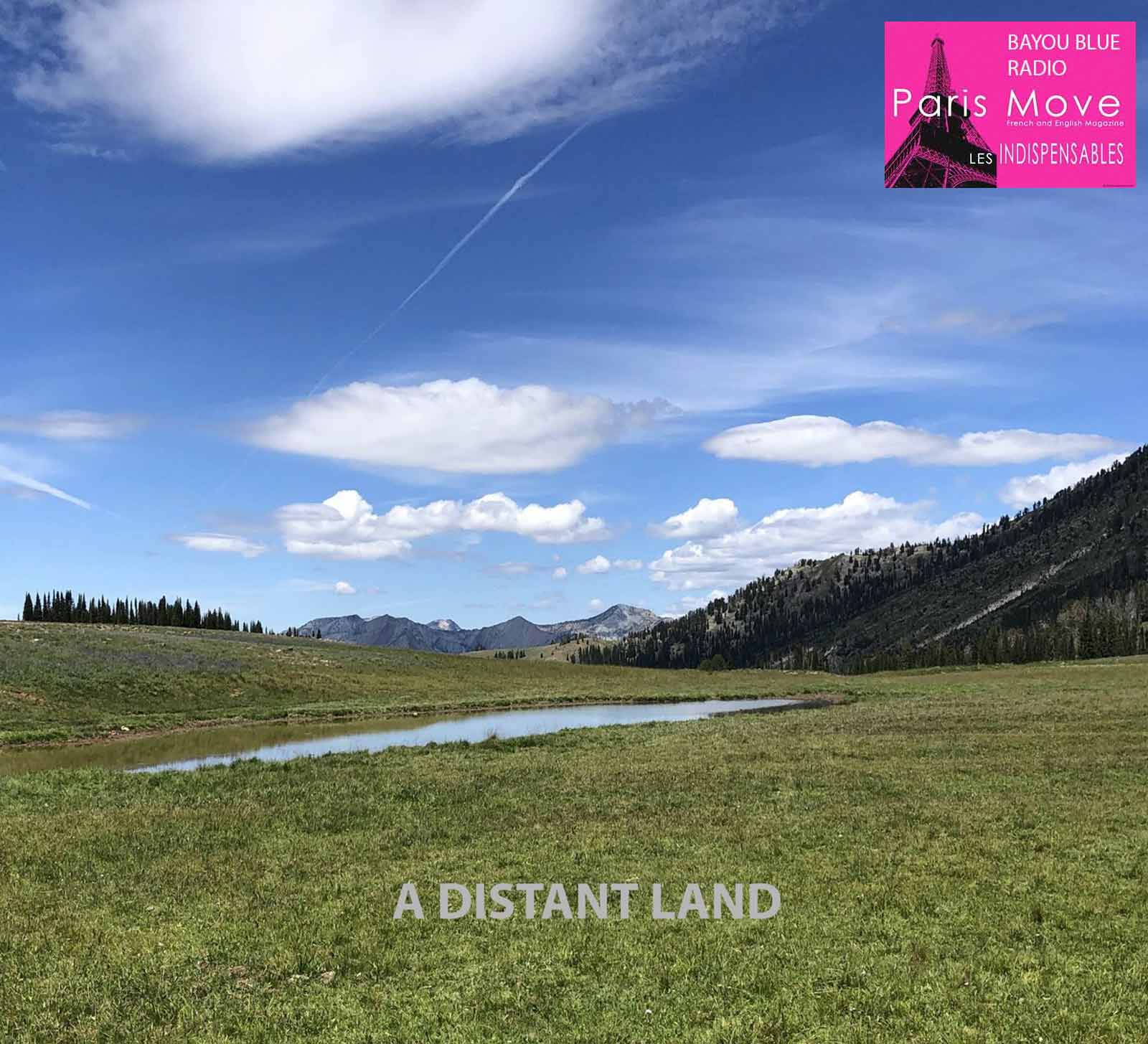
Summary: Rich Halley’s A Distant Land is an adventurous jazz album blending inventive compositions, restless rhythms and global influences. The Portland saxophonist creates an expressive musical journey where improvisation, humor and complexity meet.
For Rich Halley, rhythm is not simply the engine of the music. It is the terrain.
For Rich Halley, rhythm is not simply the engine of his music. It is the ground from which everything else emerges. His tenor saxophone seems to move inside that rhythmic landscape rather than merely playing over it, pushing against the pulse, bending it, sometimes following it and sometimes deliberately refusing to do so. There is a physical quality to his playing, an impression that each phrase has been shaped through movement and instinct as much as through composition. The notes do not simply arrive; they appear to bounce, collide and reshape themselves as they encounter the musicians around them. From the opening moments of A Distant Land, it becomes clear that this is not music interested in making itself immediately comfortable. It asks the listener to pay attention, but it rewards that attention with a world that gradually becomes more intriguing the longer one remains inside it.
What makes the album particularly engaging is the way Halley allows humor and complexity to coexist. There is nothing solemn about his musical intelligence, and nothing in the compositions suggests that difficulty should automatically be confused with seriousness. His writing can be intricate, occasionally unpredictable and rhythmically demanding, yet it retains a sense of play. That quality is important because creative jazz can sometimes become trapped beneath the weight of its own ambitions. Halley avoids that problem. He seems to understand that music can be intellectually demanding while still possessing a sense of mischief, surprise and even pleasure. His originality comes not from trying desperately to sound different, but from allowing his own personality to determine where the music should go.
A Distant Land is therefore less a collection of pieces than an invitation into a particular musical landscape. The title is revealing because distance is one of the album’s central sensations. The music constantly seems to be looking toward somewhere else, toward places that remain just beyond immediate reach. The titles themselves reinforce that feeling, with references to Maputo, sunrise and distant southern territories suggesting movement across geographical and imaginative borders. Yet Halley never treats these places as exotic decorations. They function more like points on a map, indications of a journey whose destination remains deliberately uncertain. The listener is given enough information to become curious, but never enough to stop imagining.
That sense of movement becomes easier to understand when considering Halley’s life beyond the recording studio. He is a musician who has spent decades exploring creative jazz, not only as a performer and composer but also as an organizer and advocate for music that exists outside conventional commercial expectations. His long involvement with the Penofin Jazz Festival and his role in the founding of Oregon’s Creative Music Guild place him within a tradition of musicians who understand that creative music requires more than talented performers. It requires communities, audiences, places where experimentation can happen and people willing to keep those places alive. Halley’s career has consequently been about both making music and creating the conditions in which unusual music can continue to be heard.
His background as a field biologist adds another dimension to the picture. A lifelong fascination with the natural world and extensive travel through remote regions have clearly shaped his imagination. One should resist the easy temptation to translate this directly into musical metaphors about birds, forests or landscapes, because Halley’s music is far more sophisticated than that. What seems to emerge instead is a particular attitude toward complexity. Nature is full of structures that coexist without becoming predictable, systems in which order and chance continually influence one another. A Distant Land has something of that quality. The music is carefully constructed, but it never feels imprisoned by its construction. There is always room for something unexpected to enter.
That tension between structure and freedom is at the heart of Halley’s approach. His compositions provide a framework, but the framework is not a cage. Within it, the quartet can move, react and change direction. The musicians appear to listen as intensely as they play, which is perhaps the most important quality in creative ensemble music. Improvisation is often described as freedom, but freedom without listening quickly becomes chaos. Halley’s quartet understands that improvisation is a collective act. Every musician must be willing to give something up in order to allow something else to emerge.
Trombonist Michael Vlatkovich is especially important in this process. His presence gives the music another melodic voice that can reinforce Halley’s ideas while simultaneously challenging them. The relationship between the two horns is one of the album’s most compelling features. At times they seem to complete one another’s thoughts; at other moments they appear to question each other, as though two people were discussing the same subject from entirely different perspectives. Their lines can move together, separate, overlap or suddenly change direction. The effect is conversational rather than hierarchical. Neither instrument seems determined to dominate the other.
There are moments when their exchanges suggest two birds calling to one another from different branches, but the comparison works only because the music itself possesses that quality of response and adaptation. The saxophone offers something, the trombone answers, and the answer changes the meaning of what came before it. A phrase becomes a question, the response becomes another question, and the music continues without needing to resolve the conversation in conventional terms. This is one of the pleasures of Halley’s writing. He trusts the listener to follow a musical argument without insisting that every argument reach a tidy conclusion.
The rhythm section is equally important because it prevents this freedom from becoming weightless. Andrew Jones on bass and Carson Halley on drums provide the underlying movement that allows the horns to take risks. They do not function merely as a background against which the melodic instruments can shine. Their playing helps determine the shape of the music, shifting its momentum and changing the atmosphere around the horns. The rhythmic foundation can feel solid one moment and strangely elastic the next, giving Halley and Vlatkovich the freedom to move without ever losing the sense that the quartet is traveling together.
This is where Halley’s relationship with rhythm becomes particularly revealing. His saxophone playing is energetic, but the energy does not come simply from speed or volume. It comes from friction. His phrases seem to gain their intensity from the rhythmic forces surrounding them. A line may move forward only to encounter resistance from the rhythm section, or a seemingly simple melodic idea may become angular because of what is happening underneath it. The effect is almost physical. One can hear the music leaning forward, stopping, turning and accelerating again.
After several listens, another layer begins to emerge. The music contains traces of a much wider world, with echoes that suggest Balkan traditions, North African influences and the broader vocabulary of world jazz. Yet these elements never feel pasted onto an American jazz framework simply to provide color. They have been absorbed into Halley’s musical language. This distinction is crucial. There is a difference between quoting another culture and allowing an encounter with another culture to alter the way one thinks about music. Halley appears interested in the latter.
That approach places him within one of jazz’s oldest and most fascinating traditions. Jazz has always been a music of movement, migration, exchange and transformation. Rhythms cross borders, musicians encounter unfamiliar sounds, instruments find new roles and musical languages change as they travel. The history of jazz is therefore not a fixed museum collection but an ongoing conversation between places and generations. A Distant Land participates in that conversation without announcing itself as a manifesto. The influences are there, but they have become part of something personal.
There is also something fitting about the music coming from Portland, a city whose cultural reputation has long been associated with experimentation, eccentricity and a willingness to take unconventional ideas seriously. Anyone whose knowledge of Portland comes primarily from the television world of Portlandia may recognize a certain spirit in Halley’s music, although the connection should not be taken literally. What they share is less a particular sound than an attitude: a willingness to embrace the unusual without turning it into a solemn declaration. Halley’s music can be serious about its craft while remaining curious, playful and slightly unpredictable.
That may be why A Distant Land becomes more rewarding with repeated listening. The first encounter reveals its energy and atmosphere, but subsequent listens begin to expose its architecture. A rhythmic gesture that initially seemed incidental becomes significant. A brief exchange between the horns suddenly takes on greater meaning. The bass reveals a movement that had been hiding beneath the melody. The drums change the character of a passage almost imperceptibly. The album does not necessarily become easier with familiarity; instead, it becomes deeper.
There is something almost archaeological about this process. One does not simply hear the music; one excavates it. Each listen uncovers another layer. This is not because Halley is deliberately hiding his intentions, but because complex music cannot reveal everything at once. It requires time, and more importantly, it requires a listener willing to give that time. In an age when recordings are often expected to communicate their entire identity within seconds, there is something quietly defiant about an album that refuses to surrender all of its secrets immediately.
That refusal is part of its humanity. Halley does not appear interested in producing music that can be reduced to a quick description or a convenient genre label. The album is adventurous without being chaotic, sophisticated without becoming precious and melodic without relying on predictability. It has roots in jazz, but those roots do not prevent it from looking outward. It remembers where it comes from while remaining curious about where it might go next.
That combination is especially striking given the length of Halley’s career. There is no sense here of a musician simply repeating a vocabulary that has already been established. Experience has not made the music safer. If anything, it seems to have given Halley greater confidence in uncertainty. He knows the tradition well enough to move beyond its most familiar borders without pretending that those borders never existed.
The result is an album that asks an increasingly rare question of its audience: are you willing to listen without knowing exactly what you are going to hear? The question is not an academic one. It is almost an invitation to abandon the habits that have come to define so much contemporary listening. Instead of searching immediately for a hook, a category or a recognizable reference, the listener is encouraged to remain inside the sound long enough for its internal relationships to become apparent.
That is ultimately what makes Rich Halley so compelling. His music does not use complexity as a barrier between artist and audience. It uses complexity as a doorway. The listener can enter through rhythm, melody, humor, improvisation or simply the curiosity created by an unexpected sound. Once inside, the music begins to reveal its larger geography.
A Distant Land is consequently more than a title. It is a state of mind. It describes the feeling of standing somewhere familiar while sensing that another world exists just beyond the horizon. Halley’s compositions do not tell us exactly how to reach that place. They provide fragments of direction, glimpses of landscape and occasional flashes of recognition. The rest is left to the imagination.
Perhaps that is why the album feels so alive. It does not attempt to eliminate uncertainty. It understands that uncertainty is one of the conditions of discovery. Halley has spent a career moving between composition and improvisation, between the established language of jazz and the sounds he has encountered elsewhere, between the discipline of music and the unpredictability of the natural world. A Distant Land brings those experiences together without forcing them into a single explanation.
The music keeps moving because Halley keeps listening. He listens to the rhythm, to his fellow musicians, to the traditions behind him and to the unfamiliar sounds beyond them. That openness gives the album its distinctive character. It also gives the listener something increasingly precious: the sensation that music can still take us somewhere we did not expect to go.
If Rich Halley’s music has a destination, it is not a particular country, city or landscape. It is a place beyond certainty, where composition and improvisation meet, where humor can coexist with complexity, where the familiar can suddenly become strange and where listening becomes an active form of discovery. A Distant Land does not ask us simply to hear another jazz album. It asks us to travel without a map, to accept the possibility of getting lost and to discover that being lost may be precisely the point.
In the end, that is the quiet power of Rich Halley’s music. He does not promise that the journey will be easy, nor does he give us a predetermined destination. He offers something better: a reason to keep moving. His saxophone cuts through the rhythmic landscape like a traveler who has learned that every horizon conceals another one, while the quartet follows, challenges and reshapes the path beneath him. The farther the music travels, the more clearly its purpose becomes. It is not trying to bring the distant world closer to us. It is reminding us that there are still distant worlds worth seeking.
And in a culture increasingly obsessed with immediacy, certainty and instant recognition, there is something profoundly human about a musician who still believes that the unknown can be beautiful. A Distant Land leaves us not with an answer, but with the feeling that somewhere beyond the last note there is another road waiting to be taken. Rich Halley simply has the courage to start walking.
Thierry De Clemensat
Member at Jazz Journalists Association
USA correspondent for Paris-Move and ABS magazine
Editor in chief – Bayou Blue Radio, Bayou Blue News
PARIS-MOVE, September 2nd, 2026
Follow PARIS-MOVE on X
::::::::::::::::::::::::
To buy this album (September 11, 2026)
Musicians :
Rich Halley, tenor saxophone
Michael Vlatciovitch, trombone
Andrew jones, bass
Carson Halley, drums
Track Listing :
Mismatch
Crossways Logic
A Distant Land
Message From Maputo
The Edge Of Sunrise
Subterfuge
South Of South
Harnessing The Churn